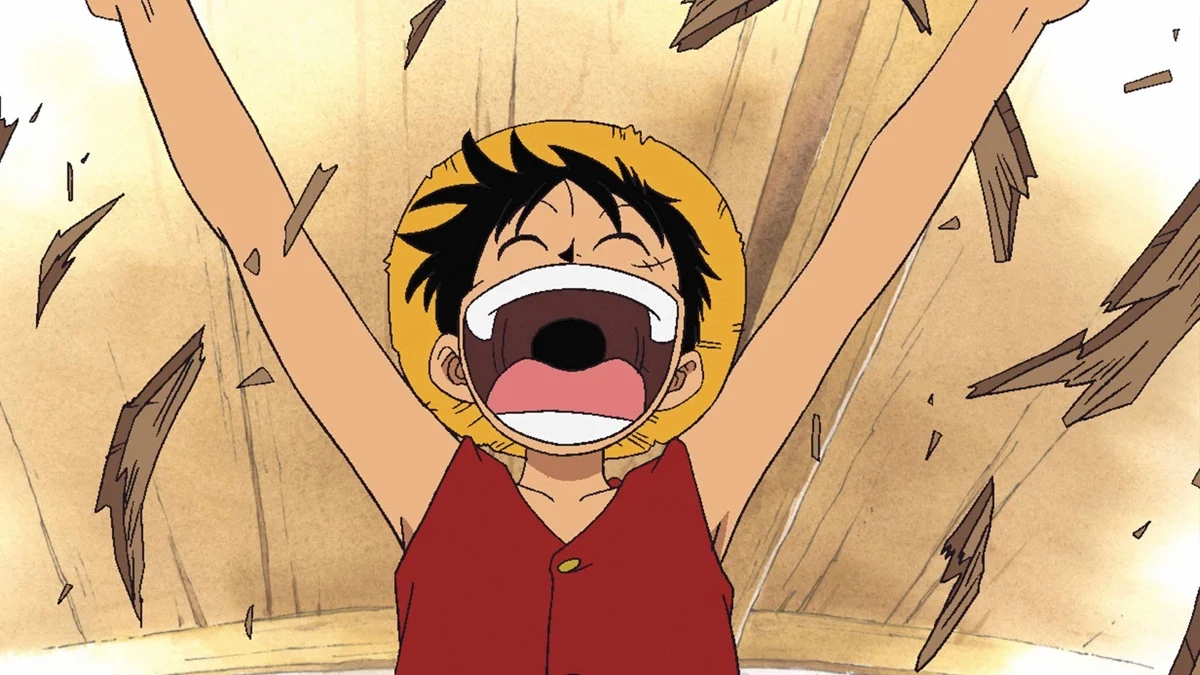
Monkey D. Luffy emerges from a barrel with a laugh and an enormous ambition: he wants to become King of the Pirates. His body can stretch like rubber, but the Devil Fruit that gave him that power has also made him unable to swim. A boy who wants the sea to be his future has acquired a particularly inconvenient weakness for a life aboard a ship.
One Piece builds a world large enough for that sort of contradiction. Pirates can be brutal, funny, generous or ridiculous; a uniform does not settle whether a person deserves trust. The voyage keeps asking what freedom means when other people have the power to confine someone, take their home or decide where they belong.
What makes the islands feel like different worlds?
The sea provides the connection, but each stop has its own problem. East Blue introduces ports, Marine bases and a restaurant that floats rather than sitting on a street. Arriving somewhere new means learning who runs it, how people make a living and which local rules Luffy is about to collide with. The adventure can change setting without abandoning the people travelling through it.
That is a useful balance for such a long story. The next island supplies a new immediate situation; the ship carries relationships that already matter. A strange place does not have to replace the cast’s existing interests. It can give a navigator, a swordsman or a cook a different reason to notice what is happening.
The Grand Line’s first enormous whale makes that scale visible. The creature does not need an elaborate explanation to make the ship look small. A coastline or an animal can be an obstacle with a personality, making the voyage feel less like travel between interchangeable arenas.

Image credits
One Piece
©尾田栄一郎/集英社・フジテレビ・東映アニメーション
Image sourceWhy is Luffy not enough to run a ship?
His confidence is useful, but it cannot navigate a ship or cook a meal. Zoro’s commitment to swordsmanship and Nami’s skill at navigation give them purposes beyond supporting a captain’s ambition. A person who knows how to win a confrontation does not necessarily know how to reach the next island.
The professions keep the fantasy physical. People need meals and a vessel that can move; a cook’s work matters before anybody calls it a fighting technique. The Baratie turns that idea into a whole place: a working restaurant can belong to the same sea as pirates and naval officers. Sanji’s place there helps make the world something people inhabit, not simply a map they cross.

Image credits
One Piece
©尾田栄一郎/集英社・フジテレビ・東映アニメーション
Image sourceTheir different goals also make companionship more interesting than unanimous agreement. Luffy does not need everyone to want his title. He needs people willing to travel together while continuing to care about things that are theirs. Loyalty becomes a way to make another person’s ambition possible, rather than a demand that they surrender it.
How can a ridiculous face carry the story?
The opening image does not present its future captain as an imposing figure on a throne. Luffy is laughing inside broken wood, making an entrance that is as comic as it is confident. The large grin and loose posture offer an immediate alternative to the solemn conqueror suggested by the word king.
That visual looseness suits a world where human bodies, animals and architecture can take improbable shapes. It also leaves room for an expression to change the temperature of a scene. A character who looks absurd need not remain a joke, and a cheerful encounter can become serious when somebody’s ability to choose is threatened.
Where should you begin?
Start with episode one of the original 1999 television anime. The series had reached episode 1180 by 27 September 2026, at about 24 minutes an episode. The story continues beyond the opening examples discussed here.
For practical stopping points, optional detours and the distinctions between adaptations, use the One Piece starting guide. Its detailed first route covers episodes 1–206, keeping films, specials, the remake and live action distinct. You can explore an opening stretch without promising to catch up immediately.


