
“There is too much One Piece” can mean you do not have hundreds of evenings available. It can also mean that, in the episode you have just watched, a short event seemed to take a very long time. Those are different problems. A series can be enormous and brisk, or short and slow.
The distinction matters before anybody starts defending Luffy. Someone who wants a long voyage and someone who wants a good story finished this month are making different requests. A promise about a wonderful future arc does not give the second person more evenings.
Is the whole journey too much to take on?
Luffy’s ambition is enormous: become King of the Pirates. The opening makes it approachable through people whose problems exist before he arrives. Zoro is not simply a vacancy labelled “swordsman”; Luffy encounters a person with his own ambition and an immediate predicament. Interest in that encounter can precede any desire to catch up with a franchise.
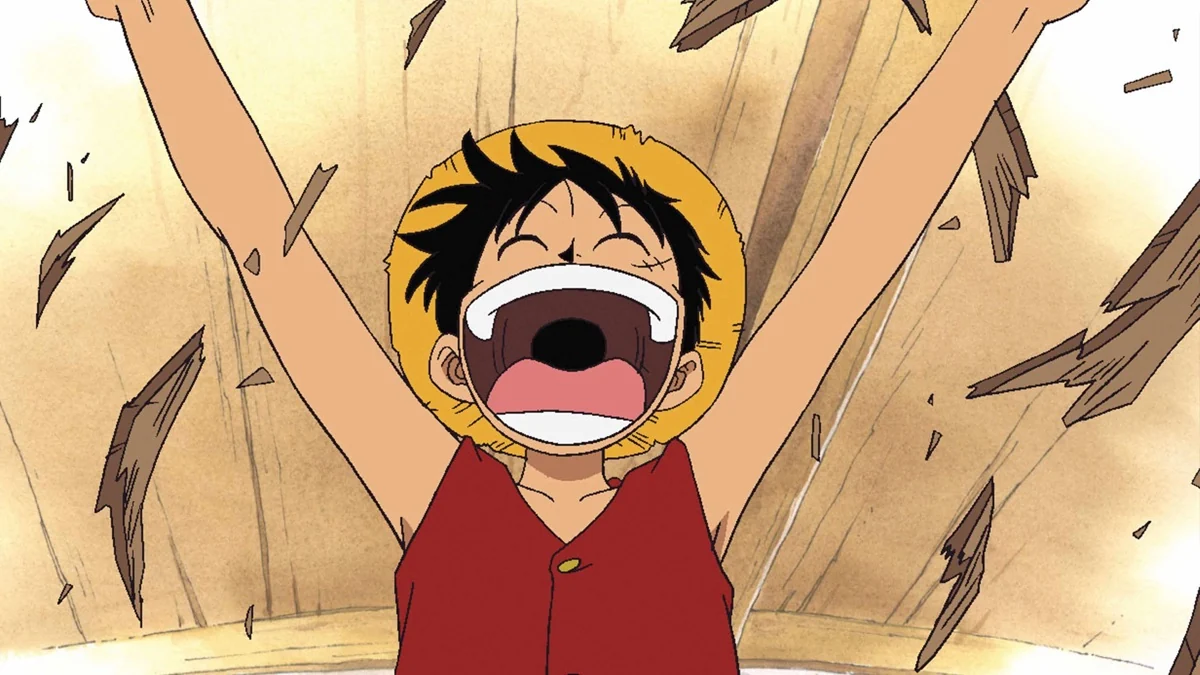
Image credits
One Piece
(C)尾田栄一郎/集英社・フジテレビ・東映アニメーション
Image sourceThat is the useful distinction between a sample and a commitment. Our starting guide supplies actual early stopping points and skip advice. Take one of those bounded routes if the characters attract you. If even that feels like a large request, a shorter series answers your needs more honestly than an argument about how many episodes you could watch each day.
Does the episode rhythm suit you?
The total episode count cannot tell you how a passage spends its time. Nor can a filler list: omitting a separate detour leaves the rhythm of the retained episodes intact. These questions can help you judge the pace of a passage; they do not measure the adaptation across all its arcs.
For a useful check, take a passage that frustrated you and ask what changed during the wait. Did someone learn something, reconsider an offer or expose a motive? Or were you waiting for information you already had? Those answers distinguish a delay with a dramatic job from time you would rather reclaim. They can also differ between viewers who enjoy sitting with the crew and viewers chiefly following the next event.
In the linked discussion about the series’ length, one reply defends recaps as aids to weekly viewers. That defence offers a reason someone might value repetition; it does not settle how much recap you want in an evening of consecutive episodes. You need not disprove a device’s historical usefulness to find it tiresome now.
When does a repeated principle change its meaning?
Sanji’s first Baratie encounters give a small, concrete test. In episode 21, the hungry Gin has no money and is thrown out. Sanji feeds him anyway. Luffy sees the action and asks the cook to join him. Generosity has made Sanji attractive as a companion before an account of his fighting strength could do the work.
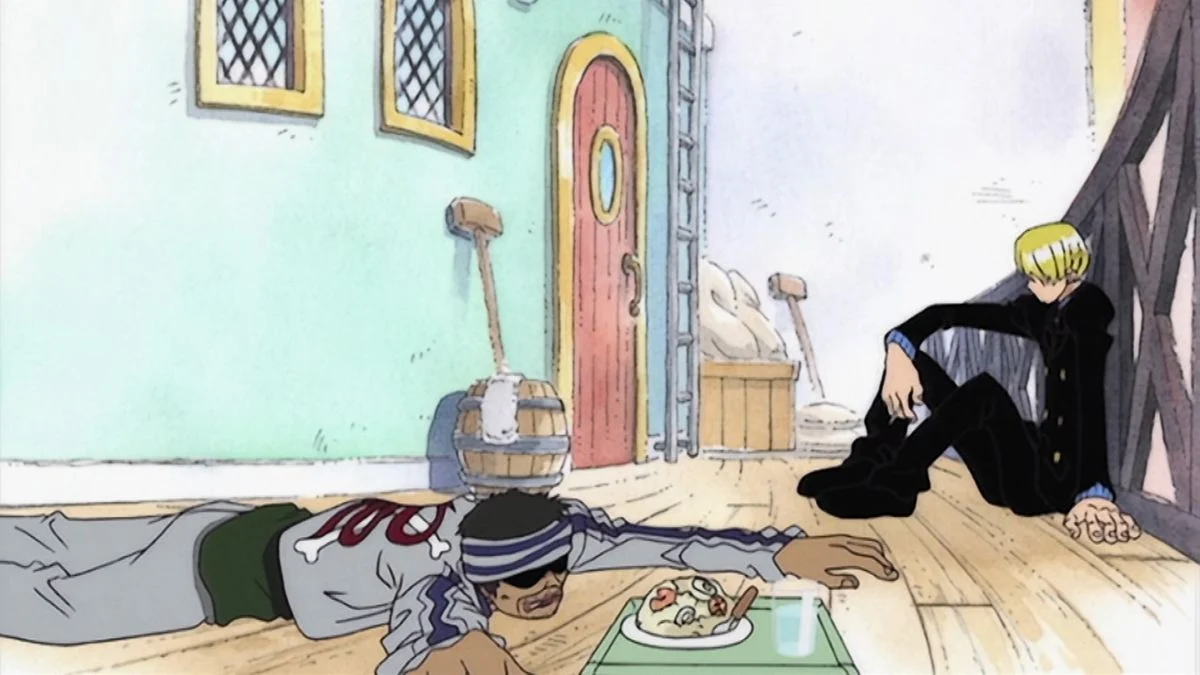
Image credits
One Piece
©尾田栄一郎/集英社・フジテレビ・東映アニメーション
Image sourceEpisode 22 repeats the feeding decision under worse conditions. Gin brings the starving pirate captain Don Krieg to the restaurant. Other people object, but Sanji gives him food; Krieg immediately attacks the man who fed him. Even then, Sanji intends to feed the captain’s hungry subordinates.
The repeated act now creates a disagreement worth having. At first, feeding someone who cannot pay looks admirable. After betrayal, the same rule can endanger the people running the restaurant. Sanji has not merely announced his kindness twice: he has forced it into conflict with his colleagues’ reasonable fear. You can admire his refusal to let someone starve and still think the kitchen staff have a point.
That is what repetition can add: a familiar value becomes harder to live by, and another character has grounds to resist it. It does not prove that every return to a joke, declaration or earlier event earns its running time. It gives you something more precise to judge than whether the story has repeated itself at all.
What follows from your complaint?
If the obstacle is the whole commitment, choose a bounded sample or something shorter. If the characters interest you but the television rhythm does not, consider the manga: reading lets you control the speed, while giving up this adaptation’s voices, music and movement. That is a change of experience, not a magic repair for every disliked story pattern.
If the problem is repeated situations themselves, the Sanji example offers a further question: are the stakes changing, or do you simply dislike returning to the pattern? Either answer is useful. Liking this crew does not require liking every way the voyage spends your time.
Sources
Linked sources contain later story details.