
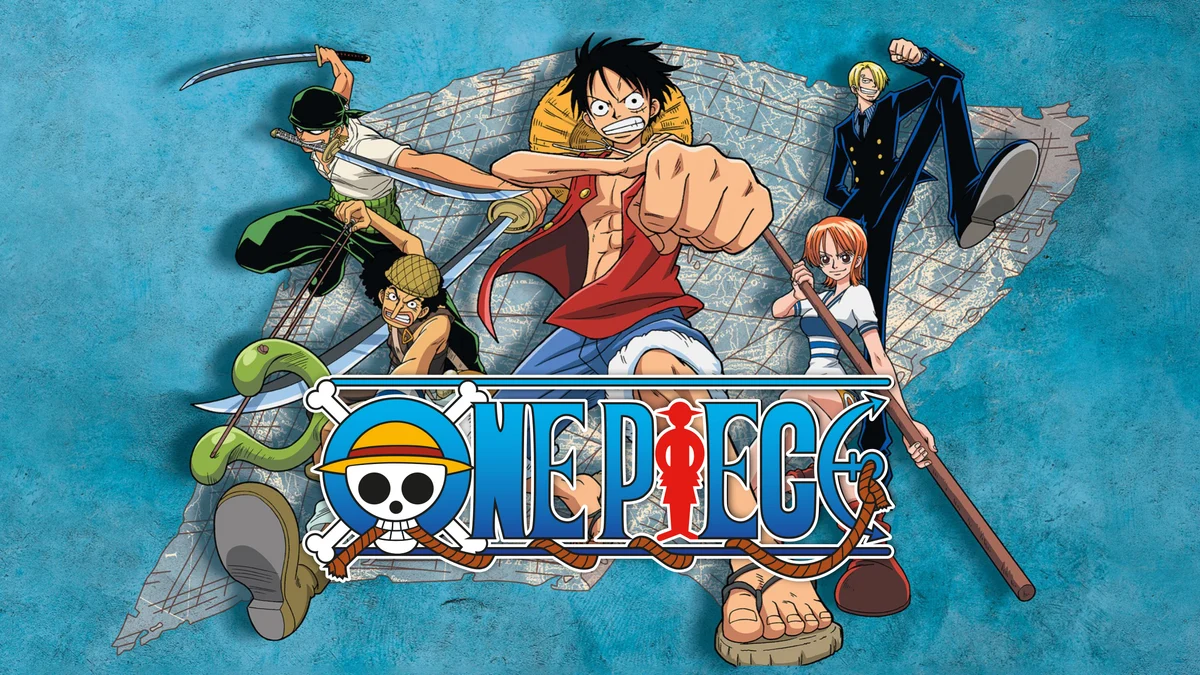
Start the original One Piece anime at episode 1. You do not need a film, a recap or a promise to catch up. East Blue, through episode 61, is a useful first substantial stretch: it lets you meet the early crew and reach the threshold of the larger voyage. Stop sooner if you are not enjoying their company.
The world is divided by seas, with islands under different rulers and the Marines pursuing pirates between them. The legendary treasure called the One Piece offers Monkey D. Luffy a route to becoming Pirate King. His body can stretch like rubber after eating a Devil Fruit, but strength does not supply a navigator, a meal or a trustworthy crew. Those practical needs give the opening journey its shape.
This guide gives detailed optional-episode advice through 206, followed by a map for returning viewers. All numbers refer to the original anime’s continuous sequence. A streaming service’s “season 1” can begin somewhere quite different.
Continue at 207 after this guide's detailed stretch. The remake and live action each begin their own route.
Which One Piece should you start?
| Version | What it is | Starting point |
|---|---|---|
| One Piece (1999) | Toei's long-running television anime. Every route number below belongs to this production. | Original episode 1. |
| THE ONE PIECE | WIT Studio's new anime adaptation, returning to the beginning of the manga. | Its own episode 1 when released, not a continuation of the older anime. |
| ONE PIECE (2023) | Netflix's live-action adaptation, with its own structure and episode sequence. | Live-action season 1, episode 1. |
As checked on 16 October 2026, Netflix announces THE ONE PIECE for February 2027, with seven episodes arriving together. Its first season is planned to cover the first 50 manga chapters, with about 300 minutes in total. That is an announced opening instalment, not the whole story or the full East Blue stretch of the older anime. Netflix’s remake announcement supplies those details.
Start the original if you want to begin the existing television journey now. Waiting for the remake is a reasonable preference for a new production from the beginning, but its unreleased episodes cannot yet be recommended for their pacing or animation. You can also try both adaptations without treating either as homework for the other.
What makes the opening crew worth following?
Luffy tends to decide that someone belongs on his ship before discovering why they cannot simply leave. Zoro wants to become the greatest swordsman, yet their first encounter finds him a prisoner at a Marine base. Luffy’s invitation therefore demands an immediate choice, not just a shared taste for adventure. Nami brings navigation and a more calculating attitude to money and trust, which gives Luffy’s easy confidence something to push against.
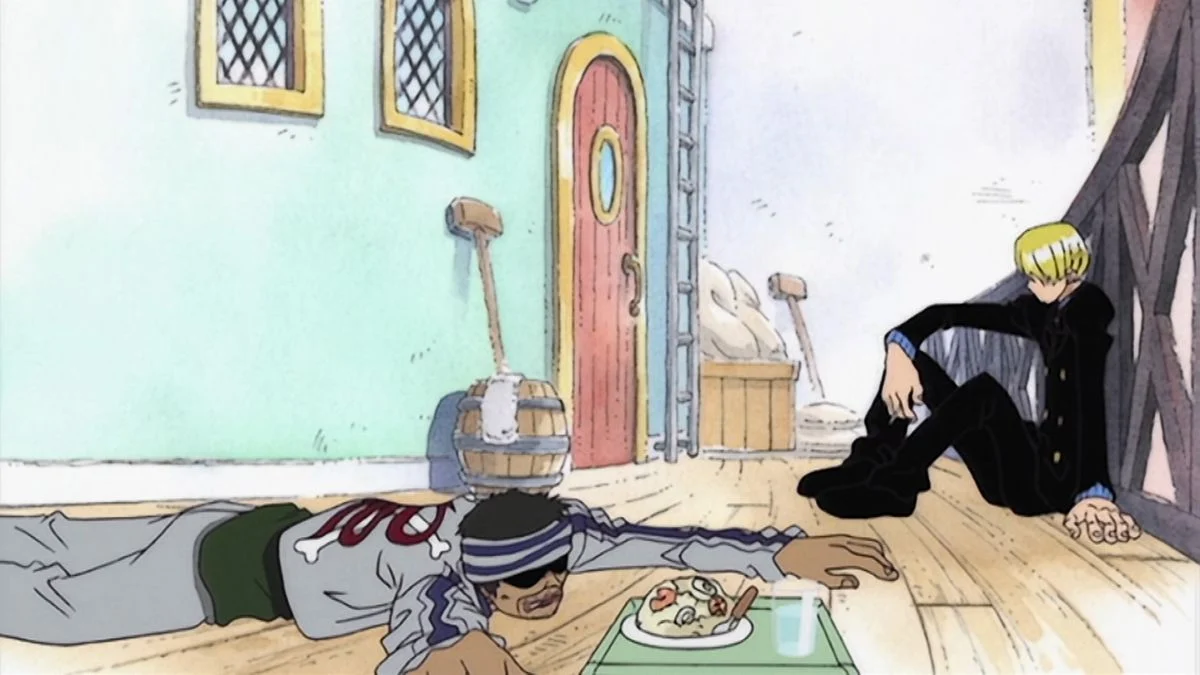
Usopp’s extravagant stories introduce a different sort of courage from Luffy’s fearlessness. Sanji, a cook on a floating restaurant, feeds a starving man who cannot pay, then resists leaving the place to which he feels obliged. These encounters make recruitment more interesting than filling vacant jobs: the question is what each person would risk by sailing, and what they already feel responsible for. You do not need their later histories or a list of future recruits before watching.
The loud humour and drawn-out confrontations will not suit everyone. Reviewing the first 26 episodes, David Brook at Blueprint: Review enjoyed the imaginative cast while noting repetitive story patterns and extended fights. Julian White at Starburst found the same opening’s noise and visual energy wearing over a longer sitting. Neither response is a verdict on every later arc. Try a few episodes for the humour, then continue for a character’s story if that person interests you, rather than waiting for a promised distant point where enjoyment supposedly begins.
Content: comic exaggeration sits beside bloody fights, bullying, bereavement and sexualised humour. Later parts also address slavery and abuse. The New Zealand Classification Office’s anime overview covers a much longer run than this opening route and notes differing ratings; the colourful designs do not make the whole series uniformly suitable for children.
How should you watch East Blue?
Watch 1–53 in order. The optional adventure that follows can wait if you want to reach the Grand Line sooner, but its final episode also carries the journey forward.
| Original episodes | Advice | Next step |
|---|---|---|
| 1–53 | Keep the early character stories and Loguetown. Retain 45–47 and 50–51, even if a list gives them different adaptation labels. | 54 for the full route; 61 for the shorter route. |
| 54–60 | Optional Warship Island adventure involving a girl and a dragon. | 61, whether you watch or skip the detour. |
| 61 | Keep the whole episode. It joins the detour's conclusion to the onward transition. Its opening will refer to unfamiliar events if you skipped 54–60. | 62. Do not substitute a service's next season label for this number. |
At an explicitly approximate 24 minutes per episode, including credits, all 61 episodes take about 24 hours. Skipping 54–60 leaves 54 episodes, about 22 hours. Actual episode lengths vary. These are planning estimates, not a measured total or a deadline for finishing.
The classification basis is Anime Filler List, a community-maintained episode index. It distinguishes mixed episodes from wholly additional stories. “Optional” here means omitted from this shorter route; it does not mean an episode is badly made or cannot add enjoyable character time.
What can you skip between 62 and 206?
Watch everything in 62–206 except any optional blocks you choose below. Each omission has an exact return point.
| Optional episodes | What you lose | Resume at |
|---|---|---|
| 98–99 | Additional desert encounters during the Alabasta journey. | 100 |
| 102 | A further desert side episode. Keep the mixed episode 101 before it. | 103 |
| 131–143 | Character-focused detours and separate island adventures after Alabasta. | 144 |
| 196–206 | G-8, a self-contained predicament inside a naval base after the sky-island journey. | 207 |
Keep 68–69, 93 and 101. Keep the full Jaya and Skypiea stretch, 144–195. A new island or a change of tone does not make a story expendable. The optional naval-base block begins at 196, after the sky-island story, not at the start of Skypiea.
Choose G-8 if you want another contained adventure with the crew before pressing on. Choose the jump from 195 to 207 if continuing the adapted main story is your priority; the complete G-8 block remains available for a later visit. There is no need to argue that one choice is the “real” way to watch.
Taking every optional skip in both tables removes 34 of the first 206 episodes, leaving 172. At the same 24-minute planning allowance, the full route is about 82 hours and the shorter one about 69 hours. Removing whole detours does not remove recaps or alter the pacing inside retained episodes. This is not an accelerated edit of the programme.
How do the later stretches fit together?
Beyond 206, continue the original numbered episodes in order. This table is a navigation map, not later filler advice. Its spans include transitions and detours, so an arc name does not mean every episode in that row belongs exclusively to that arc.
| Original episode span | Navigation landmark |
|---|---|
| 1–61 | East Blue |
| 62–143 | Grand Line entry, Alabasta and following detours |
| 144–206 | Sky-island journey and G-8 |
| 207–325 | The next sea journey, Water Seven and Enies Lobby |
| 326–384 | Side material and Thriller Bark |
| 385–516 | Sabaody and the following pre-timeskip sequence |
| 517–628 | Return to the journey, Fish-Man Island and Punk Hazard |
| 629–746 | Dressrosa |
| 747–891 | Zou, Whole Cake Island and surrounding transitions |
| 892–1085 | Wano and intervening special episodes |
| 1086 onwards | Continue by original episode number; check the service's actual list. |
These grouped spans follow the stable sequence documented in the episode index. Its season table follows Japanese home-video groupings, not a universal streaming layout. Episode 517 is a continuation, not an alternative beginning. A catalogue that starts there has not made the preceding story optional.
Do you need the films or recap specials?
Keep films and recap specials out of your first 206 episodes. You can follow the numbered television route without inserting them. This is a simple first-watch recommendation, not a claim that all films occupy a single agreed place in fictional chronology.
A film can reveal characters, abilities or designs from much later than your current episode. Its release date alone does not establish the earliest spoiler-safe insertion point. When a particular film interests you, check advice for that film and where you have reached, rather than opening a compilation of every franchise trailer.
A special called “Episode of…” is also different from a numbered TV episode. A condensed retelling can revisit familiar events, but our recommended starting route gives the original character introductions room to unfold. It does not splice a recap into a guessed handover point.
Where should you resume after a break?
Use the last original episode number you completed. After 130, continue to 131, or to 144 if you deliberately omit 131–143. After 195, choose 196 for G-8 or 207 to continue without it. If you remember only a platform season, find its final episode’s title and original number before changing services.
If you have watched only the live-action adaptation, start the anime at 1. Some situations will be familiar, but the adaptations arrange their material differently. Beginning again lets you meet these versions of the characters without a falsely precise live-action-to-anime conversion.
Before subscribing in India, check original episodes 1, 62 and 207, then the blocks between them and the next stretch you intend to watch. Those three are useful spot checks, not proof of a complete catalogue. Verify titles as well as numbers: a platform can restart its numbering inside a later arc. The India streaming guide explains that distinction and the separate language and subscription checks.
Sources
Checked 16 October 2026. Episode and arc pages can reveal outcomes in their titles and summaries.
- Netflix: THE ONE PIECE, dated 21 August 2026: remake identity and announced February 2027 opening season, distinguished from the 1999 anime and live action.
- Official East Blue story overview: early recruitment and character situations. Its full recap contains major opening-arc spoilers.
- Anime Filler List: One Piece: optional and mixed classifications through 206. Community taxonomy, not an official quality judgement; no current franchise total is inferred from its older update.
- List of One Piece episodes: broad navigation and home-video season grouping. Route totals above are inclusive arithmetic; durations use an approximate 24-minute allowance.
- David Brook, Blueprint: Review and Julian White, Starburst: differing responses to the opening collection, attributed individually rather than presented as consensus.
- New Zealand Classification Office: One Piece: content guidance across the original anime, beyond this guide’s detailed opening route.