
For Overtake!'s team spirit, start with Capeta. For road rivalries, try Initial D or MF Ghost. The list moves from driver development to street racing, then to talking cars, impossible machines and cross-country adventures.
Team stories and driver development
Team life · People behind the starting grid
Overtake!
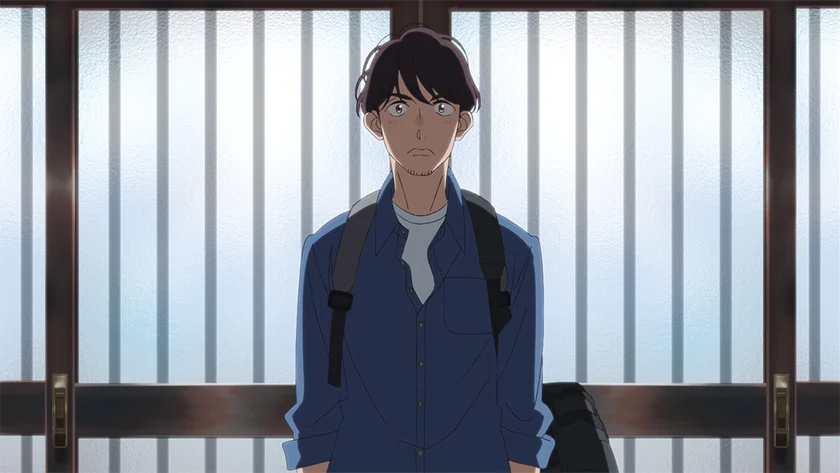
Kouya's wish to help has to become practical support. Episode 2. ©KADOKAWA・TROYCA/オーバーテイク!製作委員会 Haruka races in Japanese Formula 4 for tiny Komaki Motors. When photographer Kouya tries to help, enthusiasm quickly meets the cost of keeping a car on track.
Why try it: the work behind the race. Kouya's sponsorship plan and Haruka's awkward publicity duties make support feel practical, personal and sometimes funny.
What sets it apart: the photographer gets as much emotional space as the driver. Choose these 12 episodes for friendship and trust alongside the racing thrills.
Explore Overtake!Driver development · Making a small team's chance count
Capeta
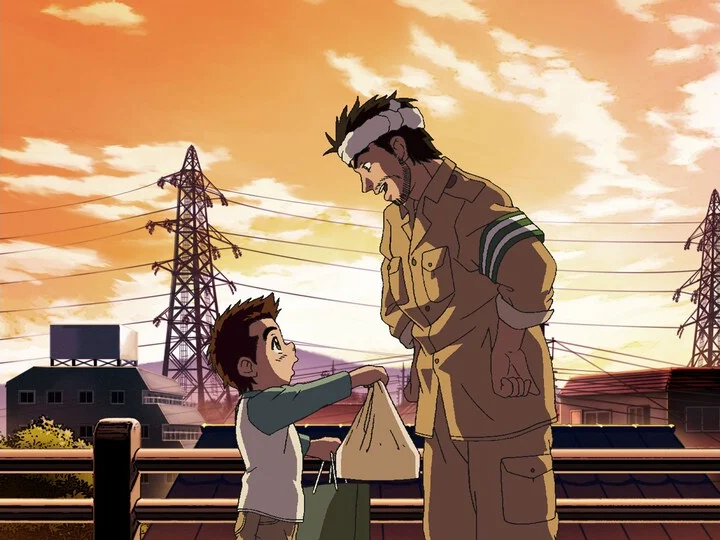
Capeta and his father, before the home-built kart opens a new possibility. Episode 1. © 2005曽田正人・講談社/マーベラス・エイベックス・エンタテインメント・創通 A father builds his son a kart from discarded parts. Its bent frame and limited engine turn Capeta's first laps into problems that talent alone cannot solve.
Why try it: resourcefulness and technique grow together: Capeta compensates with his weight, then experiments with where to lift off the accelerator.
What sets it apart: childhood discovery comes first. Family and friends help keep the kart running, making this a natural next stop for Overtake!'s small-team spirit. Start with the 2005 TV anime.
Explore Capeta's opening episodes
Road-racing rivalries
Road racing · The unassuming driver with a head start
Initial D
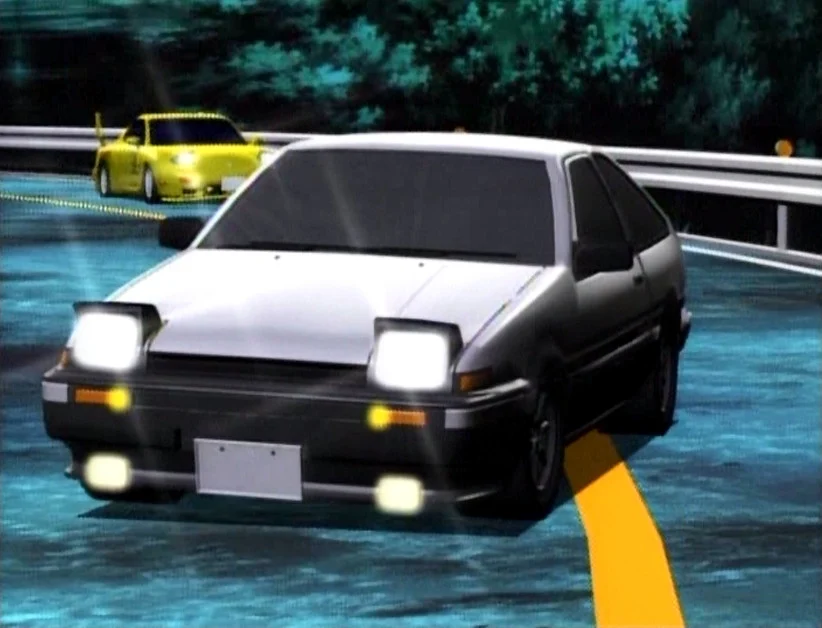
First Stage puts the AE86 and the shape of the road at the centre of the challenge. ©しげの秀一/講談社・エイベックス・ピクチャーズ・オービー企画 Takumi's routine tofu deliveries have taught him Mount Akina in his father's Toyota AE86. Local racers discover that an ordinary-looking car can be an unexpectedly difficult opponent.
Why try it: road knowledge upsets the apparent balance of power. Each downhill challenge asks what the driver can extract from familiar corners and modest machinery.
What sets it apart: Eurobeat and mountain-road duels give the original Japanese version its identity. Begin with the 1998 First Stage; the later Legend films retell its opening.
Explore Initial D First StageRoad racing · An 86 among the supercars
MF Ghost
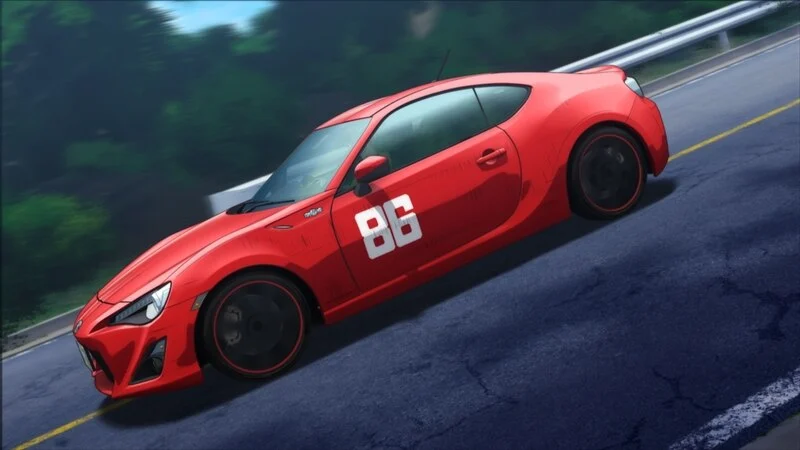
Kanata's Toyota 86 in the first season's opening qualifying run. Episode 2. ©しげの秀一・講談社/MFゴースト製作委員会 Kanata arrives from Britain to enter MFG's near-future public-road championship. His Toyota 86 shares the entry list with supercars, while finding his father gives him another reason to stay.
Why try it: the terrain keeps changing the problem: season one's opening qualifying run moves through climbs, descents and Hakone fog.
What sets it apart: qualifying and a larger field replace Initial D's early one-on-one challenges. Start with season 1; romance and sexualised race-hostess scenes also occupy its attention.
Read MF Ghost profileRoad racing · The car you cannot leave alone
Wangan Midnight
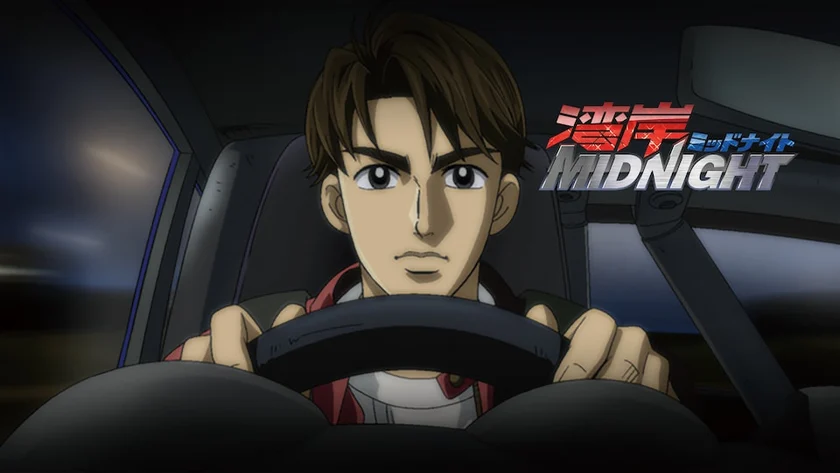
The 2007 anime's promotional image puts Akio behind the wheel. ©楠みちはる・講談社/オービー企画 Akio finds an old Nissan S30 Z in a scrapyard and wants it restored, despite instructions that it should be destroyed. The car's disturbing reputation only deepens his fascination.
Why try it: obsession with a particular machine. Drivers and tuners keep returning to what the Z might do on Tokyo's expressways.
What sets it apart: attachment and modification matter as much as rivalry. Choose the 2007 TV anime for late-night highway racing and the people who cannot leave their cars alone.
Explore Wangan Midnight's first episode
Imaginative racing adventures
Imaginative racing · A machine with something to say
Future GPX Cyber Formula
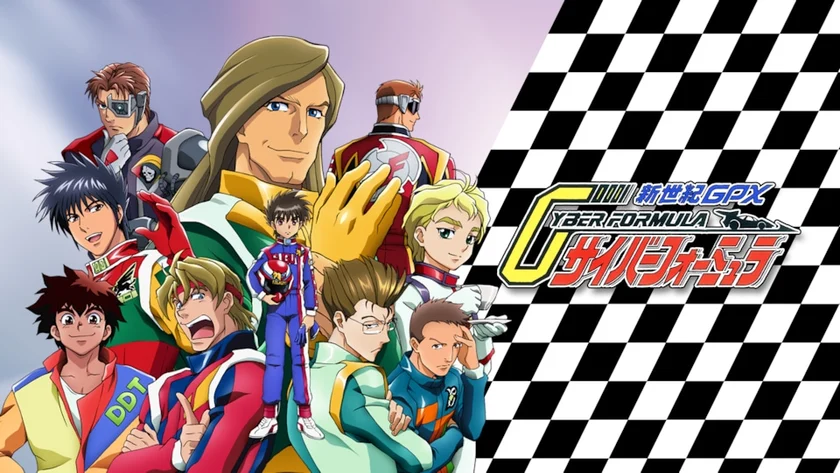
Original-TV promotional artwork. Hayato's rivals give his new partnership plenty to test. ©サンライズ Hayato accidentally becomes the registered driver of Asurada, an AI-equipped racing car. Extraordinary technology still leaves a young newcomer struggling with cornering, physical forces and advice he resists.
Why try it: the machine can argue back. Learning to race also means learning to work with a partner whose judgement is not his own.
What sets it apart: it bridges team-based sports drama and science fiction. Begin with the original 37-episode 1991 TV series before its separately named OVA sequels.
Explore the original Cyber Formula seriesImaginative racing · Speed turned into spectacle
Redline
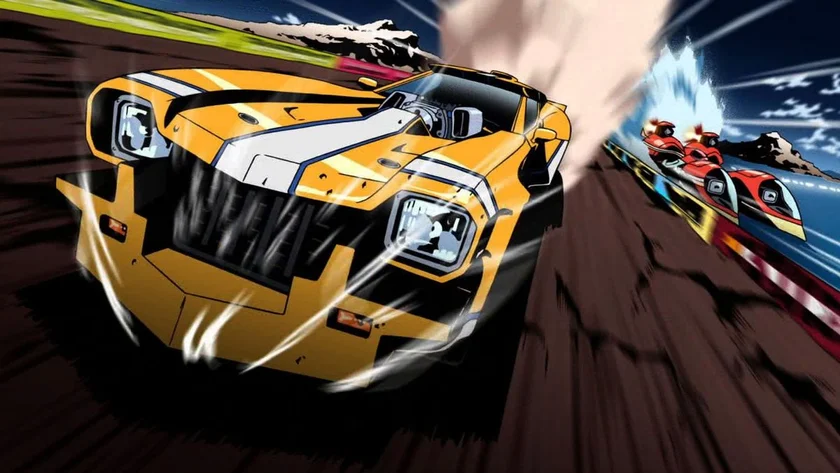
Redline makes the car's shape and the picture's angle part of its sense of speed. © 2010 Katsuhito Ishii, GASTONIA, MADHOUSE / REDLINE Partners JP takes a customised Trans-Am into an interplanetary race where rivals carry weapons and the host planet threatens military intervention. Takeshi Koike's film embraces the absurd scale of that challenge.
Why try it: elastic speed: distorted machinery, extreme angles and saturated colour make acceleration an event of its own.
What sets it apart: this is a standalone science-fiction spectacle with a romance between races. Expect graphic violence and nudity; choose it for visual invention rather than grounded motorsport.
Read Redline profileImaginative racing · Build something and cross a continent
Appare-Ranman!
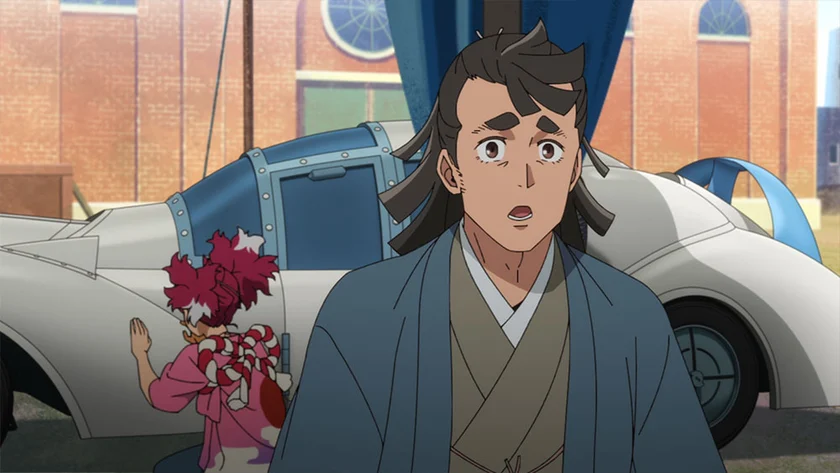
Kosame and Appare approach new machinery with rather different levels of confidence. Episode 3. ©2020 KADOKAWA/P.A.WORKS/天晴製作委員会 Inventor Appare and anxious samurai Kosame become stranded in America. A Los Angeles-to-New York race offers money to get home, if their homemade steam-powered vehicle can compete.
Why try it: building and bickering. Appare's curiosity and Kosame's practicality turn engineering problems into an odd-couple adventure.
What sets it apart: the race crosses a fanciful late-nineteenth-century world rather than following a conventional championship. Some designs use broad cultural stereotypes, but invention and the mismatched partnership provide its particular draw.
Explore Appare-Ranman!Imaginative racing · Gadgets and adventure
Speed Racer (Mach GoGoGo)
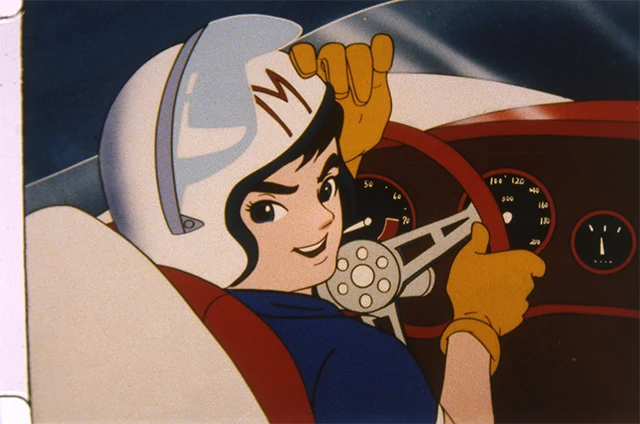
The original 1967 Mach GoGoGo, known internationally as Speed Racer. ©タツノコプロ The Mach 5 is more than a fast car: its seven special functions carry a young driver into adventures around the world. Racing meets suspense and romance in Tatsunoko's original series.
Why try it: a recognisable machine with an outsize personality. The car's inventions turn the question from simply going faster to escaping the next extraordinary situation.
What sets it apart: start with the 1967 anime, known in Japan as Mach GoGoGo. This is racing as adventure, distinct from the 1997 remake and 2008 live-action film.
Explore the original Speed RacerImaginative racing · A rookie in a futuristic championship
Highspeed Étoile
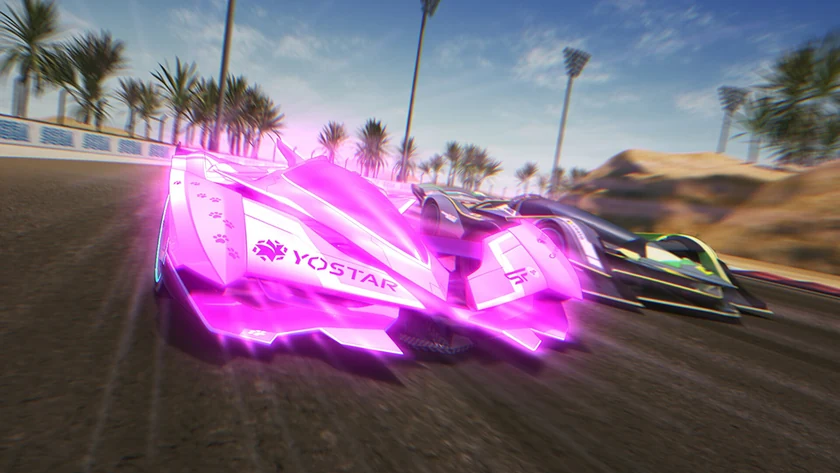
Highspeed Étoile's second episode brings the newcomers to their debut race. ©HSE Project An injury ended Rin's ballet ambitions; now she is a rookie in NEX Race, a futuristic championship powered by new technology. Her desert-circuit debut turns eagerness into a struggle with nerves.
Why try it: a fresh start among established competitors. Rin joins fellow newcomers who are equally keen to challenge the reigning champion.
What sets it apart: choose it for a female-led rookie story and imagined circuit racing. Its opening follows a much less prepared competitor than Overtake!'s experienced Haruka; speed and racecraft are different lessons.
Explore Highspeed Étoile's debut race
Want a glimpse of the racing?
The official previews offer three different flavours: Overtake!’s small-team drama, MF Ghost’s first-season road racing and Redline’s science-fiction spectacle. These promotional videos show scenes beyond the opening episodes; Redline’s includes weapons and combat.
Sources
Episode pages, criticism and official introductions below can reveal later events and race outcomes. Japanese distributor links identify the recommended edition; they are not a promise of streaming availability in your country.
-
Overtake!: official episode 2 and episode 3; Alexander Case’s review discusses the relationship between racing and character drama.
-
Capeta: TV Tokyo’s episodes 1–13, particularly the frame, engine and practice problems in episodes 4–9. Bandai Channel’s edition record distinguishes its changed opening music from the original TV broadcast.
-
Initial D: licensed First Stage episode-one record and Shochiku’s separate Legend1 film record; 3rd World Geeks’ First Stage review and Craig Lotter’s review discuss its music and differ over how well its computer animation works.
-
MF Ghost: official first-season episode 1 and episode 2; the original Crunchyroll trailer establishes the premise; Kate Sánchez’s premiere review discusses the introduction and its sexualised hostess material.
-
Wangan Midnight: Bandai Channel’s first episode establishes the scrapyard encounter; Andrew P. Collins’s discussion considers the anime’s drivers and tuning culture.
-
Cyber Formula: original TV series record and official episodes 1–10 establish Hayato’s accidental registration, the AI and early learning problems.
-
Redline: Madhouse’s production record and synopsis; A. H.’s UK Anime Network review and Tim Jones’s THEM Anime review discuss the opening qualifier, visual movement and characters.
-
Appare-Ranman!: P.A.Works’ synopsis, official character profiles and episode 3; Vrai Kaiser’s premiere review considers the lead pairing and stereotyping, while bateszi’s premiere notes discuss its adventure appeal.
-
Speed Racer: Tatsunoko’s original 1967 series record and studio introduction confirming its English title; the separately listed 1997 remake is a different version.
-
Highspeed Étoile: official Rin profile, episode 1 and episode 2 establish the new championship, ballet background and anxious debut.