

Kouya Madoka wants to sponsor a racing driver. It sounds like a generous, manageable thing to do until he visits Komaki Motors and discovers what racing costs. In Overtake!’s second episode, he learns that his help will not stretch nearly as far as he expected. A visit to the rival Belsorriso team then reveals another scale of spending altogether: money devoted to developing the driver, as well as putting a car on the circuit.
That is a good place for a racing story to begin asking difficult questions. A stopwatch can measure a lap without showing how many opportunities someone had to practise it. The teenager in the cockpit may deserve the applause, but someone still has to prepare the car and pay to bring it back.
Overtake! is persuasive about that dependence. Its early sponsorship story reflects recognisable features of real Japanese Formula 4: controlled machinery, unequal resources and support that comes with limits. The romance lies in making those pressures legible through a small circle of people. The important qualification is that affection, a sponsor’s logo and even a funded race programme do not make every bill disappear.
What kind of racing has Kouya walked into?
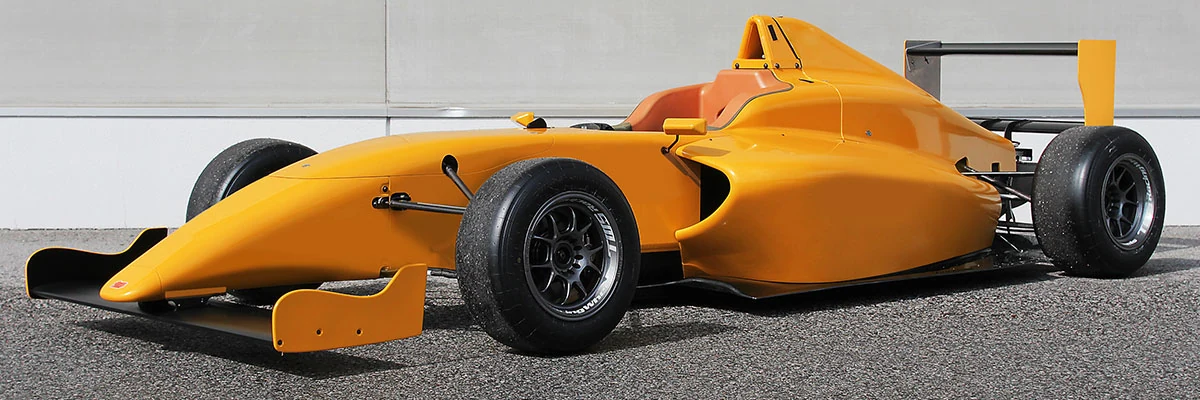
Formula 4 is an introductory category of single-seater racing, the sort of car with one driver and exposed wheels. It gives drivers a step from karting into larger racing cars. There are national championships around the world; Overtake! draws on Japan’s FIA-F4 championship, which began in 2015 alongside SUPER GT, the much larger headline attraction at those meetings. The FIA, motorsport’s international governing body, sets the framework. Japan’s series operates in the Japan Automobile Federation’s sporting system and is promoted by GT Association.
The setting gives the story a useful sense of scale. Haruka Asahina, Komaki Motors’ young driver, is competing in a serious development category, but he has not arrived in the wealthy world a casual viewer might associate with Formula 1. Gotemba and nearby Fuji Speedway anchor the anime’s world. In the real 2023 championship, the season comprised seven meetings and fourteen races. Getting to the grid once was only the beginning of the commitment.
This is also a particular generation of racing. The Dome F110 served the Japanese championship through 2023. The series moved to the Toray Carbon Magic MCS4-24 for 2024. That change matters when comparing the anime with photographs or prices found today: a newer car’s specification or sales notice cannot simply be applied backwards to the world the series researched.
For the broader story and characters, our Overtake! introduction starts with the awkward partnership between Haruka and Kouya. Here, the question is what it takes to make that partnership useful to a racing team.
If the cars are controlled, what can money buy?
Japanese F4’s shared machinery makes the budget gap more interesting. Dome identifies the F110’s engine as the TOM’S TZR42 and describes tightly managed performance. The FIA’s 2023 first-generation homologation rules, which govern approval of the equipment, also controlled chassis and component prices. Teams were not competing to invent a completely different car for every race.
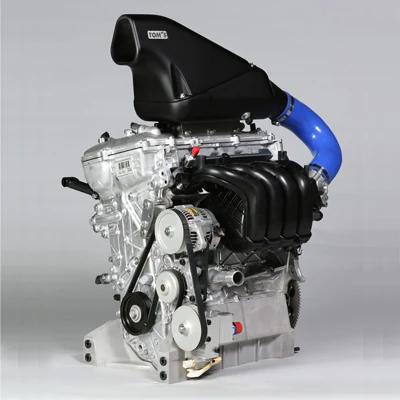
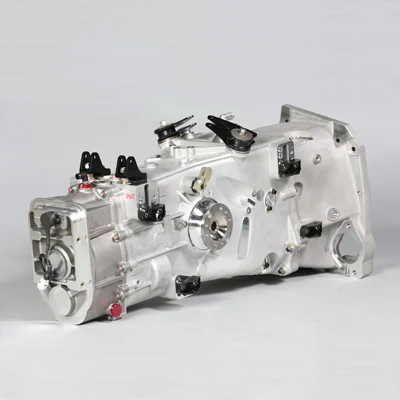
Those rules restrain one kind of spending. They cannot give every driver the same preparation, knowledge or capacity to recover from a setback. The regulations still provided for approved setup options, including springs and gear ratios, and data logging. Understanding the car remains work, even when its basic design is shared.
The production team noticed precisely this tension. In Shogo Nishikawa’s July 2023 Best Car interview, director Ei Aoki recalled seeing striking differences between teams despite their similar cars and tents. Producer Toshiyuki Nagano said the prospect of a small team challenging a strong one helped inspire the project. Their account supports a more specific kind of realism than simply calling the anime accurate: the imbalance was something they had gone to the paddock and noticed.
Belsorriso makes that imbalance personal. Satsuki Harunaga is its first driver, Toshiki Tokumaru its second; the official character profiles describe both as capable racers. Resources do not remove the need for skill. Equally, Haruka’s determination cannot establish that he has had the same opportunities to develop it. The rivalry becomes richer when both things remain true.
What has to be paid for after the car arrives?
Komaki Motors has a mechanic, not merely a driver with helpful friends. Kotarou Komaki, the owner’s son, is described as skilled at the job and close to Haruka since childhood. Giving that work to someone within Haruka’s ordinary life makes the team’s dependence harder to ignore. Mechanical competence is part of what allows the young driver’s ambition to exist.

The real championship’s 2023 FIA-F4 Japanese Challenge support terms give a revealing account of the expenses. Its package covered car and engine rental, maintenance, transport of equipment, race entries, fuel, oil and brake pads, plus an allocation of three sets of designated Dunlop tyres per meeting. Personal travel, licences, personal equipment costs, extra practice outside the supported running and damage repairs remained among the driver’s responsibilities, although the programme covered half the racing suit cost. This was one programme’s agreement, not a universal F4 contract or a statement of the racing rules’ tyre limit.
That division explains why a car price is such a poor substitute for a racing budget. An entry fee buys access to an event; it does not maintain the car. Tyres and consumables must be replenished. The machine and the people do not transport themselves. A team needs skilled labour before the track opens, while it is running and after it comes home.
Testing adds another difficulty. Running the car is how a driver learns, yet it also uses the very resources the team must preserve. The underlying tension is easy to understand without knowing a suspension setting: saving money by doing less preparation can mean arriving less prepared. Money can buy an opportunity to learn; it cannot promise what a driver will learn from it.
Crash damage makes the uncertainty sharper. A planned tyre bill and an unplanned repair are different demands on the same limited funds. The Challenge programme’s repair exclusion is a useful corrective to the reassuring word support. It also shows why an underdog story cannot measure a setback only in positions lost. Repairing the car may compete with the money intended for the next outing.
What does a supported programme change?
There were real development organisations behind drivers in the anime’s release year. Toyota’s 2023 programme announcement named four Japanese F4 drivers supported through TGR-DC Racing School. Honda’s 2023 motorsport plan included domestic FIA-F4 within its Formula Dream Project.
These programmes make Belsorriso’s investment in driver development plausible, without establishing that the fictional team represents either manufacturer. The resource being developed is a person. A driver needs practice and guidance, and an organisation can connect that work to opportunities beyond a single race.
There is a second side to this. Toyota explicitly tied future support to promising school performance; the Japanese Challenge selection involved an application, interview and driving test. Assistance was selective. It was not an entitlement available to every talented newcomer, nor a promise of an eventual professional seat.
That complicates the easy division between rich teams and deserving outsiders. Development programmes can widen access for the people selected, while leaving others to assemble funding themselves. A small team may offer close, sustained attention; a better-funded team may offer more resources. Neither arrangement settles the driver’s ability or the quality of the relationships within it.
Why does sponsorship turn into a publicity job?
In episode 3, a photograph Kouya accidentally sends leads to Haruka taking part in a sponsor’s commercial. The filming proceeds, then an interview question creates discomfort. The sequence shifts the challenge from driving to presenting a person whom somebody else is willing to support.
That is an economical way to make sponsorship dramatic. Kouya’s camera is a practical contribution, but the driver is also being asked to participate in a public version of himself. Haruka wants his racing to speak for him. A commercial requires a different kind of cooperation.
The tension reaches back to their first meeting, when Haruka rejects Kouya’s encouragement. Help sounds simple to the person offering it; receiving it can involve obligations, embarrassment and the fear of being misunderstood. Linking the publicity work to those personalities prevents the money problem from becoming an isolated explanation before the racing resumes.
The distinction from real funding is worth keeping. This early commercial establishes an opportunity and a relationship, not a documented, renewable season budget. A sympathetic sponsor can help a team continue. The story gives us no reason to treat one publicity success as proof that all future costs have been met.
How much realism should we ask of the anime?
There is substantial research behind its racing world. In the second part of the Best Car interview, Nagano described three to four years of research and checks with the people involved in the sport. Aoki pointed to cars and circuits built in 3D and sound recorded from real F4 machinery. Those choices help give the category an identity beyond the familiar outline of a racing car. They do not certify every economic claim or dramatic event.
Nor does detail automatically make a scene compelling. Iro’s response to the premiere at the Glorio Blog found the explanations disruptive to the character drama. Alexander Case’s later full-series review valued how the races concentrated on moments that advanced the characters’ stories. There is a productive tension between those readings: technical information earns its place when it changes what a person must do, or what a race means to them.
The early sponsorship episodes meet that test especially well. Kouya must reconsider what he can offer; Haruka must negotiate attention he did not seek; the mechanics’ work makes continued racing possible. Their problems connect the budget to the friendship rather than treating financial difficulty as a badge of moral superiority.
There is one numerical trap to avoid. The championship’s 2023 announcement for the new 2024 MCS4-24 quoted ¥11,990,000 (Japanese yen), including tax, for the base car, mandatory parts and assembly. It explicitly excluded the separate TOM’S engine lease, quoted at ¥1,518,000 including tax for one year. These are historical equipment figures for the next car generation, not current quotations, a driver’s season price or a reconstruction of Komaki’s accounts. Running costs still sit beyond them.
Overtake!’s strongest economic insight is that common equipment does not produce common opportunity. Its opening episodes give a fast driver a convincing need for people who can keep creating chances to race. The friendship matters because support becomes actual work. Kouya has to find something useful to contribute, and Haruka has to find a way to accept it while keeping the ambition his own.
For a quick look at the real category, Dunlop’s official 2020 Japanese F4 digest combines racing footage with a champion interview in about two and a half minutes. It shows the F110 era discussed here, three years before the anime’s release. The interview is in Japanese; this is a tyre supplier’s season film, not an independent account of team budgets.
Real F4 racing · Dunlop’s 2020 season digest · 2½ minutes
Loading the player connects to YouTube. Playback does not start automatically.
Sources
The episode links cover early setups. The full-series review linked below contains later character developments; real championship reports also reveal sporting results.
- Official Overtake! material: episode 1, episode 2, episode 3, and the profiles of Kotarou, Satsuki and Toshiki.
- Production testimony: Shogo Nishikawa’s 28 July 2023 Best Car interview with Aoki and Nagano, part one and part two.
- Championship and setting: the FIA’s account of F4’s purpose, Japanese FIA-F4’s introduction and organising body, JAF’s August 2023 report, Dome’s F110 history and Gotemba’s official anime page.
- Period rules and support: 2023 first-generation FIA homologation regulations, especially articles 2.2 and 2.4, the 2023 Japanese Challenge terms, and the 2023 sale announcement for the 2024 car.
- Manufacturer programmes: Toyota’s 2023 race team announcement and Honda’s 2023 motorsport overview.
- Critical perspectives: the Glorio Blog’s premiere roundtable, 5 October 2023 and Alexander Case’s full-series review at Breaking it all Down, 30 December 2023.