
A fast lap can answer a stopwatch and still leave the most interesting question unresolved. Has the driver justified the people supporting him? Can he read a difficult stretch of road before the conditions change? Overtake! and MF Ghost invite attention to different parts of that gap.
Their openings give racing two useful dramatic shapes. Overtake! makes a young driver’s opportunity depend on a small team and an awkward new supporter. MF Ghost puts a trained driver into a road competition where terrain and visibility change the task as he goes. Both need a capable driver. They build different reasons to care about that capability.
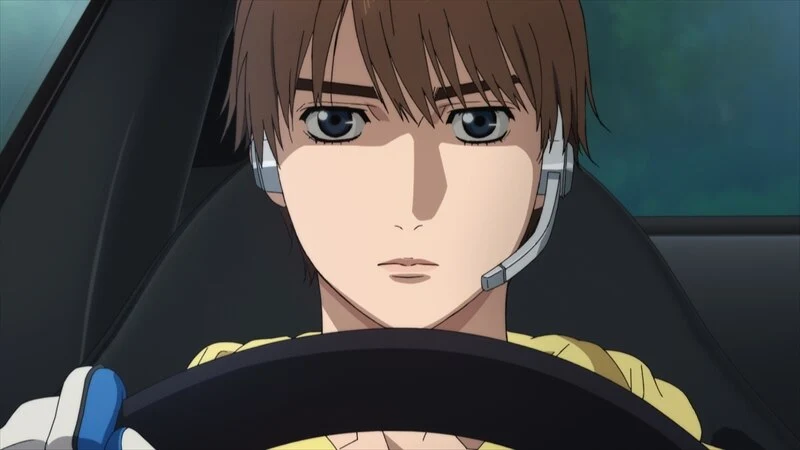
What is the driver trying to prove?
Haruka Asahina races for Komaki Motors in Overtake!’s Japanese Formula 4 setting. Photographer Kouya Madoka sees him at Fuji Speedway and becomes involved in helping the team. In episode 2, that wish runs into the cost of racing and the contrast with better-resourced Belsorriso.
The point is not that Haruka alone is sincere while his rivals merely have money. The rival drivers have their own abilities and ambitions. The unequal support changes the conditions under which talent develops. A result can matter to the driver, mechanic and sponsor in different ways.
Kanata Rivington begins MF Ghost with training acquired in Britain and enters MFG in a Toyota86. His early qualifier asks what that competence can achieve on this particular road. The official episode 2 outline moves him through uphill and downhill sections towards a fog-covered area, with Ogata communicating as he drives.
The two stories therefore put uncertainty in different places. Will a team be able to sustain its young driver’s opportunity? What will an experienced newcomer do with the next conditions in front of him? Neither question needs a race result spoiled to become interesting.
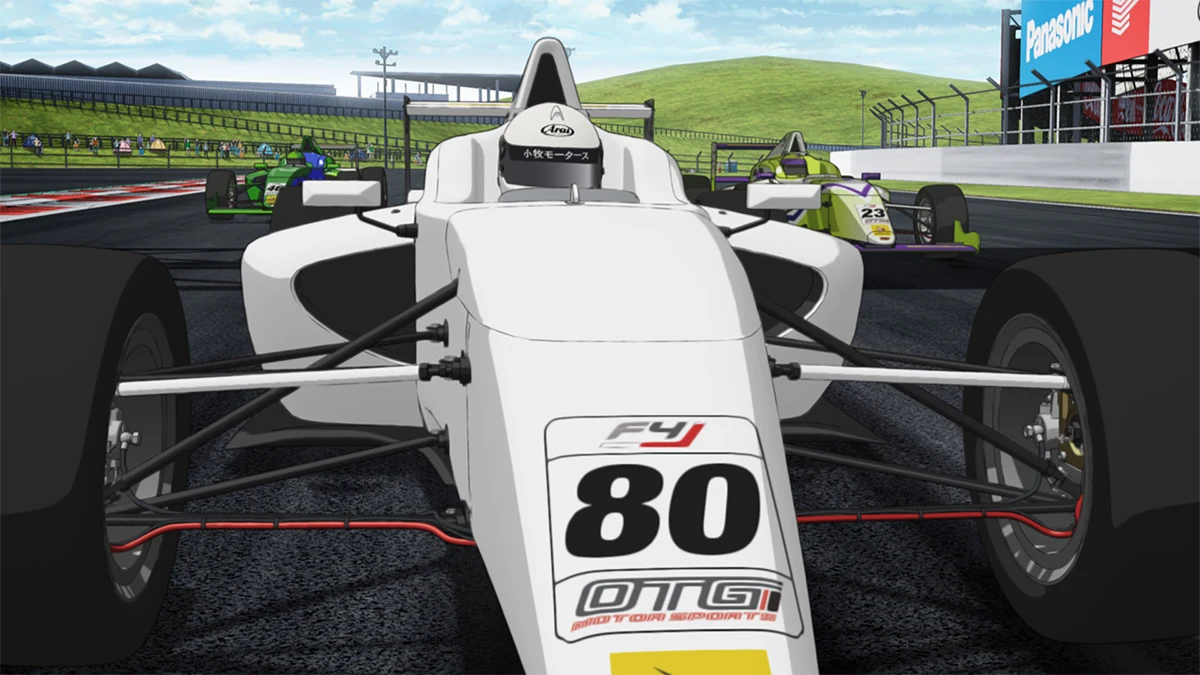
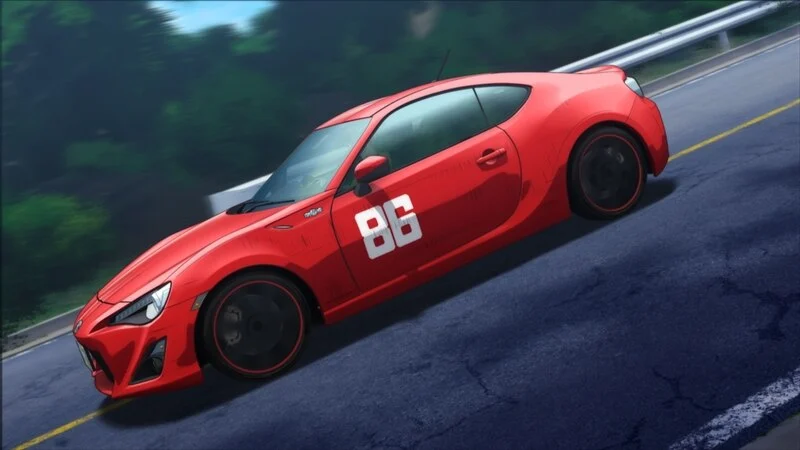
Does similar machinery remove the human difference?
Formula 4’s controlled equipment helps define Overtake!’s underdog problem. The basic category does not give every team the same money, preparation or capacity to recover from trouble. The existing investigation of the anime’s racing costs separates that period-specific real framework from the story’s romance.
For this comparison, the dramatic consequence is enough: the driver’s performance depends on work that does not appear on a timing screen. The audience has people to worry about before the car begins a lap.
MF Ghost gives that relationship another setting. Ogata supports Kanata’s entry and communicates information during qualifying. The route itself changes from climb to descent to reduced visibility. A driver’s skill is interesting when circumstances give it a particular problem to solve, rather than presenting speed as an unexplained personal trait.
This does not mean every technical decision in either anime has been independently certified. A story can make a challenge clear without becoming an engineering demonstration. The distinction here concerns what each opening asks the viewer to notice.
Why can the time away from racing matter?
Kouya has to turn interest into sustained help. Haruka’s friendship with mechanic Kotarou keeps the team within his ordinary life. The paddock is full of people whose involvement does not begin and end with the driver’s hands on the wheel.

Those scenes can make the next outing more meaningful. They can also feel like a delay if what you mainly want is another driving problem. The difference is a preference about the source of tension, not proof that one series contains the correct proportion of racing.
A discussion among Initial D readers shows that distinction in practice: some responses value Overtake!’s character and team concerns, while others want more technical or racing emphasis. Those individual reactions are more useful than treating every car anime as an interchangeable replacement.
The strongest reason to put these openings together is that they enlarge the question. Speed can matter because of the road a driver has learned to read. It can also matter because of the people who made another attempt possible. A stopwatch measures the performance; the surrounding story tells us what is at stake in it.
Sources
These episode pages and the discussion can include later developments. No racing-result or ending judgement is drawn from the forum.
- Official Overtake! episodes 1, 2 and 3, for the team/support setup and selected images.
- MF Ghost episode 2 and original character announcement, for Kanata, Ogata and the qualifier’s changing conditions. Placement information in the synopsis is not reproduced.
- The researched Overtake! cost Feature, with its original 2023 Formula 4 evidence; later equipment specifications are not applied backwards here.