
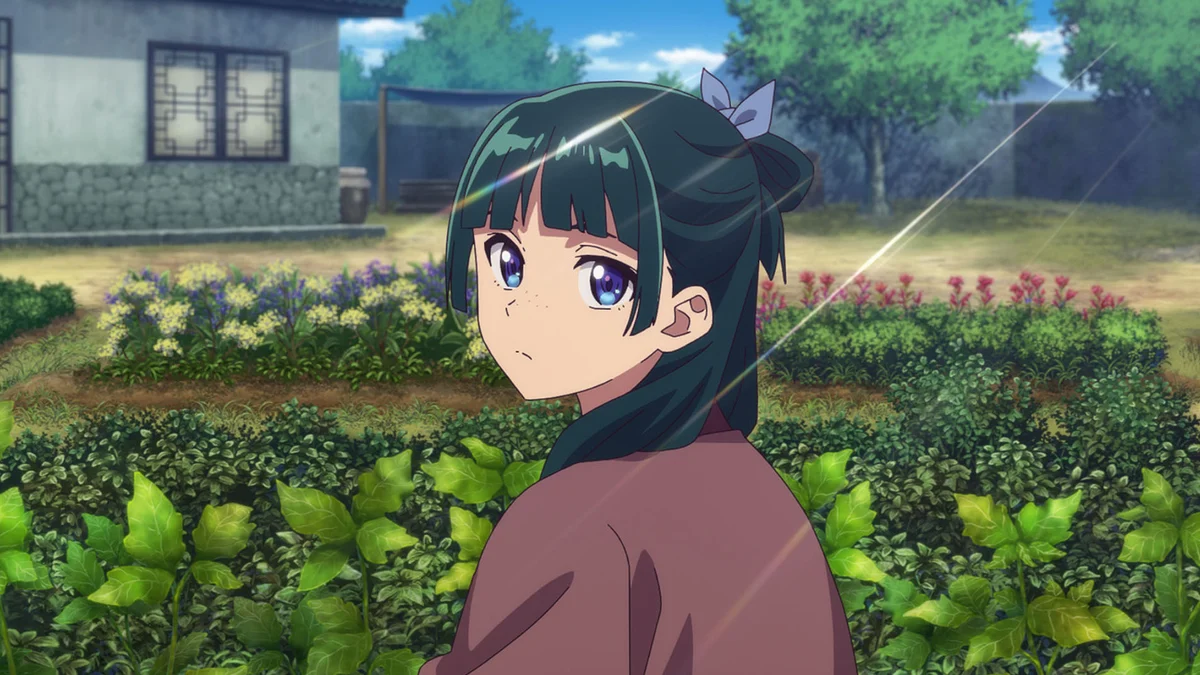
Why is Maomao’s knowledge dangerous in the palace?
The inner palace is the part of the imperial court where the emperor’s consorts live, attended by servants and watched over by officials. An illness there can endanger a child, a household’s position and the people responsible for its care. Rumours travel through the same rooms as orders. A low-ranking servant may notice something vital without being welcome to say it.
The Apothecary Diaries puts a medically knowledgeable outsider inside that hierarchy. Its fictional empire draws on imperial China, but this is a mystery story rather than an account of a particular dynasty. The important division is between what someone knows and what their position lets them do.
Maomao grew up working with medicines in the city’s red-light district. Kidnapped and sold into palace service, she wants to finish her work without drawing attention. Then she hears that the emperor’s children are falling ill. Others speak of a curse; she looks for a physical cause. Staying unnoticed becomes difficult when the problem is one she might be able to solve.
Who gives Maomao a place in the court?
Jinshi is an influential official managing the inner palace. He notices Maomao’s abilities and arranges work that uses them. His charm gets him attention elsewhere; with Maomao, it often gets him a look of disgust. Their exchanges are funny, but they are also unequal: he has the authority to bring her troublesome assignments.
Their working relationship joins two different kinds of knowledge. Maomao can identify a substance or notice a physical symptom; Jinshi knows which person needs an answer and can arrange for her to enter the right room. She does not automatically trust the attention that makes her work possible. That friction gives the investigations a social problem alongside the medical one.
Gyokuyou, one of the emperor’s favoured consorts, takes Maomao into her household as an attendant and food-taster. That role puts her skills near people worth poisoning. The promotion improves her pay while colleagues pity her dangerous new duty. Maomao, meanwhile, is bored enough to want something to do. Gyokuyou has her own household and child to protect; recognising Maomao’s usefulness gives the newcomer a place where her knowledge is wanted, even if it cannot free her from palace rules.
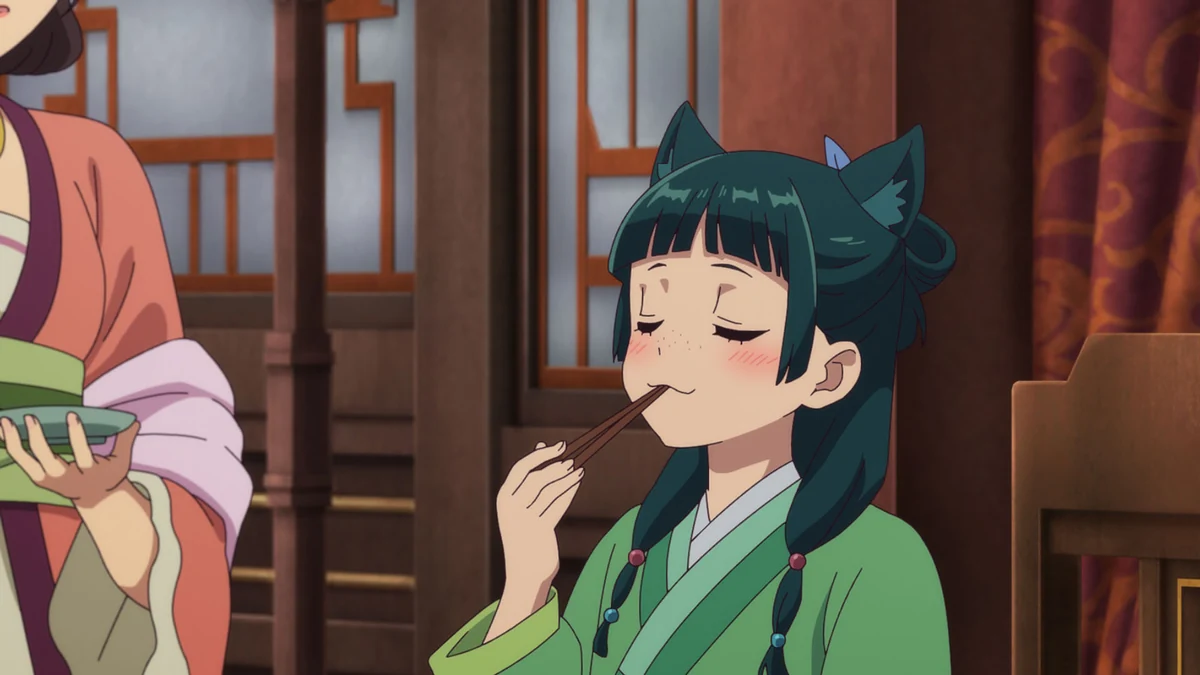
Gaoshun is Jinshi’s dependable aide. He turns the official’s requests into practical work; in episode 3, he escorts Maomao to investigate a night-time disturbance.
How does Maomao investigate a palace mystery?
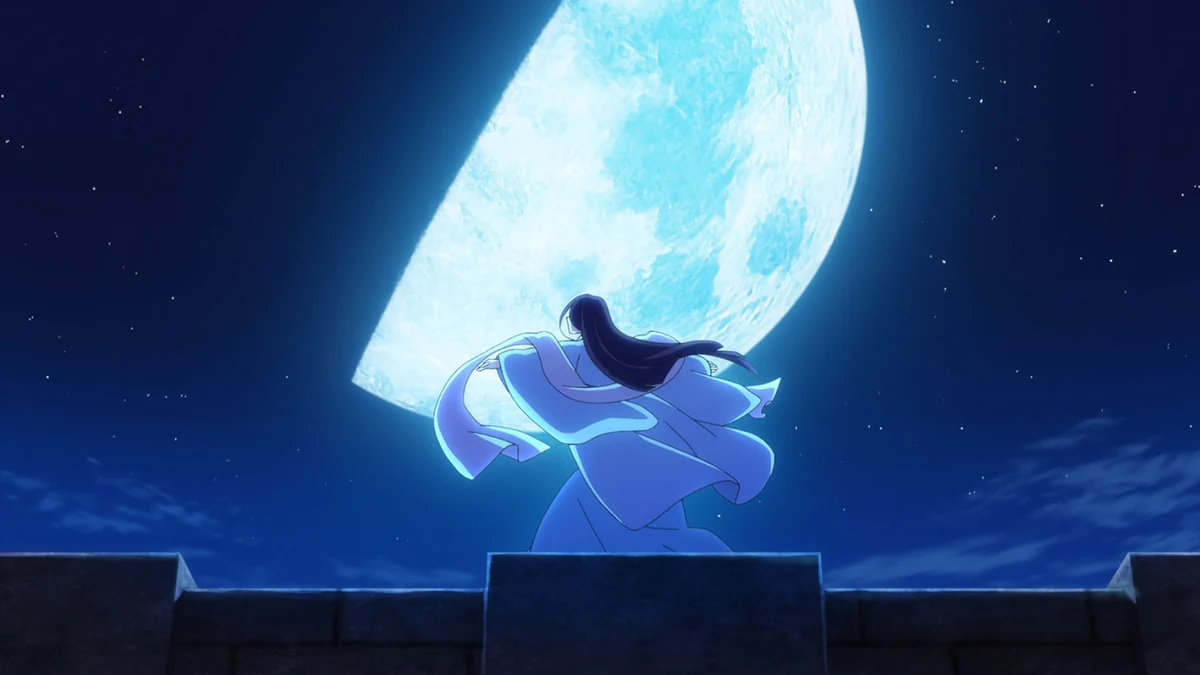
In episode 3, palace gossip says that a woman’s ghost dances on the walls at night. Jinshi asks Maomao about sleepwalking; she goes to see the woman and investigate her circumstances. The investigation changes the question: from whether the palace is haunted to what is happening to a person inside it.
Illnesses, materials and household routines offer Maomao clues, while rank affects whose explanation is heard. The medical answer can be only half the problem. In a season 1 essay for Anime Feminist, S. Chang examines how access to care depends on a woman’s place in the court.
Where does the comedy come from?
Maomao’s curiosity can defeat her intention to keep a low profile. In USA Anime’s review of episodes 1–3, Theron highlights both her fascination with poisons and the contrast between Jinshi’s charm and her unimpressed response. The reviewer also notes the small, exaggerated character drawings used for humour.
Gaoshun’s reaction makes the joke more revealing. Theron describes him asking Maomao to stop giving Jinshi disgusted looks because Jinshi enjoys them enough to become distracted. The supposedly composed official is the one being managed by his aide.
What might make it a poor fit?
The early cases ask you to follow conversations, symptoms and social circumstances. If you want fights to drive the story forward, Maomao’s work offers a different pleasure. The first three episodes introduce the medical casework and Maomao’s new duties, so they make a manageable first sample.
The teasing relationship with Jinshi may also land differently for different viewers. His power over Maomao is part of the setup, so her discomfort cannot always be read as flirtation between equals. The comedy depends on her refusing the response he expects, while the court gives her fewer choices than he has. If you want an uncomplicated palace romance, that imbalance and the cases’ darker subjects are worth knowing about at the outset.
For a compact, complete watch instead of an ongoing television story, Spirited Away also puts an outsider to work in an unfamiliar hierarchy, but does so as a two-hour fantasy film. It has frightening scenes of its own; it is not an equivalent medical mystery.
Is The Apothecary Diaries suitable for children?
For families, this is a poor choice for young children despite its comic expressions and colourful palace. Sexual exploitation, coerced service and children in danger are part of its stories. New Zealand’s Classification Office guide to seasons 1 and 2 describes sexual and suicide themes, including sexual violence.
Where should you start, and how long does it take?
Begin at season 1, episode 1. The first two seasons contain 48 episodes: 24 each. Using the Classification Office’s approximate 23 minutes per episode, allow 9 hours 12 minutes per season, or 18 hours 24 minutes for both. These are planning estimates including credits, not measured runtimes for every edition. They exclude season 3 and the separate film.
| Where you are | What to watch next |
|---|---|
| New to the series | Season 1, episodes 1–24 |
| Finished episode 24 | Season 2, starting at overall episode 25 (season 2, episode 1) |
| Finished episode 48 | Season 3, starting at its first episode |
See the season 3 news story for its Japanese release schedule.
The separate film project is not season 3. Start with the numbered television seasons; the film’s place in the story has not been confirmed in the sources linked here.
Sources
The episode summaries, profiles, reviews and content advice below reveal later events and case solutions.
- Setting and production: Nippon TV’s programme record and the official first-season introduction.
- Cases and characters: official synopses for episodes 1, 2 and 3, plus character profiles. The profiles extend beyond the starting cast.
- Viewing route and content guidance: official season 1 and season 2 indexes, plus the New Zealand Classification Office guide.
- Critical perspectives: Theron’s opening-three-episode review at USA Anime and S. Chang’s season 1 essay at Anime Feminist.
The opening image comes from the official episode 1 gallery; the body figures come from the official episode 2 and 3 galleries.