
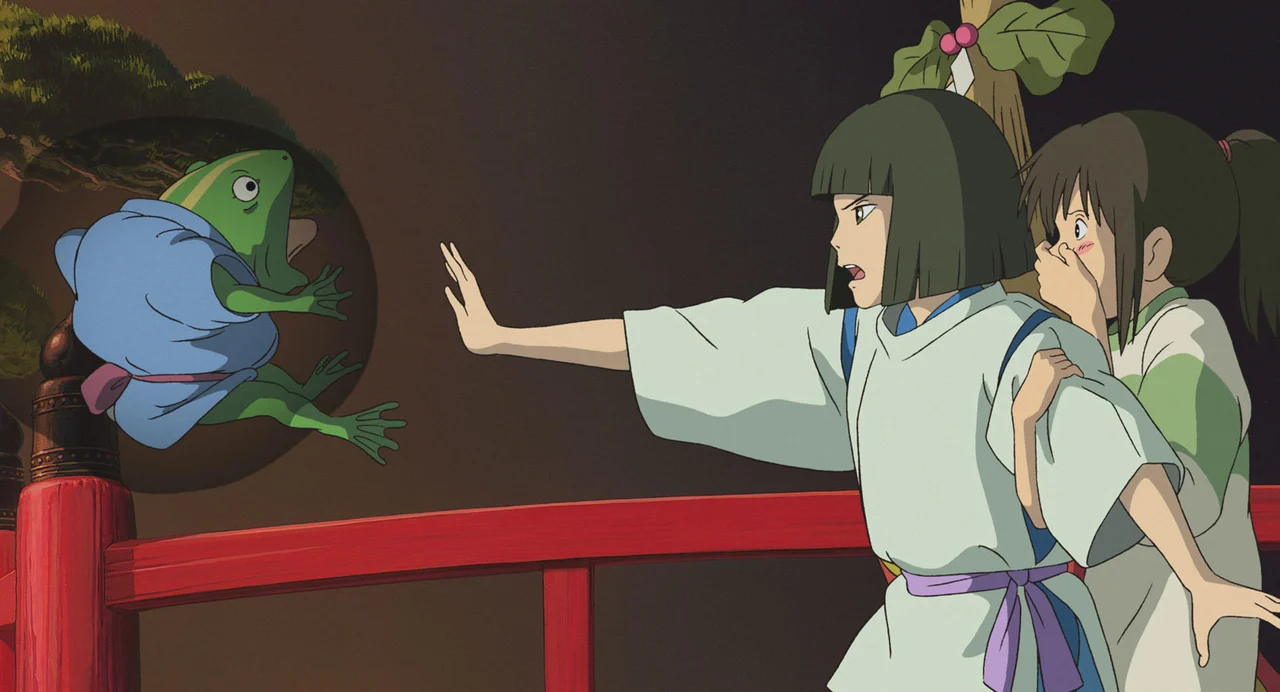
How does Chihiro end up working for spirits?
A family moving to a new home takes a detour into what looks like an abandoned village. By nightfall, the place belongs to spirits, and Chihiro’s parents have undergone a frightening transformation. She cannot rely on them to take her home; she has to find a way to free them herself.
The centre of this world is a bathhouse for spirits, run by the sorceress Yubaba. Chihiro takes a job there to survive. Work, unfamiliar customs and a powerful employer become immediate problems alongside the larger task of saving her family. A child who was a passenger on a family trip must now act for herself.
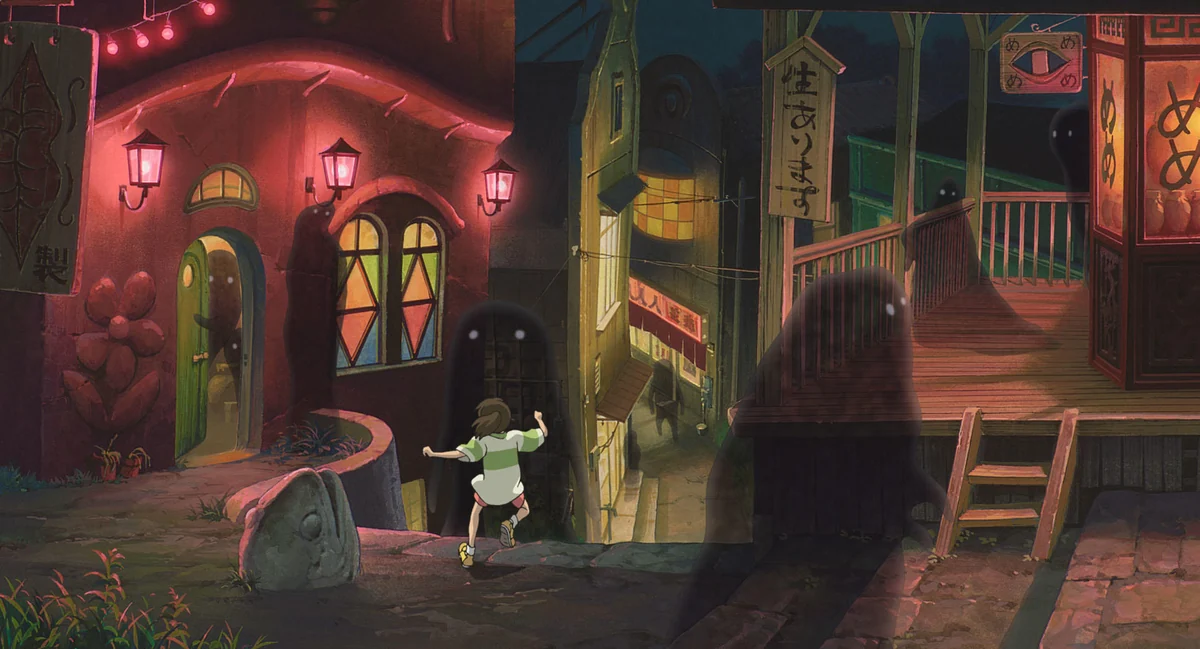
Who helps Chihiro find her feet?
Haku first helps Chihiro survive in the spirit world. He knows where she needs to go and what she needs to do, but his connection to Yubaba makes him more complicated than a guide who can simply lead her home. Lin, a bathhouse worker, offers another kind of help: an older colleague who can get the newcomer through the practical business of the place. Chihiro needs both introductions and everyday support.
The boiler operator Kamaji initially looks as intimidating as his machinery. Meeting him is part of Chihiro learning to approach someone strange without knowing in advance whether they will help. Yubaba, by contrast, controls the job Chihiro needs. The child has to negotiate with a powerful employer while relying on people who work inside the same system.
What makes the bathhouse worth exploring?
Choose it if discovering a strange place is part of the attraction. A bathhouse gives the fantasy a working environment, with jobs to do and customers to serve, rather than just a landscape to travel through. Chihiro’s rescue goal gives those discoveries a direction.
In his BFI introduction to Ghibli, Kambole Campbell recommends it as an accessible entry point, drawing attention to responsibility, work and the natural world.
How does the film mix everyday work with fantasy?
An early boiler-room encounter captures the film’s sense of humour. Chihiro helps a tiny soot worker with a lump of coal; the other workers promptly decide that she can carry theirs too. The magic has the familiar logic of a workplace where somebody else might do your job if you let them.
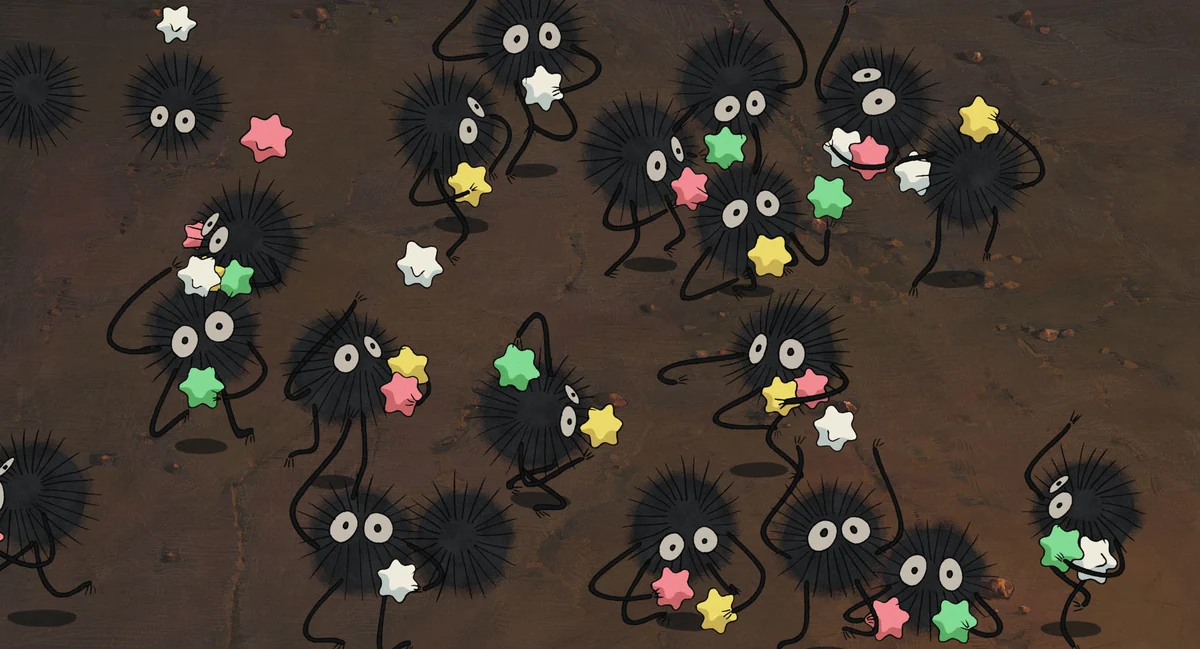
Andrew Osmond describes this incident in his Sight and Sound review, alongside the bathhouse’s boilers, lifts and densely furnished rooms. His argument is that work gives Chihiro agency. Chihiro has to learn how to deal with the inhabitants, not simply find her way through their world.
That attention to rooms, routines and new encounters also means the rescue is not a straight chase. Osmond questions how the story adds characters and strands partway through. If you want every scene to advance the same urgent objective, its detours may frustrate you. Choose it when wandering through the world is part of what you want from the evening.
James Berardinelli at ReelViews welcomes that unpredictability, finding the unexpected turns a relief from more familiar animated plots. The bathhouse is full of people whose needs can interrupt Chihiro’s plan. Following those interruptions can be as rewarding as following the rescue, provided you enjoy discovering what kind of person each encounter asks her to become.
If you want a shorter film centred on childhood exploration without a rescue quest driving its premise, try My Neighbor Totoro. Neither film is required viewing for the other.
Is Spirited Away suitable for children?
For a child who enjoys eerie fantasy, Chihiro’s discoveries offer plenty to explore. A child frightened by separation or bodily transformations may find it overwhelming. The BBFC’s UK content advice identifies threat, scary imagery and injury detail.
For a family viewing, use the BBFC’s detailed advice to judge individual sensitivities. That page contains scene details, so it is best left to the adult making the choice if you want to preserve surprises.
Which version should you watch, and how long is it?
The animated feature stands alone. Allow roughly 125 minutes, following Studio Ghibli’s original-film listing. No earlier Ghibli viewing is needed.
Select the animated feature directed by Hayao Miyazaki, first released in Japan in 2001. Spirited Away: Live on Stage is a separate stage adaptation recording, not the same viewing experience.
Sources
- Studio Ghibli: Spirited Away: Japanese release, director, approximate runtime and official stills.
- GKIDS: Spirited Away: distributor’s premise and edition information.
- Kambole Campbell’s Ghibli introduction, BFI: attributed critical perspective; its 2020 availability information is not used here.
- Andrew Osmond’s original 2003 review, republished by Sight and Sound: boiler-room example, world design and reservations about narrative detours. Contains spoilers.
- BBFC: Spirited Away: content advice; detailed entries contain spoilers.
- James Berardinelli, ReelViews: independent criticism of the unexpected story turns, plus Haku, Lin and Kamaji’s starting roles. Contains later events.