
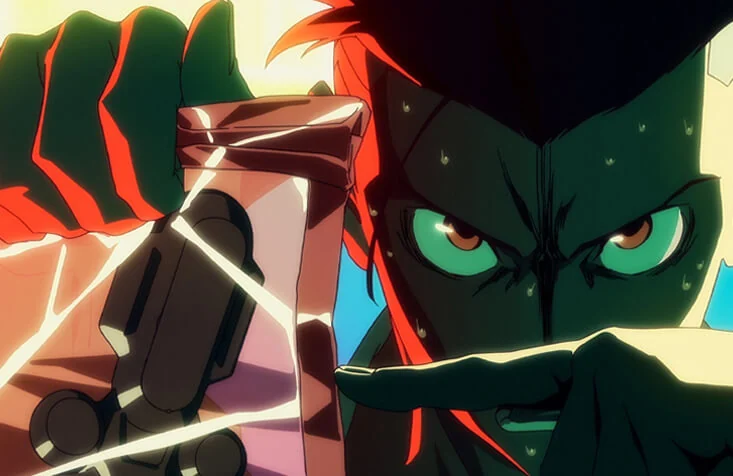
What does it take to survive in Night City?
In Night City, technology can replace parts of your body and make you stronger or faster, if you can pay for it. Huge corporations dominate this future metropolis; beneath them, people scrape together money for school, rent and basic security. A wealthy bully can buy a physical advantage as easily as an education.
That is the world of Cyberpunk: Edgerunners: a crime story about a teenager looking for a way up. Its outlaws take paid jobs outside respectable society, but they still need customers, equipment and someone willing to hire them. The crew takes orders from fixers who act for richer clients.
Why does David become an edgerunner?
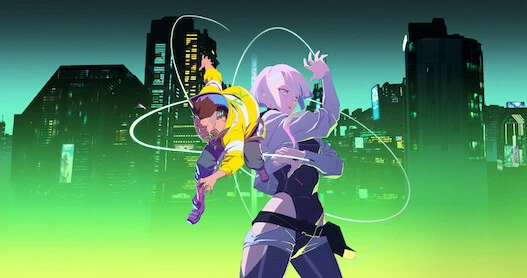
David Martinez is a bright student at Arasaka Academy, an elite school where he cannot afford to fit in. His mother, Gloria, works to keep him there. Their home life is less futuristic glamour than an overworked parent and a broken washing machine. Staying in school means enduring classmates who look down on him; leaving means giving up the future his mother is trying to buy him.
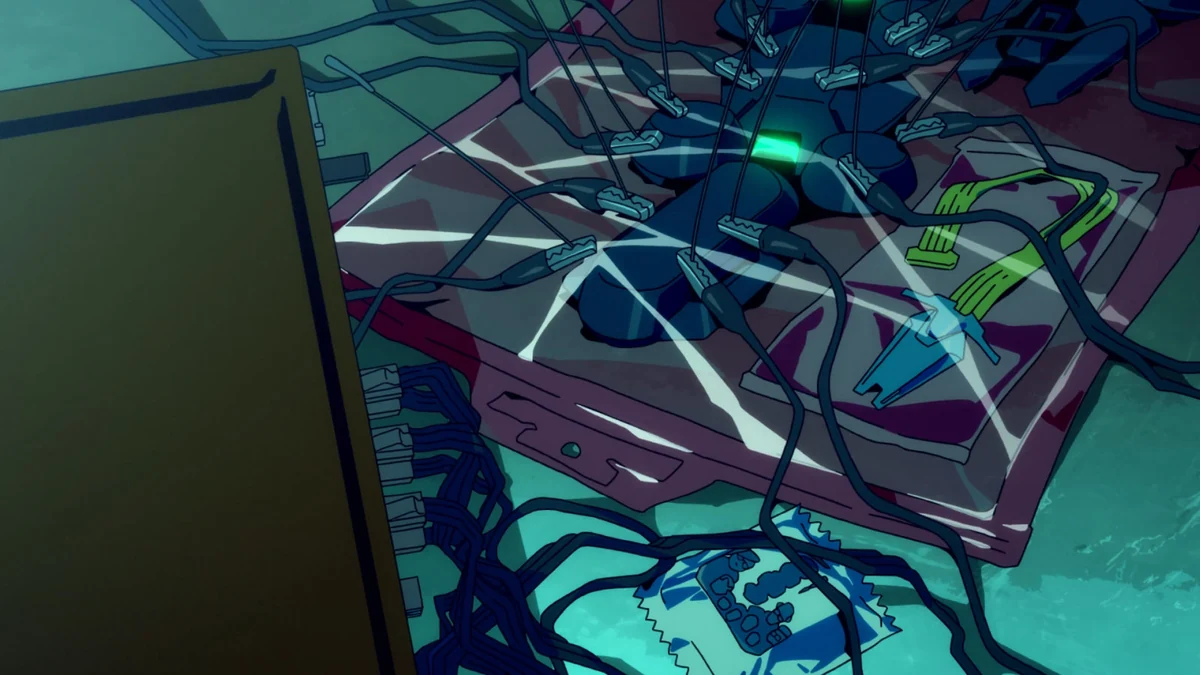
A personal tragedy breaks that precarious arrangement. David has a Sandevistan installed: an implant that gives him bursts of extraordinary speed. He uses it to turn the tables on his bully, then finds an opening among the edgerunners, mercenaries who take illegal jobs. His body becomes something he can offer a crew. For someone used to being treated as a burden, being useful is a powerful invitation.
The advantage comes with immediate costs. Overuse leaves David bleeding and unconscious, and he needs medication to keep using the implant. His first earnings help pay to maintain the very thing that lets him earn them. Episode 2 account.
Who brings David into the crew?
Lucy is a netrunner: a hacker who connects directly to systems. She introduces David to her crew and later helps train him. She is capable and guarded, with an ambition of her own: to reach the Moon. While David is trying to become someone in Night City, Lucy wants somewhere beyond it. Their growing romance brings those different ambitions into conflict.
In their early virtual trip to the Moon, Lucy lets David share the place she imagines escaping to. The change of setting matters: for a moment he can offer her his attention instead of proving what his implant can do. The relationship has something intimate to lose before the jobs and upgrades begin making bigger demands on them.

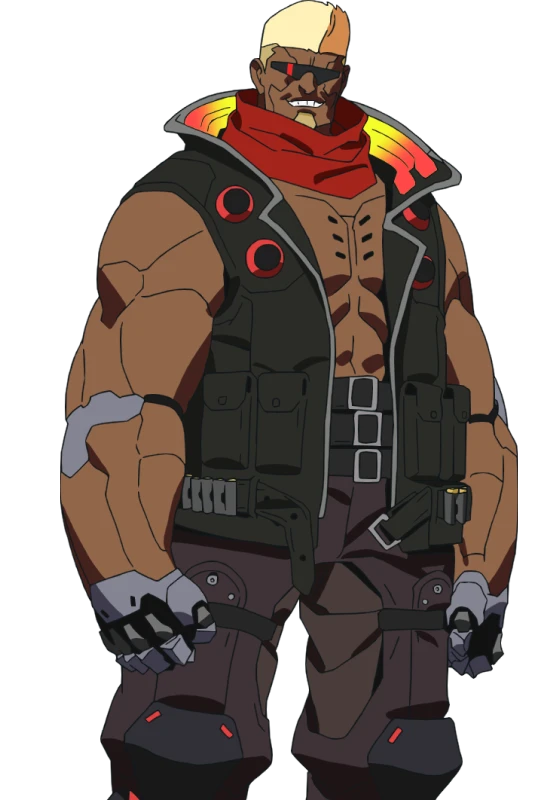
Maine leads the group and becomes David’s mentor. When the eager newcomer wants another mission, Maine puts Lucy in charge of training him: having useful hardware is not the same as knowing the work. Rebecca, a combative gunfighter, brings a more impulsive energy and fierce loyalty to her teammates. Faraday is the fixer who supplies jobs, connecting these street-level operators to the people paying for their services.
Why does getting stronger put David at risk?
The action makes power feel tempting and dangerous at once. David’s speed can win a fight, but his body still has to endure using it. More extensive augmentation also carries the threat of losing control of himself. The interesting question becomes whether he can recognise a reason to stop while success is giving him reasons to continue. Each upgrade promises more work and asks more of his body.
The harsh setting does not make every relationship cynical. Jonathon Wilson at Ready Steady Cut finds an unexpectedly sincere romance beneath the exploitation. David’s attachment to Lucy gives him something to want beyond the next job.
How does the animation show David’s speed?
David’s speed changes how the action looks. Coloured afterimages show several stages of his movement at once. In Animation World Network’s interview, director Hiroyuki Imaishi describes keeping earlier frames of a movement visible; character designer Yoh Yoshinari identifies this as a technique revived from older anime. The coloured trail lets you follow David’s path even when the other characters cannot keep up.
Does the short run give the crew enough time?
Kate Sánchez at But Why Tho? praises the early pacing but argues that later character changes need more room to develop. Big emotional turns may arrive before you find them earned. The compressed run is a drawback if you want time with the crew between jobs.
Is Cyberpunk: Edgerunners suitable for children?
This is adult viewing, with explicit sexual material as well as bodily damage. Limbs and heads are destroyed, with blood and injury detail rather than clean, consequence-free shoot-outs. If that would make the action unpleasant to watch, its visual inventiveness is unlikely to compensate. The BBFC’s UK advice gives more detail, including sexual assault.
Where should you start, and how long does it take?
Watch episodes 1–10 of Cyberpunk: Edgerunners (2022) on Netflix, subject to your local catalogue. It is a standalone story; you do not need to play Cyberpunk 2077. CD PROJEKT RED produced the series with animation by Studio Trigger. Allow about 4¼ hours: the BBFC’s ten 2022 streaming entries total 253 minutes, with timings varying by edition. That total includes the episodes’ credits and excludes the separate successor.
If you are trying it rather than committing to the whole run, the first two episodes establish the problem: David cannot afford his old life, and the apparent escape has costs of its own. They take roughly 50 minutes and show both his circumstances and the violence of the series.
Edgerunners 2 is separate. It follows a fresh crew in another standalone ten-episode story; it is not episodes 11–20 of David’s series. This introduction covers the original 2022 work. For the successor’s release information, see our Edgerunners 2 news story.
Sources
The linked recaps, interviews and reviews reveal later events, including the ending.
- Characters and opening events: official profiles, Netflix’s episode summaries and the linked episode 2 account. These destinations contain plot details beyond this introduction.
- Production and count: Netflix Media Center.
- Craft and early Moon scene: Victoria Davis’s Animation World Network interview with Hiroyuki Imaishi and Yoh Yoshinari, on the use of afterimages and the Moon sequence.
- Independent criticism: Jonathon Wilson, Ready Steady Cut, on the romance beneath the exploitation; Kate Sánchez, But Why Tho?, on strong early pacing and later compression.
- Content and duration: BBFC’s UK record, with episode-specific advice.
- Images: original-series promotional artwork from the official site and the linked August 2022 Tudum article, plus the official glossary’s Sandevistan still.