
What do the sisters find in their new home?
Satsuki and her younger sister Mei move with their father to the Japanese countryside, near the hospital where their mother is being treated. They have a new house to explore and a new neighbourhood to get used to, with the worry about their mother never very far away.
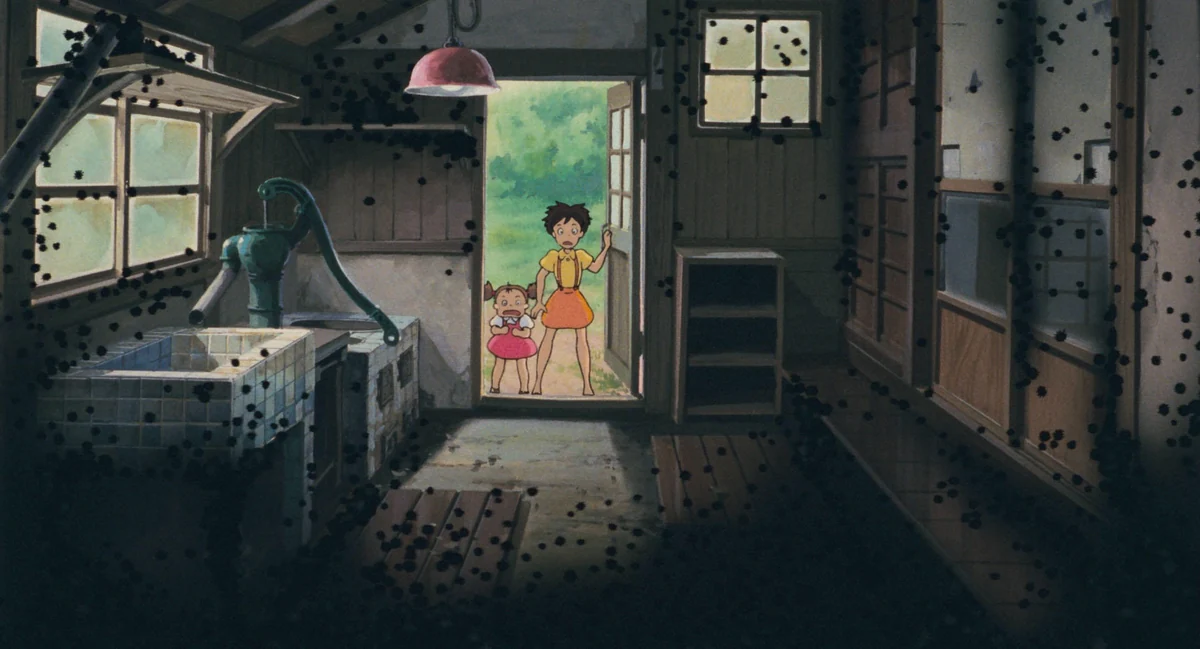
The surroundings turn out to contain more than fields and trees. Tiny creatures inhabit the house, and Mei encounters Totoro, an enormous, gentle forest spirit. Meeting him becomes part of how the sisters discover their new home, rather than the start of a mission to defeat him.
What makes exploring the neighbourhood an adventure?
A new house and a patch of woodland can be an adventure when the people discovering them are children. The girls do not need to leave their family life behind to find fantasy. The house and the woods invite attention: who lives here, what is that small creature, and where might it be going? The size of a discovery matters more than its place in an elaborate plot.
How do Satsuki and Mei experience the move differently?
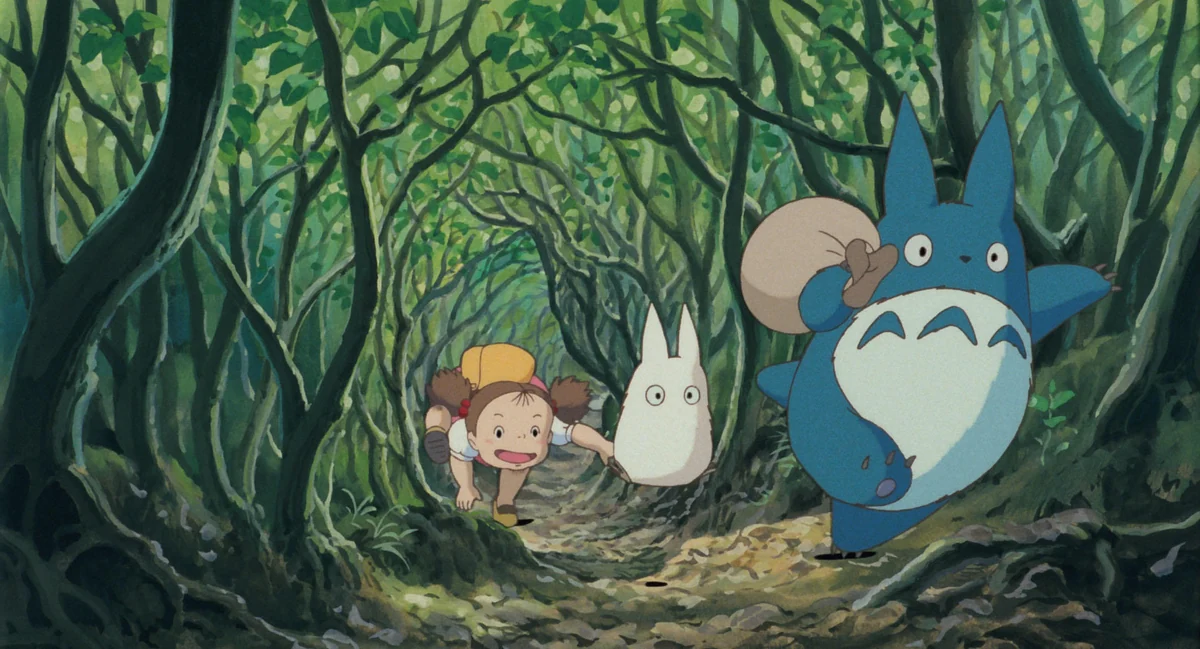
Mei can follow a small creature simply because she wants to know where it is going. Satsuki has school and the practical responsibility of helping look after her. That difference gives their shared discoveries a second meaning: the older sister needs room to be a child too.
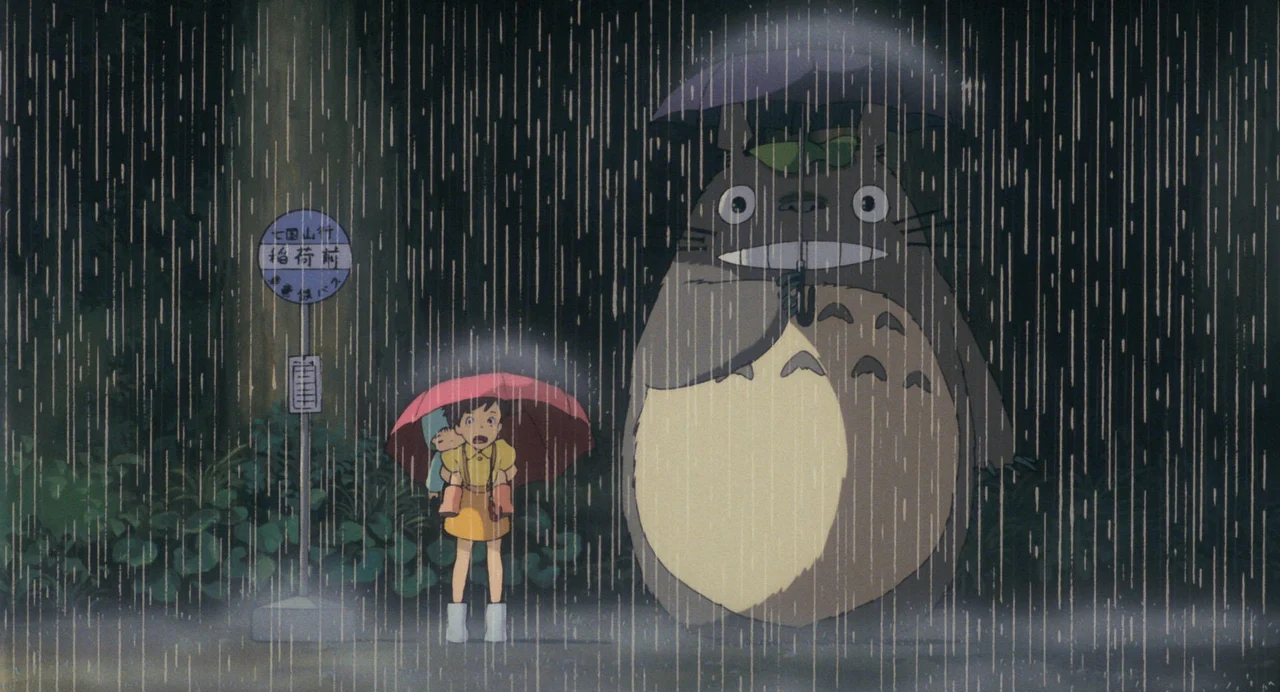
Satsuki is waiting for their father at a rainy bus stop, carrying the sleepy Mei, when Totoro appears beside them. Her encounter with him grows out of caring for someone else. Offering the creature an umbrella makes kindness the start of an unlikely friendship. Totoro meets their curiosity with his own; he can be absorbed by a small human object as completely as Mei is by him. Brian Eggert’s essay at Deep Focus Review describes Totoro’s delight in the raindrops hitting the borrowed umbrella.
Will the film’s unhurried pace suit you?
Kambole Campbell’s BFI guide emphasises the film’s willingness to pause and observe. Common Sense Media’s review likewise identifies a leisurely pace rather than an all-out adventure.
If you want a villain or an intricate mystery to organise the evening, that pace may feel aimless. Its gentle creatures also do not remove the sisters’ worry about their mother: the family uncertainty supplies the tension that an antagonist might provide in another film.
If you want a stronger goal driving the fantasy from the start, Spirited Away follows a child trying to free her parents. Howl’s Moving Castle offers romance alongside war. You can watch any of them first.
Is Totoro a good choice for children?
Totoro’s child-height discoveries make it a good family starting point when a child enjoys gentle exploration. The main concern is worry about the sisters’ mother and separation from family. Common Sense Media’s US parent guide describes a child becoming lost, creatures that may initially frighten younger viewers, and brief nonsexual partial nudity in a family bath.
If illness or separation is a sensitive subject for someone watching, read the detailed parent guide first.
Which version should you watch, and how long is it?
Studio Ghibli lists an approximate runtime of 86 minutes. This is a standalone film, with no earlier story to catch up on.
Look for My Neighbor Totoro (1988), directed by Hayao Miyazaki.
Still choosing? The three-film comparison puts time, intensity and audience fit side by side.
Sources
- Studio Ghibli: My Neighbor Totoro: original Japanese release, director, approximate runtime and official stills.
- GKIDS: My Neighbor Totoro: distributor’s premise and disc details.
- Kambole Campbell’s Ghibli introduction, BFI: attributed observation about the film’s pace and focus.
- BFI: My Neighbour Totoro: the bus-stop encounter and a critical account of its episodic storytelling; contains later plot details.
- Common Sense Media: parent guide: content considerations; includes scene and story details.
- Brian Eggert, Deep Focus Review: an account of the umbrella encounter and Totoro’s response to the rain. Contains the ending.