
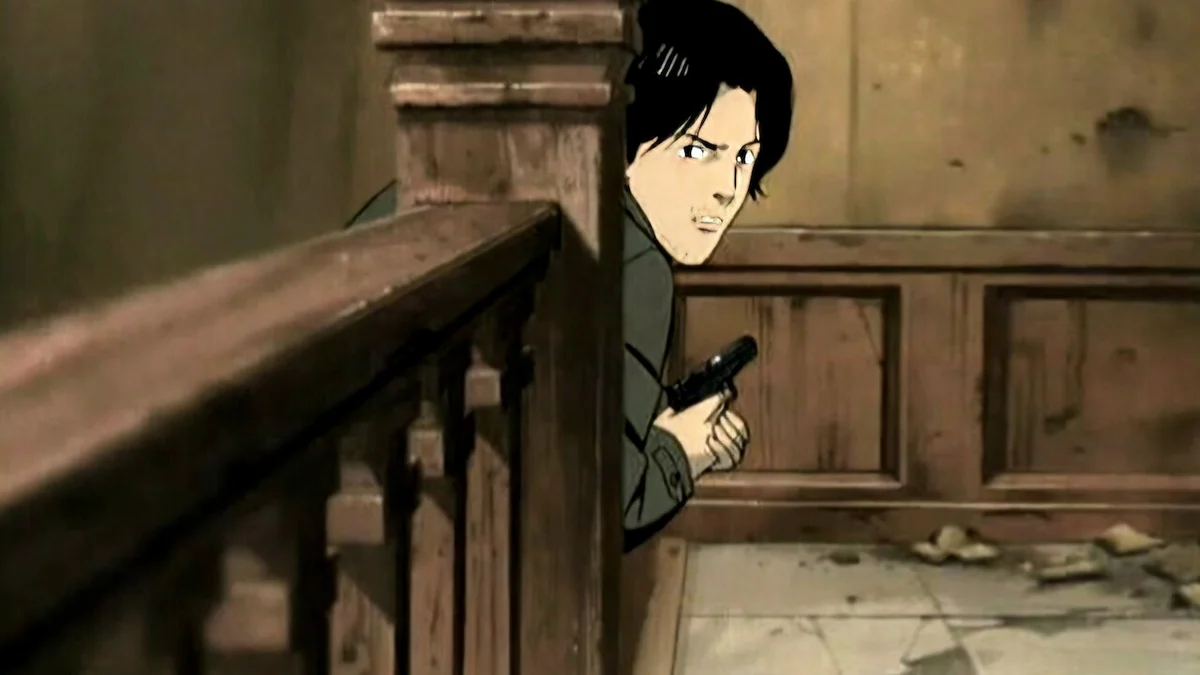
Dr Kenzo Tenma is a Japanese neurosurgeon working at a German hospital. When a wounded boy and a powerful public figure both need surgery, hospital leadership tells Tenma to prioritise the official. He chooses the child instead. That decision costs him status and alters the course of his life.
What happens when the doctor becomes a suspect?
The operating-room choice pits the patient who arrived first against the hospital’s political interests. It also disrupts Tenma’s private future. His engagement to Eva, the director’s daughter, ends as his career falls apart. The institution’s approval was part of the life he had expected to share with her, not just a matter of which office he occupied.
Then the hospital leaders who opposed him die mysteriously and his prospects improve. Detective Lunge sees a possible motive in the very reversal that benefits Tenma, although he has no evidence against him. What the surgeon experienced as punishment followed by a reprieve can look, from outside, like a reason to commit murder. Tenma cannot settle an investigation by explaining the principle that guided his operation.
Years later, killings are connected to the child he saved. The medical dilemma has become a pursuit in which Tenma’s knowledge and Lunge’s suspicions do not line up. A respected specialist used to making urgent decisions now has to reckon with somebody else deciding what his actions mean.
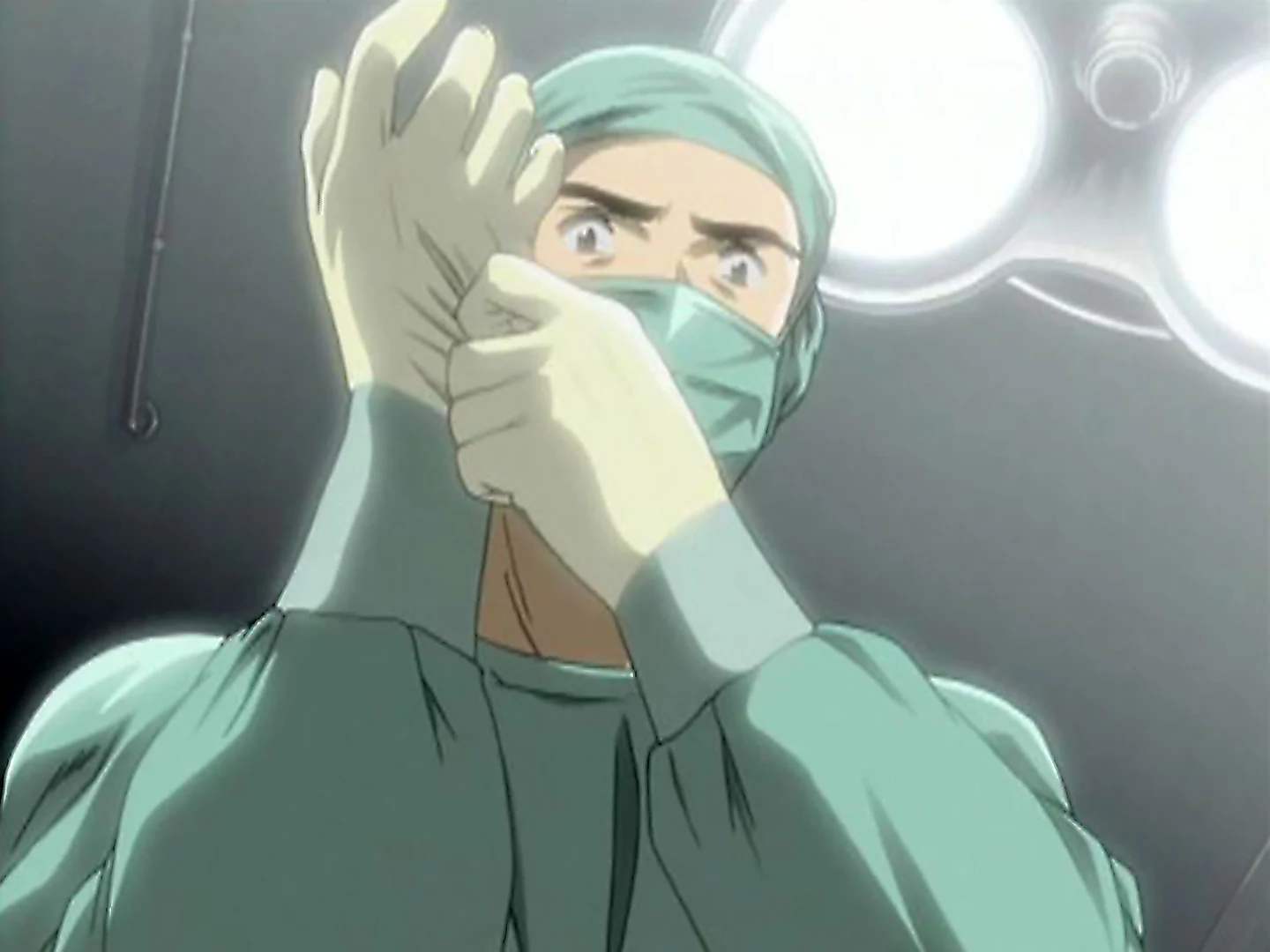
Image credits
Monster
(C)浦沢直樹(Studio Nuts)/小学館・VAP・NTV
Image sourceWhose lives does the investigation interrupt?
The early story also spends time with Nina, a bright university student in Heidelberg. Her days have an ordinary fullness: classes, activities and a part-time job. An anonymous email arrives in the middle of that routine while Tenma is elsewhere searching for a lead. Before she becomes a possible connection in his inquiry, she has commitments that make sense without him.
Nina has a reason of her own to investigate the message: she cannot remember her life before the age of ten. Hoping to recover that missing past, she goes to Heidelberg Castle to meet the sender. Her decision comes from a need Tenma’s medical dilemma cannot explain for her. The past is an absence in her own life, not merely a clue somebody else wants her to supply.
The change of viewpoint also keeps Tenma from being the only measure of the story. He is trying to follow consequences, while other people encounter events whose connection to his operation they cannot yet know. The reader’s interest can move from finding a culprit to worrying about what a stranger stands to lose.

Image credits
Monster
(C)浦沢直樹(Studio Nuts)/小学館・VAP・NTV
Image sourceWhy give an investigation this much room?
DVD Corner’s reviewer, writing as nicklyons1 about the first fifteen episodes, emphasises the interlocking subplots and consequences of past decisions. The early hospital and Heidelberg threads give that observation a concrete shape: an investigator’s suspicion and a student’s message enter from different lives before their larger significance is clear.
The attraction is the time allowed to care about those lives. The same breadth requires patience. An episode following somebody outside Tenma’s immediate view can delay a direct answer while making the question matter to another person. That is a particular pleasure of this long investigation, rather than a promise of a fresh solved case every week.
Is this a short mystery or a long investigation?
Start with episode one and follow the original 2004 television anime through episode 74. If you prefer a tightly compressed case-of-the-week thriller, the commitment may feel substantial. The length gives the doctor’s pursuit room to bring him into other people’s unfinished lives. The opening operation is the beginning of the question, not a dilemma that one correct decision resolves.


