
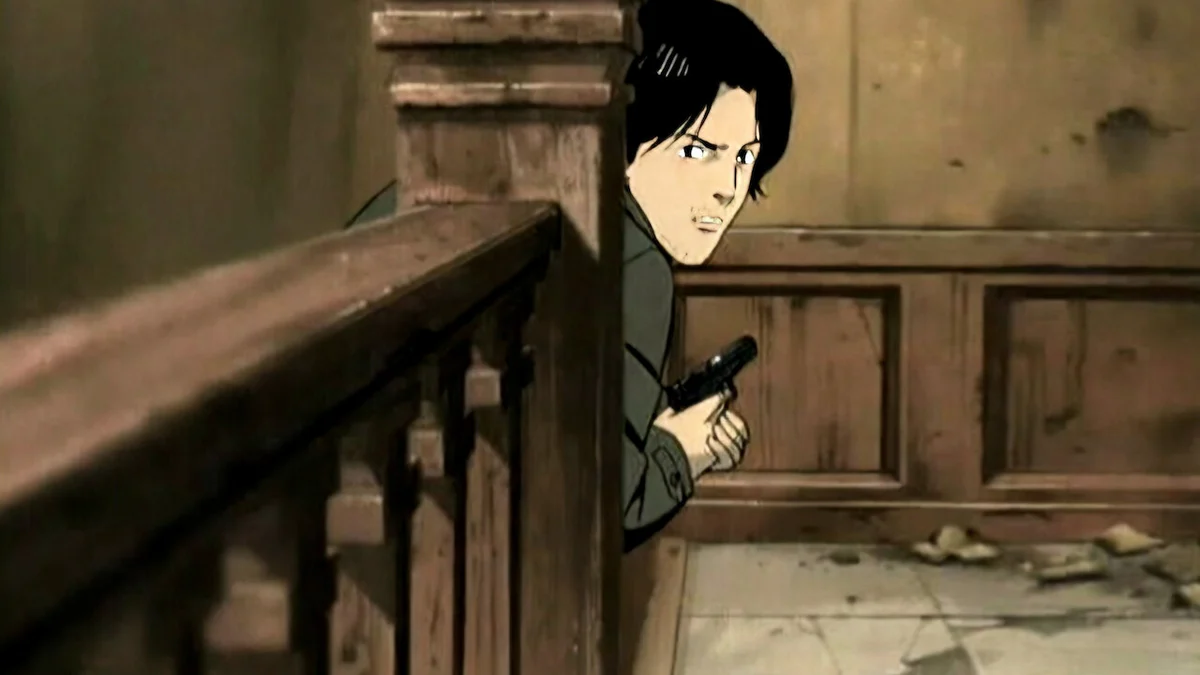
Knowing what someone can do is not the same as knowing what they have done. Monster and Perfect Blue build suspense around that gap, without making supernatural combat rules the reader’s main tool for closing it. A surgeon’s motives can be turned into grounds for suspicion; a performer’s public image can become difficult to separate from her ordinary life.
The two stories make us question different things. Monster asks whether a doctor’s conflict with his employers is evidence of a crime. Perfect Blue asks how much of a performer’s life can stay private when strangers feel they know her. Both create suspense before we know who is responsible for the danger.
Why does Tenma become a suspect?
Surgeon Kenzo Tenma refuses an order to prioritise the mayor over a child who arrived first. That puts him at odds with the hospital executives. At this point, the choice and the professional cost are understandable: his skill does not let him practise independently of the people who control his position.
The early story then changes the question. Those executives are found dead in mysterious circumstances, and BKA detective Lunge suspects Tenma without evidence to support the theory. Tenma’s understandable resentment gives Lunge a possible motive to pursue, even without proof.
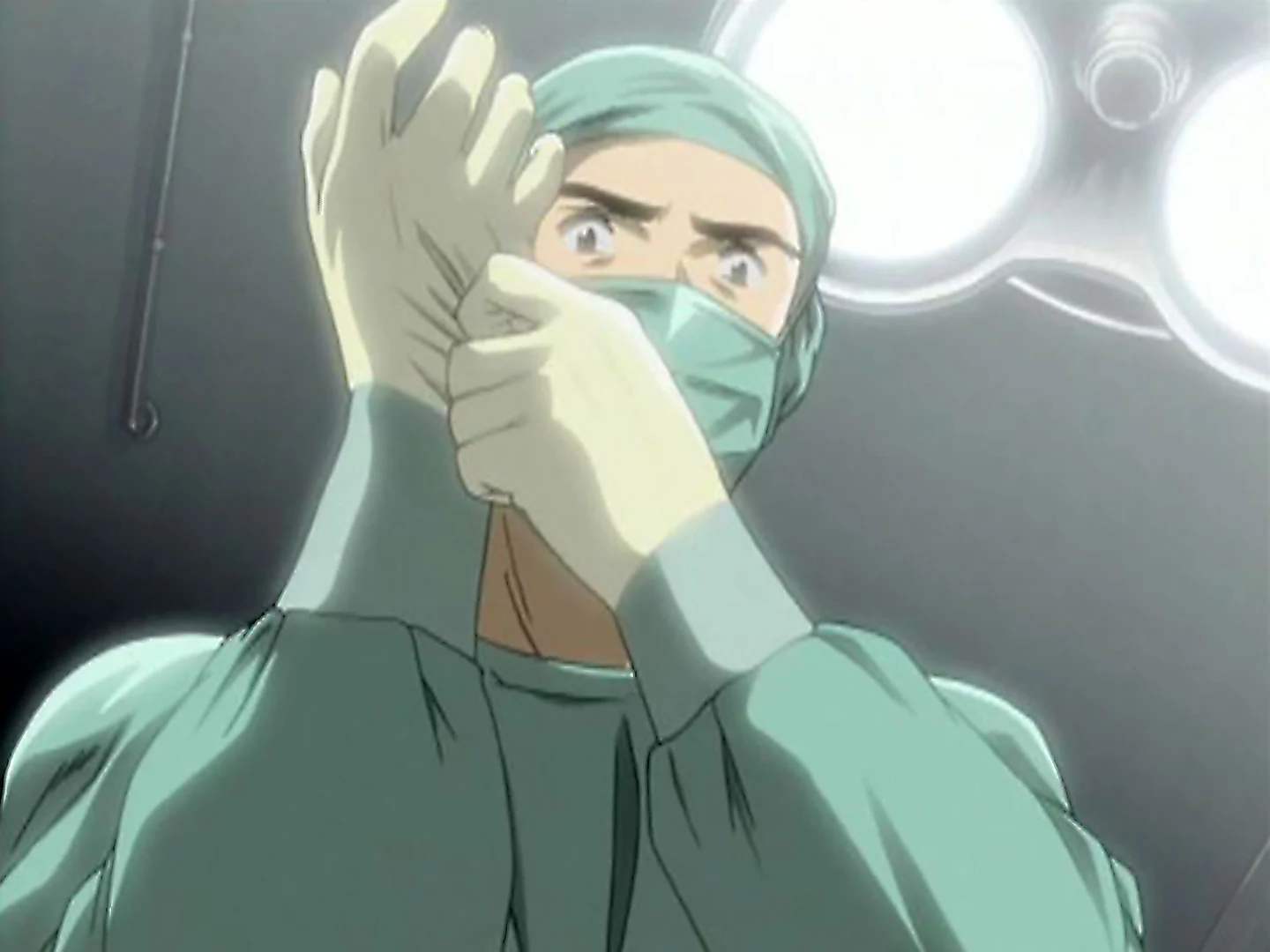
Image credits
Monster
(C)浦沢直樹(Studio Nuts)/小学館・VAP・NTV
Image sourceThis makes the institution do a second kind of work. First it can punish Tenma for refusing an order. Then that workplace conflict gives an outside investigator a reason to suspect him. What the viewer knows about his decision does not establish the cause of the deaths, and what Lunge suspects does not become proof merely because a detective holds the theory.
The surgeon cannot remove that uncertainty by being better at surgery. Professional competence answers how to treat a patient; the investigation demands an account of events and motives. Suspense grows when those questions attach themselves to the same person but require different kinds of evidence.
That is what makes Tenma’s early predicament compelling: making the right medical choice does not keep him from becoming a suspect. The 74-episode television anime has room for an extended investigation; this comparison stops at the opening suspicion, without explaining the crimes.
How does Perfect Blue unsettle the public/private boundary?
Mima leaves the pop group CHAM! to become an actress. For an audience that wants her familiar image to remain fixed, the change is not simply a new job. Public visibility gives strangers access to a version of her while giving her little equivalent knowledge of them. Stalking makes that imbalance dangerous.
The film’s construction does more than announce that problem. In his interview with Satoshi Kon, Andrew Osmond points to the opening’s cuts between Mima in concert and Mima in ordinary life. Kon explains that he wanted to place her stage work beside daily life: for her, the public and private cannot be cleanly divided.
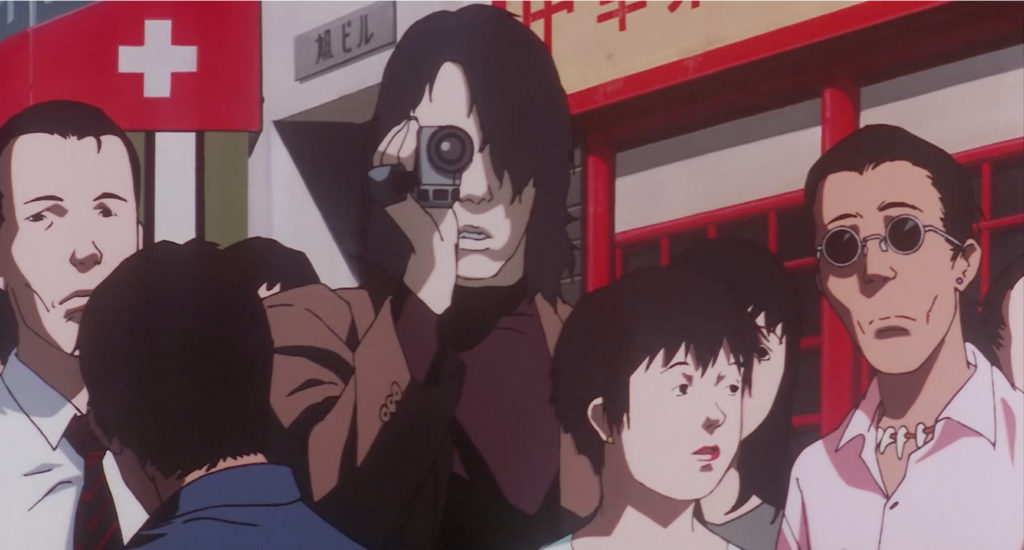
Image credits
Perfect Blue
© 1997 MADHOUSE
Image sourceThose cuts ask the viewer to connect Mima’s stage work with her daily life. The person on stage and the person carrying on afterwards are not separate identities that can be neatly filed away. As Mima tries to change her career, the film keeps bringing those parts of her life together.
Mima can learn a role, but she cannot control how strangers connect it to her own life. Some insist on seeing her as the idol she is trying to leave behind. Becoming a better actress cannot stop them from claiming to know who she really is.
Our closer Perfect Blue feature develops a later acting assignment and its cost. The opening asks us to compare public performance with ordinary life, then notice how little protection the distinction itself gives Mima. Kon explains why he placed the scenes together, without identifying the culprit or resolving every uncertain image.
Which uncertainty do you want to follow?
In Monster, the early pressure is the distance between an event, a motive and evidence that connects them. The hospital conflict is visible; the explanation of the deaths remains contested. In Perfect Blue, the opening already makes a public/private division difficult to keep tidy, and a career change gives that instability a personal cost.
Choose Monster for an investigation that can widen over a long television series. Choose Perfect Blue for a concentrated film in which the presentation of a working life is part of the suspense, while weighing its sexual violence, nudity and graphic violence before viewing.
Death Note is a useful neighbouring contrast because its supernatural mechanism adds explicit conditions to an information contest. Here, no additional combat system gives Tenma an answer to suspicion or Mima ownership of how she is seen. The suspense depends on how the hospital treats Tenma and how other people interpret Mima’s image.
Sources
Linked sources contain later story details.