

How does magic shape the Clover Kingdom?
In the Clover Kingdom, magic supports everyday life and helps decide a person’s place in society. Royalty and nobles rank above commoners and peasants; powerful magic is more common among the privileged. A talented child from a poor village still has to contend with people who think birth tells them everything worth knowing.
The Magic Knights protect the kingdom in nine squads. Above them is the Wizard King, a title awarded to the country’s greatest mage. For the boys at the centre of Black Clover, reaching that position would mean being recognised by a society that looks down on where they came from. Official world guide.
Asta and Yuno were left at a church in remote Hage village and raised together like brothers. Both want to become Wizard King. Yuno already commands wind magic; Asta cannot cast a single spell. At fifteen they attend the ceremony where young mages receive grimoires, books that strengthen their magic. Asta hopes one will finally change his situation.
What he gets is stranger: a sword that cuts through magic. It gives his physical training a use in combat, but it does not give him ordinary spells. The opening takes the boys to the Magic Knights’ entrance exam, where magical talent and social prejudice meet. They join different squads: Yuno enters the prestigious Golden Dawn; Asta ends up with the badly behaved Black Bulls. Their rivalry continues through missions, new teammates and threats to the kingdom. TV Tokyo’s opening-episode summaries.
Who are Asta, Yuno and the Black Bulls?
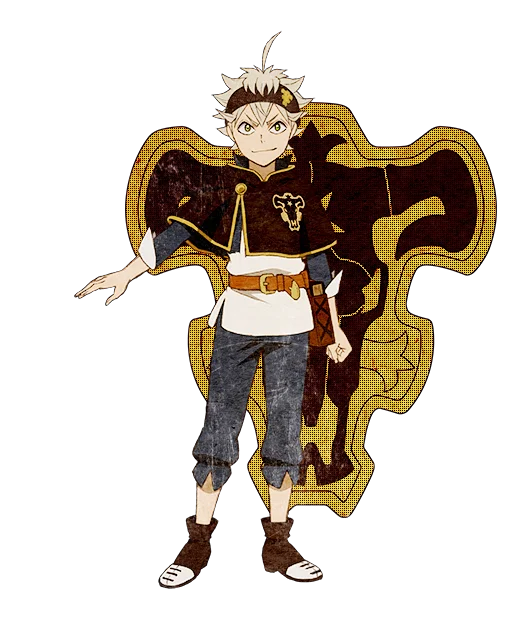
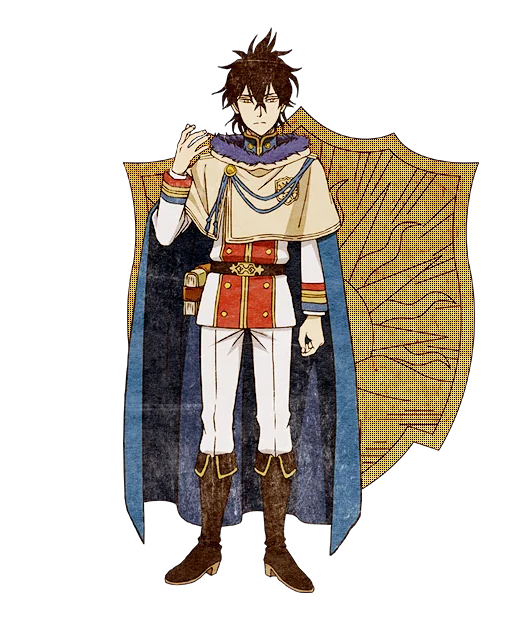
Asta responds to being underestimated by training harder and making himself heard. His anti-magic lets him challenge much stronger mages, but he still has to get his sword to the spell or opponent in front of him.
Yuno is quiet, gifted and just as determined to win. He shares Asta’s poor upbringing, so magical talent gives him an advantage without erasing the class divide. Their competition begins with a shared ambition. Yuno takes Asta’s dream seriously even when other people see only his lack of magic; being recognised by this particular rival matters more than praise from a stranger. Joining different squads lets the boys test that promise in different company.
Noelle brings the opposite problem into the Black Bulls: she is royal and has enormous magical power, but struggles to control it. Her family treats that failure as a disgrace. Asta lacks the gift everyone values; Noelle possesses it and still cannot meet the expectations placed on her. Her royal manners initially put distance between her and her teammates, even though she needs the same chance to prove herself that brought Asta here.
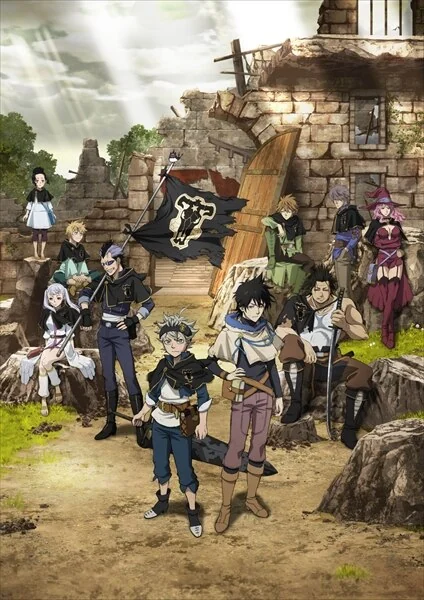
Yami, the Black Bulls’ captain, is blunt, demanding and willing to push recruits well past their comfort. He gives this unlikely group someone to answer to, and someone to rely on when things go wrong.
Why does the squad’s teamwork matter?
Asta’s sword can cancel magic; it cannot do every job in a fight. The series gives his teammates useful work beyond cheering him on. In the first village mission, Noelle protects civilians with a defensive spell while Asta and Magna face the attackers. That divides the problem: winning a fight and keeping people alive need different abilities. TV Tokyo, episode 10.
A later battle makes the combination more elaborate. Finral’s spatial magic and Vanessa’s threads help position and move Asta, letting his sword become part of a three-person attack. Their support changes how Asta can reach an opponent who would otherwise be beyond him. TV Tokyo, episode 47.
Those combinations give the Black Bulls a reason to fight as a squad. Anime UK News critic N.E.C, reviewing the first season’s final home-video volume, praised the combined squad battle and the brief backstories that give Finral and Vanessa more weight. The same review welcomed Noelle’s progress in controlling her power after finding her poorly served in the preceding volume. Read the review.
What might make the opening hard to enjoy?
Asta shouts a lot. In a review of the opening ten episodes, N.E.C found it grating and preferred the English performance, while noting that it remained loud. If the Japanese performance is the obstacle, sampling the dub is a practical option. It will not change Asta’s personality or turn this into a quiet fantasy. Opening-volume review.
The setup will feel familiar if you know other battle anime: determined outsider, gifted rival, competitive squads and a distant top rank. Dee’s premiere review at Anime Feminist finds that familiarity limiting, while crediting the clear setup of the kingdom’s class divisions. N.E.C found the early social theme underexplored, and was more persuaded when episodes 11–19 developed it through the cast. The same review criticised uneven animation in that later volume. Episodes 11–19 review.
Start at episode 1 and decide whether you want more of these people. If you are interested but unsure, the first mission concludes by episode 10 and gives you a better sample of the squad than the entrance exam alone. That is an optional stopping point, not ten episodes of homework. Do not keep watching purely because someone promises a much later fight will repay your patience.
How long is the original run, and where should you start?
The original 2017–2021 television run has 170 episodes. At an assumed 24 minutes per episode, that is about 68 hours. Our shorter watch route retains 153 episodes, or roughly 61 hours, and explains each optional skip and where to resume. Both estimates include openings and endings and exclude the film and continuation; they are planning figures, not measured totals for every edition.
Start with episode 1 of the 2017 series. Reaching episode 170 does not finish Asta’s whole story. The original broadcaster’s archive ends there, with the characters preparing for further conflict.
For a first watch, leave the optional film, Sword of the Wizard King, until after that run. Netflix describes it as a standalone story, so there is no need to interrupt the series to fit it in. Netflix’s film explainer.
The television continuation is titled Black Clover 2nd Season (2026). Do not confuse that with an older streaming service’s “season 2” division of the original episodes. See the continuation’s news story for the Japanese schedule, and check your service’s listing for local episodes and languages.
Where can you watch the original trailer?
Original television series · Japanese promotional video (2017) · avex pictures
Loading the player connects to YouTube. The trailer does not play automatically.
Is Black Clover suitable for children?
For family viewing, the teamwork and underdog story come with bloody fights, deaths, sexual jokes and revealing outfits. Check Common Sense Media’s US parent guide before choosing it as a long-running adventure for a child.
Sources
Episode archives and reviews below contain later plot details.
- World and cast: official world guide and original profiles for Asta, Yuno, Noelle and Yami. The profiles include later details.
- Episode examples and original run: TV Tokyo’s opening episodes, episode 47 and episode archive.
- Critical observations: N.E.C at Anime UK News on episodes 1–10, 11–19 and the first season’s final home-video volume.
- Independent premiere criticism: Dee at Anime Feminist, on the familiar setup, social divisions and Asta’s behaviour.
- Viewing estimate: Apple TV’s Indian episode listings list opening episodes at 23–24 minutes. The 24-minute allowance is a planning estimate, not an exact runtime for every episode or edition.
- Film: Netflix’s film explainer. Continuation developments are covered in the linked News story.
- Content guidance and trailer: Common Sense Media and the original official video page.