
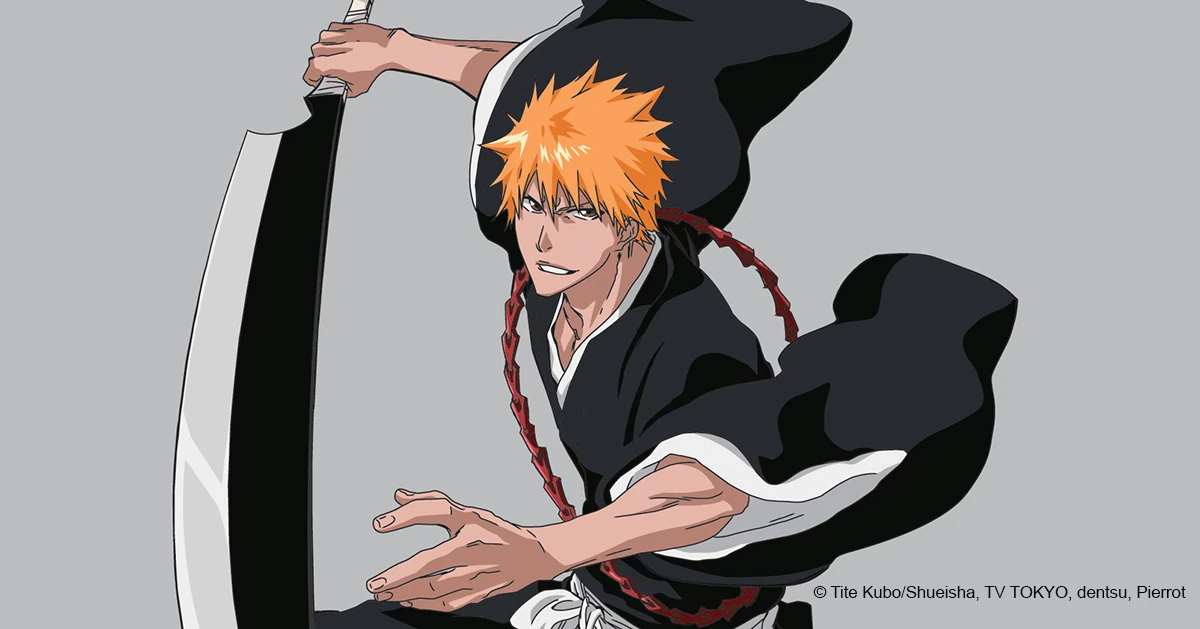
In Bleach, ghosts share the streets with people who usually cannot see them. Some need help reaching the afterlife; others become Hollows, dangerous spirits that prey on the living and the dead. Soul Reapers carry swords to confront those threats and guide souls onwards. Behind their work stands Soul Society, a spirit world with its own authorities and rules.
Ichigo Kurosaki is a fifteen-year-old who can see what his neighbours cannot. When a Hollow attacks his family, the Soul Reaper Rukia Kuchiki lends him her power. He takes far more than she intended, leaving her unable to do her job. Now the teenager has the strength to protect people, and a responsibility he never applied for.
The original anime has 366 episodes, followed by Thousand-Year Blood War. For the episode route, go to the Bleach watch guide.
Why do Ichigo and Rukia need each other?
Their arrangement keeps the early story from being a simple lesson in getting stronger. Ichigo has the energy Rukia needs, but she understands the spirits, equipment and obligations that come with it. He cannot replace that knowledge by swinging a bigger sword. She has to teach someone who did not volunteer to spend every evening following her instructions.
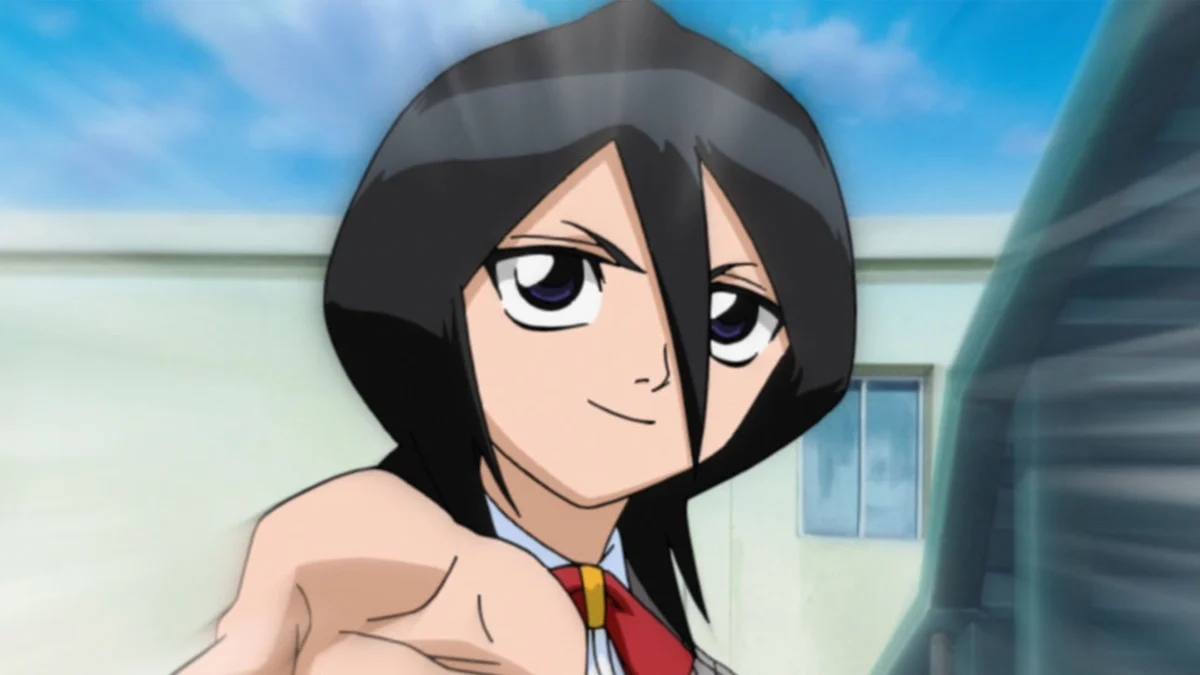
Rukia also has to live among people. In episode 2 she turns up as a new student at Ichigo’s school, bringing the consequences of the previous night into his ordinary day. The comedy comes from the same problem as the danger: neither can simply go back to the life they had before meeting.
What makes the early ghost stories personal?
The early cases show what Ichigo is protecting. A Hollow may be someone’s lost relative. A seemingly ordinary animal may carry a human soul. Removing a threat and understanding what happened to the person behind it are different tasks.
Ichigo’s friends bring that danger closer. Orihime Inoue’s family history becomes part of an early haunting. Yasutora Sado, usually called Chad, gets involved after taking in a parakeet with a spirit attached to it. These are classmates with lives outside Ichigo’s new job; they are not safe just because they cannot see everything he sees.
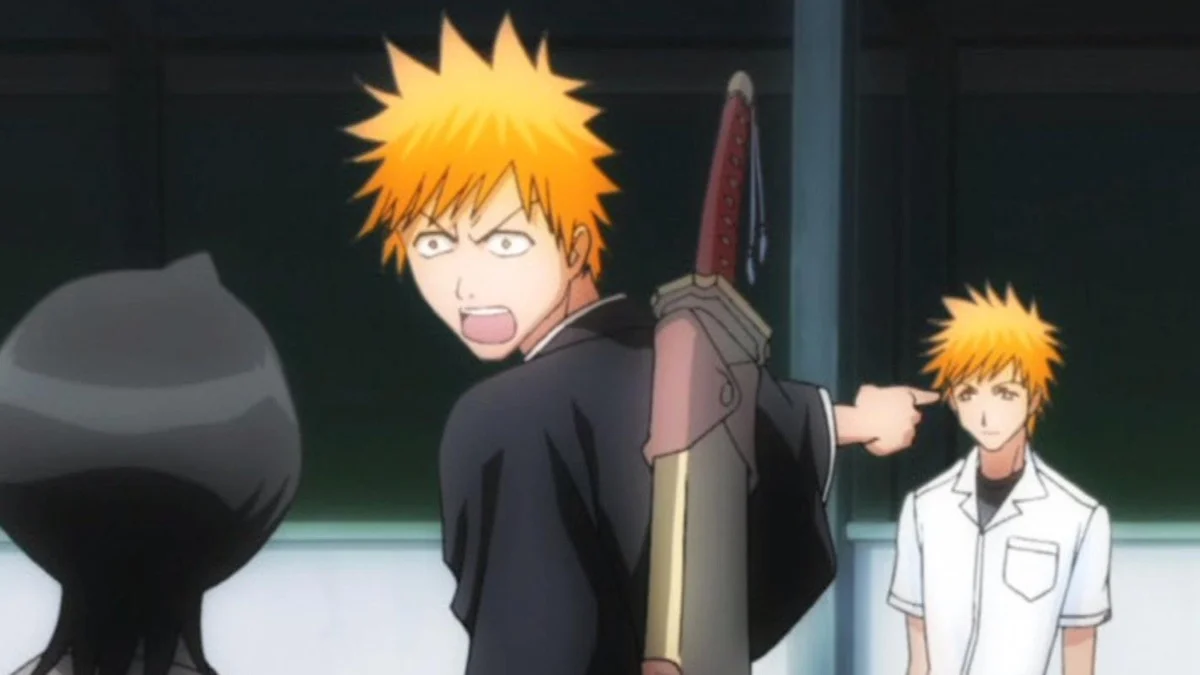
In episode 5, Chad works with Rukia against a Hollow he cannot see: she can identify the danger but has not recovered her power, while he has the strength to help. Their cooperation gives both characters a job that Ichigo cannot simply perform for them.
Uryu Ishida, another classmate, complicates the idea that Soul Reapers are the only people equipped to deal with spirits. He is a Quincy, a human who fights Hollows with a different tradition, and he distrusts Soul Reapers. His challenge to Ichigo brings competing beliefs into what initially looked like a new job with a single set of rules. The expanding group matters because each person has a different reason to help, argue or hesitate.
How does the story expand into Soul Society?
The series does not stay with a different ghost each week. Soul Society’s rules eventually put Ichigo’s loyalty to Rukia in conflict with the organisation she serves. Knowing that Soul Reapers protect people does not tell him whether their authorities are always right.
A favour between two people becomes a confrontation with an entire institution. Ichigo has to decide how far he will go for Rukia when the people pursuing her are supposed to protect souls too. The cost is that the intimate ghost stories become one part of a much larger action series. If those smaller mysteries are all you want, do not expect the whole run to keep the opening’s structure.
Ryan’s review of the first thirteen episodes at Anime UK News praises how the opening explains its spirit world while keeping some of its mysteries intact. Try those early cases for Ichigo and Rukia’s partnership before committing to the later rescue arcs.
Casey Covel’s review of episodes 1–20 at Geeks Under Grace admires the character introductions but finds the early conflicts too straightforward and the larger direction slow to emerge. The mixture of school comedy, grief and individual hauntings needs to hold your attention before the wider conflict arrives.
The viewing route needs more care once the story expands. The original broadcast includes lengthy anime-original stories, sometimes inserted while another conflict is underway. You can keep them for more adventures with the cast or skip selected blocks to stay closer to the manga’s route. Our watch guide explains the consequences and keeps mixed episodes.
How much should you sample?
Start at episode 1. Episodes 1–5 introduce the partnership and give Orihime and Chad a personal stake in the supernatural world. At an assumed 24 minutes each, that is about two hours: enough to assess the tone without promising yourself the whole franchise.
If you already like the cast but want a larger objective, the first twenty episodes build towards the rescue story, and episode 21 begins the Soul Society infiltration. Watch towards it in order if you are enjoying the company: the relationships established in the opening make the larger mission matter.
Where should you start, and what follows the original series?
Begin with Bleach, the 2004 television anime, episode 1. Thousand-Year Blood War follows it; the long gap before its 2022 start does not make it a remake. The broadcaster’s series history distinguishes the 2004–2012 original from the later adaptation of the final story arc.
| Part of the anime | How it fits |
|---|---|
| Bleach · 2004–2012 Original episodes 1–366 | Start here. Watch every episode, or use the linked guide for optional detours and return points. |
| Thousand-Year Blood War · from 2022 | Continue after original episode 366. Begin at the continuation’s episode 1, then follow The Blood Warfare, The Separation, The Conflict and The Calamity in order. |
| The four animated films | Optional side adventures. For a first watch, leave them until after the original series; you do not need them before the television continuation. |
VIZ lists 366 original episodes. At roughly 24 minutes each, that is about 146 hours for the original run alone, including openings and endings. Thousand-Year Blood War and the films add more time. The guide has a shorter original-series route and explains what it leaves out; this is not a 366-episode total for the entire franchise.
The continuation has its own numbering. Follow its named parts rather than assuming a streaming service’s “season 1” means the beginning of Bleach.
Check that the listing includes the 2004 original, not only Thousand-Year Blood War.
Is Bleach suitable for children?
The original series combines jokes and school life with ghosts, deaths and bloody sword fights. It is a poor choice for a child who finds hauntings or injury imagery upsetting; Common Sense Media’s US original-series guide details those concerns.
The later series is more graphic. BBFC’s UK continuation advice records strong bloody violence and dismemberment; its detailed entries contain spoilers.
Sources
Episode summaries and reviews below reveal story developments.
- Premise and opening cases: TV Tokyo’s first-ten-episode summaries and series history, plus VIZ’s first-part synopsis.
- Original count and viewing estimate: VIZ’s Bleach catalogue lists 366 original episodes. Its first Blu-ray set lists 648 minutes for episodes 1–27, supporting the 24-minute planning allowance; that is not a measurement of all 366 episodes.
- Critical perspective: Ryan, Anime UK News: Bleach Volume 1, covering the first thirteen episodes.
- Another review: Casey Covel, Geeks Under Grace: episodes 1–20, on memorable introductions but limited early development and direction.
- Sampling boundary: Studio Pierrot: Soul Society infiltration, episodes 21–41. The archive contains extensive arc spoilers.
- Content guidance: Common Sense Media on the original series and BBFC on Thousand-Year Blood War.
- Images: opening artwork from VIZ’s original-series Blu-ray article; body figures from Apple TV’s original-series listings for episode 2, “A Shinigami’s Work” and episode 6, as credited beneath the figures.