
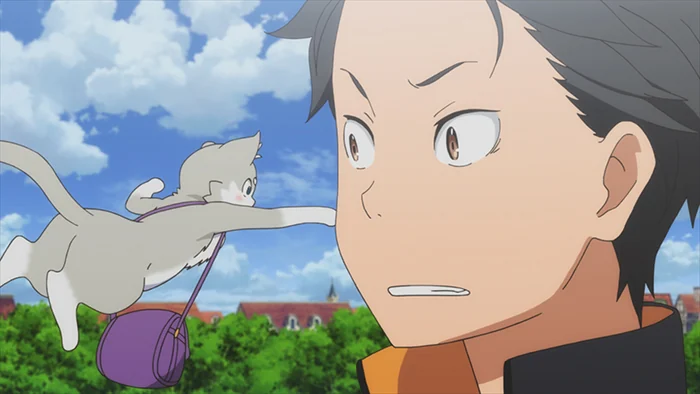
Isekai means “another world”. In anime, it usually describes someone leaving a familiar life and having to live under another world’s rules. They might be transported there, reborn there, or trapped in a world they expected to visit briefly.
The useful question is what the crossing changes. Does the newcomer lose their old home, gain a different body, or discover that the way back has closed? A virtual world complicates the definition because it can become someone’s whole daily existence while their body remains at home. A trapped-game story such as Sword Art Online therefore tests how broadly the label applies.
The key distinction is between a fantastic setting and the experience of entering one. A person born among wizards does not become an outsider from another world simply because the audience needs the magic explained.
How do the four beginnings differ?
| Work | What changes at the start? | What the label helps you understand |
|---|---|---|
| Re:ZERO | Subaru leaves an ordinary trip to a convenience store and finds himself in an unfamiliar fantasy world. | A transported outsider must learn how to act without the knowledge he took for granted at home. |
| That Time I Got Reincarnated as a Slime | Satoru dies and begins another existence as a slime. | Reincarnation changes his body as well as his surroundings. |
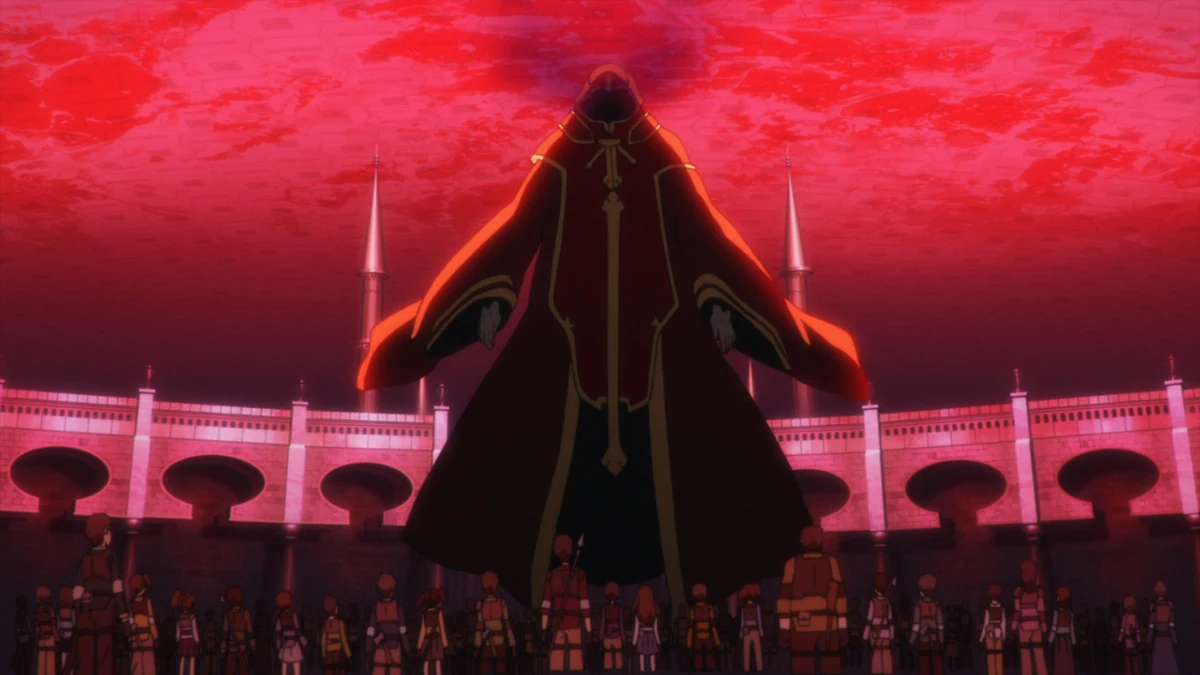
| Sword Art Online, Aincrad | Players enter a virtual game and discover they cannot log out. | Being trapped changes a game from recreation into the place where life must be lived. Its classification as isekai depends on how broadly “another world” is used. |
| Black Clover | Asta grows up in a kingdom where magic shapes opportunity, without magic of his own. | He is excluded within his home world. “Fantasy” describes this premise more precisely than our newcomer-to-another-world definition of isekai. |
In Sword Art Online, Aincrad is the setting of the first story: a virtual castle whose floors the trapped players must clear. The table covers that opening, rather than every later storyline.

Does isekai always mean reincarnation?
Transported and reincarnated protagonists both have a previous life to compare with the new one. The comparison can give them useful knowledge, but it can also give them expectations that fail.
Re:ZERO makes that failure explicit at the beginning. Subaru expects the special treatment of an adventure hero; the first-episode synopsis in the official season-one archive instead describes him being beaten by local thugs without the extraordinary strength he anticipated. He has entered another world, but it has given him no immediate advantage in a fight.
He also needs other people. A girl helps him when his expectations fail, and he joins her search for a stolen possession. Demelza’s season-one review at Anime UK News describes that first attempt to repay a kindness. The new world already has people with their own problems; Subaru’s arrival does not make those problems revolve around him. The opening uses his familiarity with adventure stories to make his actual ignorance more uncomfortable.
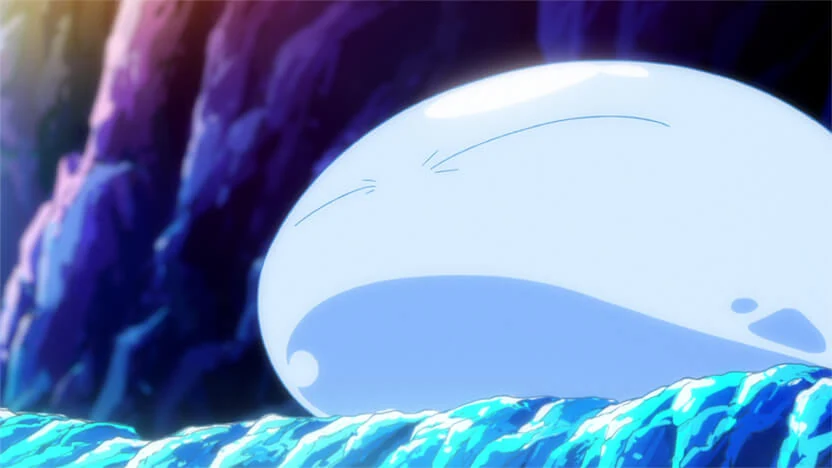
Reincarnation adds a separate question: how much of the old self survives a new body? The opening of That Time I Got Reincarnated as a Slime makes that question literal. Satoru dies as a human and awakens as a slime. He must work out what this body can do as well as where he is.
That change supplies physical comedy as well as a fresh start. Caitlin Moore’s Anime Feminist premiere review describes the former office worker rolling around and absorbing magical plants before meeting a dragon. His human memories survive in a form that cannot carry on his old routines. Subaru must revise his expectations of the world; Satoru has to revise his expectations of his own body.
Is Sword Art Online an isekai?
The Aincrad setup contains both sides of the debate. The characters are trapped somewhere with its own rules, stakes and daily life. Their physical bodies, however, remain in their original world. If a separate physical reality is essential to your definition, a virtual game will not qualify. If the story’s displaced experience matters most, the comparison is useful.
Even publishers use the broader label: Yen Press categorises the first Aincrad novel as isekai, alongside science fiction.
Do you need levels, a game or an overpowered hero?
No. Those devices can accompany the crossing, but they answer different questions. A level measures a character’s progress. Reincarnation explains how a person acquires another life. A portal connects places. One story can use all three, while another can build its fantasy around a job, a family or the search for a way home.
Consider Spirited Away. Chihiro enters a spirit world and has to find work in a bathhouse while trying to help her parents, as GKIDS’s film introduction explains. She has no character-creation screen or combat-level target. The unfamiliar workplace, its residents and the danger to her family are enough to drive the adventure. Paul Price’s study of isekai manga and fantasy categories uses the film as an example of a portal-quest story.
Conversely, Black Clover’s official world guide describes the society Asta belongs to: a kingdom of magical ranks, grimoires and knight squads. Asta’s disadvantage is that he has no magic in his own world. A distant country or unfamiliar dungeon would not, by itself, make him a visitor from another reality.
The term has broader uses too. Price’s study includes immersive stories set wholly inside fantastic worlds, alongside portal journeys and stories in which the fantastic enters ordinary life. Its categories describe a wider field than the newcomer-centred definition used here. A disagreement over whether a series counts can therefore be a disagreement about the definition, rather than its plot.
Does the label tell you the tone?
Tone needs a separate check. The soft blue body in Slime’s still does not tell you that its premiere begins with a fatal stabbing; Moore’s review specifically contrasts that violence with the later creature comedy. Re:ZERO’s colourful streets likewise do not make Subaru’s life there safe. “Another world” can introduce wonder, comedy or distress, and a single series can move between them.
Sources
Official archives and full reviews can reveal later events when opened.
- Re:ZERO season 1, episode 1: Subaru’s arrival and his failed assumptions about his abilities.
- That Time I Got Reincarnated as a Slime, episode 1: Satoru’s death and new body.
- Sword Art Online, Aincrad episode 1 and Yen Press’s first novel listing: the trapped-game premise and the publisher’s genre classification.
- Black Clover’s official world guide: the kingdom Asta grows up in.
- Paul Price, “A Survey of the Story Elements of Isekai Manga”: a broader scholarly classification, including stories set wholly in a secondary world.
- Demelza, Anime UK News, Re:ZERO: Subaru’s early attempt to help the girl who helped him; full season-one review.
- Caitlin Moore, Anime Feminist, Slime episode 1: the premiere’s new-body comedy and the violent death preceding it.
- GKIDS, Spirited Away: Chihiro’s bathhouse job and family rescue premise; the film illustrates a portal journey without game mechanics.