
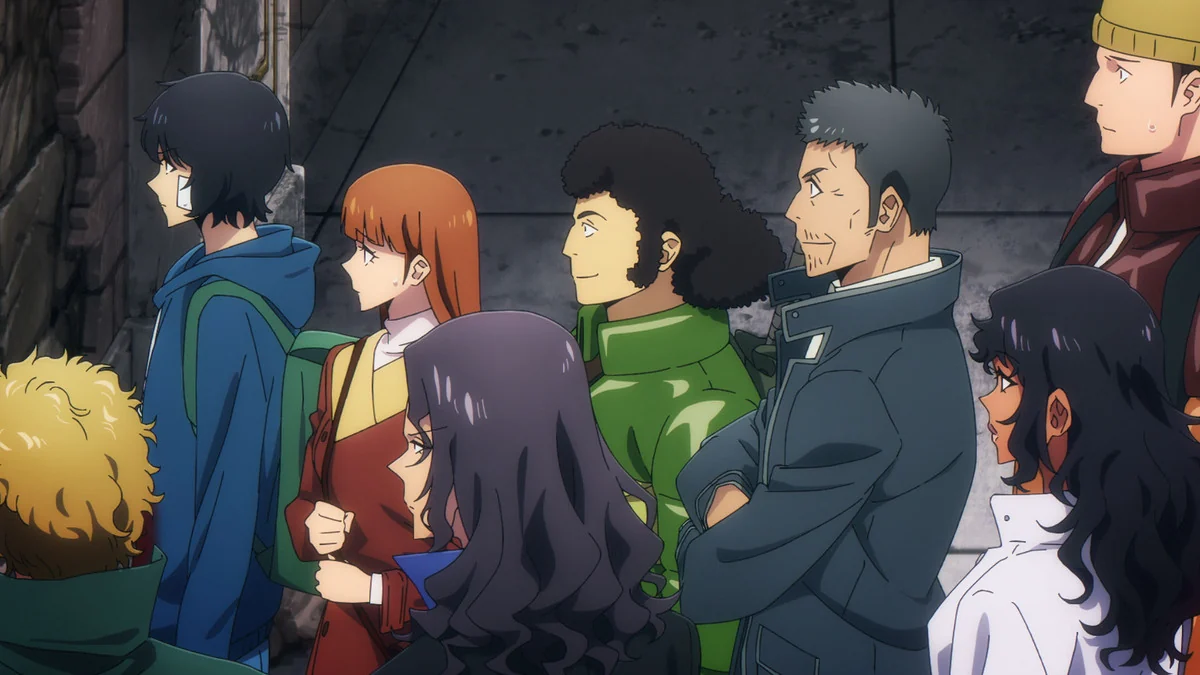
In Solo Leveling, a hunter’s rank is normally a ceiling. Sung Jinwoo gains something more valuable than a strong starting position: the ability to keep improving while almost everyone around him remains bound by that ceiling. Across two seasons, the show turns that difference into an effective source of anticipation. First comes the question of what he can survive. Later comes the pleasure of seeing other people discover how badly they have underestimated him.
That change makes this a rewarding action series for viewers who enjoy accumulating power and conspicuous payoffs. It also narrows the battles. Other hunters increasingly struggle to contribute on Jinwoo’s terms. Away from combat, his friendship with Yoo Jinho gives him someone to plan with, depend on and occasionally find exasperating. Those ordinary exchanges become welcome breaks from the mounting astonishment at his strength.
Early progress comes with obligations
The opening gives Jinwoo something to escape before it gives him something to collect. He is a weak hunter doing dangerous work to support his family. Injuries are not exciting proof of toughness when they threaten his ability to earn anything at all. That makes the arrival of the System more appealing than a random upgrade attached to an already comfortable life.
The System does not simply announce that the hero is special. Its daily exercise quest has a punishment, and its tasks demand compliance without explaining the larger purpose. Those early mechanics connect power to a schedule and an obligation. Improvement feels useful, but the authority granting it has not earned trust. The official episode 3 synopsis establishes the private interface; Crunchyroll’s episode account details the task and penalty.
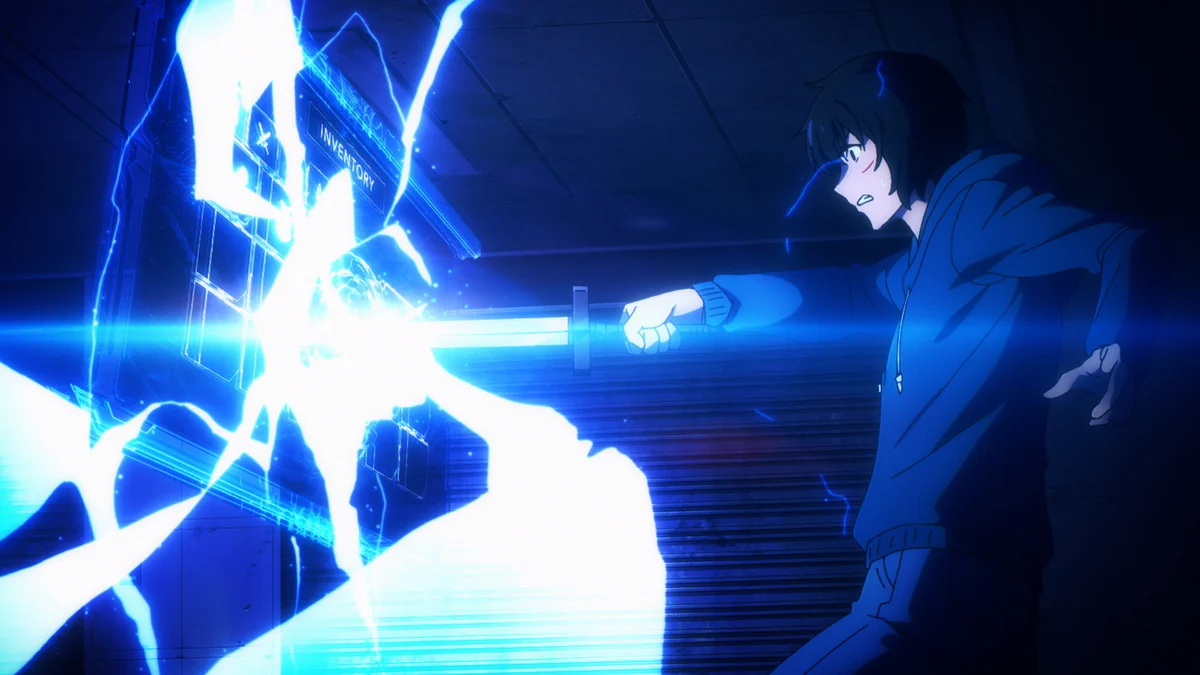
Season 1 also gives progress a physical test. The knight encounter in episode 11 puts Jinwoo against an opponent whose threat cannot be understood simply by admiring his latest increase in strength. The official synopsis sets that confrontation after sustained fighting. Fatigue makes the fight a test of how he uses his strength, rather than another chance to display it.
That does not mean season 1 is a perfectly gradual struggle. In his season review for The Outerhaven, Josh Piedra praised the Igris fight while finding Jinwoo’s increasing dominance and limited personality less convincing. The reservation matters even before the larger scale of season 2. Enjoyment depends partly on finding the demonstration of strength satisfying in itself.
Season 2 makes reputation part of the action
The second season has a useful advantage: the viewer knows more about Jinwoo’s development than most of the people entering a dungeon with him. In the Red Gate setup, an apparently ordinary training visit suddenly becomes a much more dangerous assignment. In another raid, he joins as a porter while a recognised attack team handles the fighting. Both arrangements make his low public standing dramatically useful. He does not arrive with everybody already expecting the answer to be him. Official episode 13 and episode 17 establish those setups.
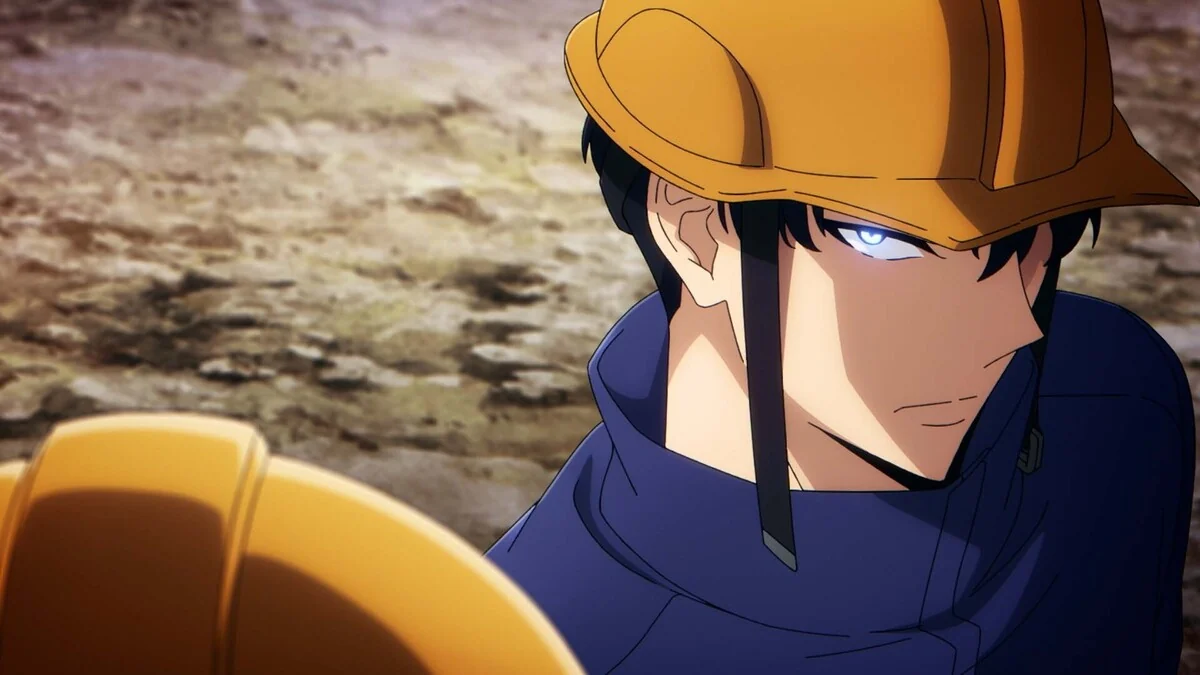
This is where the series finds a different kind of suspense. A scene can hold interest even when the hero’s survival is not the only question. Who understands the danger? How long can the established hierarchy account for what is happening? What will it take for the people in charge to reassess him?
The larger action payoffs have divided reviewers on precisely this point. Jay Gibbs at Anime Corner praises the variation between heavy exchanges and agile movement in season 2 episode 12, looking back at that fight in his finale review. Benjy Kwong at That Hollywood Show admires the presentation but argues that overwhelming dominance drains the stakes. A fight can be forcefully presented while its result feels less uncertain.
Jinho brings companionship to the climb
Jinho first joins Jinwoo as another low-ranked recruit in the episode 5 raid. He has money and equipment; Jinwoo has strength he cannot publicly explain. Their later arrangement gives both a practical reason to keep meeting. Jinho needs dungeon experience for his guild plans, and Jinwoo needs opportunities to improve without attracting too much attention. Bubbleblabber’s episode 7 review describes Jinho’s proposal for nineteen more raids.
Episode 19 character spoiler: the next two paragraphs discuss Jinho’s decision about his family and future.
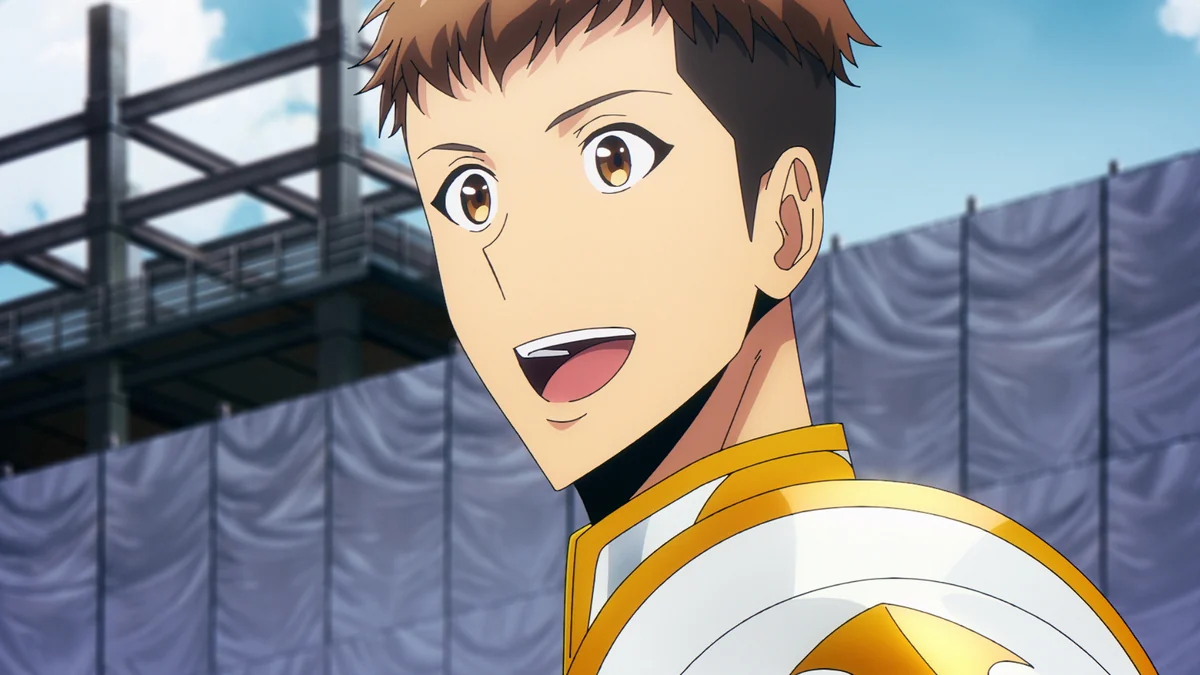
The friendship becomes more than a convenient arrangement. In episode 19, Jinho chooses to follow Jinwoo instead of taking the path his father expects. Hannah Brave’s RABUJOI account reads the decision as personal loyalty; Anime Rants also singles out his growing independence. Jinho has something to give up. His admiration becomes a choice he must defend to somebody whose approval matters.
Jinho brings plans, resources and an eager willingness to spend time with a man who increasingly intimidates other people. The imbalance can be funny: after Jinho makes his grand commitment, Jinwoo’s immediate need is a lift in his van. The relationship briefly lets the show be about two people trying to work together, rather than an institution discovering another astonishing number.
Experience cannot close the gap in strength
The supporting hunters have a harder problem in combat. Son Kihoon leads the raid Jinwoo joins as a porter in episode 17. The team has trained fighters and a recognised chain of command; Jinwoo has been hired to carry supplies. Crunchyroll’s episode account names Kihoon as the A-rank team’s captain. The official synopsis identifies the group as the Hunters Guild’s second attack team and establishes Jinwoo’s assignment.
The raid does not make the other hunters foolish for being weaker. The official synopsis describes a battered team trying to withdraw, only to find the exit blocked. Retreat is a sensible response to danger they cannot handle. The frustration is that sensible judgement and experience cannot close the gap in strength. The attraction increasingly becomes waiting for the porter to exceed the people officially responsible for the mission.
Kihoon’s predicament shows the danger of a world that sends people into dungeons according to an imperfect assessment. Jinho offers companionship. Jinwoo’s family gives him a reason to earn and survive. But when the question becomes who can change the course of a major battle, the answer becomes increasingly concentrated in one person. If you want the other hunters to develop their own decisive solutions, their personal qualities will not fully compensate.
A good choice for the escalation, a weaker one for an ensemble
The two-season progression offers enough change to justify continuing beyond the opening: a mysterious private system becomes a force that established institutions must take seriously. Its clarity is a strength. You can follow why the next test matters without learning a large political history first.
Choose it for that movement and for action built around showing the difference between one level of power and the next. Jinho gives the climb a welcome human relationship, but the combat remains centred on Jinwoo. If your favourite part of battle anime is a varied group arguing, developing separate methods and sharing decisive victories, this will offer less of that than its large roster initially suggests.
The two seasons total 25 main-story episodes, about ten hours at an assumed 24 minutes each. For a manageable trial, watch episodes 1–4, about 96 minutes. The first two establish the danger; episode 3 introduces the private interface, and episode 4 puts its progression into practice in a dungeon entered through a subway station. That is a better sample of the recurring attraction than the opening ordeal alone. If the satisfaction of improvement and the combat do not catch you there, a much bigger power gap is unlikely to solve the problem.
Expect graphic violence, dismemberment, frightening creatures, and references to sexual violence and suicide; some episodes contain flashing imagery. The UK BBFC content record gives episode-level advice and may reveal later events.
This judgement covers seasons 1–2, not a future resolution to the System’s mysteries. For the practical route and the distinction between ReAwakening and later continuations, use the Solo Leveling introduction.
Sources
The official episode archives establish the story setups and 25-episode scope: season 1 and season 2. The archives, recaps and full reviews contain plot outcomes omitted here.
- Josh Piedra, The Outerhaven: season 1 review, including the Igris fight and reservations about Jinwoo.
- Jay Gibbs, Anime Corner: finale review that also assesses the preceding episode’s combat.
- Benjy Kwong, That Hollywood Show: episode 25 criticism of spectacle and diminishing stakes.
- BBFC content advice: violence, disturbing themes and flashing imagery across the classified episodes.
- Official season 1 episodes 1, 3, 4, 5 and 11: opening group, private interface, solo dungeon, Jinho’s introduction and the knight confrontation. Episode 1 and 4 galleries supply the retained images.
- Official season 2 episodes 13, 16 and 17: Red Gate setup, work-clothes still and the second attack team’s porter assignment.
- Crunchyroll’s episode 3 and 17 recaps: daily quest and penalty; Kihoon’s name and captaincy respectively. Distributor recaps, not independent criticism.
- Bubbleblabber, episode 7: Jinho’s proposed raids and guild ambition.
- Hannah Brave, RABUJOI, episode 19 and Anime Rants, episode 19: Jinho’s choice and family disagreement; RABUJOI also discusses the van scene.