
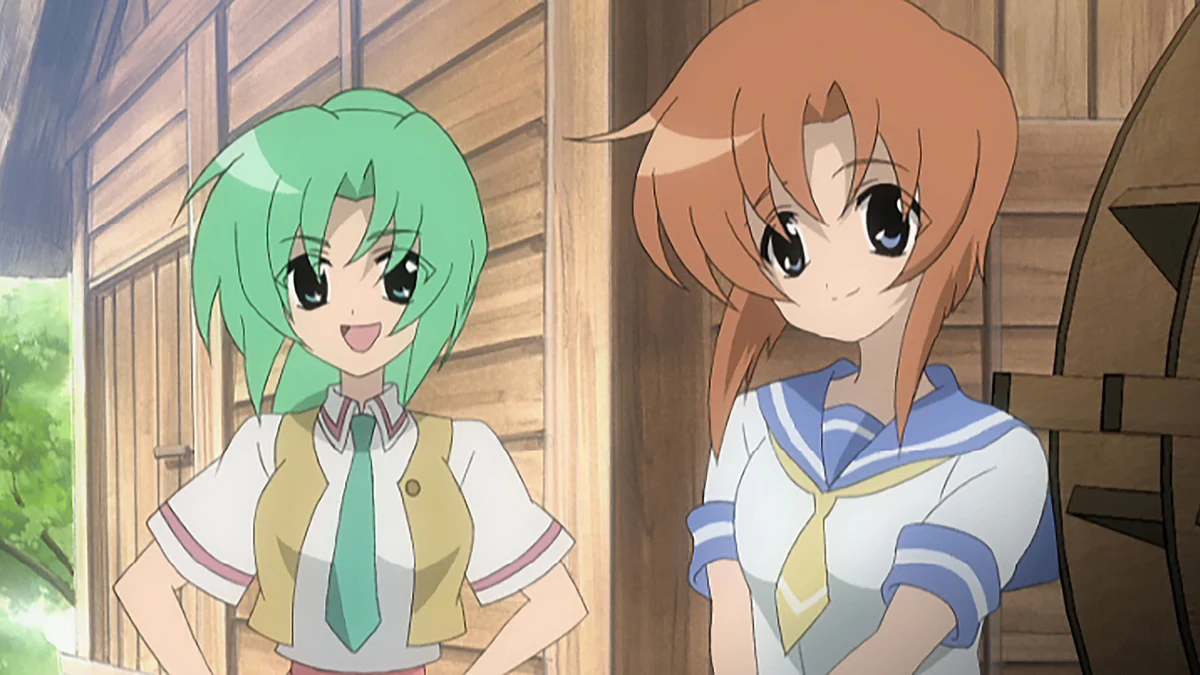
Start with Higurashi: When They Cry from 2006, then watch Kai. The original village mystery comes before the later productions, even when they introduce a recognisable situation or share a familiar cast.
Keiichi Maebara’s move to the village of Hinamizawa brings school friends, competitive club games and a local festival with a disturbing history. Begin with his arrival. Getting to know that company before the mystery develops gives the later visits to the village something to return to.
What is the Higurashi watch order?
Follow original → Kai → Rei → Gou → Sotsu. Each title begins again at episode 1. Use the subtitle and year together to locate the production you want.
| Entry | Type | Episodes | Watch after |
|---|---|---|---|
| Higurashi: When They Cry (2006) | Original TV series | 26 | Begin here. |
| Higurashi: When They Cry Kai (2007) | Second TV series | 24 | The complete original series. |
| Higurashi: When They Cry Rei (2009) | OVA follow-on | 5 | Kai episode 24. |
| Higurashi: When They Cry Gou (2020–2021) | Later TV story | 24 | The original cycle. |
| Higurashi: When They Cry Sotsu (2021) | Gou continuation | 15 | Gou episode 24. |
The original television story is 50 episodes, the route through Rei is 55, and the selected route through Sotsu is 94. Our original-cycle profile groups the first series, Kai and Rei together.
Why start with the 2006 original?
Start with the 2006 series to meet Keiichi as he arrives among Rena, Mion, Satoko and Rika, friends who already have their own habits and relationships. The club gives him an everyday place among them before the village’s past becomes harder to ignore.
Mion leads the group’s competitive games and takes winning seriously, while Satoko brings a talent for traps into their contests. Rena’s delight in cute objects gives her a very different enthusiasm. These are friendships expressed through doing things together, with Keiichi learning the group’s habits as he joins in. The games provide a lively beginning before a conversation about local history changes the questions he asks. Rika and Satoko also share a home, so their companionship extends beyond the club. The group brings together classmates and people whose everyday lives are closely connected, before the mystery asks how well they understand one another.
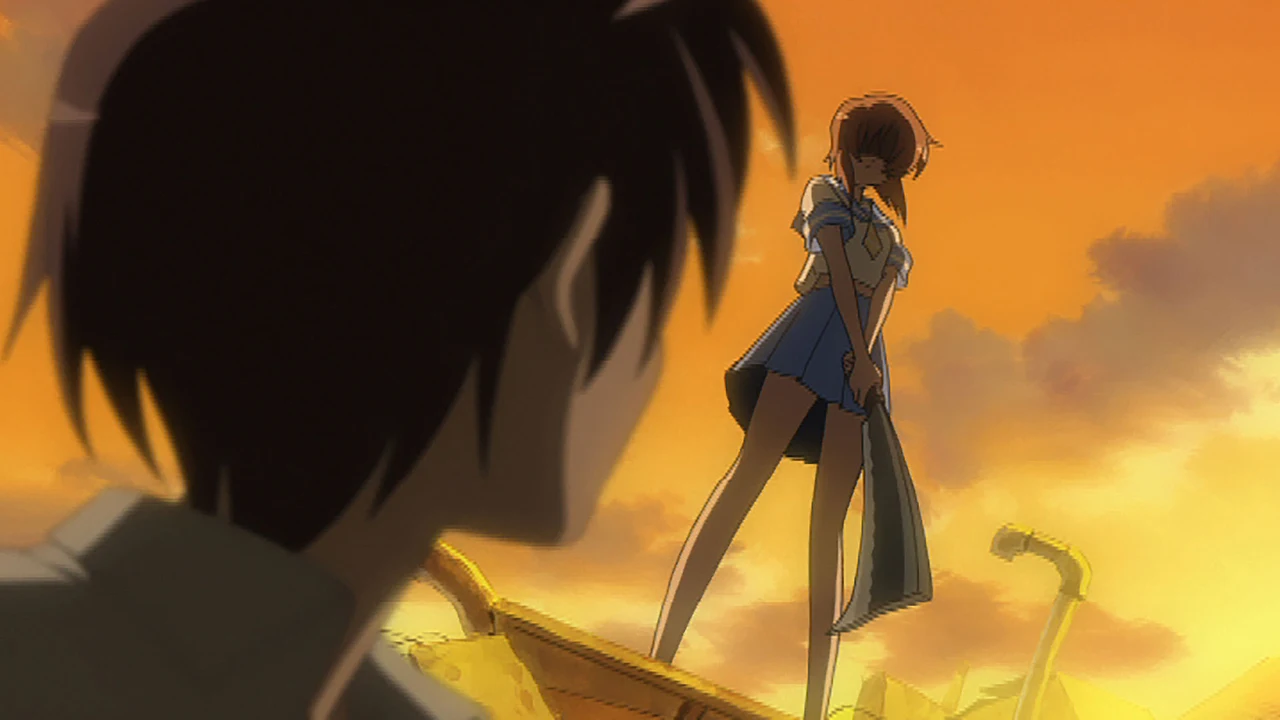
Image credits
Higurashi: When They Cry (original television anime)
©2006竜騎士07/ひぐらしのなく頃に製作委員会
Image sourceThe first series is organised into six named chapters, from Onikakushi to Tsumihoroboshi. Follow those chapters in their presented order. Their changes in emphasis are part of how the mystery develops: a person who seems easy to understand in one situation can become much harder to read in another. Trying to arrange every scene into a village calendar would turn discovery into an explanation you already know.
The friendly designs and school setting accompany graphic violence, frightening threats and abuse. That contrast is part of the viewing decision before you begin. For a first sample, complete the opening Onikakushi chapter, episodes 1–4, so that its initial invitation into village life has time to develop into a complete first mystery.
What comes after the original ending?
Go straight to Kai episode 1. This second series carries the original mystery forward, returning to the village as the Watanagashi festival approaches.

Image credits
Higurashi no Naku Koro ni Kai
©2007竜騎士07/雛見沢御三家
Image sourceKai begins with Reunion, then moves through Yakusamashi, Minagoroshi and Matsuribayashi. Watch its opening as part of that sequence. The people and information carried over from the first series give those chapters their context, while the later chapters take the original story towards its resolution.
The festival has a personal place in Rika’s life: she belongs to the Furude shrine family and serves as shrine maiden at the gathering. In Kai’s opening situation, the club’s cheerful company continues around her, but she sometimes looks sorrowful as the festival draws near. Following her attention gives the village’s annual gathering a different emphasis from Keiichi’s first arrival.
How does Rei fit after Kai?
Watch Rei after Kai as an OVA collection. Its contents vary in tone: Hajisarashi and Hirukowashi sit around the three-part Saikoroshi story. That middle story follows Rika into another serious dilemma after the earlier struggle.

Image credits
Higurashi no Naku Koro ni Rei
©2009竜騎士07/雛見沢御三家
Image sourceThe complete collection shifts between comedy and the more consequential central story. If you want only the serious Saikoroshi chapter, it occupies episodes 2–4; that shorter visit leaves out the two comic bookends.
The bookends draw on different parts of the wider franchise. Hajisarashi comes from a bonus novel supplied with the game Higurashi no Naku Koro ni Matsuri, while Hirukowashi uses the world of Higurashi Daybreak. Their origins help explain the collection’s variety: it brings together a serious Rika story and more playful outings, rather than extending one television chapter throughout.
When should you watch Gou?
Watch Gou after the original cycle. Its familiar village, cast and opening situation lead into a new story. Creator Ryukishi07 describes it as a new work rather than a remake.

Image credits
Higurashi: When They Cry – GOU
©2020竜騎士07/ひぐらしのなく頃に製作委員会
Image sourceIts opening finds Keiichi enjoying his new life before he hears an unsettling account from the photographer Tomitake at an old dam-construction site. That encounter gives the newcomer a local mystery to pursue beneath his school friendships. For a returning viewer, the interest lies in how this recognisable invitation into Hinamizawa develops as a new work.
For more on this particular choice, read why Gou is a new story and where to start. The creator interview in Sources discusses much more of the plot, so save that link for after the later pair.
What follows Gou?
Watch Sotsu immediately after Gou. The pair forms a 39-episode story. Finish Gou’s episode 24 before moving to Sotsu episode 1.

Image credits
Higurashi: When They Cry – SOTSU
©2020竜騎士07/ひぐらしのなく頃に製作委員会
Image sourceA returning viewer who completed the original and Kai can add Rei, then start Gou. Someone already partway through Gou or Sotsu should use that full subtitle and the next episode number as their bookmark. Those names are more useful than a service’s season number when locating the next part.
Sources
Linked story indexes and the creator interview contain later revelations.
- Bandai Channel: original Higurashi and episode index
- Bandai Channel: Kai and chapter order
- Bandai Channel: Rei’s five-part collection
- d Anime Store: Rei
- Bandai Channel: Gou’s opening episode
- d Anime Store: Gou
- d Anime Store: Sotsu
- Official anime site: Ryukishi07 on Gou and Sotsu
- Official Higurashi: Gou’s broadcast dates