

A ruined world and a cold relationship are different things to spend an evening with. You might accept danger if the people facing it look after one another; you might find an empty landscape harder to bear than an argument in a crowded city. “Dark, but with a heart” is useful only once those differences are visible.
The two strongest invitations here are Girls’ Last Tour and Fullmetal Alchemist (2003). Darker than Black and Texhnolyze show how much colder a dark story can feel. They are not equally reassuring alternatives.
| Work | What makes the setting dark? | Where is care visible? | What can still be difficult tonight? |
|---|---|---|---|
| Girls’ Last Tour | A collapsed civilisation with scarce food and fuel | The pair’s shared travel and practical dependence | Isolation and basic survival remain present |
| Fullmetal Alchemist (2003) | Bodily loss and a quest entangled with military power | Edward sacrifices to keep Alphonse with him; the search is shared | Injury and family grief are immediate |
| Darker than Black | Violent espionage and powers with imposed prices | Hidden identities and emotional distance make trust uneasy | Emotional distance is part of the attraction; reassurance is harder to find |
| Texhnolyze | Coercion, mutilation and the undercity of Lux | Coercion dominates the opening; companionship is not the attraction offered here | Bodily violation is a reason to choose a different entry, not an incidental warning |
Do you want companionship against the ruins?
Girls’ Last Tour
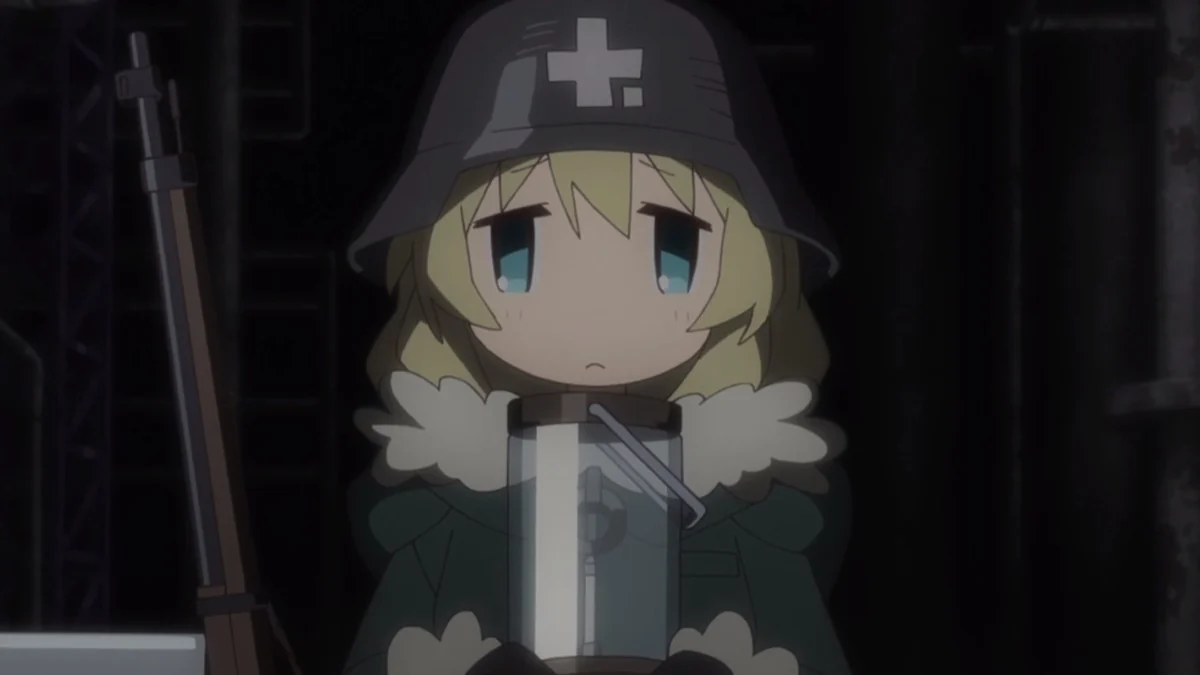
Finding food and fuel gives the pair immediate tasks in a vast, empty city. Image credits
Girls’ Last Tour
(C)つくみず・新潮社/「少女終末旅行」製作委員会
Image sourceChito and Yuuri cross a vast ruined city on their tracked vehicle, looking for food and fuel. Their opening problem is smaller than rebuilding civilisation. Yuuri’s suggestion takes them into a building where they get lost; without sunlight, even their sense of time begins to slip. Chito notices a faint current of air.
Why try it: That is the scale of the companionship: another person’s impulsiveness can get you into trouble, and another person’s attention can become a resource when your own has run out. They have somewhere to direct a question, a complaint or an observation, even in a world with very few people left to answer. Travelling together means having someone to share even a small discovery with.
Keep in mind: The travellers offer company inside the emptiness. Do not confuse its smaller tasks with a world that has become safe: the next episode’s snowstorm makes finding shelter a matter of staying alive. If the thought of scarce supplies and deserted spaces is itself exhausting, affection between the travellers may not be the relief you need.
Do you want a personal quest with national cost?
Fullmetal Alchemist (2003)
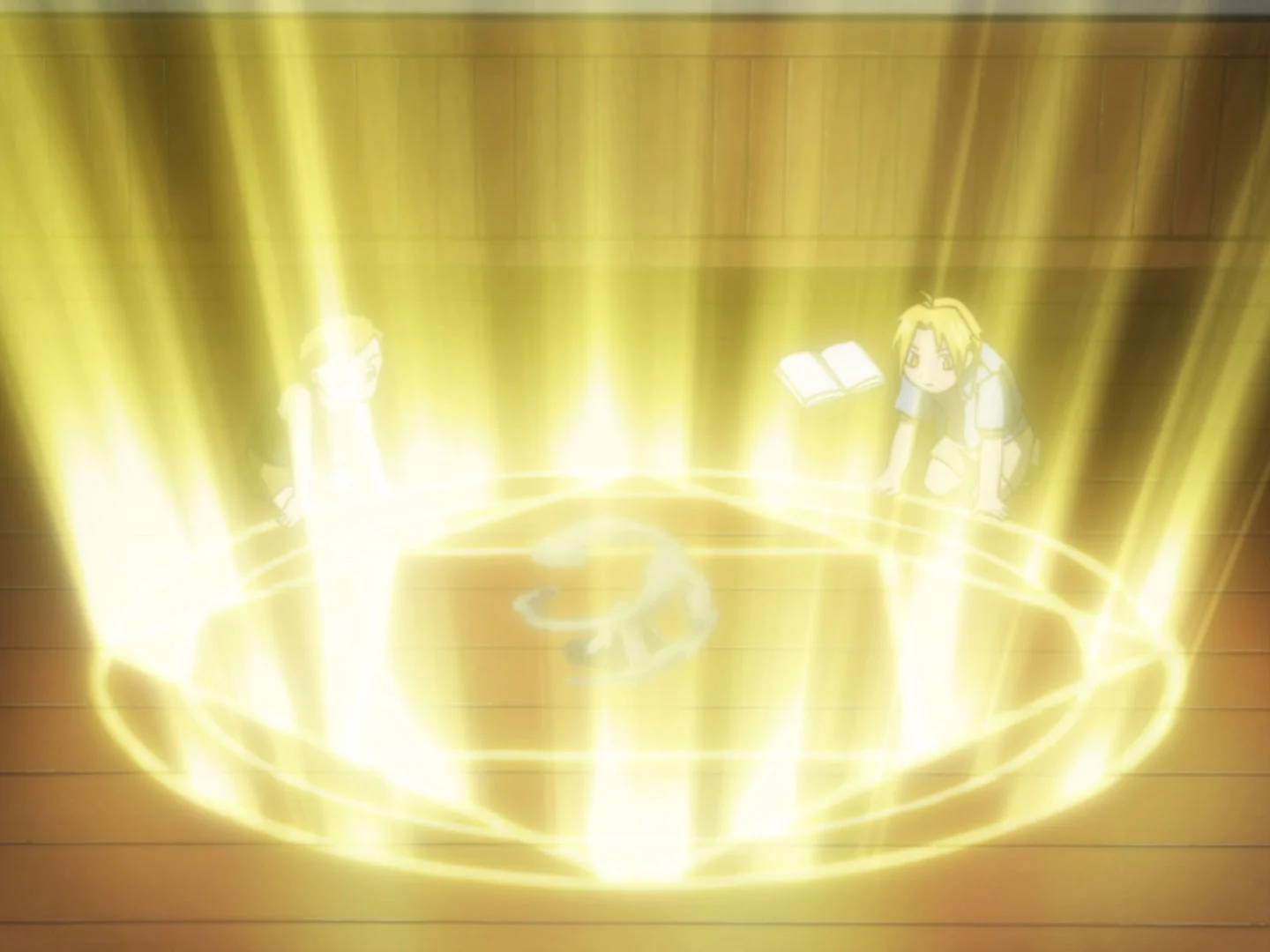
The brothers’ search begins with a shared attempt at alchemy, before its cost can be understood. Image credits
Fullmetal Alchemist (2003)
©荒川弘/スクウェアエニックス・毎日放送・アニプレックス・ボンズ・電通2003
Image sourceEdward and Alphonse’s failed attempt to bring back their mother has an immediate, terrible cost. Edward loses a leg and Alphonse loses his body. Edward then gives up his right arm to bind his brother’s soul to armour. The care is a decision with a bodily price, not merely the fact that the protagonists are related.
Why try it: Their subsequent search for a way to restore what was lost is therefore something they must undertake together. Alphonse is present, but the armour keeps the original harm in view; Edward’s mechanical limbs do the same. The shared purpose supplies a reason to follow them through an adventure whose institutions and violence expand beyond their family.
Keep in mind: Choose the 2003 television anime, rather than Brotherhood, for this combination of a close bond and a darkening quest. Taleweaver’s Nihon Review assessment notes both a serious trajectory towards war and destruction and awkward slapstick. That tonal mixture can provide relief, but it can also jar: a joke does not cancel the injury or grief underneath it. This is the busier, more openly adventurous of the guide’s central pair.
Do you want a spy mystery with an emotional price?
Darker than Black

A cover identity and dangerous work make emotional distance part of the spy premise. Image credits
Darker than Black
©BONES・岡村天斎/DTB製作委員会・MBS
Image sourceHell’s Gate transforms Tokyo’s world, while Contractors have powers with specific prices and a reputation for emotional detachment. Hei works under the everyday identity of Li and carries out dangerous espionage. Concealment is part of his life, rather than an obstacle a friendly group can simply talk away.
Why try it: This offers less emotional reassurance than the first two choices. Secret identities, obligations and suspicion take priority over visible reassurance. The premise makes connection a question; it does not, by itself, earn a recommendation for someone specifically asking to see people care for one another.
Keep in mind: That distinction matters to the request behind this guide: its writer found Darker than Black too adult for the balance they wanted, while Gurren Lagann had more heart than they were seeking. There is no contradiction to correct there. They were describing a particular desired distance between innocence and harshness, not asking for the darkest title with a friendship somewhere in it.
Do you want an oppressive undercity?
Texhnolyze
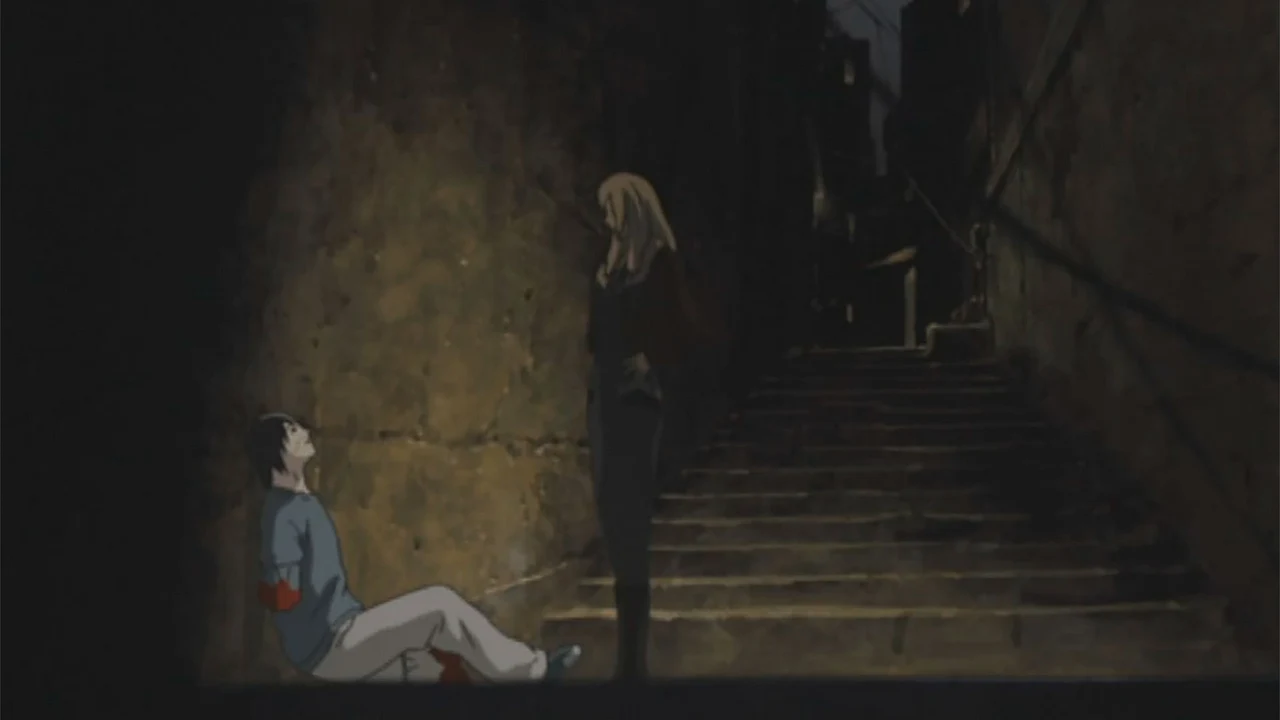
Texhnolyze’s oppressive surroundings offer little immediate visual relief. Image credits
Texhnolyze
©RONDO ROBE・TEXHNOLYZE製作委員会
Image sourceIn Lux, prizefighter Ichise loses an arm and a leg and is fitted with robotic replacements without his consent. Philip Brophy describes the setting as an energy-drained future underworld. Physical survival begins with something being done to his body, not an invitation to trust a companion.
Why try it: This is the harshest choice here, and a poor fit if companionship is what you want.
Keep in mind: Ichise’s loss and forced reconstruction put coercion and bodily harm at the centre of the opening. Its austere, coercive science fiction comes with bodily harm; later warmth should not be a reason to endure material outside your limits.
For a first choice, decide what you want to stay close to: two travellers making daily life together, or two brothers trying to recover their bodies. The first follows two people finding company in an almost empty world; the second carries a family bond into a busier and more violent adventure. The colder examples may suit another evening, when reassurance matters less to you.
Sources
Linked sources contain later story details.
- Reddit: “Dark but with a heart”
- Reddit anime discussion, 26 October 2026
- Fullmetal Alchemist (2003) official Aniplex page
- The Nihon Review, “Fullmetal Alchemist”
- Girls’ Last Tour official anime site
- Sentai catalogue synopsis
- Darker than Black official Aniplex series page
- Apple TV Texhnolyze listing
- Philip Brophy, “Texhnolyze”
- episode 1
- episode 2