
Rimuru’s early journey to Dwargon has an unusually practical purpose. He needs artisans who can help provide food, clothes and shelter for goblins and tempest wolves. An adventure that began with a newly reincarnated slime discovering its abilities is now confronting a skills shortage.
That is a revealing place for That Time I Got Reincarnated as a Slime to put its powerful protagonist. Protection can make a settlement possible. It does not tell everybody how to make the things they need once the immediate danger has passed.
What changes when the encounter becomes a home?
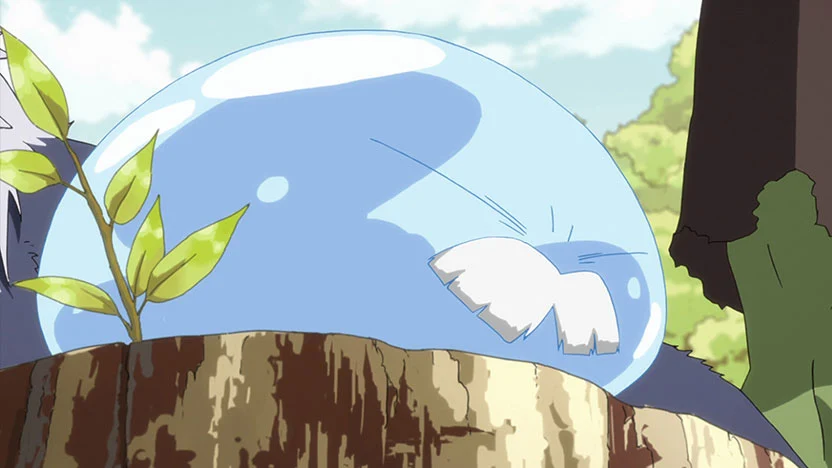
The cave offers Rimuru a comparatively private kind of progress. An unfamiliar body can absorb, investigate and acquire new possibilities. Great Sage gives that discovery an analytical voice; Veldora gives it a relationship. The slime’s expanding abilities belong to someone learning how to exist in a new environment.
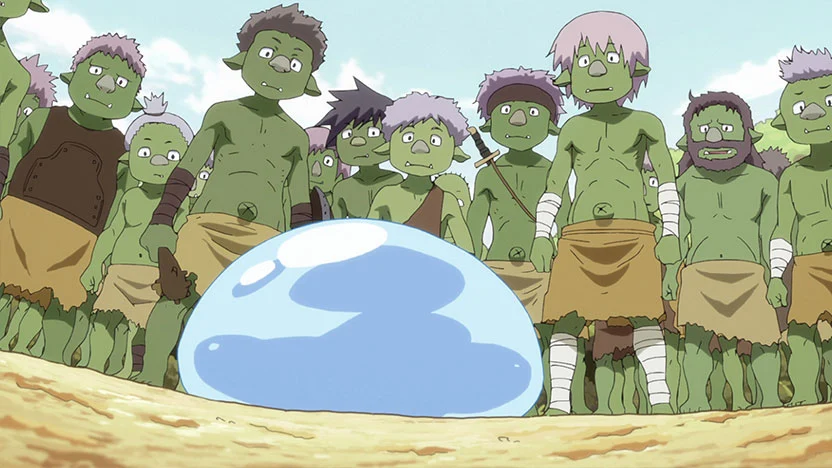
The goblin village changes the direction of that progress. Other people now have a stake in what Rimuru does next. Their needs do not end when an opponent stops being dangerous. A successful intervention leaves a community still needing to eat, dress and find shelter.
This is where the settlement begins to matter as more than a reward for heroism. It gives the story things worth returning to. A road adventure can move from one grateful population to the next. A community asks what the powerful visitor will help make possible over time.
Why go looking for people rather than another attack?
The journey to the dwarven nation supplies a concrete answer. Rimuru is looking for people who can support the goblins and tempest wolves, not simply another opponent to test his abilities against. Kaido, a guard captain, introduces him to the blacksmith Kaijin. The first useful connection is itself made through somebody else.
Kaijin has a problem that belongs to his existing job. He must deliver twenty longswords made with magical steel to the king in five days. Rimuru needs the craftsman’s expertise; the craftsman is already under pressure to turn a particular material into a particular number of finished objects. He cannot be understood only as a vacancy in Rimuru’s future village.
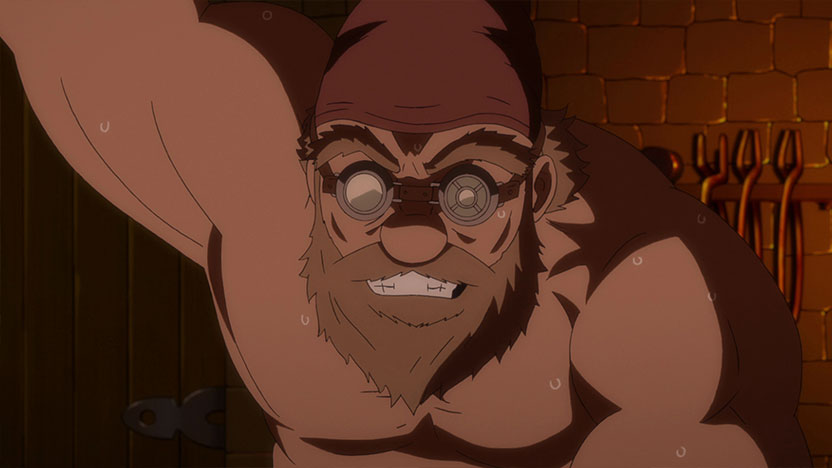
The deadline makes the encounter more than recruitment. Each side arrives needing something, and the needs differ. The goblins lack practical provision; Kaijin has an immediate production obligation. Finding a skilled person now creates another task before it can solve the first one.
Why does the craftsman’s own work matter?
The order gives the prospective helper a life outside the protagonist’s plans. Kaijin’s labour has a customer, a quantity and a deadline. That is a more substantial introduction than a specialist who appears with nothing to do until the hero arrives.
It also changes the meaning of Rimuru’s next useful action. A village-building adventure can proceed through a chain of reciprocal problems: the settlement needs a craft, the craftsperson needs help with work, and someone introduces the two. The story does not have to award Rimuru every relevant skill for his journey to move forward.
The early nation-building appeal lies in that chain. The protected village gives him a reason to travel to Dwargon; Dwargon introduces people whose responsibilities matter in turn. What begins as an expanding set of personal abilities has acquired somewhere to be useful, and other people whose work will shape what that place can become.
Sources
Later episode archives and discussion replies contain major developments outside this opening scope.
- Official original episodes 1, 3 and 4, for the cave, village, journey to Dwargon and Kaijin’s order.
- Official glossary, for the absorption and analysis ability. This argument does not extend later ability descriptions into the opening.