
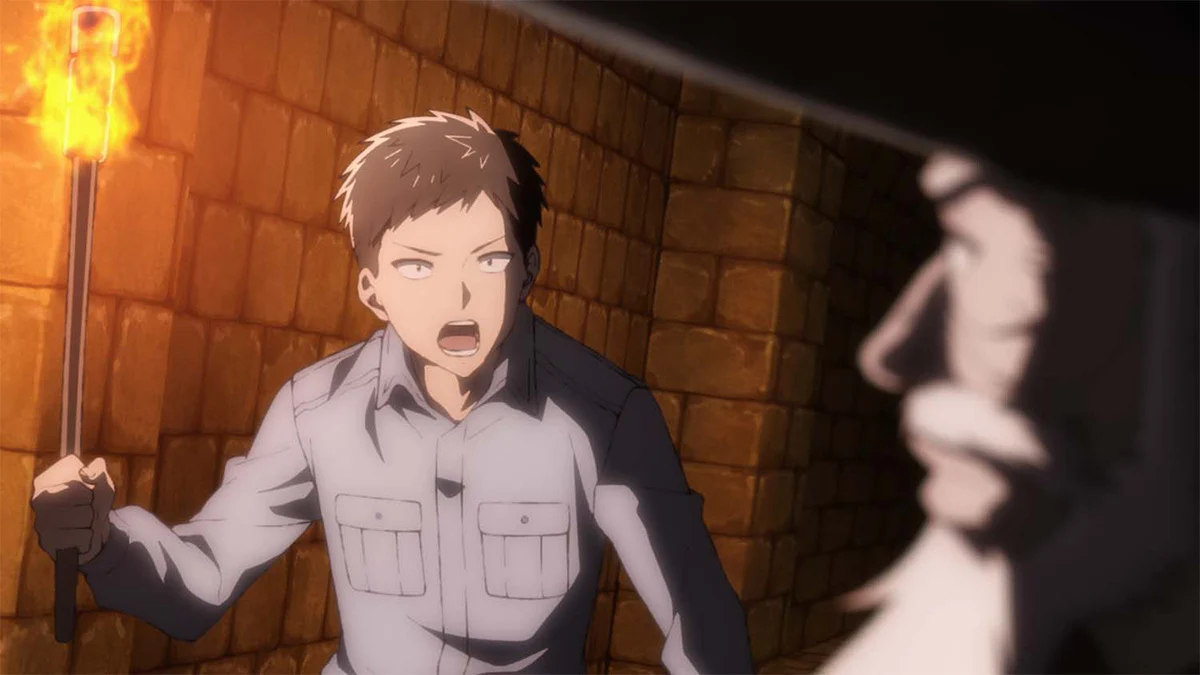
A fantasy dungeon can have an impressively ordinary problem: the treasure chest is locked. So can the adventurers entering it. Equipment wears out, people forget things and somebody has to keep the practical details from bringing the expedition to a halt.
Saitou used to work as a handyman in Japan. Arriving in another world does not turn him into its finest swordsman or give him effortless command of magic. What travels with him is experience: opening locks, repairing things and noticing how objects fit together. In a party of people with much more spectacular abilities, those skills give him something necessary to do.
Handyman Saitou in Another World makes being needed an adventure of its own.
What does a handyman bring to a dungeon?
The work is useful because the setting does not stop being material when magic enters it. A chest still has a lock. Armour can need repair. Hands that know how to fix a bag have experience that can be applied to unfamiliar equipment.
Saitou’s uncertainty is as important as his competence. With little fighting ability, he worries that his companions are carrying him. The official premise makes gratitude the change in his life: he does not have to become extraordinary at everything to discover that people value what he can contribute.
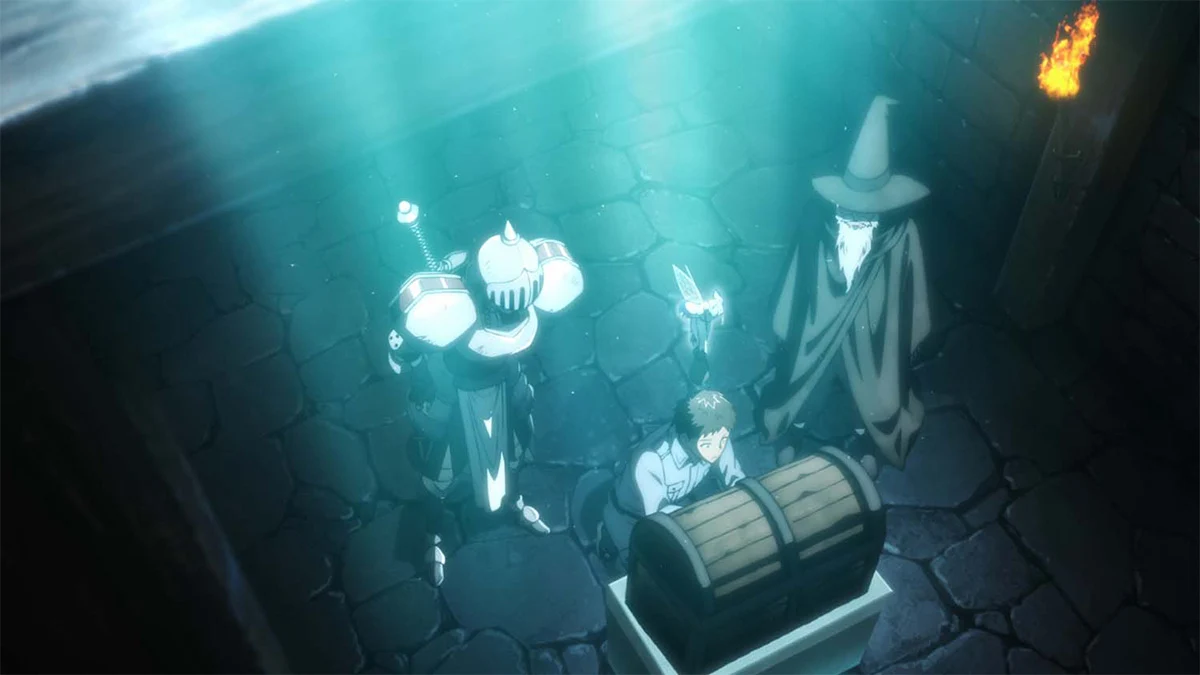
That is a more interesting basis for an ensemble than making every companion an audience for the hero’s brilliance. The others can protect him, and he can solve something they cannot. Dependence travels in both directions.
The story also lets his work fail. In episode 2, a mistake activates a trap and sends him deeper into the labyrinth. Practical experience gives him a role; it does not promise that he will always read an unfamiliar mechanism correctly.
Why does this party need one another?
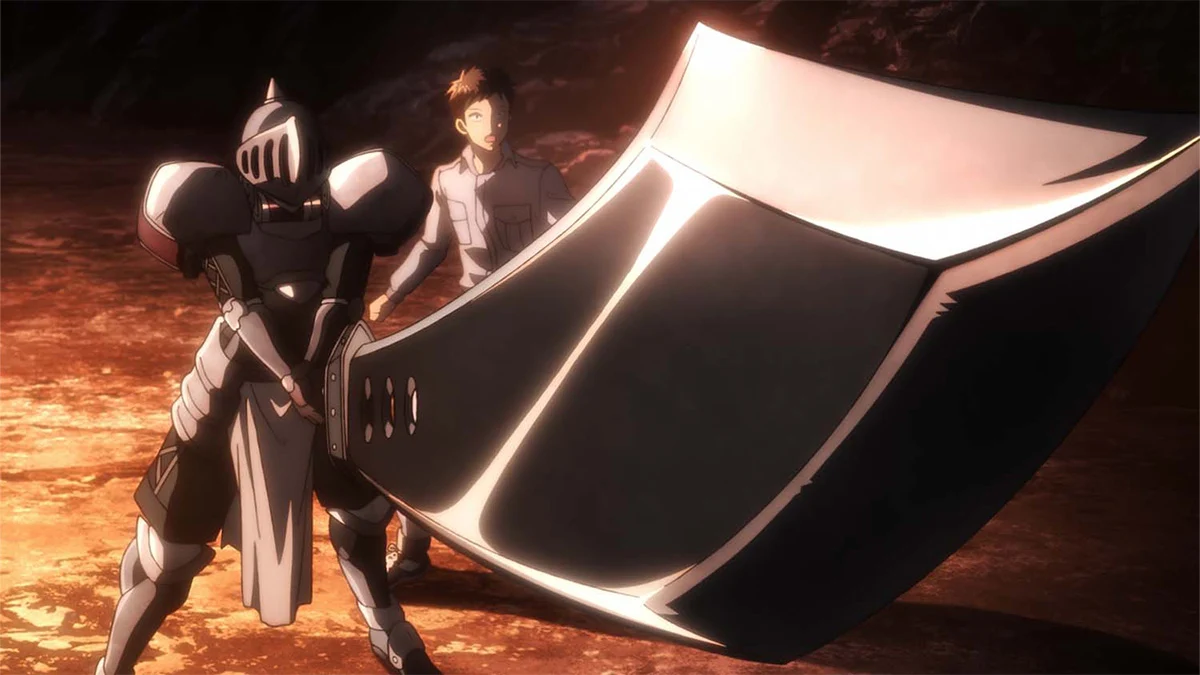
Raelza is a heavily armoured warrior, physically capable in ways Saitou is not. Her helmet also protects something more personal: she is self-conscious about a facial scar. Her interest in the handyman is difficult for her to express, giving the imposing fighter a vulnerability that a weapon cannot resolve.
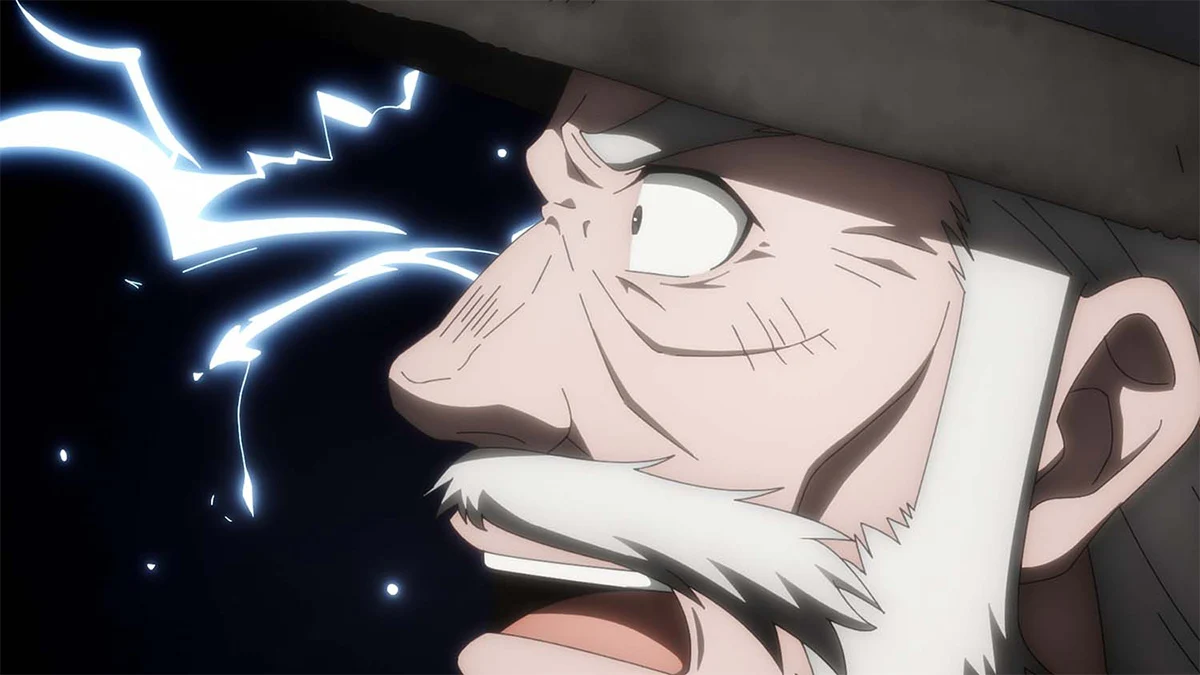
Morlock is a powerful elderly magician who often forgets the words he needs. Saitou helps him with incantations, while the fairy Lafanpan can treat the back pain that makes fighting difficult. The strongest spell in the group still depends on less conspicuous help getting it into use.
Lafanpan’s healing has a price. Outside emergencies, she charges even her companions, a rule that gives the party’s everyday economics a place in the fantasy. Care is valuable work, and having somebody nearby who can perform it does not automatically make it free.
These limitations make the group funny without making its members interchangeable. One person needs protection, another needs words remembered, another struggles to show what she feels. Friendship grows out of accommodating particular people rather than assembling a set of flawless abilities.
Can useful work still be an adventure?
The party has to go somewhere dangerous to make use of its talents. The labyrinth offers locked objects, traps and monsters, so a quiet skill can become urgent very quickly. Raelza’s armour and enormous weapon give the danger a visible scale beside Saitou’s work clothes.
A good early complication reverses the repairer’s role. In episode 3, the wire cutters Saitou brought from his previous life break. He takes them to a dwarven craftsman called Dohnbain. The person who fixes other people’s equipment must now ask somebody else to help with his own.
It is a small but useful limit on the premise. Modern tools are not an inexhaustible advantage, and expertise does not belong to one world. Saitou can know how an object works without being able to restore it alone. The fantasy grows through exchanges of skill.
What kind of humour should you expect?
The opening episodes move between short comic situations and different adventuring groups. A familiar fantasy role can arrive with an awkward practical qualification: the wizard forgets, the healer wants payment, the worker with no grand title solves the everyday problem. Small setups create room for quick reversals and a widening cast.
That segmented beginning can take time to settle into if you want one continuous quest immediately. The series also has very crude sexual jokes and sexualised framing. Later material brings grief, serious injuries and bloody violence alongside the comedy. The warmth of people recognising Saitou’s worth is one part of the tone, not a promise that the entire season will be comfortable.
Toshiyuki Kubooka directs the C2C adaptation of Kazutomo Ichitomo’s manga. Its central visual contrast is already clear in the early stills: a man in practical clothes among heavy armour, magical light and a tiny winged companion. He does not have to look like the most powerful person in the picture to belong there.
Where should you start?
Begin with episode 1 of the 2023 television season and continue in order. The season has 12 episodes, with no prerequisite film or earlier adaptation. The manga is a separate version, not required preparation.
Allow about four hours and fifty minutes, using a rounded 24 minutes per episode. The BBFC’s individual listings run around 24 minutes; this is a planning estimate, not a precisely timed playlist. This introduction’s route excludes bonus promotional shorts.
What does the official trailer introduce?
KADOKAWA’s second promotional video introduces the 2023 television adaptation. The trailer advertises that original January broadcast.
Original 2023 season · KADOKAWAanime · PV 2. Opens YouTube.
Sources
The episode archive, character pages and detailed classification advice can reveal later story events.
- Official introduction, for the ordinary-worker premise and useful skills.
- Official profiles for Saitou, Raelza, Lafanpan and Morlock, for their abilities, difficulties and relationships.
- Official episodes 1, 2 and 3, for the opening party, mistake and broken-tool setup; episode 12, for the season endpoint.
- Official credits and video archive, for the adaptation and trailer identity.
- BBFC’s season record, for the duration allowance and content guidance.