
Mukohda’s most useful power does not make him the strongest person at the campfire. It gives the strongest creature there a reason to keep him around. In Campfire Cooking in Another World with My Absurd Skill, access to modern groceries helps a cautious, ordinary man acquire a very extraordinary dinner guest.
That is why Online Grocery makes a better fantasy ability than its name suggests. Its advantage lies in what it can supply, whom that supply attracts and what they are prepared to do in return. Mukohda remains recognisably himself. The world around his cooking table reorganises.
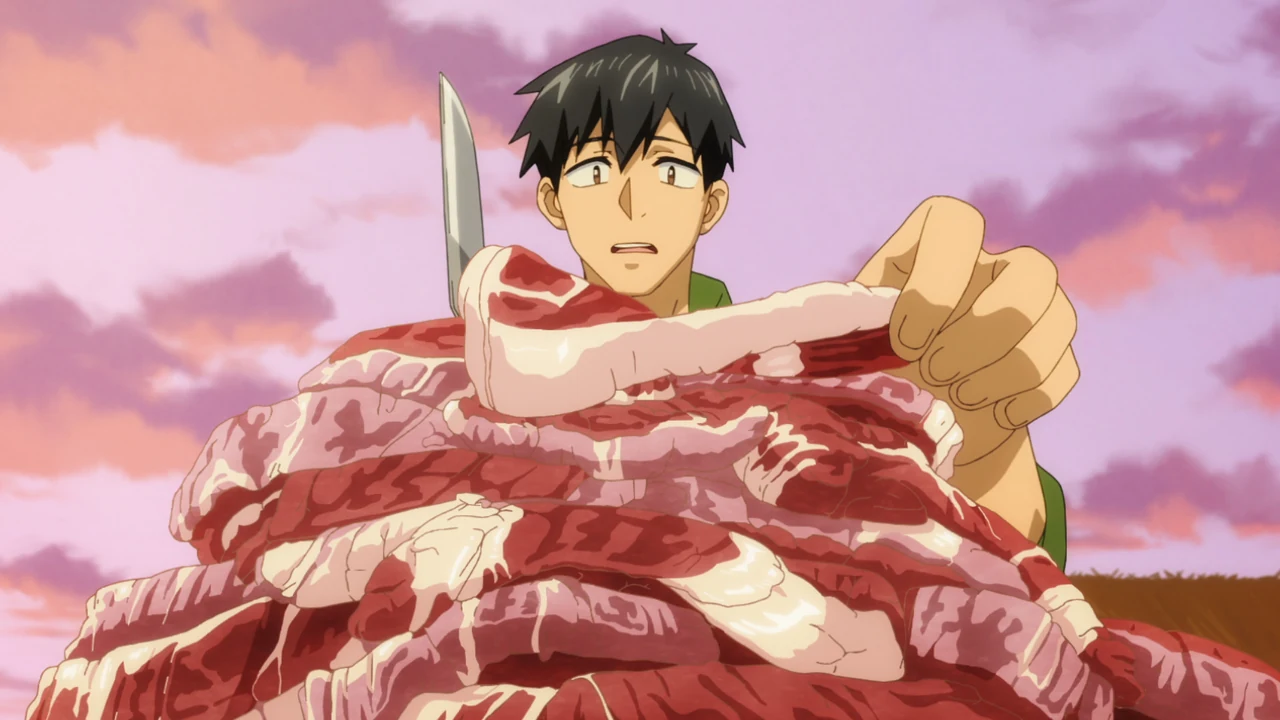
What does Online Grocery actually give him?
Mukohda is an office worker caught up in a hero-summoning. His unusual skill lets him order ingredients and seasonings from his original world. The official first-episode account makes the apparent mismatch explicit: an unassuming shopping ability produces remarkable effects through cooking in another world.
The useful distinction is between possessing a finished weapon and having access to a supply nobody around you takes for granted. A familiar seasoning does not have to be rare at home to be exceptional somewhere else. Online Grocery carries a piece of Mukohda’s ordinary life into a setting where that familiarity becomes an advantage.
The skill also needs somebody to turn ingredients into a meal. A purchase is not the same thing as dinner. By putting a cook between the ability and its reward, the premise leaves room for preparation, judgement and other people’s appetites. The heroic action can be deciding what to make next.
Why does feeding Fel count as power?

Fel, a legendary fenrir, is drawn by the smell of cooking. The second episode’s official synopsis places his familiar contract with Mukohda at the centre of the new arrangement. A man who would rather avoid dangerous attention has acquired a companion almost designed to attract it.
The joke works because their strengths remain uneven. Fel supplies the overwhelming physical presence. Mukohda supplies a pleasure that presence cannot simply provide for itself. Their partnership does not require the cook to become a swordsman before he can matter.
This makes usefulness a relationship. Being powerful in isolation is one kind of advantage; becoming valuable to somebody powerful is another. Mukohda’s importance comes from doing something Fel wants repeated. A spectacular first meal begins an ongoing obligation to produce the next one.
There is warmth in that exchange and a very practical comic problem. Winning the attention of an enormous eater is not the same as getting less work to do.
Does the skill remove the need for ordinary work?

The opening keeps routing exceptional abilities through mundane arrangements. Mukohda registers with both the merchant and adventurer guilds—organisations that handle trade and adventuring work—and starts with beginner requests. Then Fel brings in hunted monsters that prove much more formidable than that beginner status suggests. The official episode 3 outline identifies the resulting mismatch.
The cook has not personally defeated everything he can now bring to the counter. His partnership has changed what he can obtain. That is a different progression from simply awarding him a larger attack statistic: his access improves while his unease about danger remains understandable.
The guild scenes also keep the adventure connected to a wider world. Food needs ingredients; extraordinary hunting produces things somebody has to assess and handle. Cooking belongs to a chain of activities rather than existing as a pause outside the fantasy plot.
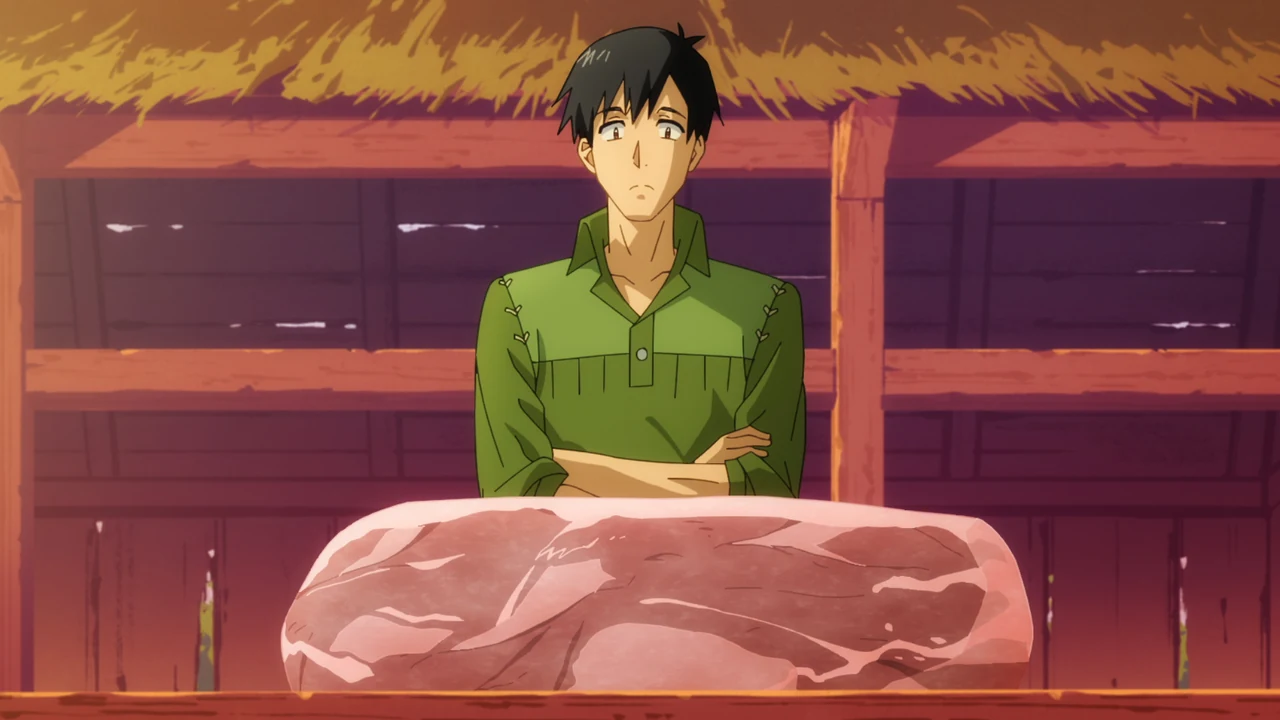
Why keep returning to the next meal?
The answer is also the series’ main tradeoff. If cooking is only a device for obtaining a powerful ally, the result could be explained quickly and the story could move on. Giving preparation and eating their own space asks the viewer to enjoy the routine that makes the partnership possible.
That rhythm will not please everybody equally. A meal can feel like an anticipated reward or another interruption before an adventure resumes. Here, the return to food is the point: Mukohda’s contribution has to remain visible after Fel arrives. Otherwise, the useful-skill premise would quietly become the story of a man standing beside a much stronger character.
Online Grocery is therefore overpowered in a particularly entertaining way. It changes what Mukohda can offer without making every other capability irrelevant. The fantasy is being needed for something ordinary you can do well—and discovering that your most intimidating companion is waiting for you to do it again.
The first official anime trailer from MAPPA introduces the original travelling-and-cooking premise.
Sources
The linked series pages include later episodes and characters beyond this opening example.
- Official first-season stories, episodes 1–3: summoning, Online Grocery, the fenrir contract, guild registration and the disparity between beginner work and Fel’s hunting. Official episode-gallery images accompany those entries.
- Licensed episode 3: My Super Power Is All About Cooking, corroborating the opening guild-and-cooking focus.
- Official series site, for title identity and original-series materials. This Feature does not assess later skill upgrades or compare the anime’s full run with the novels.