
Subaru remembers someone helping him when he was helpless in an unfamiliar city. She does not necessarily remember helping him. That is one of Re:ZERO’s most uncomfortable uses of its reset premise: an experience can remain important to one person after it has disappeared from the history they share.
The opening makes that difference painfully concrete through a greeting. Subaru finds the silver-haired girl again and calls the name she gave him before. What he intends as recognition reaches her as an insult. He has remembered her words correctly and still failed to understand what is happening between them.
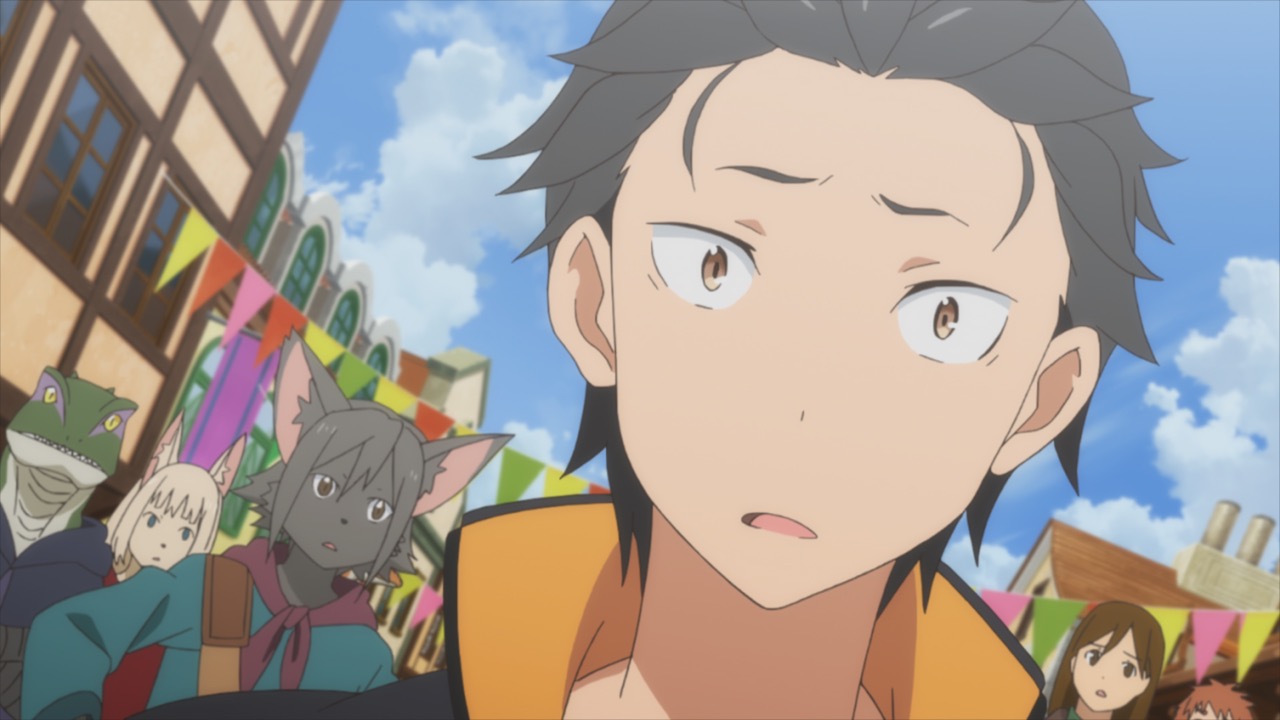
What belongs to Subaru alone?
Return by Death brings Subaru back to an earlier point after he dies, while leaving him with memories of the attempt that has ended. The official first-season archive anchors that premise in his repeated return to the starting place. The city is familiar to him sooner than he is familiar to its inhabitants.
The name exchange in episode 2 tests that advantage. In the earlier encounter, the girl called herself by the name of the Witch of Envy. Subaru has not yet understood the significance of that choice. On meeting her again, he uses the same name as though he were greeting an acquaintance. She challenges him for calling her something taboo.
For him, the word comes from a conversation they had. For her, an unknown young man has stopped her in public with a deeply offensive name. The greeting carries two histories, and only Subaru has experienced both. Knowing a fact about somebody is not enough if you do not understand what using it will mean to them now.
Why does the kindness survive the failed greeting?
Emilia’s first help gives Subaru a reason to care before he understands his ability. She has her own problem, a stolen insignia, yet intervenes when he is in trouble. He responds by trying to help recover it. The attachment begins with a particular interruption in her day, not a general duty imposed by arriving in a fantasy world.
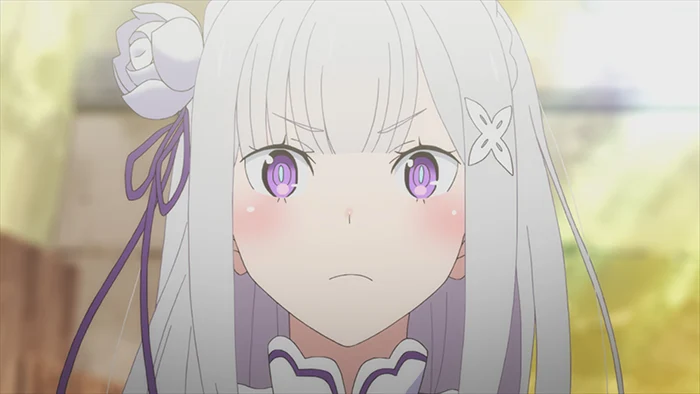
Once he recognises the reset, he can see the apparent escape clause: in this attempt, she has not rescued him, so there is no shared debt to repay. But knowing that does not remove what the rescue meant to him. Gratitude has survived the loss of the event that would explain it to her.
This is why his wish to help remains moving without automatically making every approach sensible. The feeling is sincere; the social evidence is missing. He needs to find a way to act on the first without demanding that another person supply the second.
What happens when the remembered problem becomes a negotiation?
The insignia gives that intention a practical obstacle. Subaru needs to deal with Felt, who has taken it, rather than merely persuade Emilia that his feelings are real. By episode 3, he is trying to buy it back before the next danger arrives. The official episode account describes a negotiation, not an automatic return because he knows why the object matters.
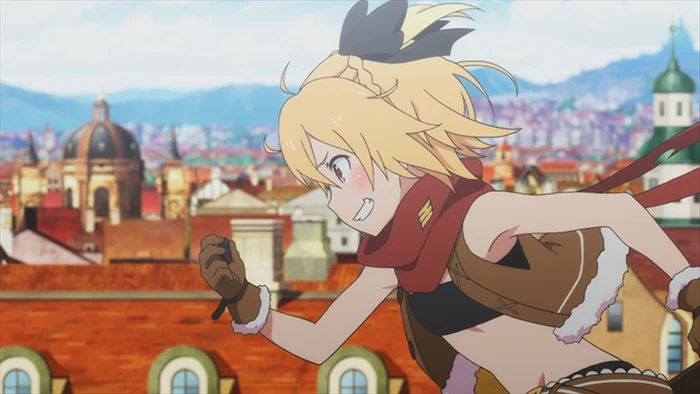
Felt’s position is different from Emilia’s and from his. The insignia is something she can bargain over. His knowledge of a possible disaster does not turn her into a participant in the earlier rescue. A useful next attempt has to take account of what the person across the table wants, not only what he wishes to preserve.
Subaru can return to the same city with more experience, but he cannot simply resume every relationship from the point where he left it. The wrong-name greeting makes that limitation visible before the larger danger is resolved. A familiar face is there; the shared conversation is not. Starting again means finding a way to meet the person in front of him, even while remembering what that person has already meant to him.
Sources
Later episode summaries and forum replies can reveal major developments. No later timeline theory or restriction is asserted here.
-
Official original first-season archive, opening and episodes 1–3, for arrival, Return by Death and the stolen-insignia search.
-
Licensed original-season introduction, for the starting predicament. The argument concerns the opening’s unequal memories, not a claim that every later relationship follows an identical pattern.
-
ここアニ’s original episode 2 scene discussion, reproducing the name exchange in Japanese; later speculation in that reading is outside this argument.