
Mima is trying to change jobs. She leaves the pop group CHAM! for acting, which ought to give her a chance to become something more than the performer an audience already knows. Instead, each new performance creates another image she must live beside.
Perfect Blue makes that predicament easy to lose sight of. Its mystery invites questions about which events happened, which were imagined and where one performance ends. There are good reasons to ask those questions. But treating Mima only as a source of clues can obscure the effort she is making: learning a new profession while people keep telling her what sort of woman they expect to see.
Content and spoiler note: the discussion includes Mima’s staged sexual assault in the television drama Double Bind. It does not identify the thriller’s perpetrator or explain its ending.
Why is Mima’s career change already public?
An idol performs a recognisable version of herself for an audience. CHAM!’s songs, stage clothes and group identity make Mima available as someone fans can return to. An actress must become other people convincingly. The move asks her to replace one kind of public recognition with another.
It also creates a practical vulnerability. Having worked on a stage does not give her immediate authority in a television production. Other people have roles to offer and decisions to make about the image through which she will advance. Ambition can make a troubling opportunity feel difficult to refuse without making the ambition itself false.
Kon’s opening connects the stage job with ordinary life rather than waiting for the mystery to disrupt an otherwise sealed domestic world. In Andrew Osmond’s interview, he describes those experiences as inseparable for Mima. She does not stop being the woman people recognise when the performance ends.
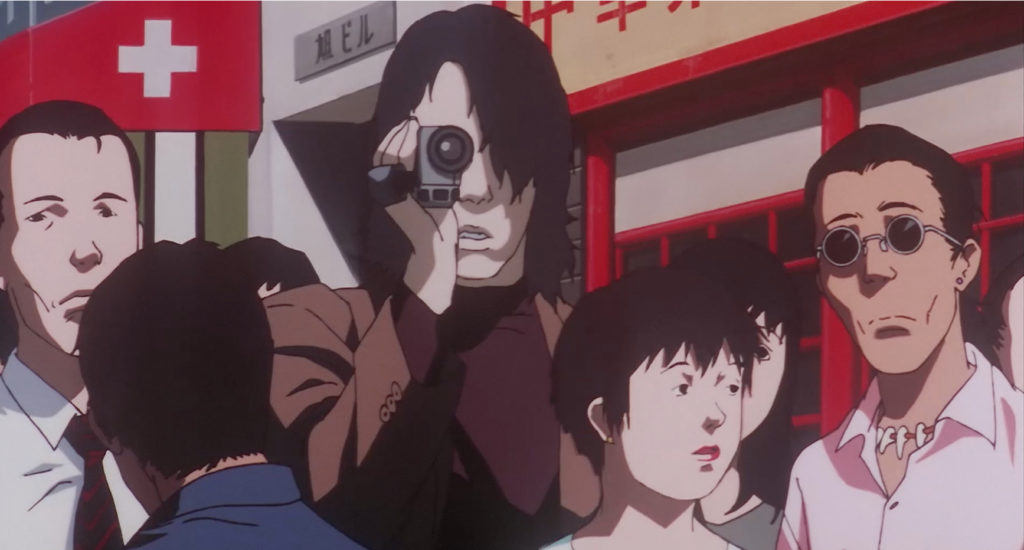
The camera in this distributor still is a useful companion to that idea. Recording can extend an encounter beyond the person who is being recorded. Mima’s work generates images that can remain available while she moves on to another day, another role or a different understanding of herself. Her audience need not move at the same speed.
How free is Mima’s choice on the set?
The Double Bind assignment makes Mima’s professional ambition uncomfortable to consider. She agrees to perform a rape scene. Within the television production it is staged; within Perfect Blue, making that performance becomes part of the pressure surrounding her transition to adult roles. Recognising that distinction does not make the scene emotionally harmless for a viewer.
Osmond asks Kon whether Mima is right to agree. Kon defends the decision as part of her effort to become a professional actress, describing it as an extreme trial. That is the director’s judgement, and it deserves to be presented as such. A reader need not accept that professional recognition should require enduring this kind of demand.
The tension is more substantial than a simple opposition between a free choice and a choice forced on her. Mima wants the new career. The industry around her helps determine what progress appears to require. The fact that she can say yes does not remove the unequal conditions in which she says it; those conditions do not erase her desire to work either.
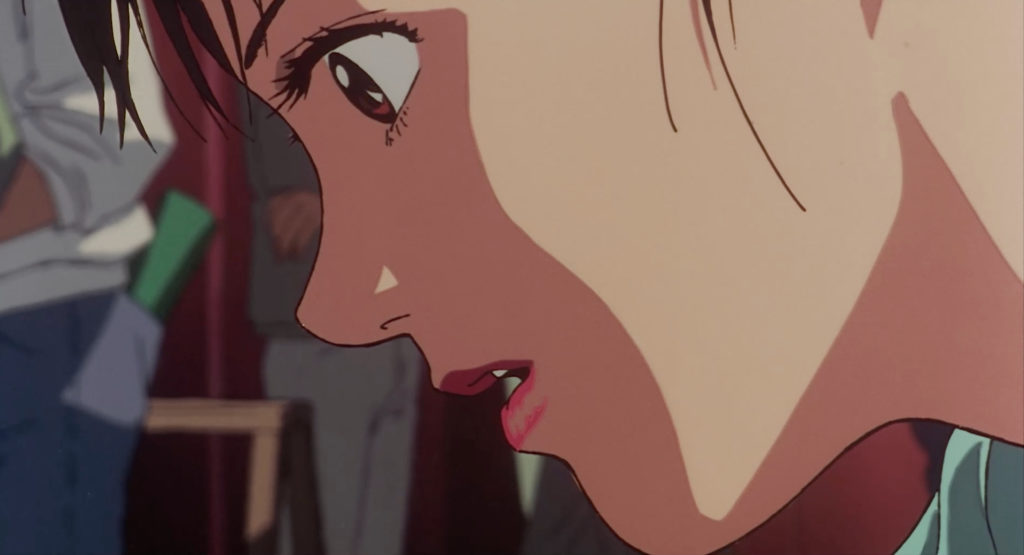
This is one reason her distress cannot be understood merely by finding the villain. The mystery concerns particular acts of violence. Her work raises a different set of questions about approval, vulnerability and the cost of being taken seriously. Those questions would still matter if every change of scene came with a reassuring label.
How can an image sound more certain than Mima feels?
The impersonating website Mima’s Room gives that struggle another form. It writes a life in her voice without her authorship. Something apparently intimate can become convincing evidence for someone else while leaving Mima alienated from the account.
She is already being asked to become new versions of herself professionally. The website supplies a version that claims she never changed. One activity requires acting; the other pretends there is no performance involved at all. Both make an image of Mima available for somebody else’s use.
The aquarium still offers a quieter visual complication. Fish, plants and glass share the image with a face. We can see the face clearly enough, yet seeing it does not remove the intervening layers. The visible layers do not stop us seeing her; they complicate the promise that seeing is enough.
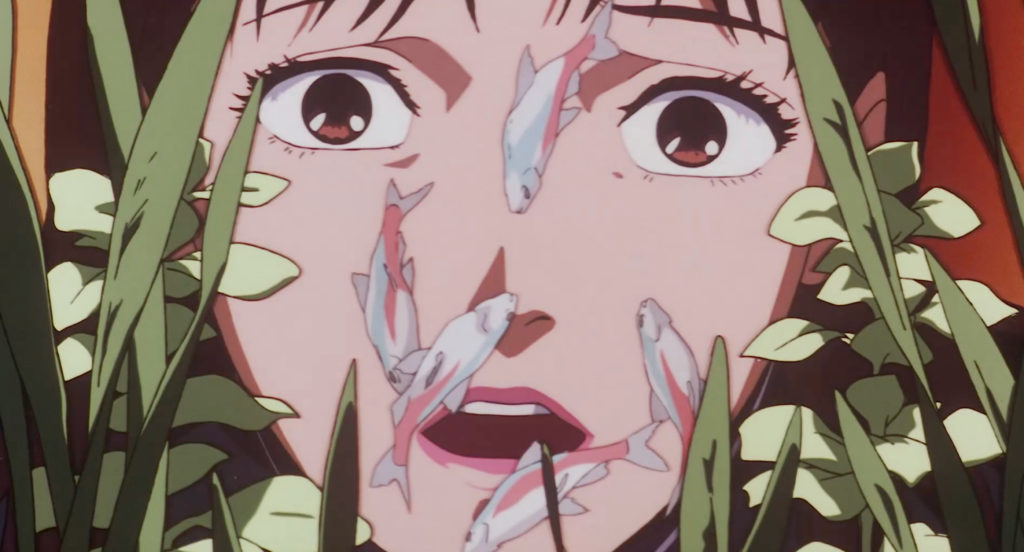
The film’s cuts make context similarly consequential. An image can be legible while its relationship to the preceding image remains uncertain. Kon told Osmond that he distinguished subjective and objective material while storyboarding, but did not make the audience’s classification of every moment the film’s objective. Deliberate construction and a disoriented spectator are compatible.
What does solving the mystery leave unresolved?
A viewer asking for help on r/anime lists questions about real events, imagined events and the final expression. A reply tries to settle some points while offering alternatives for others. The exchange shows a desire for orientation; it does not establish a single authoritative explanation.
In another discussion, bravetailor values the film’s lingering uncertainty even after its resolution. That is a different kind of satisfaction from arranging the events into a clean chronology. Neither response needs to cancel the other.
Watching Mima’s work offers something firmer to hold through the uncertainty. She wants a future, needs recognition and encounters people who prefer a more useful or familiar image of her. The emotional question continues beneath the thriller’s shifting surfaces: how much room does she have to become someone, when becoming someone is itself a public performance?
Sources
- GKIDS’ licensed disc page, for Mima’s career change, stalking premise and distributor stills. Its home-video release date is not the original film’s production date.
- Andrew Osmond’s interview with Satoshi Kon, for Kon’s account of the opening’s public/private juxtaposition and his distinction between understanding the film and classifying every image.
- Madhouse’s original-film record, for the original production and credits. This Feature concerns that animated film, including later editions of it.
- A viewer question about the mystery and bravetailor’s different reading of closure, checked 26 October 2026. Discussion replies contain ending spoilers and unverified claims; those claims are not adopted here.