
Making Goku small does not make him a beginner. Dragon Ball DAIMA begins after the battle with Majin Buu, with an experienced fighter caught in somebody else’s scheme. The imposed change gives him a different body to use, rather than replacing him with a child who has yet to meet his friends.
That distinction lets the new journey keep Goku’s appetite for a challenge while finding other things he needs to learn. The Demon Realm is unfamiliar ground. Fighting experience does not supply the route, the transport or every piece of local knowledge required to cross it.
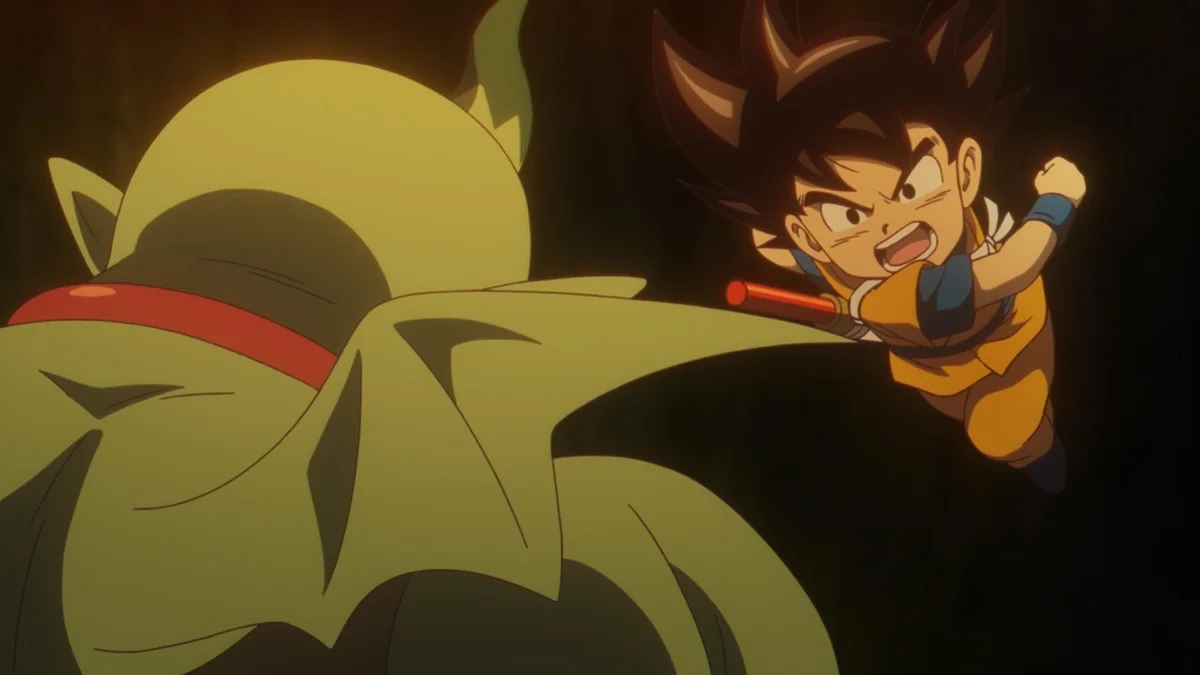
Image credits
Dragon Ball DAIMA
©バード・スタジオ/集英社・東映アニメーション
Image sourceWhat can the smaller body change without erasing the character?
The return of the Power Pole, also called the Nyoibo, gives the change something tangible. Goku retrieves equipment associated with reaching beyond the limits of his body. The familiar object becomes useful in a situation that does not require the story to pretend his earlier achievements never happened.
The visual scale carries part of that renewal. In the early fight image, the opponent’s back occupies most of the near space. Goku’s face and raised fist appear beyond it. The pose communicates eagerness even while the composition makes the disparity in size obvious.
This is a different attraction from asking which latest transformation would make the next attack larger. An altered body can make familiar actions interesting again. An object the audience recognises can re-enter the practical business of reaching, moving and fighting.
Smallness alone would be a limited novelty, though. A veteran in a smaller form still needs somewhere worth going. The opening pairs that physical change with a destination whose everyday arrangements cannot be assumed in advance.
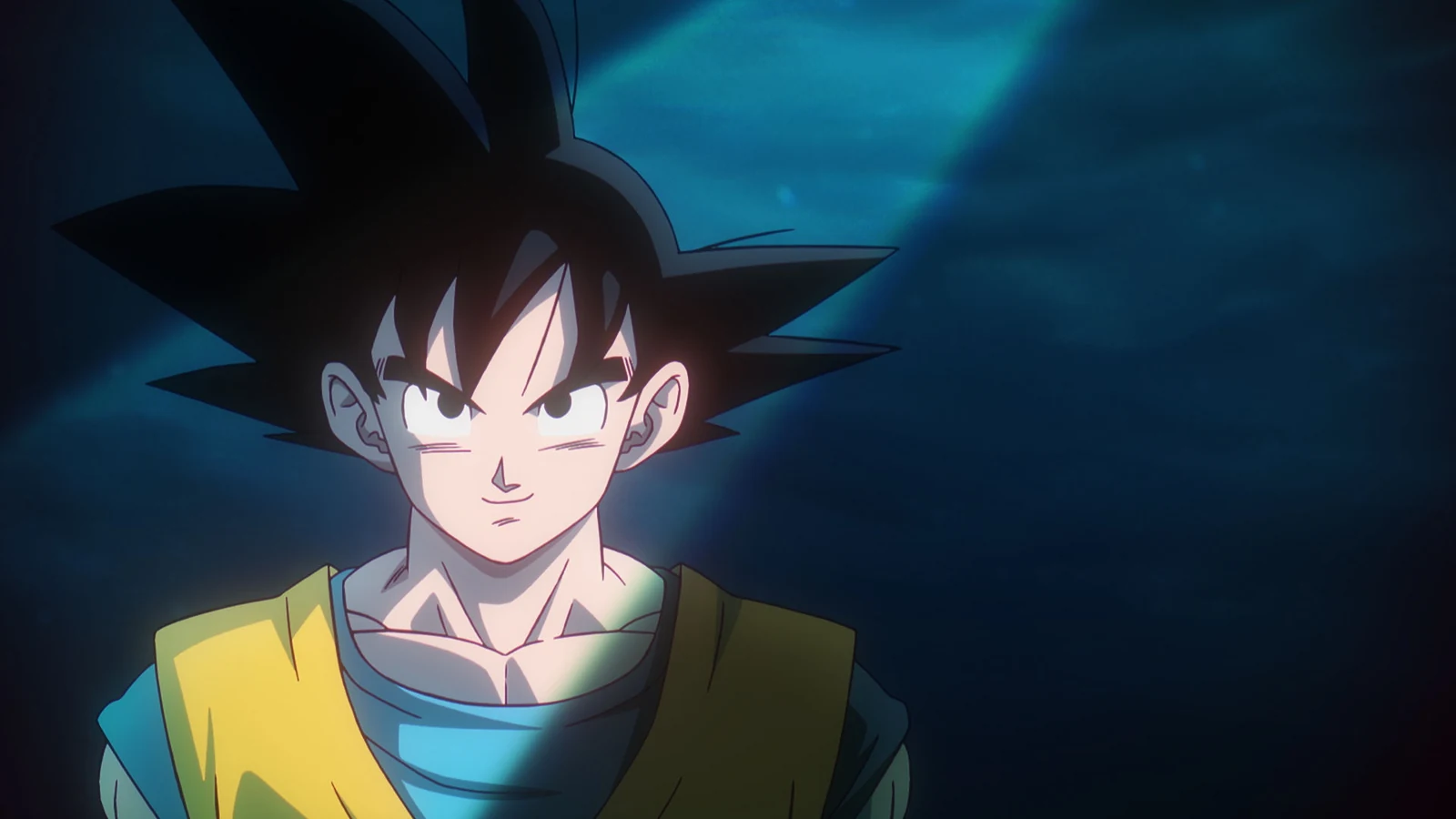
Image credits
Dragon Ball DAIMA
(C)バード・スタジオ/集英社・東映アニメーション
Image sourceThe landscape shows how much ground the party has to cross. The party is bunched together above open rock formations, with terrain stretching well beyond it. Goku remains recognisable, but the world is no longer arranged at the scale of a close fight. There is somewhere to cross.
Why does a local guide matter to Goku?
Glorio arrives with knowledge of the Demon Realm, and travels there with Goku and Supreme Kai. His value to the party does not depend on being a replacement for Goku’s usual fighting companions. He knows something about where they are going.
That gives the trip a useful imbalance. An experienced fighter can still be a visitor. A guide can make an unfamiliar place intelligible without sharing the visitor’s enthusiasm or explaining everything the audience might eventually want to know.
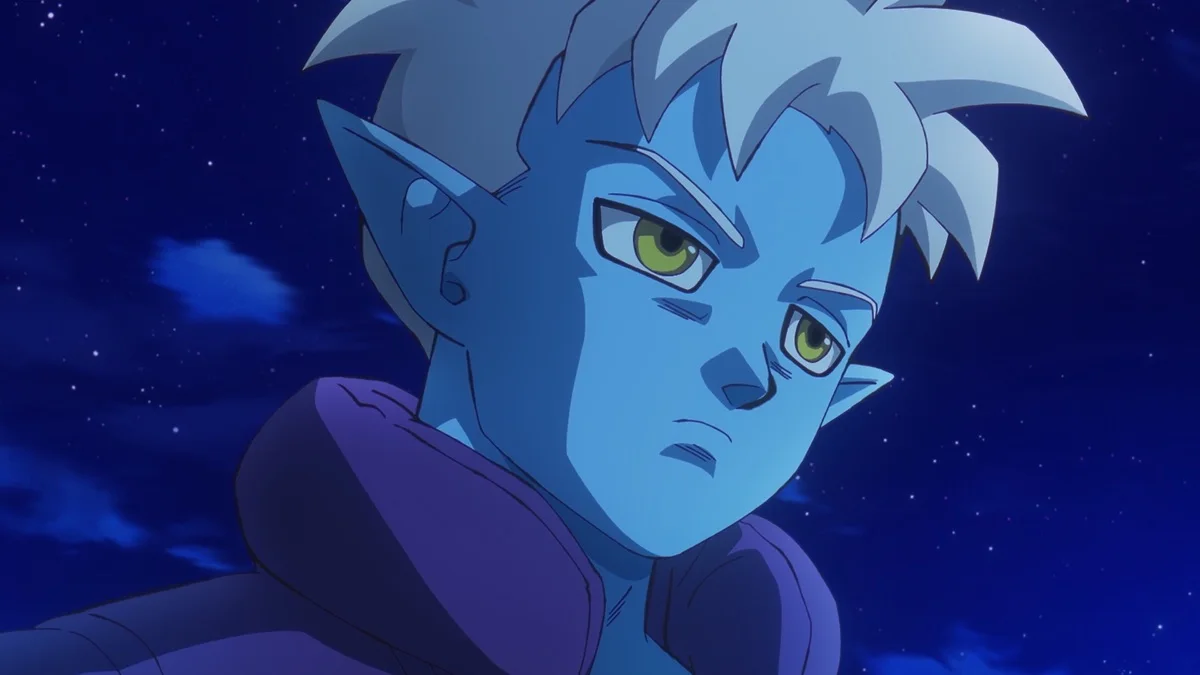
Image credits
Dragon Ball DAIMA
©バード・スタジオ/集英社・東映アニメーション
Image sourcePanzy later adds her own insistence on joining and showing the way to a castle. The party grows through knowledge of a place, as well as through the ability to survive a confrontation. Directions can give a new companion a useful contribution before anybody needs to compare maximum power.
What makes the space between battles worth keeping?
Episode 4 puts the travellers on foot and takes them to a lone drive-in. There are strange souvenirs and a talkative Majin couple, people whose ordinary business intersects with the visitors’ much larger problem. The destination briefly becomes a place where somebody works and talks, rather than only the location of the next enemy.
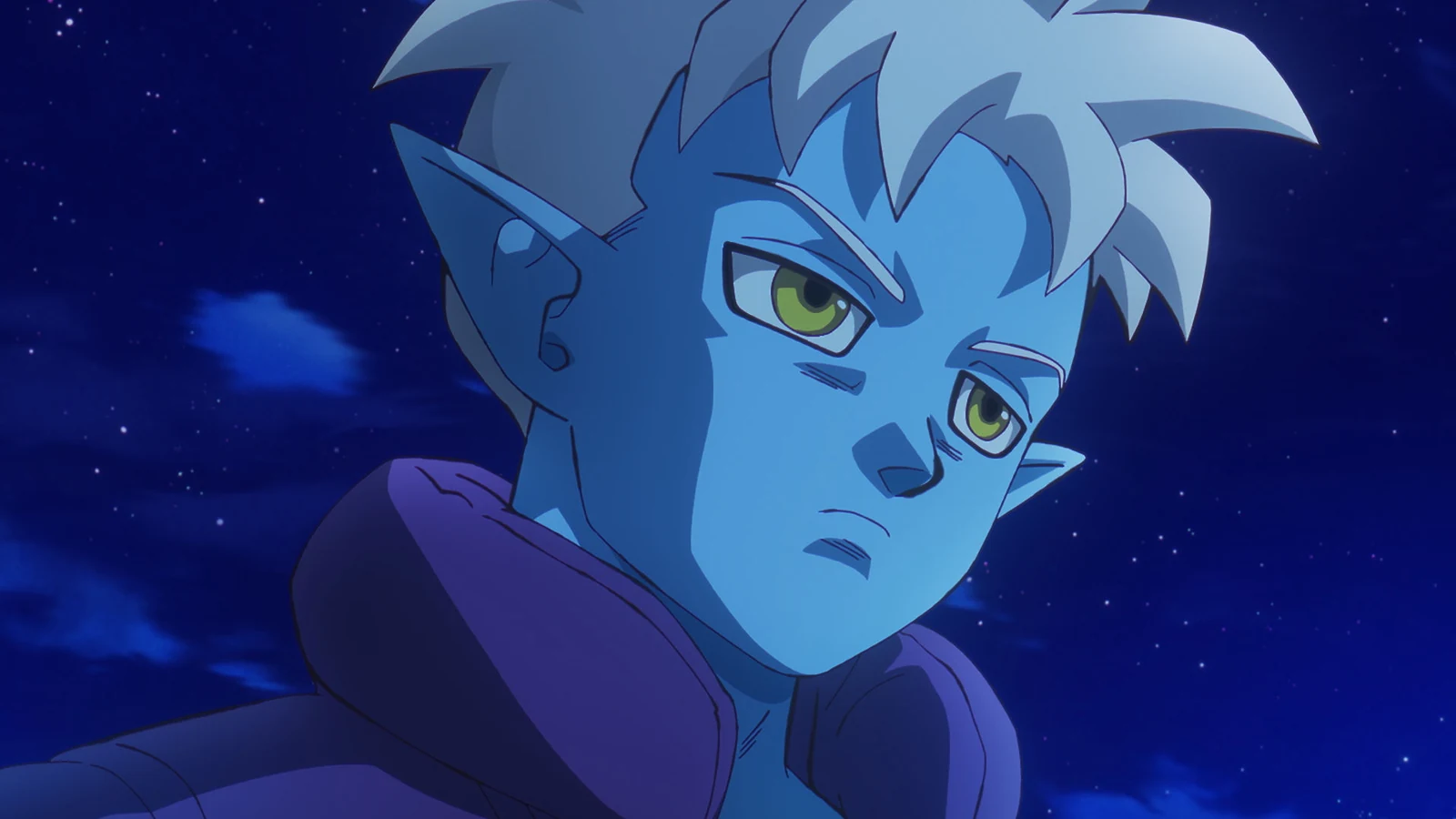
Image credits
Dragon Ball DAIMA
(C)バード・スタジオ/集英社・東映アニメーション
Image sourceThe stop gives local knowledge something to attach to. An unfamiliar object can be a souvenir; an unfamiliar person can be running the place the party needs. Those small exchanges make the Demon Realm worth looking at between confrontations.
Goku’s history remains useful because the viewer recognises the person eager to continue. The journey remains useful because recognition is not the same as knowing the way. DAIMA can start another adventure without requiring its hero to start his life again.