
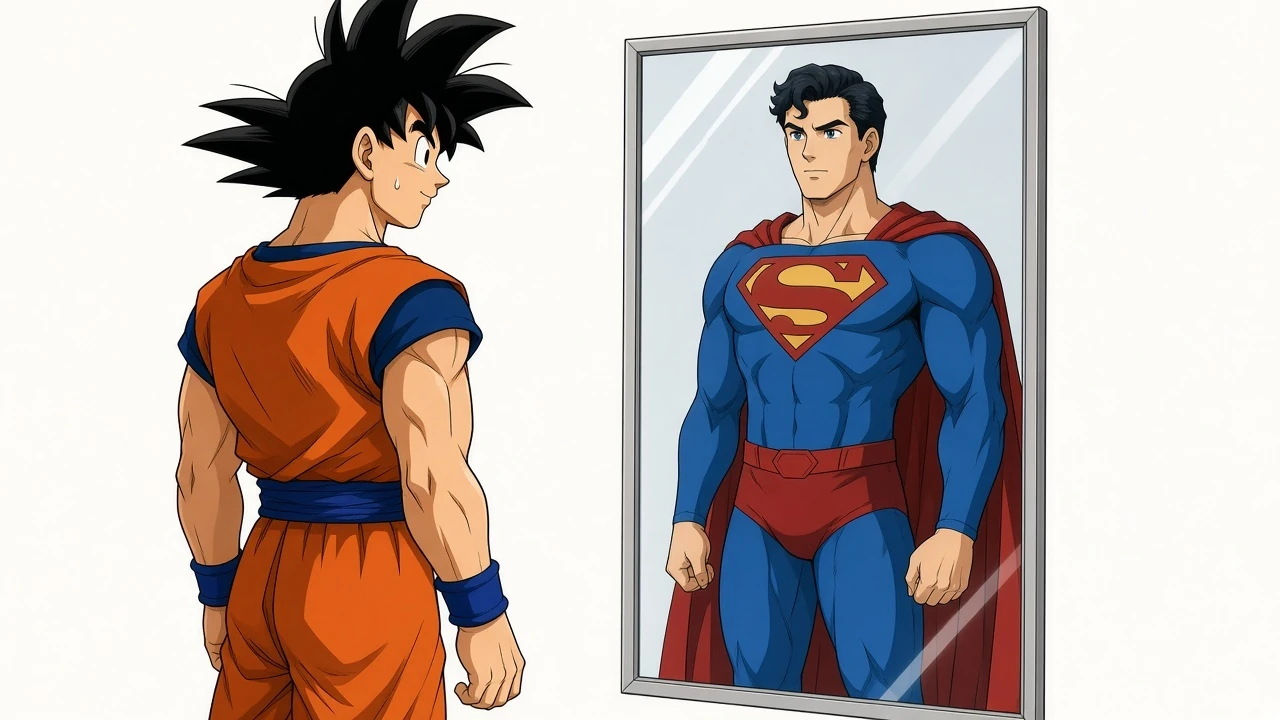
Spoilers: alien origins, Saiyan-era clashes, Super Saiyan forms, Cell-era allies and later manga origin accounts.
Two planets. Two goodbyes.
Parents looking towards the child they are sending away. This is where the resemblance stops being abstract.
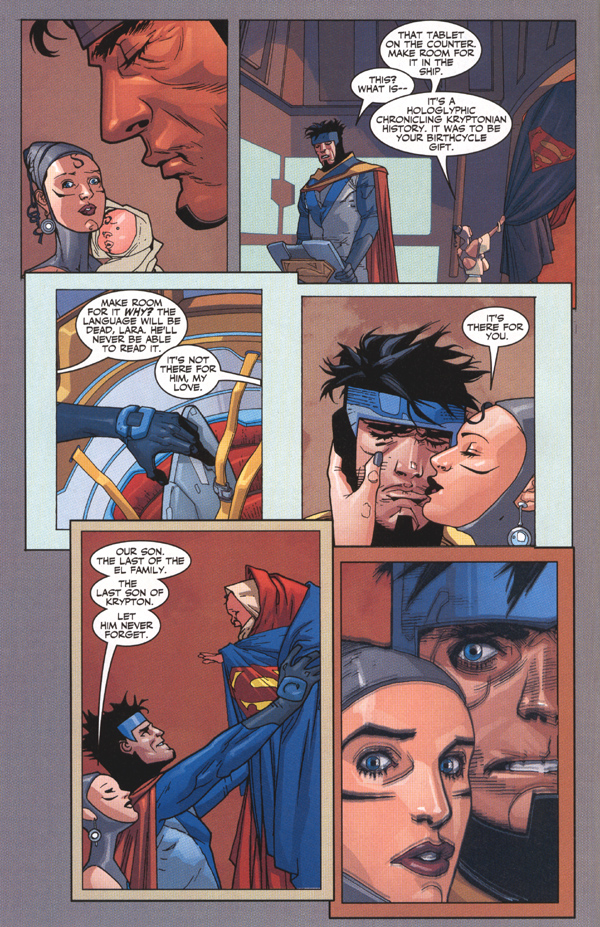
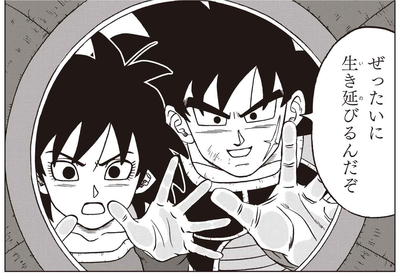
A close visual echo, not an identical shot. These are 2003 and 2022 retellings; neither image is evidence of what Toriyama had planned in 1984.
A child arrives on Earth in a spacecraft. Someone who has no idea what has just landed takes him in. He grows up far from his birthplace, possesses strength no ordinary child should have, and eventually becomes one of the people standing between Earth and catastrophe.
His original planet is destroyed. Its history turns out to be considerably more complicated than a sad story about an explosion. Other survivors appear, and some of them would like a word about his attachment to the humans.
At this point, the cape and the orange uniform are doing a lot of the identifying work.
The resemblance is worth enjoying. Publication dates can show which ideas appeared first; they cannot establish that Toriyama borrowed from Superman.
How much of the Superman pattern existed before Goku?
Superman debuted in 1938; Goku arrived on 20 November 1984. That is a 46-year head start. Neither hero came with his complete history attached: the revealing part is when the familiar pieces joined the story.
- 1938The alien child arrivesAction Comics #1: escape from a doomed planet; a life on Earth.
- 1944Superman gets a childhoodMore Fun Comics #101: Superboy begins. Cover-dated 1945.
- 1949Clark discovers KryptonSuperman #61: in this telling, the hero learns his own origins.
- 1959–61Relatives, allies, enemiesSupergirl, the Justice League and General Zod enter the comics.
- 1984Enter the boy with a tailDragon Ball begins. Goku’s Saiyan identity comes later.
- 1988–89Family history becomes a threatRaditz reveals Goku’s ancestry; Vegeta and Nappa bring invasion.
- LATER ORIGIN RETELLINGS
- 2003Superman’s farewell, retoldBirthright #1 supplies the parents’ farewell panel shown here.
- 2014 / 2022Goku’s farewell, expandedMinus (2014) develops the departure. Super #81 (2022) supplies our matching image.
Publication dates, not fictional chronology. The League debuted in December 1959 with a 1960 cover date. Later retellings sharpen the resemblance; they do not establish influence.
The childhood, the lost heritage and the dangerous survivors were all present in Superman’s comics before Goku arrived.
What happens after the spaceship lands?
Jonathan and Martha raise Clark; Grandpa Gohan raises Goku. Earth gives both alien children a family before either can understand his birthplace. Gohan also teaches martial arts, while the Kents guide Clark’s sense of responsibility. The resemblance is in belonging, even where the upbringing differs. DC’s comics timeline, Grandpa Gohan’s official profile.
The farewell images make that connection especially striking. Jor-El and Lara in Superman: Birthright #1 (2003); Bardock and Gine in Dragon Ball Super Chapter 81 (2022). Parents sending away a child, trusting that somewhere else might offer a future: the emotional arrangement is uncannily close. Birthright’s retelling, Gine’s manga scenes.
Did Superman also have the strange childhood first?
Small boys. Extremely light cars.
A specific childhood feat, with very different intentions.
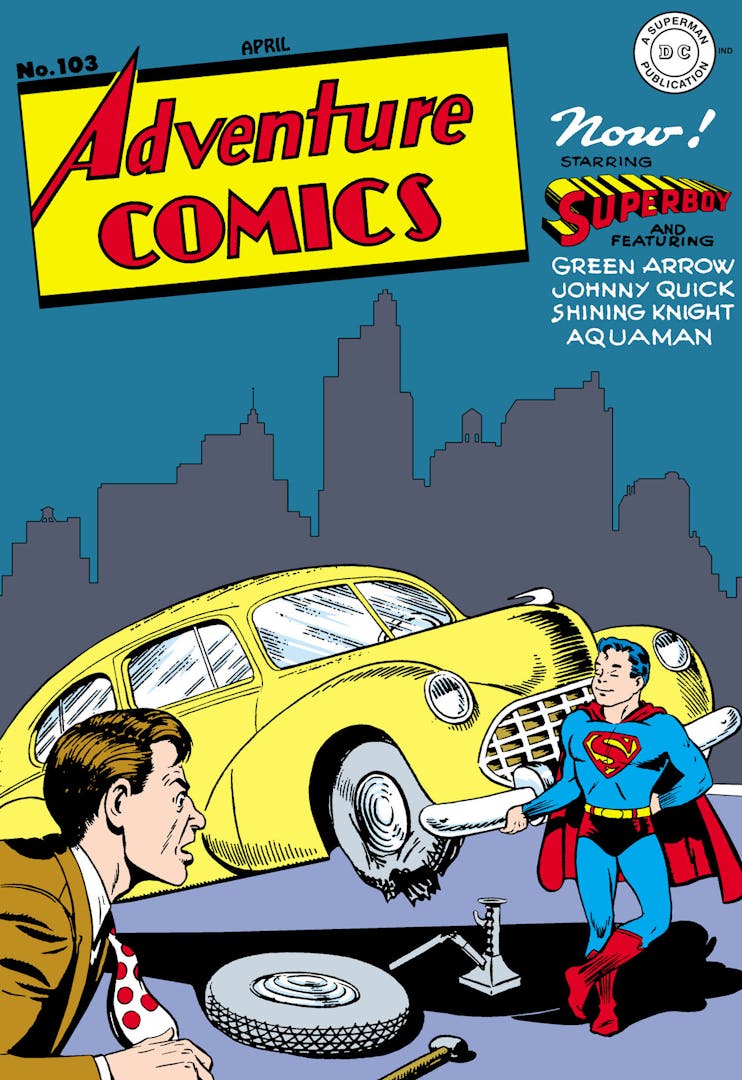
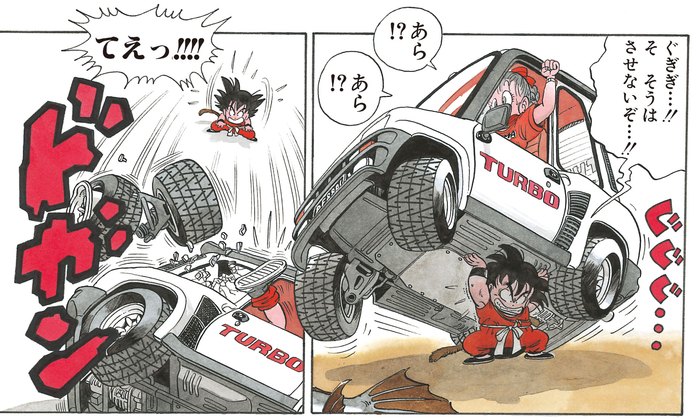
A comic cover beside a manga story panel: the comparison is the feat, not two identical plots.
The car makes a useful test. On the Adventure Comics #103 cover, Superboy holds one up while a man changes its wheel. In Dragon Ball Tale 1, Goku lifts Bulma’s car because he thinks it is a monster. Same impossible childhood strength, very different roadside assistance. Goku’s first encounter with Bulma.
Smallville gives the extraordinary child ordinary surroundings: parents, friendships, a town and people who need help. The original Superboy stories make that childhood a superhero career in its own right. Clark has the strength to lift the car; learning what to do with that strength gives the stories somewhere to go. DC's early Superboy collection.
Goku’s car encounter opens a much less orderly education. Bulma draws him out of his isolated life and into the search for Dragon Balls. Teachers, rivals and tournaments follow. He has the strength already; the world keeps supplying things he does not understand. For both boys, being extraordinary is the beginning of the childhood story, not an exemption from growing up.
Superman's publication history runs the other way: the adult hero arrives first, and the comics subsequently expand backwards into his boyhood. Dragon Ball introduces Goku as a child and carries him forwards. Both make room for the pleasures of growing up extraordinary, but they invite readers into that life from opposite ends.
The heritage reveal changes the comparison again. In Superman #61 (1949), Clark learns about the alien world readers already associate with him. Raditz’s arrival changes the explanation for Goku’s strength for readers too. The boy with a tail has become a husband and father before the story identifies him as a Saiyan. His brother arrives remarkably late with the family paperwork.
Why does their family history keep threatening Earth?
The homecoming turns into a beating
Shared ancestry does not guarantee a warm welcome.
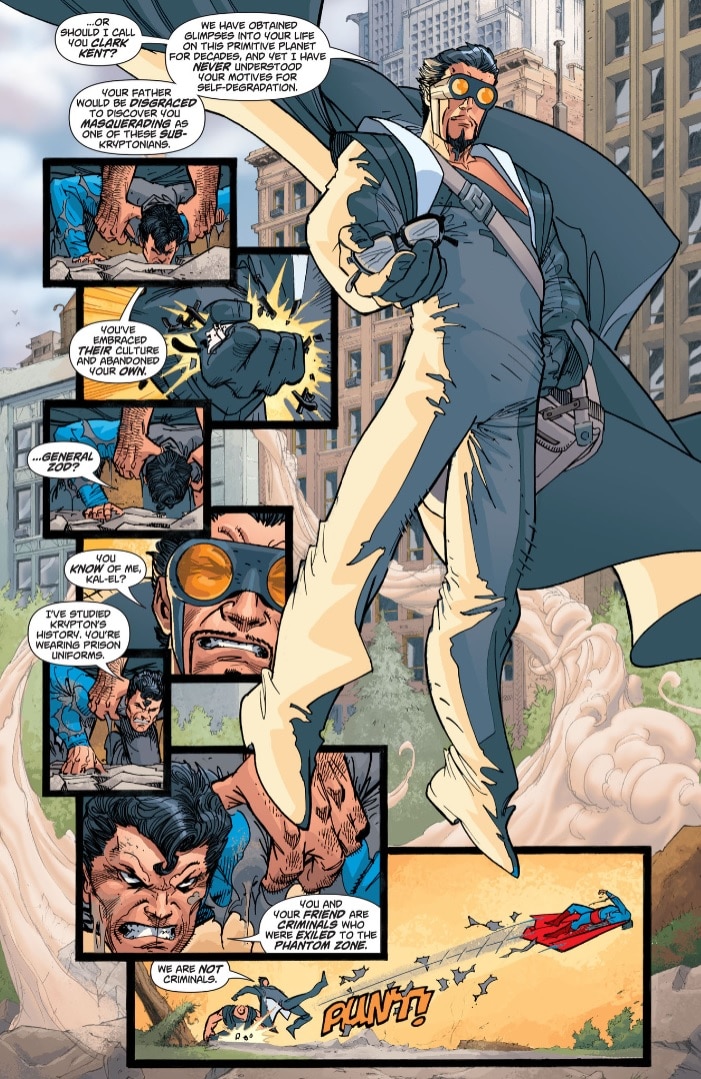
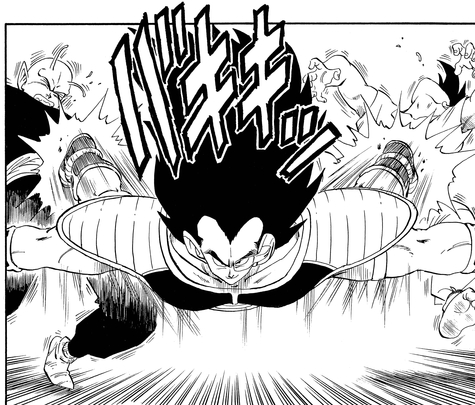
The shared scene is an alien compatriot overpowering Earth’s defender. Raditz is his brother; Zod is not.
Raditz is a spectacularly bad introduction to a previously unknown family. He brings an explanation for Goku's strength, a claim on his identity and an immediate danger to the people Goku cares about. Goku's response is to oppose his brother, joining forces with Piccolo to protect his son and Earth. VIZ's manga synopsis.
Vegeta and Nappa turn that family crisis into an invasion. Goku’s ancestry explains why he can protect Earth, then supplies people powerful enough to threaten it. That is the sharpest Superman resemblance here: discovering where the hero belongs also introduces enemies who think he belongs somewhere else.
General Zod fills that broad role in Superman's comics. He survives Krypton's destruction through his imprisonment in the Phantom Zone and becomes an enemy of Jor-El's surviving son. He has Kryptonian abilities and a military background, turning Superman's lost civilisation into an active threat rather than distant scenery. DC's Zod profile.
The scenes above make the argument physical. Zod condemns Clark’s attachment to humanity while beating him; Raditz can strike Goku and Piccolo together. These visitors bring more than information about a dead world. They have the strength to enforce its claim. Raditz is a brother and Zod a compatriot, but both make the hero’s Earth loyalties a problem.
Supergirl supplies a useful counterpoint. A surviving relative can also bring companionship and another defender. Kara is not Raditz with a cape, just as Nappa is not automatically the counterpart of whichever large Kryptonian happens to be standing next to Zod. These histories are richer than a casting spreadsheet.
Are their powers suspiciously similar too?
Beams, flight and a familiar silhouette
Two ways to make ordinary physics look optional.
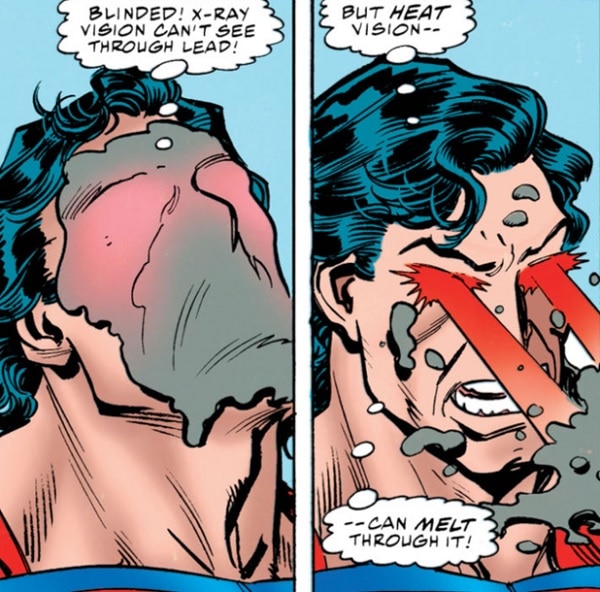
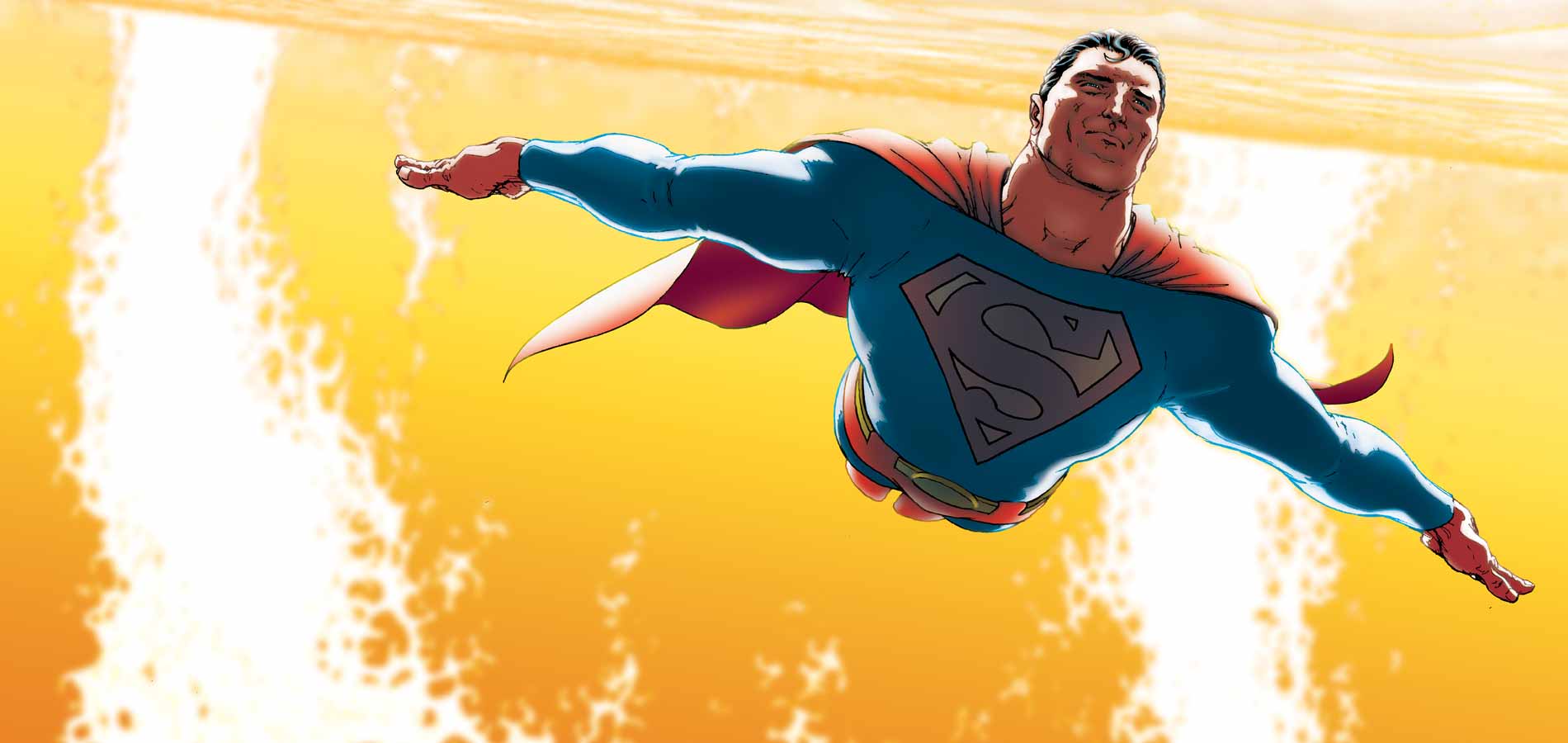
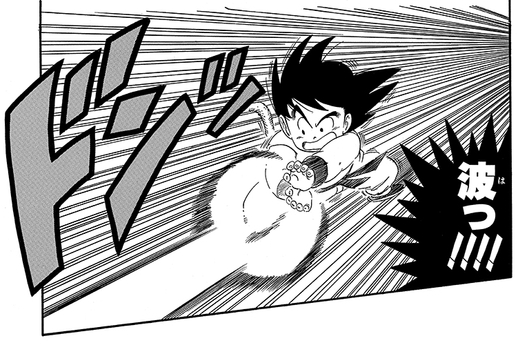
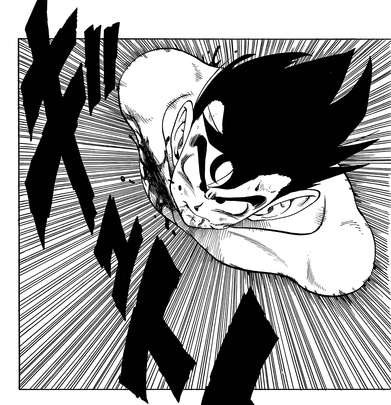
The silhouette is familiar; the mechanics differ. Neither pair is a measure of who would win.
Start with the beams. In Action Comics #714, Superman melts a lead obstruction with heat vision. Goku’s early Kamehameha, in Tale 15, sends energy out through his hands. Eyes and palms give the spectacle different launch points, but the panel still fills with concentrated power. Superman’s heat vision, Goku’s technique.
Flight makes the resemblance even easier to read. A body suspended in the air stops obeying the rules around everyone else. Goku’s Tale 193 image shows his use of Buku-jutsu, a levitation technique; Superman’s flight is part of his familiar Kryptonian abilities. Both can turn the sky into fighting space, although they reach it through different power systems. Goku’s technique compendium, Superman’s powers.
Those systems matter. Superman’s familiar powers draw on solar energy and include enhanced senses and freeze breath. Goku’s development revolves around martial arts, controlled energy and transformations. In Dragon Ball Super, training with Whis opens further possibilities beyond Super Saiyan God. A similar-looking attack does not make the instruction manuals interchangeable. Super manga recap.
Their dominance is relative, too. Beside ordinary people, both can make a hopeless confrontation look survivable simply by arriving. Against the strongest beings in their own stories, neither has a permanent reservation at number one. Bizarro can match Superman’s power; Beerus reveals how much room remains above Goku. Bizarro’s profile.
The difference is in what the stories do with that gap. Goku’s hunger to improve drives him from tournament defeats towards increasingly formidable opponents. Toriyama described that appetite for strength as central to developing the series. Superman’s long history includes defeats and changing abilities, but his familiar dramatic burden is what to do with immense power. Toriyama interview.
Superman often makes strength feel like an enormous responsibility already in someone’s hands. Goku makes it feel like a lifelong project with a very poor concept of finishing time.
Is there a Justice League hiding among the Z Fighters?
Earth’s defenders, assembled
The group shot is the resemblance. The organisation is the difference.
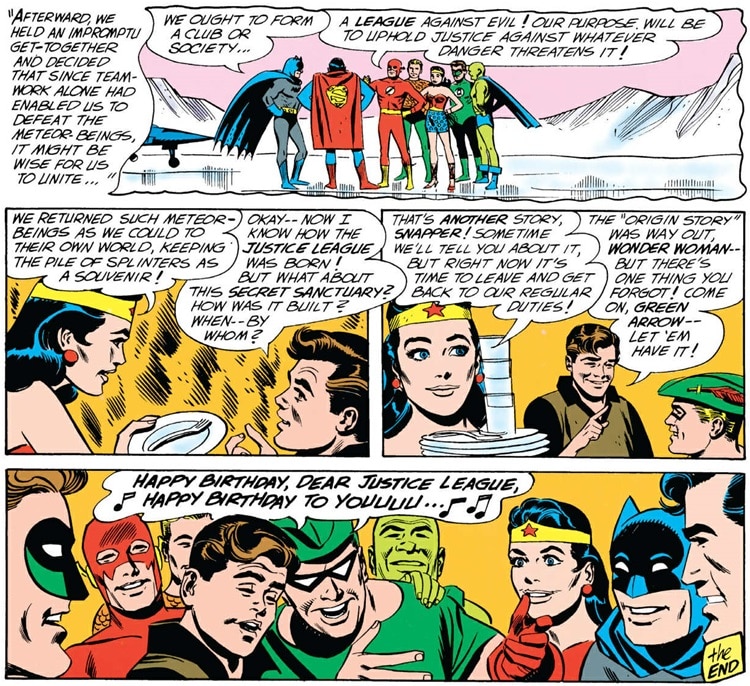
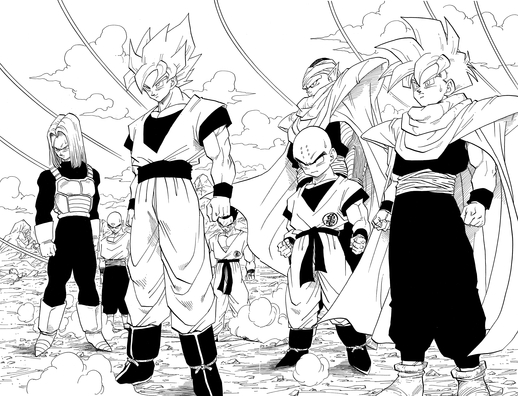
One group is discussing its founding. The other is arriving for a confrontation. Both make room for power beyond the lead hero.
The group shot makes a persuasive first impression. Exceptional people assemble around a familiar strongman because the next problem is too large for ordinary help. Put the Justice League beside Goku’s allies at the Cell Games and the eye understands the comparison before anyone explains the membership rules.
Then the speech balloons start. In the League panel, the heroes are discussing a club and its purpose. Goku’s circle has no equivalent founding meeting here. The Z Fighters arrive through friendship, family, training and former rivalries. One ensemble proposes an organisation; the other has accumulated a remarkable number of people who can survive standing near the same disaster. DC’s Justice League history, the Tale 395 gathering.
That difference gives the resemblance some texture. Superman joins a wider world of independent heroes; Goku’s adventures steadily build a wider fighting circle. Neither cast exists solely to make its strongest-looking member look impressive. Friends and allies bring their own skills, loyalties and unfinished business into the confrontation.
“Z League” is therefore an excellent joke and a poor organisation chart. Even Superman’s founding role changes between Justice League versions. What survives the comparison is the pleasure of seeing Earth’s defenders together: the hero has company, and the threat had better justify the attendance.
How much resemblance is enough to raise an eyebrow?
Toriyama gave Dragon Ball a different starting inheritance. His account of its creation names Jackie Chan films and Journey to the West, the Chinese adventure whose Monkey King supplied Goku's name and much of his early imagery. Those roots explain the martial arts, the monkey features and the comic journey. They deserve more than a footnote beneath Superman's cape. Toriyama interview, official name explanation.
The case becomes interesting through accumulation. A strong boy alone proves very little. Add the spacecraft, Earth upbringing, destroyed homeworld and hostile survivors, and the resemblance becomes harder to shrug off. Add the later parents’ farewell and even the emotional framing begins to look familiar.
Superman's comics had explored many of those elements before Dragon Ball began. That establishes an earlier published pattern. The argument here is about how closely the later manga can resemble it, not a claim that the dates reveal Toriyama's private intentions.
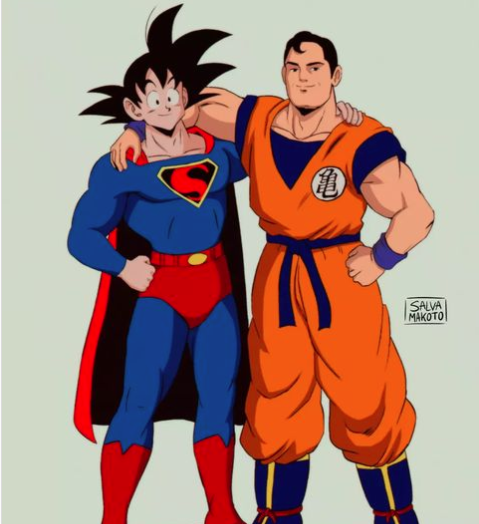
You can recognise Goku's individuality and still look at that picture twice.
The orange uniform is distinctive. The paperwork from his home planet is where things start looking familiar.
Sources
DC: The Evolution of Superman's Origin, issue-specific changes to the origin, knowledge of Krypton and solar explanation.
DC: Whatever Happened to the Boy of Tomorrow? and Adventures of Superboy Vol. 1, the original Clark Kent's boyhood comics.
DC: New History of the DC Universe timeline, part two, a modern account of the Kents and Clark's early life; its fictional chronology is not the publication timeline above.
Dragon Ball: debut retrospective, Saiyan arc and Namek battle, original Japanese serialisation context.
Grandpa Gohan, Gine in the Super manga and VIZ's Saiyan-arc synopsis, adoption, later departure account and Raditz's role.
VIZ: 7 April 2014 issue announcement and official series chronology, Minus and the Super manga's publication context.
Superman, Supergirl, Zod, Bizarro, Justice League origins, and Super manga recap, powers and character/team roles. Source pages may contain later story spoilers.
Toriyama interview, translated by Ian Kelley, his account of martial-arts-film and Journey to the West influences and Goku's development; an unofficial English translation of creator testimony, not a statement about Superman influence.
Superman: Birthright retrospective and archived reproduction of the selected page, 2003 origin retelling; the image is hosted by a fan archive, not DC.
Official Krillin showcase: Android and Cell arcs, the manga ensemble image identified as Tale 395.
DC: Justice League anniversary announcement, dates The Brave and the Bold #28 to 29 December 1959; its 1960 cover date differs from release.
Superboy debut copyright record, November 1944 release versus January–February 1945 cover date.
Official Bulma showcase, Tale 1 car-lifting scene.
DC: heat vision and lead, Action Comics #714 panel and issue identification.
Goku’s technique compendium, the selected Tale 193 flight panel; DC’s Superman gallery, the accompanying flight artwork. Gallery issue metadata is not asserted.