
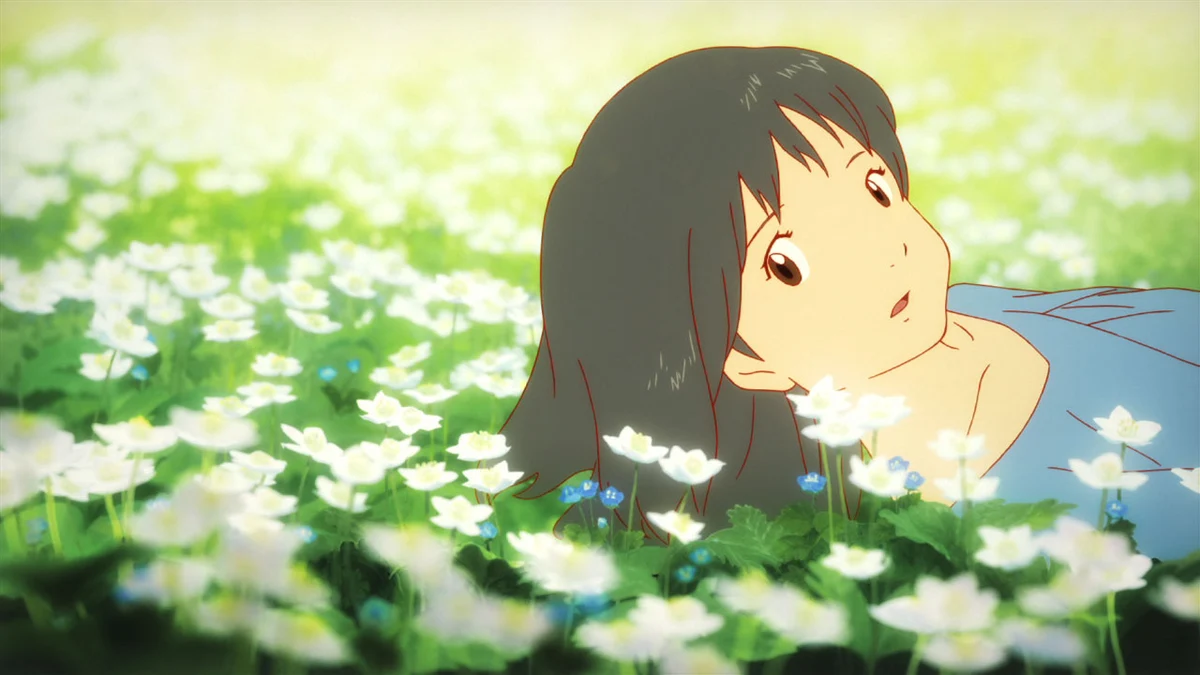
Hana falls in love with a man who can become a wolf. Their children inherit the same possibility, turning the small problems of family life into things no ordinary parenting book can quite explain. A child can be hungry, frightened or delighted and have a body that does not remain reliably human while feeling it.
After their father dies, Hana has to raise Yuki and Ame herself. She eventually leaves the city for an old house in the countryside, hoping to give both children room to decide how they want to live.
Wolf Children follows thirteen years of that family. Its fantasy begins with an unusual inheritance, but its most interesting questions belong to the everyday work of loving people who will grow beyond your ability to choose for them.
What does Hana have to learn?
Hana begins as a student, not an expert on children or wolves. The loss of her partner removes the person who might have understood the family’s unusual needs from inside his own experience. She is left working out practical answers while protecting a secret.
That makes the move to the countryside more than a picturesque escape. The house needs work and a new way of living has to be learned. Space is useful, but it does not feed a family or teach somebody how to farm.
The film gives those problems a place alongside affection. The children are lovable and exhausting; their difference can be a source of play and an extra reason for worry. Caring for them means responding to what they need now while trying to preserve choices they are too young to understand fully.

Image credits
Wolf Children
©2012「おおかみこどもの雨と雪」製作委員会
Image sourceThe image makes the premise wonderfully immediate. Two small children look at one another from nearly the same level. Ears and posture suggest another kind of creature, while clothes and a domestic floor keep them inside a recognisable home. The human and animal parts do not arrive in separate compartments.
Why isn’t the countryside a life without other people?
Hana wants privacy, but she also needs help. Nirasaki, an elderly neighbour, teaches her to farm, and other villagers become part of the family’s new life. The attempt to withdraw from scrutiny leads towards relationships she could not have supplied for herself.
That gives the setting a useful complexity. A rural house offers the children room, yet living there requires knowledge and cooperation. Hana’s determination matters, but determination is not a replacement for someone showing her how to do unfamiliar work.
Nor does changing addresses make young children predictable. Inside the house, the smaller scale of the adventure continues: a child under a table, paper on the floor, a sibling watching what happens next.

Image credits
Wolf Children
©2012「おおかみこどもの雨と雪」製作委員会
Image sourceThe humour is specific to bodies and behaviour. A table becomes something to explore from below. Furniture divides the space between two siblings who are close enough to watch each other. The image needs no grand magical event to make the family’s life feel lively.
Can the same home lead to different lives?
Yuki is the older child, Ame the younger. They share a mother and an unusual inheritance, but Hana cannot assume that the same arrangement will answer both children’s needs forever.
School gives that difference a practical form. Yuki wants to do what the village’s other children do. Joining them means entering a place where the family’s private rules must work in public, including a promise not to become a wolf in front of other people. Wanting to belong can make an ordinary classroom feel like an ambitious destination.
Ame’s relationship with the human and natural worlds develops differently. The film leaves room for that difference rather than treating the children as two versions of the same problem for Hana to solve. Keeping options open for a toddler and supporting an older child’s wishes are not identical kinds of care.

Image credits
Wolf Children
©2012「おおかみこどもの雨と雪」製作委員会
Image sourceThe contrast between that broad landscape and the small domestic pictures helps describe the film’s reach. A parent attends to the person immediately in front of them; the world that person will eventually enter is much larger. Space can feel freeing and worrying at the same time.
What kind of family film is it?
Mamoru Hosoda directs and shares the screenplay credit with Satoko Okudera. The story brings romance, bereavement, practical work and growing children into one long family portrait. Its central attraction is the changing relationship between Hana and the people she is raising, rather than a villain who can make their difficulties disappear by being defeated.
The warmth does not remove loss or danger. The father’s death is an early part of the premise, and later scenes put family members at risk. There are also quiet intervals, comic disruptions and tenderness. It is worth choosing a time when you want room for that mixture, rather than expecting an uninterrupted animal adventure.
Do you need to watch anything first?
No. Wolf Children is a standalone 2012 film, about 117 minutes, or just under two hours. It requires no earlier Hosoda film, television series or manga. Later remasters are editions of this same feature.
For a younger child’s countryside discoveries with a different emotional balance, My Neighbor Totoro is a useful companion. It shares an interest in family and unfamiliar surroundings, while telling a much shorter story.
What does the official remaster trailer introduce?
GKIDS’ trailer promotes a 4K remaster of the original film. Its release details refer to that remaster, not a new chapter of the family’s story.
Original 2012 film, later remaster · GKIDS Films
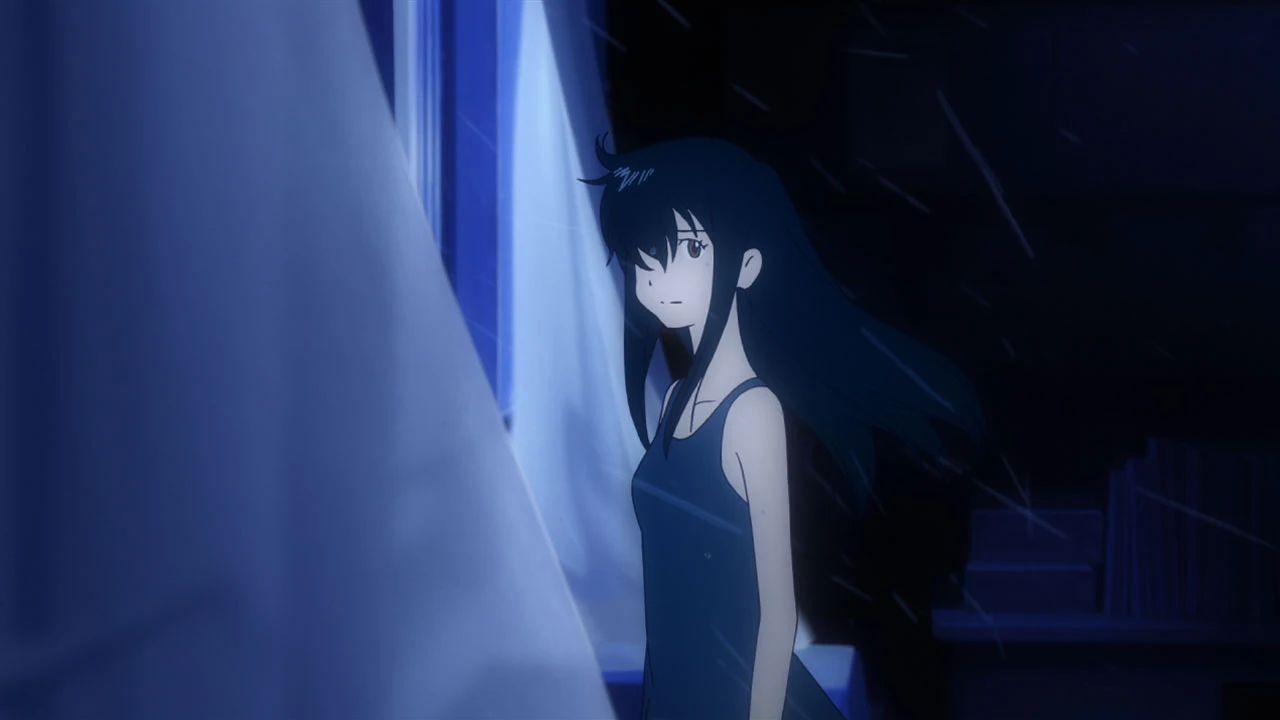
Loading the player connects to YouTube. Playback does not start automatically.
Watch on YouTube · Poster: official film still.
Image credits
Wolf Children
©2012「おおかみこどもの雨と雪」製作委員会
Image source


