
Image credits
The Tale of the Princess Kaguya
© 2013 Isao Takahata, Riko Sakaguchi/Studio Ghibli, NDHDMTK
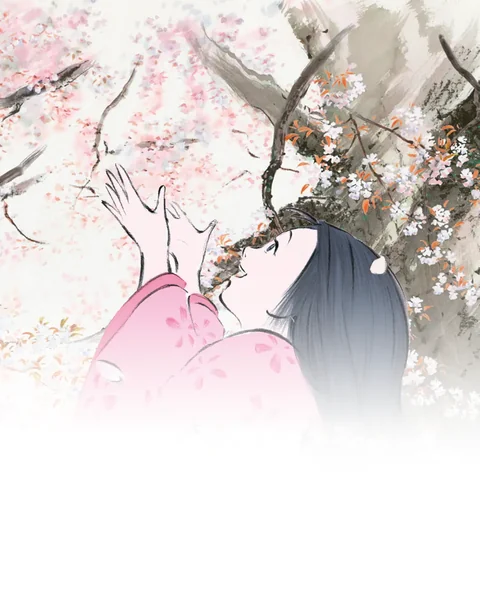
Image sourceA bamboo cutter finds a tiny girl inside a shining stalk and raises her with his wife. She grows at an extraordinary speed, drawing attention that changes the life her parents imagine for her. Isao Takahata’s film adapts the tale of Princess Kaguya through her passage from a rural childhood into imposed expectations.
The village children call the rapidly growing girl Little Bamboo. Sutemaru leads them through a countryside of fruit, animals and outdoor games while her father begins discovering gold in other bamboo stalks. He reads that wealth as a sign that his daughter should live as a princess in the capital.
Kaguya's new education demands clothes, manners and stillness far removed from running with the village children. Her father's plans bring teachers and suitors into rooms where she is expected to remain composed.
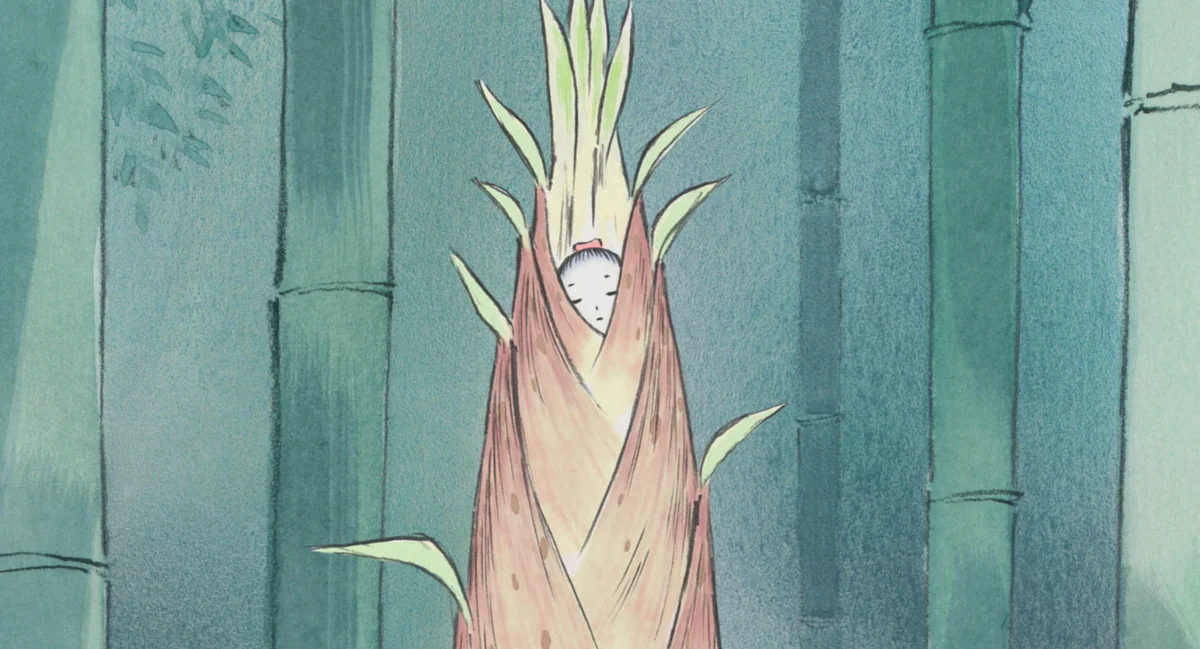
Image credits
The Tale of the Princess Kaguya
© 2013 Isao Takahata, Riko Sakaguchi/Studio Ghibli, NDHDMTK
Image sourceTakahata adapts The Tale of the Bamboo Cutter with loose pencil contours and pale, watercolour-like backgrounds. Individual strokes remain visible in Kaguya's running body and Sutemaru's countryside, with light empty areas around them. Those drawings carry Little Bamboo's outdoor childhood into the court's demand for stillness.


