
Why does rescuing a cat cause so much trouble?
Haru is having an unpromising school day when she sees a cat carrying a parcel into the path of a truck. She scoops him to safety with a racquet. Then he stands upright and thanks her. Her quick kindness has brought her to the attention of the Cat Kingdom, whose idea of a reward is very different from hers.
The rescued cat is Prince Lune. His father sends presents, including live mice, and decides that Haru should marry his son. The joke has a sharp edge: the king is so certain of his generosity that he does not stop to ask what its recipient wants. A girl who helped a stranger must now find a way out of the future his family has arranged for her.
Directed by Hiroyuki Morita, The Cat Returns is a Studio Ghibli adventure built around that mismatch. Cat behaviour becomes royal ceremony, and an ordinary teenager has to deal with creatures who treat their absurd demands as perfectly reasonable. Haru’s reactions keep the fantasy close to everyday experience: surprise, embarrassment and the awkward business of trying to turn down an offer everyone else thinks is wonderful.
Who helps Haru stand up for herself?
Haru’s awkwardness does not cancel out her courage. The rescue happens because she acts, without a plan for a reward. Her difficulty comes afterwards, when acting on a clear emergency gives way to deciding what she wants for herself. Escaping the cats means learning that gratitude does not oblige her to accept whatever they offer.
Muta, a large, irritable cat, leads her towards help at the Cat Bureau. He is an appealingly unpolished companion for a story full of courtly gestures. His bluntness punctures the pageantry, and his presence gives Haru someone other than royalty to follow.
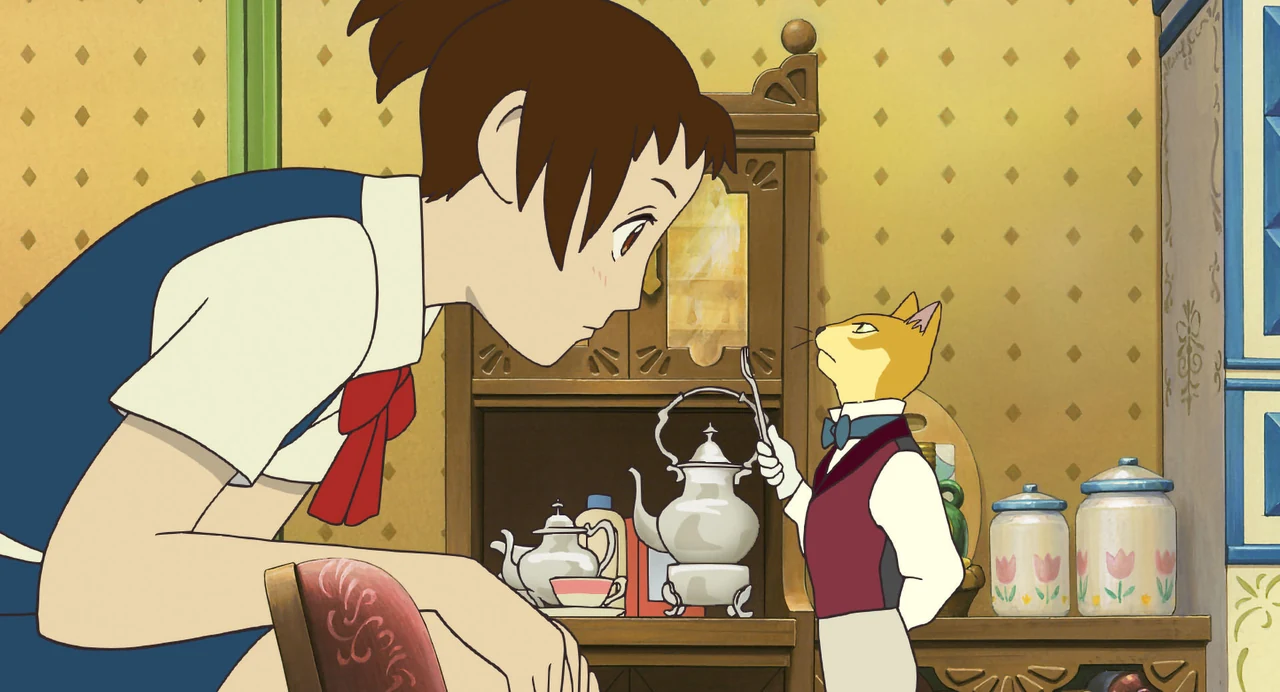
At the Bureau she meets the Baron, a formally dressed cat figurine who comes to life. His politeness is different from the king’s: it leaves room for Haru to have wishes of her own. He offers reassurance and practical assistance, becoming an ally in getting her home rather than another person deciding where she belongs.
Their contrasting manners give the film an effective comic partnership. Muta can be gruff where the Baron is graceful; Haru is caught between amazement and exasperation. Their company gives Haru room to be uncertain without facing the whole strange business alone.
What gives this fantasy its particular charm?
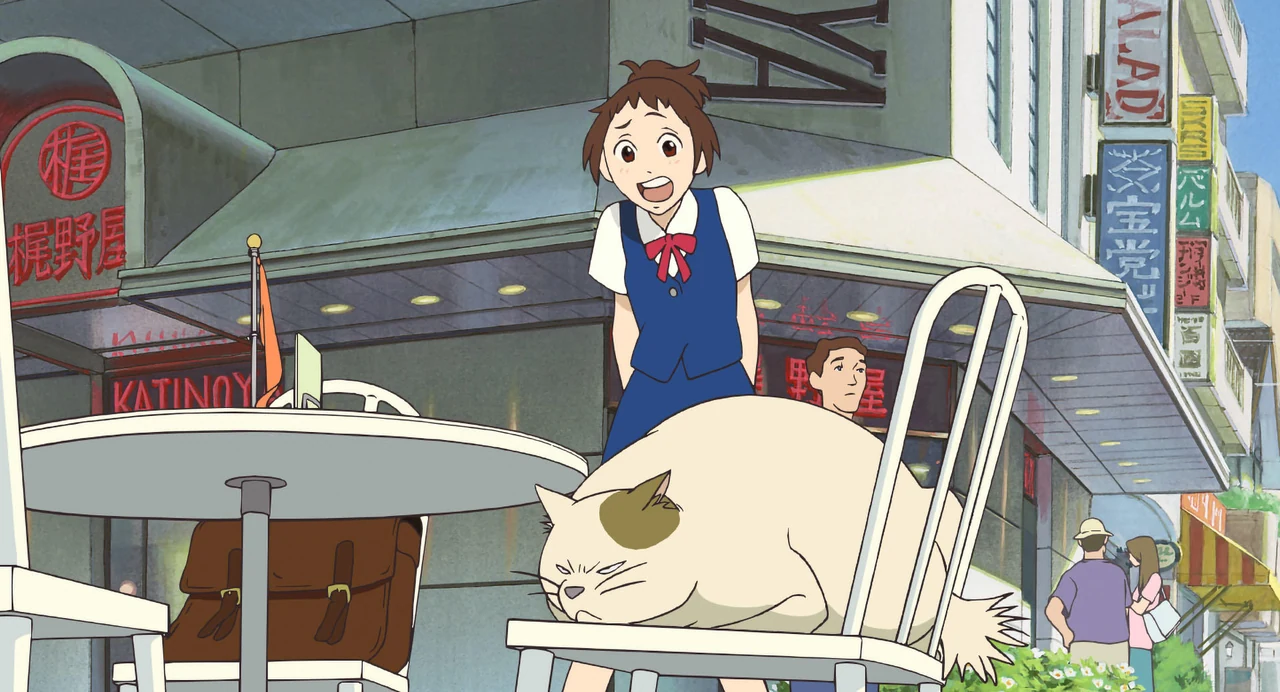
The urban scenes make room for small visual jokes before the grander adventure. Haru meets the extraordinary among shopfronts, café chairs and everyday errands. Crowded signs give the streets a lived-in texture, while changes of scale turn domestic details into discoveries: Haru bends across a room to speak to a tiny, immaculately dressed host. The absurdity remains close enough to ordinary life to feel like something discovered around a corner.
That attention to setting is one of the strengths identified by WH’s Time Out review, which particularly praises the urban design and the distinct personalities. The cats are funny partly because their human rituals do not erase their catlike priorities. A gift can be lovingly wrapped and still be a mouse that nobody asked for.
The English dub offers another way into those personalities. Anne Hathaway voices Haru, Cary Elwes the Baron and Peter Boyle Muta. Both Time Out and Adam Arnold’s Animefringe review respond warmly to the contrast between the voices. Elwes gives the Baron an elegant bearing, while Boyle’s gruff Muta offers a comic counterweight. Haru’s surprise has two very different personalities to bounce against.
Yuji Nomi’s music gives the journey another source of warmth. The Rotoscopers review singles out the opening overture for suggesting Haru’s inner life before dialogue establishes it. Alongside the talking cats and ceremonial absurdity, that gentler musical introduction leaves room for the girl having an ordinary, uncertain day. The adventure grows out of her life rather than making her merely a visitor to somebody else’s spectacle.
The later kingdom-and-escape adventure is more familiar than the opening’s peculiar etiquette. Time Out finds parts of the royal setting conventional, and the short story leaves some characters less developed than their appealing first impressions promise. Its strongest thread remains Haru’s growing confidence and the pleasure of the unlikely company helping her along.
Do you need to watch Whisper of the Heart first?
No. The Baron and the large cat return from Whisper of the Heart, which explains GKIDS’ sequel label, but Haru’s adventure introduces its own lead and predicament. The earlier film adds recognition and a different story about teenage creativity; it is an optional companion.
This is the 2002 animated film directed by Hiroyuki Morita, first released in Japan on 20 July, with a runtime of approximately 75 minutes. For family viewing, its comic tone accompanies mild peril, including an abduction, weapons and falls, as well as the unwanted marriage proposal.
The English trailer shows changes to Haru’s appearance and parts of her later escape. Skip it if you want to discover those adventures in the film.
2002 film · English trailer · GKIDS Films
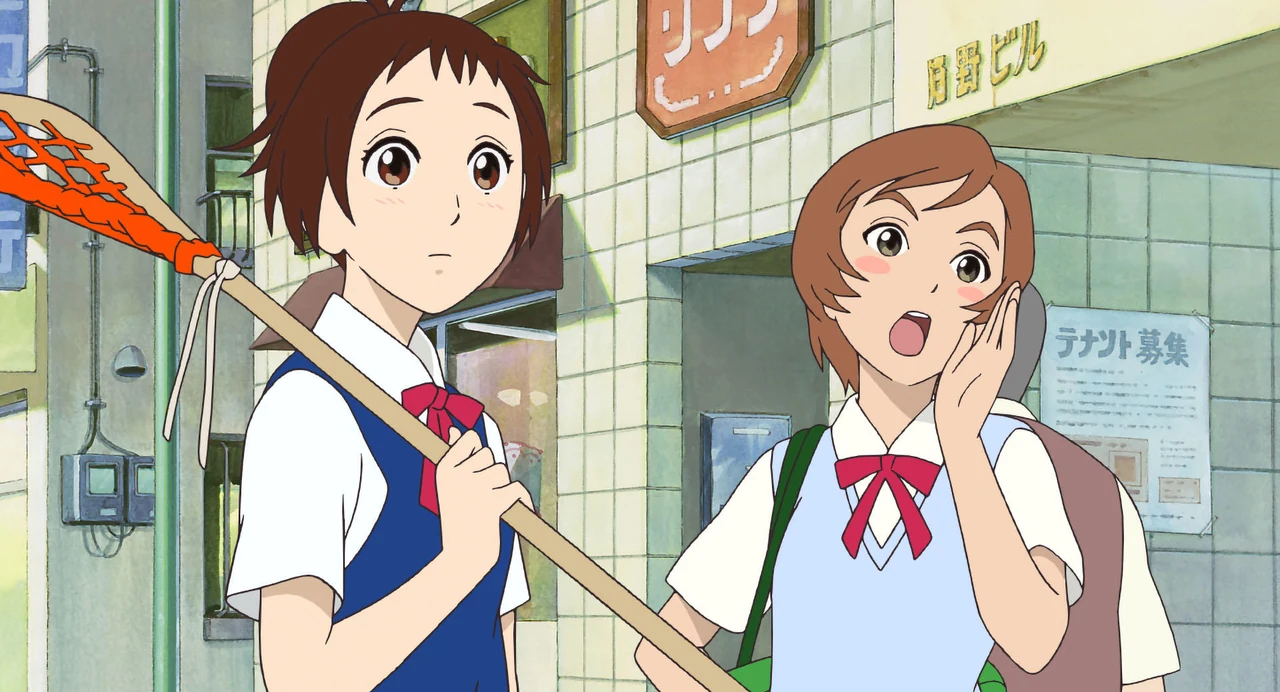
Loading the player connects to YouTube. Playback does not start automatically.
Watch on YouTube · © 2002 Aoi Hiiragi/Reiko Yoshida/Studio Ghibli, NDHMT
Sources
Reviews and detailed content guidance can reveal later events and the escape.
- Studio Ghibli: The Cat Returns: director, original release, approximate runtime, credits and official stills.
- GKIDS: The Cat Returns: opening premise, connection to Whisper of the Heart, language editions and official trailer.
- WH, Time Out: town design, characterisation, English voices and reservation about the royal setting.
- Adam Arnold, Animefringe: returning characters, early allies, visual style and English dub.
- Rotoscopers: The Cat Returns: Haru’s uncertainty, the opening music and the appeal of a lighter adventure.
- BBFC: The Cat Returns: specific content advice for the animated film.