
Rakuro Hizutome has a peculiar way to relax. He hunts down terrible games and commits himself to finishing them. Bugs, unfair balancing and unreliable systems have given him plenty to complain about, but they have also trained him to keep trying when a game behaves badly.
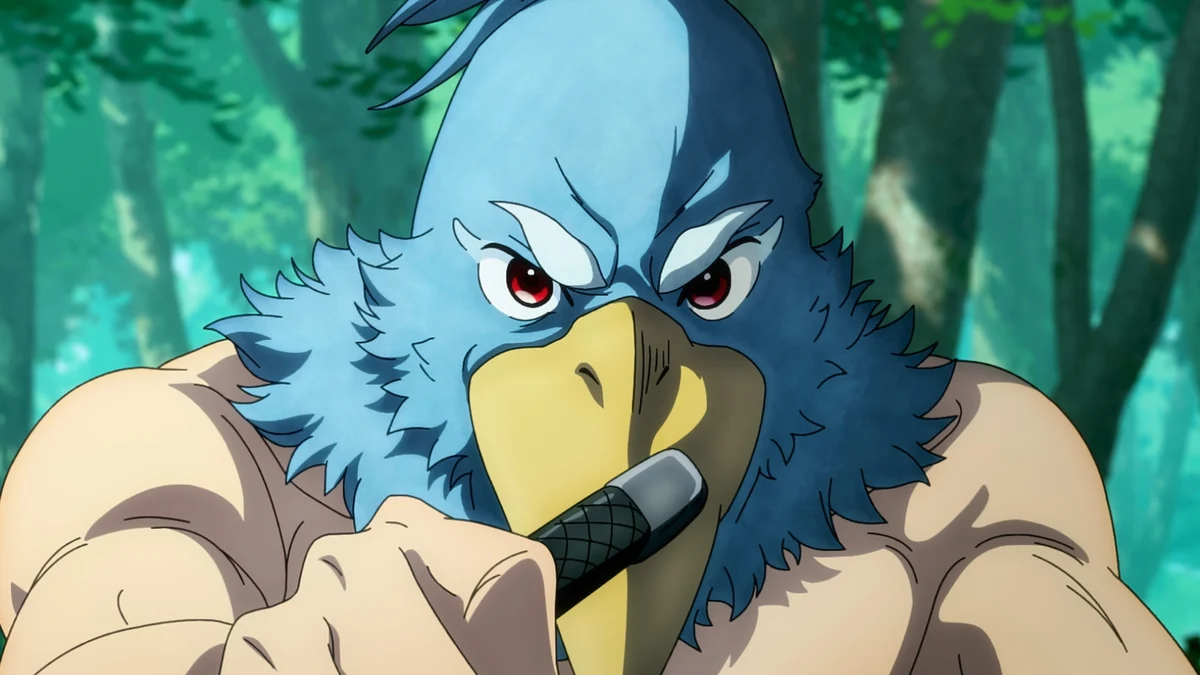
For a change, he picks something acclaimed. Shangri-La Frontier is a huge virtual-reality game whose world is meant to work beautifully. Rakuro enters it as Sunraku, a blue bird-headed adventurer with far less clothing than his opponents might consider sensible, and discovers that a good game can challenge him too.
The pleasure is in his enthusiasm. Here is somebody who wants to find out what a world can do, then see what he can do inside it.
What happens when an expert starts a new game?
Sunraku begins with excellent player skills and a new character. Those are different things. His reactions and persistence travel with him; knowledge of this game’s monsters, quests and equipment does not arrive fully formed.
That gives the early adventure a satisfying tension. He is capable of making a fight look impressive and capable of getting himself into trouble. An early battle with a giant poisonous snake makes the distinction concrete: confidence from other games does not make a new creature harmless.
The goal is not to escape the game. Rakuro chooses to play, and his life outside it remains part of the story. Equipment, difficult encounters and obscure routes matter because he wants to master them. A setback can be frustrating without becoming a claim that the player’s real body will die.
For anyone who enjoys games, that changes the fantasy’s emotional centre. A surprising encounter is something to tell another player about. A strange restriction is something to investigate. The next attempt can be attractive precisely because the previous one exposed a gap in your understanding.
Why does a rabbit make such a useful travelling companion?
Emul is a non-player character, a character controlled by the game rather than another human player. She guides Sunraku towards a special scenario connected to a rabbit country and brings useful magic of her own, including teleportation.
Her presence turns an unusual discovery into a relationship. Sunraku has somebody beside him who belongs to the world and can respond to his experiments with something more expressive than a line of menu text. The tiny rabbit in a bright jacket and the enormous bird head are a wonderfully odd pair even before either says anything.
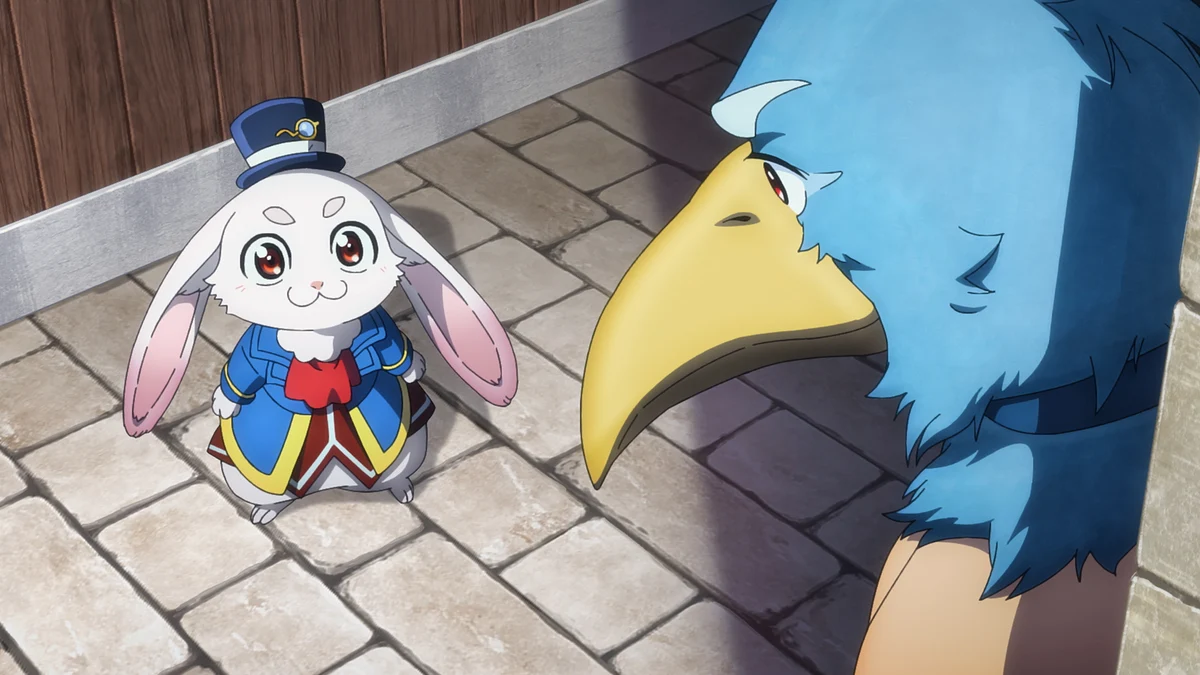
Her formidable father, Vysache, leads the Vorpal Rabbits and sets challenges for Sunraku. A cute creature can therefore open the door to more serious tests. The world has room for absurd appearances and demanding encounters in the same stretch of adventure.
It is an inviting way to handle discovery. A rare opportunity is not just a higher number attached to an item. It can mean access to people, places and tasks that change what the player spends time doing.
Who understands why he keeps playing?
Sunraku’s existing game friendships bring another kind of knowledge into the fantasy. Arthur Pencilgon specialises in strategy and information, including fighting players stronger than herself. OiKatzo is a professional fighting-game player with formidable experience against other people. They have encountered Sunraku in other games, so their relationships come with rivalry and shared history.
They do not all contribute the same kind of competence. Reading an opponent, making a plan and executing it are separate pleasures. Their presence lets a difficult encounter become a social problem: whose judgement do you trust, what does each person know, and can everyone perform their part?
Rakuro’s classmate Rei Saiga adds a different mismatch between player and appearance. Her heavily armoured avatar, Psyger-0, projects enormous confidence and power; her feelings towards Rakuro outside the game are much harder for her to manage. The contrast makes the avatar a form of play rather than a complete description of the person wearing it.

What makes this fantasy feel like playing?
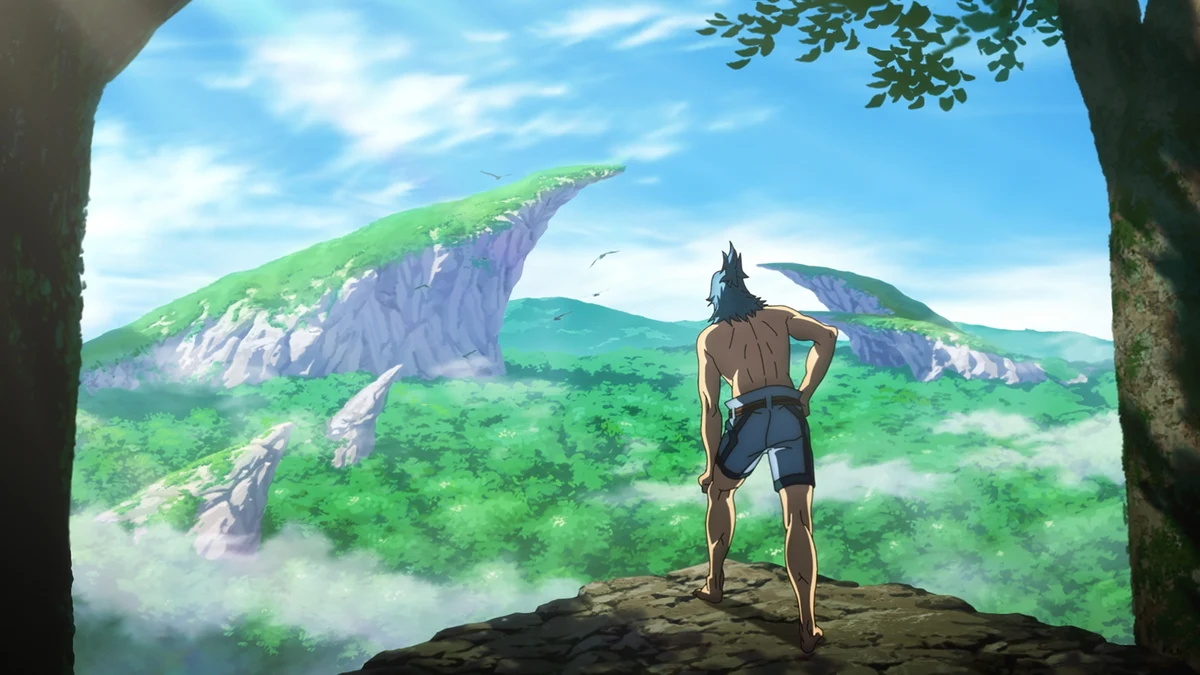
The visual contrast does a lot of work. The opening landscape spreads out in greens and pale distant rock. Sunraku’s mask has a bright beak and exaggerated eyes. Emul’s small body sits beside it almost like a different scale of illustration. Toshiyuki Kubooka’s C2C adaptation makes room for the character’s ridiculous appearance inside a world worth exploring.
The story also lets games remain particular. In episode 4, Sunraku returns to a badly behaved fighting game to meet an old gaming acquaintance. The shiny new adventure has not erased the appeal of the old mess. Playing badly made games was a real pleasure for him, not simply a punishment before the proper story began.
Expect time spent on mechanics, attempts and preparation. The attraction is not constant forward movement towards a final escape. It is the interest of finding a difficult thing, learning enough to approach it differently and having people around who appreciate why the effort matters. Readers seeking a grave survival story should expect a more playful relationship with danger.
Where should you begin?
Start with season 1, episode 1, from 2023, then continue into the second season. Each has 25 numbered episodes, making 50 in the released route. Recaps and the small bonus segments are separate from that count.
Allow 26 minutes per episode, or roughly 22 hours for the fifty-episode route. Actual main-story time varies with credits and bonus material. The next season is announced for January 2027 and is outside this route as checked on 22 October 2026.
What does the first-season trailer show?
Crunchyroll’s second official trailer belongs to the 2023 launch and introduces the original game and its bird-headed player.
Original 2023 series · Crunchyroll · official trailer 2. Opens YouTube.
Sources
Character pages, episode archives and trailers can reveal later encounters.
- Official English introduction and first-season profiles, for Rakuro’s premise, the companions and original production credits.
- Official character archive, for the players’ different abilities and the rabbit-world relationships.
- Official episodes 1, 2 and 4, for the opening choice, early snake encounter and return to another game.
- Bandai Channel’s first-season and second-season listings, for the established route estimate.
- Official current site, for the January 2027 continuation announcement. Its introduction contains spoilers for released seasons.