
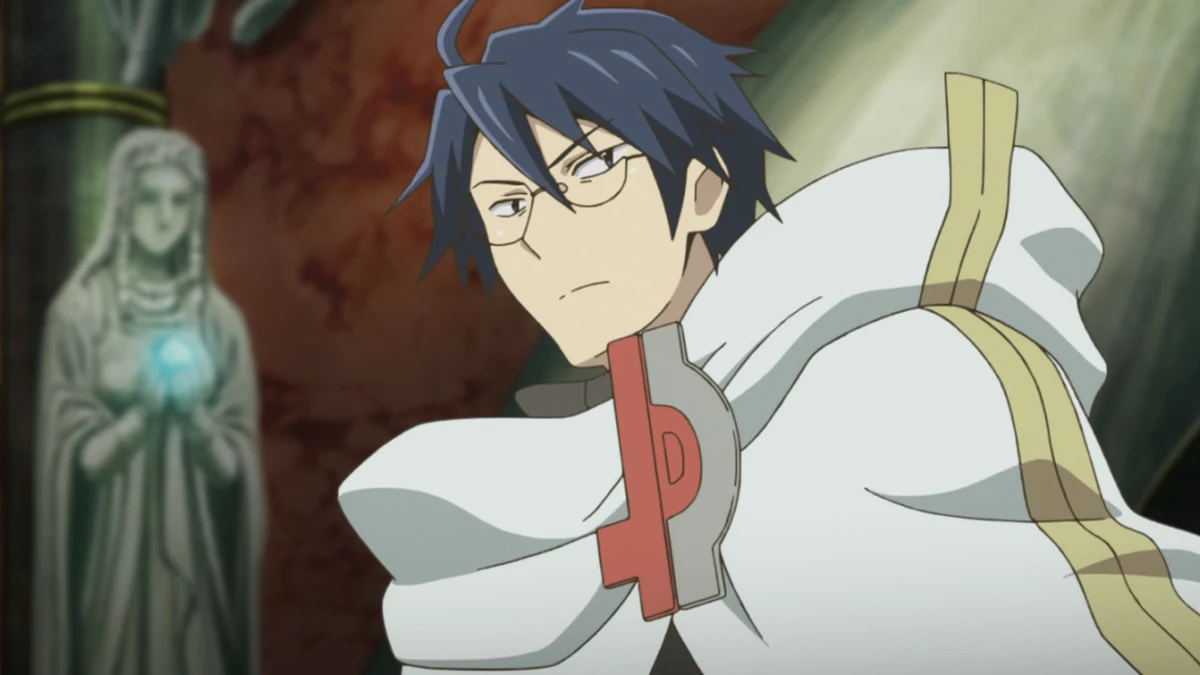
Thirty thousand Japanese players discover that the online world of Elder Tale has become somewhere they have to live. Their avatars have bodies, the streets have people in them, and logging out is no longer an option. Knowing which button casts a spell does not tell anyone what to do tomorrow.
In Log Horizon, that uncertainty spreads beyond the next fight. Powerful guilds can dominate a city. A beginner can be exploited by people with better equipment. Food can keep you alive without giving you much reason to enjoy the meal. The adventure is partly about discovering the rules, and partly about deciding what sort of life those rules should allow.
At its centre is Shiroe, a veteran player who is much more comfortable analysing a problem than leading a room. His knowledge becomes useful only when he starts doing things with other people.
What does a support player contribute?
Shiroe plays an Enchanter, a class built around supporting a party. His friend Naotsugu is a Guardian, equipped to hold the front line, while Akatsuki is an Assassin. Those roles mean more than three different costumes. They suggest different jobs in a dangerous place and a reason to coordinate them.
An early rescue gives their expertise a concrete purpose. Serara, a young member of the Crescent Moon Alliance guild, is stranded far to the north. Helping her requires a journey through unfamiliar conditions, even for players who recognise the map. The trio can know a game well and still have to learn how to move through its world together.
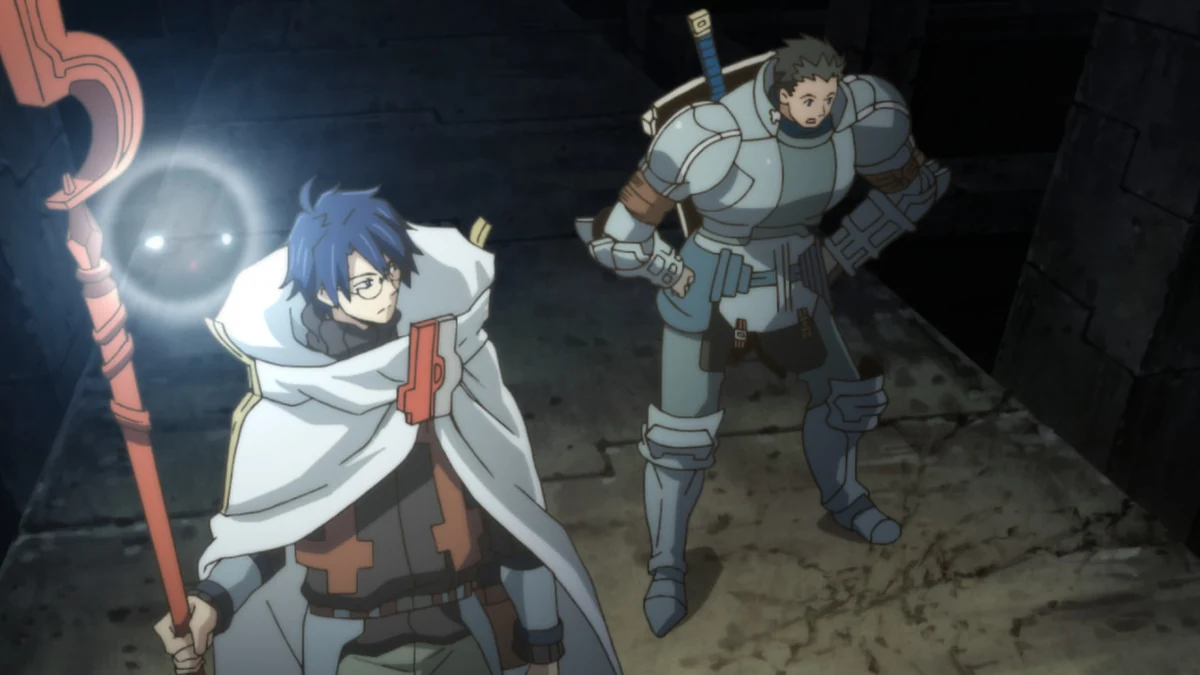
The appeal is in making several abilities useful at once. Shiroe can think about where someone else needs to stand, what they can do next and what an opponent is likely to attempt. A powerful plan depends on people willing to carry it out. That makes trust a practical resource before the story begins asking larger questions about it.
Why does a guild matter outside combat?
A guild is an organised group of players. In an ordinary online game it might provide companions for a difficult quest. Here, it can also offer protection, information and a place to belong. Having nobody to log out to makes the social role harder to dismiss.
Marielle, who leads the Crescent Moon Alliance, offers a warmer model of guild life than Shiroe’s habit of keeping his distance. Henrietta brings administrative and negotiating ability. Nyanta, an experienced player with a cat-like avatar, is both a capable companion and someone who understands the value of making everyday life more comfortable.
The larger cast also includes inexperienced players. They do not all begin with Shiroe’s knowledge or his powerful friends. The series has room for people who need teaching, rather than treating a low level as evidence that someone is unimportant.
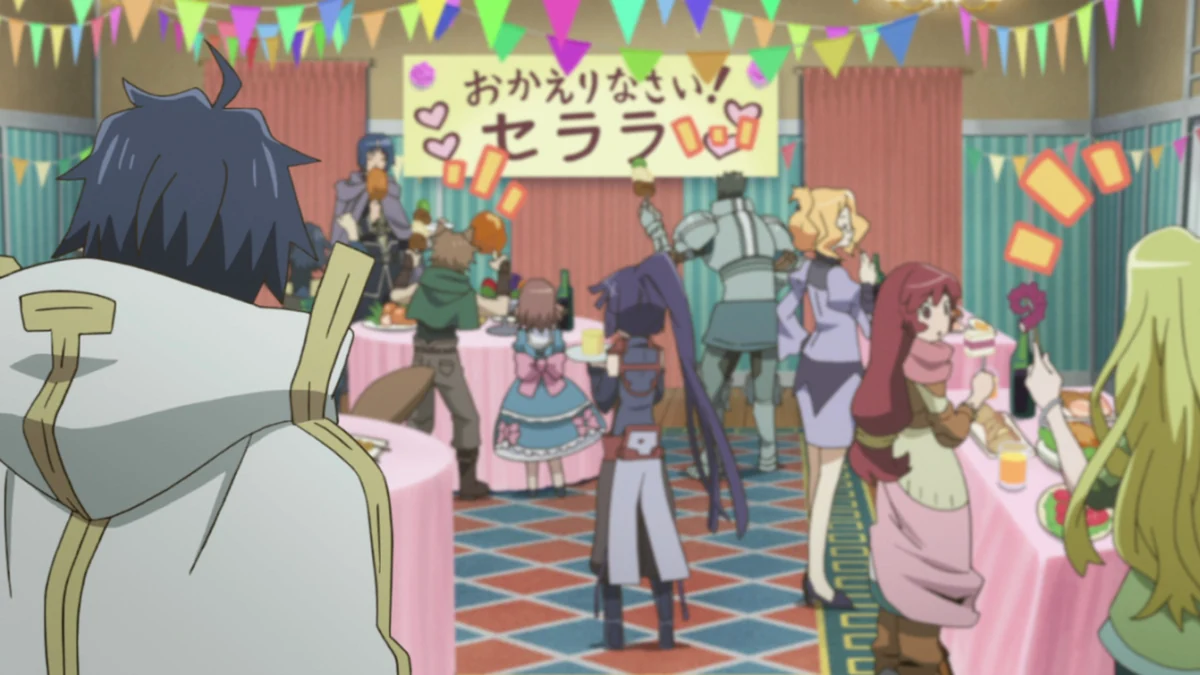
That gives the political ambitions a personal scale. Making the city safer matters because there are particular people living in it, including those who cannot simply fight off anyone who threatens them.
How can a hamburger become part of a plan?
The early food problem is delightfully specific. A meal can look right and still taste wrong. Finding a way to make food enjoyable changes more than the menu: it creates something people want, something that can be sold and a reason for different guilds to talk.
By episode 7, the Crescent Moon Alliance is opening a fast-food stand. The operation needs cooks, organisers and people who can serve customers. Food becomes one of the ways a whole city starts moving again, with consequences well beyond the person who needs lunch.
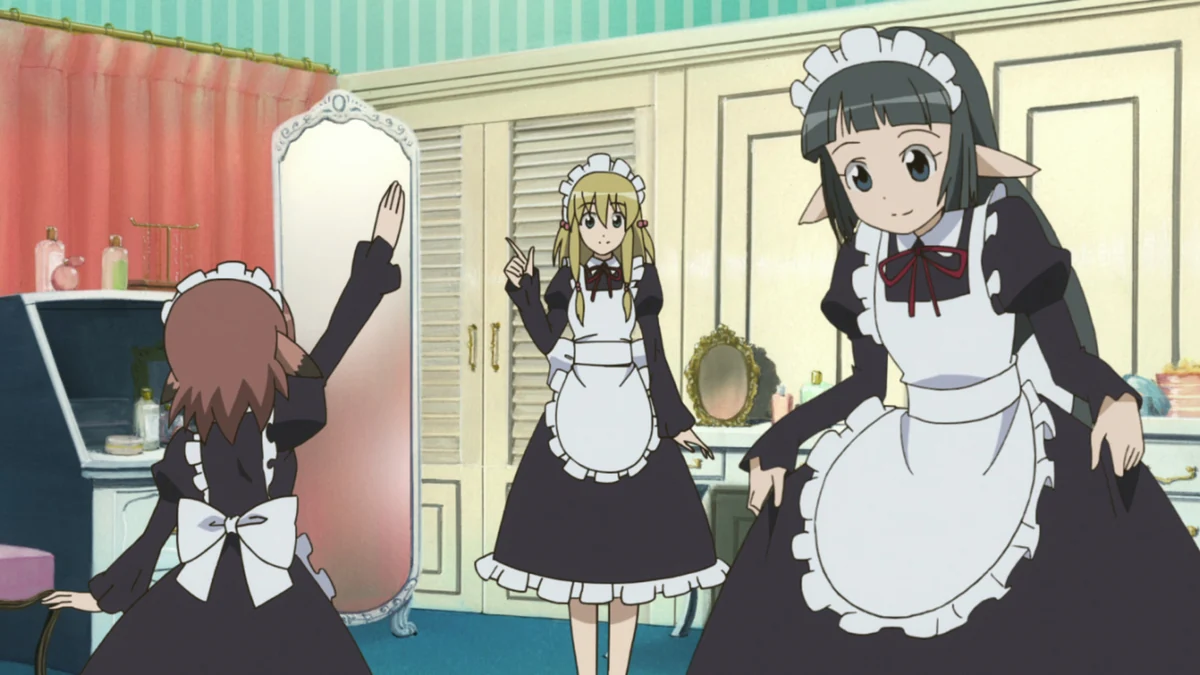
Shiroe’s answer to disorder gradually involves negotiation. Different groups want different things, so getting them into the same room does not automatically make them allies. The pleasure is in following how he identifies a useful connection, then waiting to see whether the people involved will accept it. The solutions are worth leaving for the series to reveal.
Who else belongs in this world?
The players call the world’s original inhabitants the People of the Land. They were once the characters encountered through a game, but meeting them face to face complicates the assumption that they exist only to provide a quest or sell an item.
That question widens the setting. The adventurers cannot build a society by thinking only about other adventurers. Trade, obligations and relationships involve people who were here before them, with interests of their own.
The later seasons keep expanding that problem. The second series takes the established community into further questions of resources and cooperation. The third, Destruction of the Round Table, puts its civic arrangements under pressure. These are continuations of the same story; the subtitle is not a remake or a shortcut for new viewers.
What gives the strategy its personality?
Shiroe’s glasses, high collar and reserved expression make him a different visual centre from a charging swordsman. Around him, the character designs range from heavy armour to animal-like avatars and everyday guild uniforms. The differences make a crowd feel like people who chose different ways to inhabit the same game.
The animation studio changes from Satelight in the first season to Studio DEEN in the second and third. The story continues through that change. In Anime UK News, Demelza finds some second-season character redesigns initially distracting, while valuing the colour and atmosphere of life in Akihabara. The production shift is useful to know about without treating it as a new continuity.
The series can be playful and talkative. Conversations about rules, money or authority are often the main event, and the ensemble’s jokes interrupt the serious planning. Ian Wolf’s review of the first-season UK release describes its appeal as more cerebral than the immediate thrills of Sword Art Online. That is a useful expectation, rather than a promise that every viewer will prefer the same balance.
Where should you begin, and how far does it go?
Watch the television seasons in release order:
- Log Horizon (2013–2014): 25 episodes, beginning with The Apocalypse.
- Log Horizon, second series (2014–2015): 25 episodes.
- Log Horizon: Destruction of the Round Table (2021): 12 episodes.
That is 62 episodes, or roughly 25 hours, using a planning allowance of 24 minutes per episode, as shown on Crunchyroll’s original-series episode cards. The estimate covers the three TV seasons, not recap or promotional specials, and does not require reading the novels or manga first.
The route reaches the third season’s endpoint, not a promise that every mystery about the world is resolved. Begin with the original opening and let the city, party roles and relationships build in sequence.
What can you see in the original trailer?
The original-series trailer previews the trapped-player premise, characters and fantasy combat. Its advertising and release information belong to the earlier launch.
Original series · Crunchyroll Store Australia. Opens YouTube.
Sources
The official episode descriptions and reviews contain later events. Their full explanations are more revealing than this introduction.
- Satelight’s original-series record, for the premise, original staff and guild setup.
- Crunchyroll’s original-season descriptions for The Apocalypse, The Battle of Loka, Return to Akihabara, Resolve, Crescent Moon and Round Table Conference, for the early situations. Platform posting dates are not the original broadcast dates.
- d Anime Store: first series, second series and Destruction of the Round Table, for the 25 + 25 + 12 episode route and exact first-season image identities. These Japanese listings do not establish availability elsewhere.
- The Australian classification record for season three, for its 2021 identity and Studio DEEN production credit.
- Studio DEEN’s second-series record and third-season episode-12 record, for continuation identity and the scoped endpoint. The latter describes the final battle.
- Ian Wolf, Anime UK News: first-season volume one and Demelza: season two, part one, for the named critical assessments.
- Crunchyroll’s series listing, for the 24-minute episode cards used as a rounded planning allowance. This is not a measured sum of all 62 episodes.