
Who is the stranger with the medicine box?
He arrives with remedies, an elaborate painted face and a sword he cannot draw whenever he likes. The Medicine Seller travels through other people’s lives in the original 2007 Mononoke, encountering supernatural beings whose histories are bound up with human actions and feelings.
His unusual limitation gives the series its shape. Before the sword can be used, he must establish the mononoke’s Form, the Truth of the events and its Reason, the heart or feelings involved. An apparition is an urgent problem, but it is also a sign that something about the people around it needs to be understood.
The Medicine Seller connects the stories without turning them into a conventional journey towards a final opponent. Each new case brings a place, a group of people and an account that will not come easily. You follow a composed outsider into situations whose occupants have much more to lose than the stranger asking questions.
What worlds do the five cases open up?
The opening “Zashiki-warashi” begins at an inn. A pregnant traveller, Shino, asks for shelter on a rainy night. The innkeeper Hisayo reluctantly gives her a room normally kept from guests. A request for rest has placed somebody vulnerable inside a house she does not understand.
“Umi-bōzu” takes the investigation to sea. The merchant ship Soraris-maru is bound for Edo, with an assortment of passengers including a self-proclaimed practitioner of magic. A tampered compass sends the ship off course. Their shared journey makes them dependent on a route that no longer seems reliable.
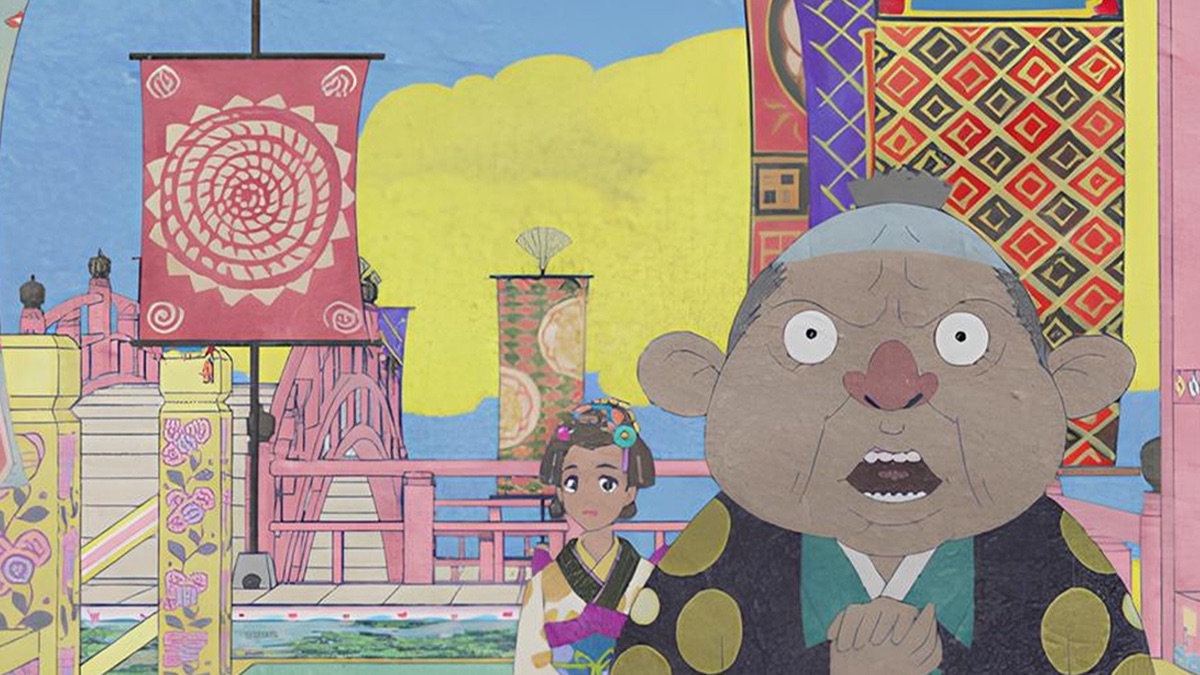
Later, “Noppera-bō” begins with a woman imprisoned under an accusation of killing her family, and “Nue” assembles prospective husbands for an incense competition. The concluding “Bakeneko” moves the company into a subway carriage. The settings change more than the scenery: a prisoner, a competitor and a passenger have different reasons to speak, conceal something or mistrust the person questioning them.
The five cases occupy twelve episodes, giving each gathering room to become its own small drama. The inn is a useful first encounter; the series does not require you to learn every creature’s folklore before meeting the people involved.
What makes its people more than witnesses?
Shino needs a bed before she needs an investigation. Hisayo controls the room before the Medicine Seller can ask about its past. Their wants give the opening a practical urgency: one person needs help, while another has the power to decide what help will cost or conceal.
That is the recurring attraction of the case structure. A witness does not exist simply to hand over the correct clue. People can be frightened, proud, ashamed or invested in how a story is told. The sword’s conditions keep those feelings relevant even when a supernatural being threatens to overwhelm the room.
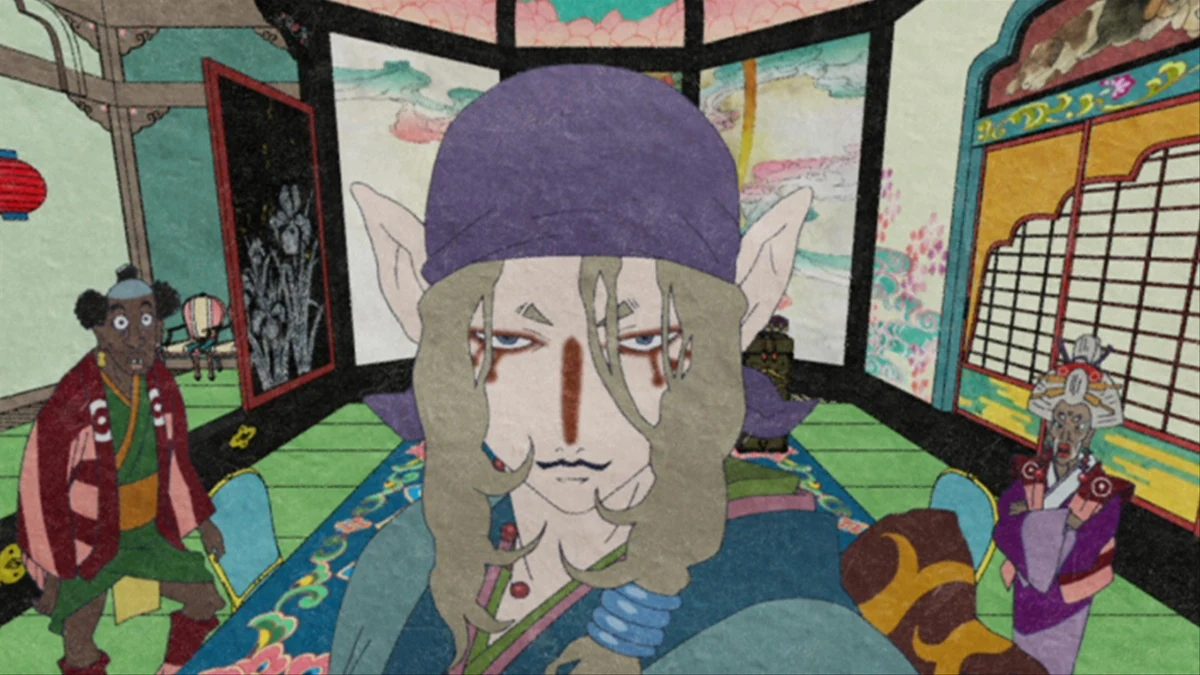
His calm also gives the audience something to hold onto. The people around him may be panicking or trying to maintain authority; the investigator has a task that cannot be hurried past its missing pieces. Curiosity about what happened can carry you through the unease without making the human suffering incidental.
What do the colours and music invite you to notice?
Director Kenji Nakamura and designer Takashi Hashimoto give figures and rooms a shared decorative force. Floral interiors, patterned clothes and paper-like surfaces make the image feel worked across its whole width. In their 2007 interview, the creators describe the picture-scroll and ukiyo-e ideas behind that relationship. The Medicine Seller can be striking without being the only thing worth looking at.
That beauty comes with strange, sometimes distressing stories. Its appeal can be the pleasure of examining an image and the uncertainty of discovering what has happened inside it. An ornate surface supplies something to explore while the people gradually supply an explanation.
Opening song “Kagen no Tsuki,” by Ryota Komatsu × Charlie Kosei, brings its own elaborate invitation. Komatsu’s liner notes connect its uncanny attraction to tango harmony and an unsettled melody. Yasuharu Takanashi supplies the score, and JUJU’s “Natsu no Hana” closes the episodes. The music belongs to a series whose mystery and theatricality share the same space.
Where should you begin?
Start with episode 1 of the 2007 television series and follow the cases in order: Zashiki-warashi, Umi-bōzu, Noppera-bō, Nue and Bakeneko. Twelve episodes at approximately 23 minutes each make about 4 hours 36 minutes.
The Medicine Seller first appeared in the earlier Ayakashi: Samurai Horror Tales “Bakeneko” arc. That is a separate story, available to explore before or after this run; the 2007 series begins its own first case. Later Mononoke films and Princess Mononoke are different works and are outside this viewing total.
Sources
Official episode pages and the creator interview reveal case details beyond these opening situations.
- Toei: original series and episode index: identity, staff and five-case order.
- dAnime: licensed TV description: Form, Truth and Reason.
- Fuji: opening episode, Nue setup, Toei: Noppera-bō opening and Bakeneko: initial situations only.
- Apple TV: Umi-bōzu opening: sea journey and scene image.
- Anime Style: 2007 creator interview: visual conception. Toei music and Komatsu’s liner notes: music credits and opening conception.