
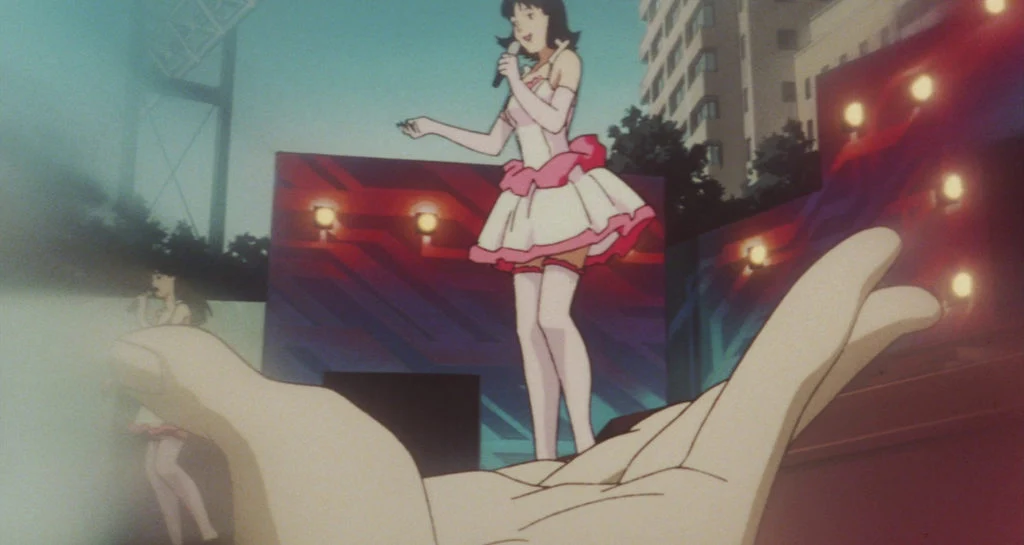
Mima Kirigoe leaves the pop group CHAM! to become an actress. It is a hopeful decision: she wants another kind of work and a future beyond the image she already knows how to perform. People who recognise her do not necessarily welcome the change. A threatening fan and a website written in her voice turn recognition into something she can no longer control.
That is the starting point of Perfect Blue, Satoshi Kon’s short, concentrated psychological thriller. The world around Mima is made from familiar places and activities: stage performances, television work, a home, a computer and people watching screens. The strangeness grows through the connections between those things, until seeing an event does not guarantee knowing what kind of event it was.
The appeal lies in following a person through that uncertainty. Mima is trying to advance in a profession that makes images for other people. As her confidence is worn down, performance becomes difficult to keep separate from the rest of her experience.
Why does Mima leave CHAM!?
CHAM! gives Mima a shared identity as well as an audience. Bright coordinated outfits and microphones make the members recognisable together. Being one part of that public image is a different job from becoming a character in a television drama, even if both require people to watch her.
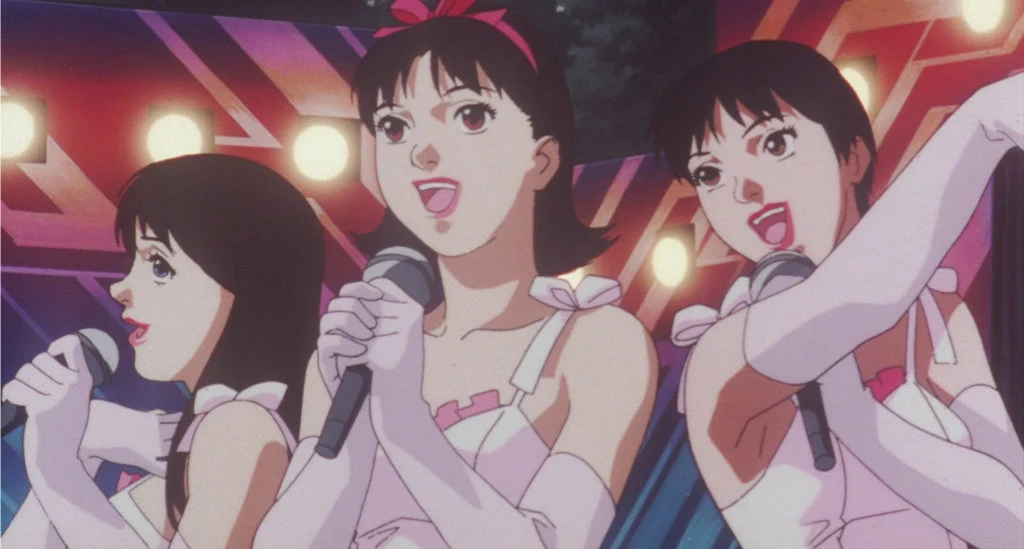
Acting brings opportunities and demands that she cannot manage simply by deciding she is ready to move on. Producers and managers help determine which roles become available and what sort of image they will create. Her ambition makes those opportunities matter. The tension is sharper because a new job can be something she wants while also making her vulnerable.
The television drama Double Bind supplies a further layer: Mima plays scenes inside a story whose production is itself part of this film’s story. It gives her lines, situations and emotions to perform. Kon can then place an acted experience beside a private one and make the relationship between them uncertain.
What makes Mima’s Room so frightening?
The fan site Mima’s Room offers a diary in her voice. It appears to know intimate details, but Mima is reading words she did not write. That makes its familiarity a source of fear. The threat is not only that a stranger has watched her; a stranger can also offer a convincing account of who she is.
The distinction is personal. A viewer can recognise a performer without knowing her routine. The website claims the authority of both, as if access to the public image also supplied access to the person. Mima encounters a version of herself that can seem more certain than she feels.
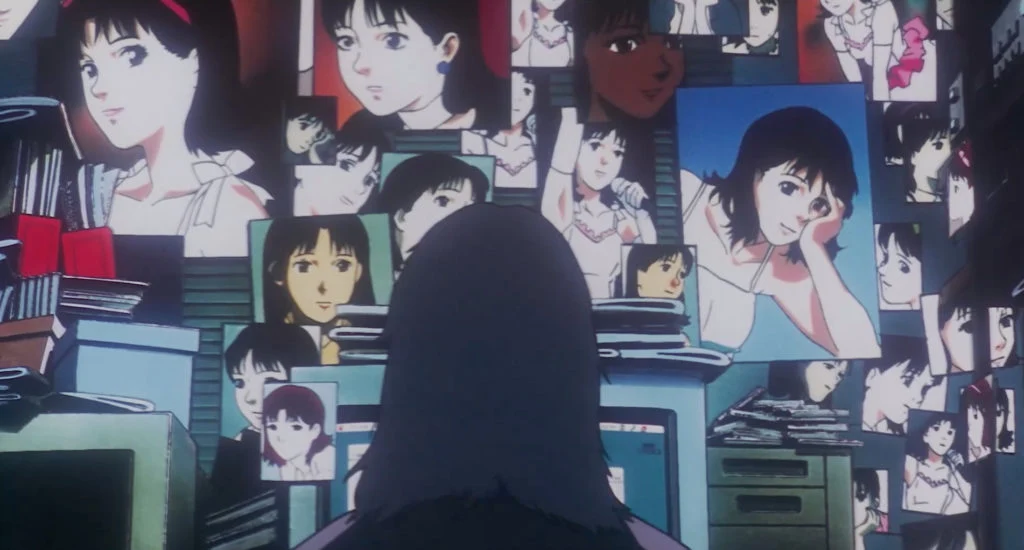
In the distributor still, the wall repeats Mima’s face while the seated figure remains turned away. The arrangement makes the imbalance visible: one person can be collected and displayed while the collector stays comparatively hidden. The composition makes looking unequal before the figure’s identity becomes important.
Andrew Osmond’s account of Kon’s production notes describes the computer as a window through which a person can both look and be looked at. The idea fits the film’s early public-internet setting. An apparently private room can become another place where an image of Mima circulates.
How does the editing unsettle you?
Kon’s editing gives the thriller much of its identity. In Osmond’s interview, the director describes juxtaposing Mima’s stage job with ordinary life in the opening. The public and private are already entangled for her before the plot becomes difficult to sort out.
That is a useful starting point for the later transitions. The confusion does not require every image to be obscure. A face, room or performance can be visible while the context needed to interpret it is missing or shifting.
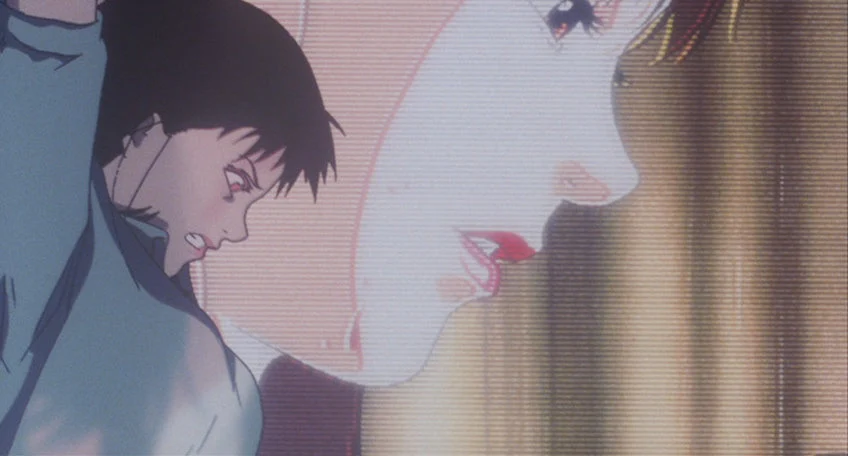
The television image places a bright face on a screen beside another person. Both occupy the picture, but they do not have the same relationship to its space. Images within images give the film ways to make Mima present and distant at once.
Kon also told Osmond that he distinguished subjective and objective events while storyboarding, while resisting the idea that sorting every moment was the audience’s principal task. A viewer can look for an explanation and still attend to what uncertainty is doing to Mima. Those are compatible ways to remain involved.
In a discussion, one viewer particularly values the film’s lingering unease; other readers elsewhere ask for help reconstructing events. These are individual responses to the film’s demands. It offers concentration and disorientation, rather than a guarantee that every viewer will enjoy having confidence repeatedly disturbed.
What should you know before watching?
This is Satoshi Kon’s original animated feature, with a screenplay by Sadayuki Murai. Production is dated 1997 and the Japanese theatrical release followed in 1998. Later restorations and remasters present the same film. Allow approximately 82 minutes for the BBFC-listed edition; no novel or earlier anime is required.
Expect sexual violence, including an extended staged rape scene and an attempted assault, bloody attacks, stalking, nudity, exploitation and psychological distress. The short runtime does not make the material slight. These elements are part of the viewing choice, even when the craft of the thriller is the attraction.
For another Kon film afterwards, Millennium Actress also connects a performer’s life with roles and images, through a different emotional register. Perfect Blue is complete on its own.
GKIDS’ 4K-remaster trailer promotes a later edition of this original film and includes disturbing images and thriller developments.
Original film, later remaster · GKIDS Films. Opens YouTube.
Sources
These sources include detailed plot discussion. Kon’s interview and the production-notes article reveal later events.
- GKIDS’ film page, for the premise, theatrical-release distinction and remaster identity.
- Andrew Osmond’s interview with Satoshi Kon, for the director’s account of public image, the opening cuts and subjective experience.
- Osmond on Kon’s Perfect Blue production notes, for the computer image and visual context.
- GKIDS’ original Blu-ray gallery, for the contextual film images, and collector’s-edition details, for production year and film credit.
- BBFC’s film record, for the approximate runtime and specific content guidance.
- One viewer’s reading of the lingering tone, checked 26 October 2026. The linked thread includes ending discussion; this introduction does not adopt its interpretations as a single solution.