
A boy puts nails in his mouth and sets about making a curse. A student cannot forget a model’s face, then discovers that she has applied to act in his film circle’s production. Junji Ito Collection finds entrances to the uncanny in people who already have something on their minds: a grievance, an ambition or a fear they cannot persuade anyone else to share.
The 2018 television anime adapts short stories from Ito’s horror collections. It keeps introducing new people and circumstances, often pairing two stories in one instalment. There is no central investigator who explains every event or one continuing mystery that must account for the whole run. The attraction is meeting a new bad possibility, sometimes in an unremarkable room or an object that should be harmless.
Its early stories also leave room for absurdity. Somebody’s determination to be sinister can be funny before it is frightening. A grotesque face can interrupt a mundane discussion about making a student film. That range makes the collection more peculiar than a steady succession of solemn ghost stories.
What kind of boy is Souichi?
The first television instalment pairs “Souichi’s Convenient Curse” with “Hell Doll Funeral”. Souichi, the boy at the centre of the opening story, believes he is exceptional. His idea of what he can do gives ordinary resentment an elaborate expression: ceremony, props and the promise that other people will suffer for crossing him.
Souichi’s ritual makes the combination vivid. Nails held in his mouth interfere with an ordinary child’s face; candles and a raised hammer make his project look both threatening and laborious. He wants power, but he also seems invested in looking like someone who has it.
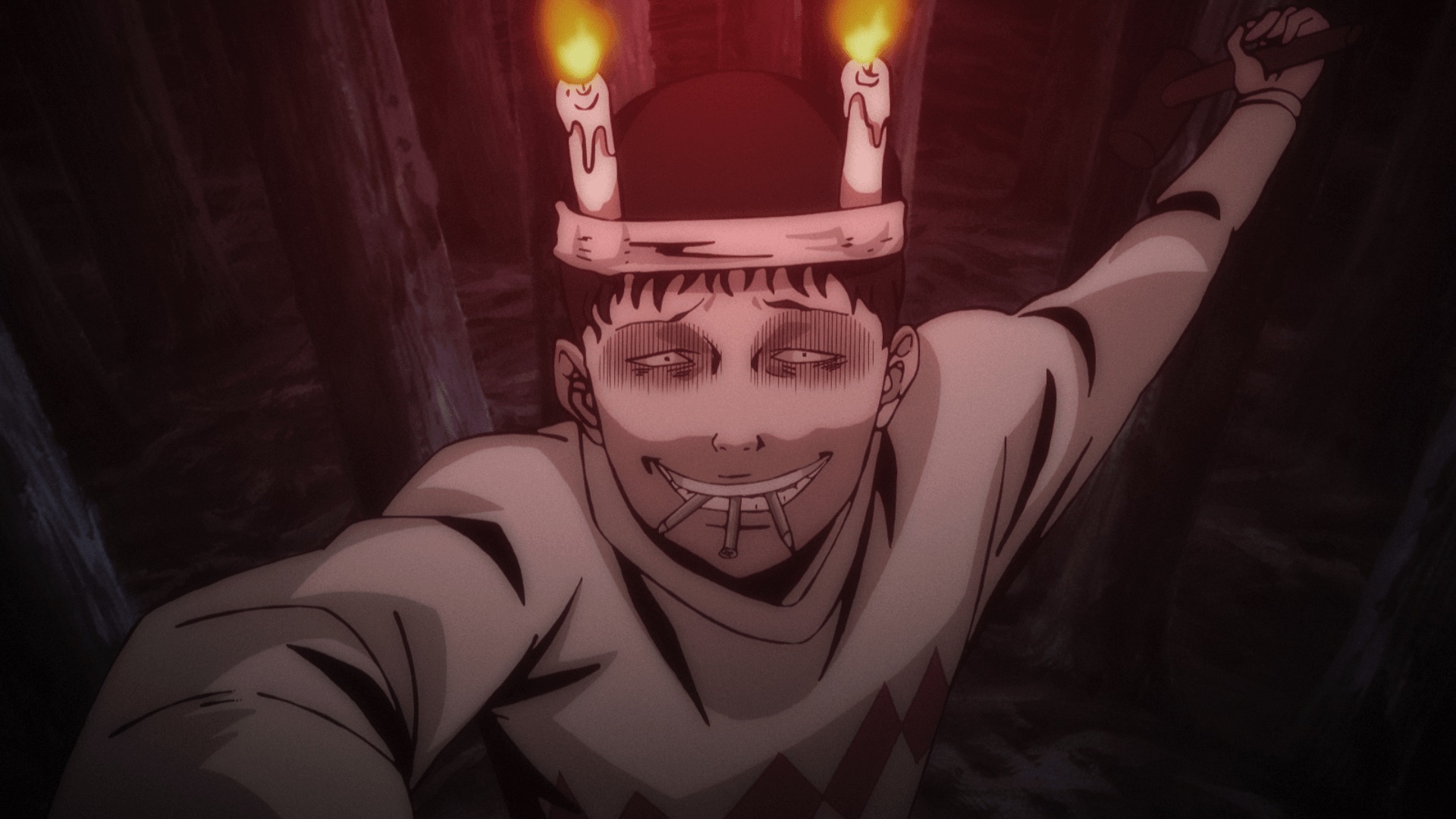
That self-importance gives a newcomer something to recognise alongside the grotesque. The story begins with a person who wants the world to acknowledge him. Its horror can grow from the disproportion between that want and the method he adopts, without requiring an elaborate mythology before the scene begins.
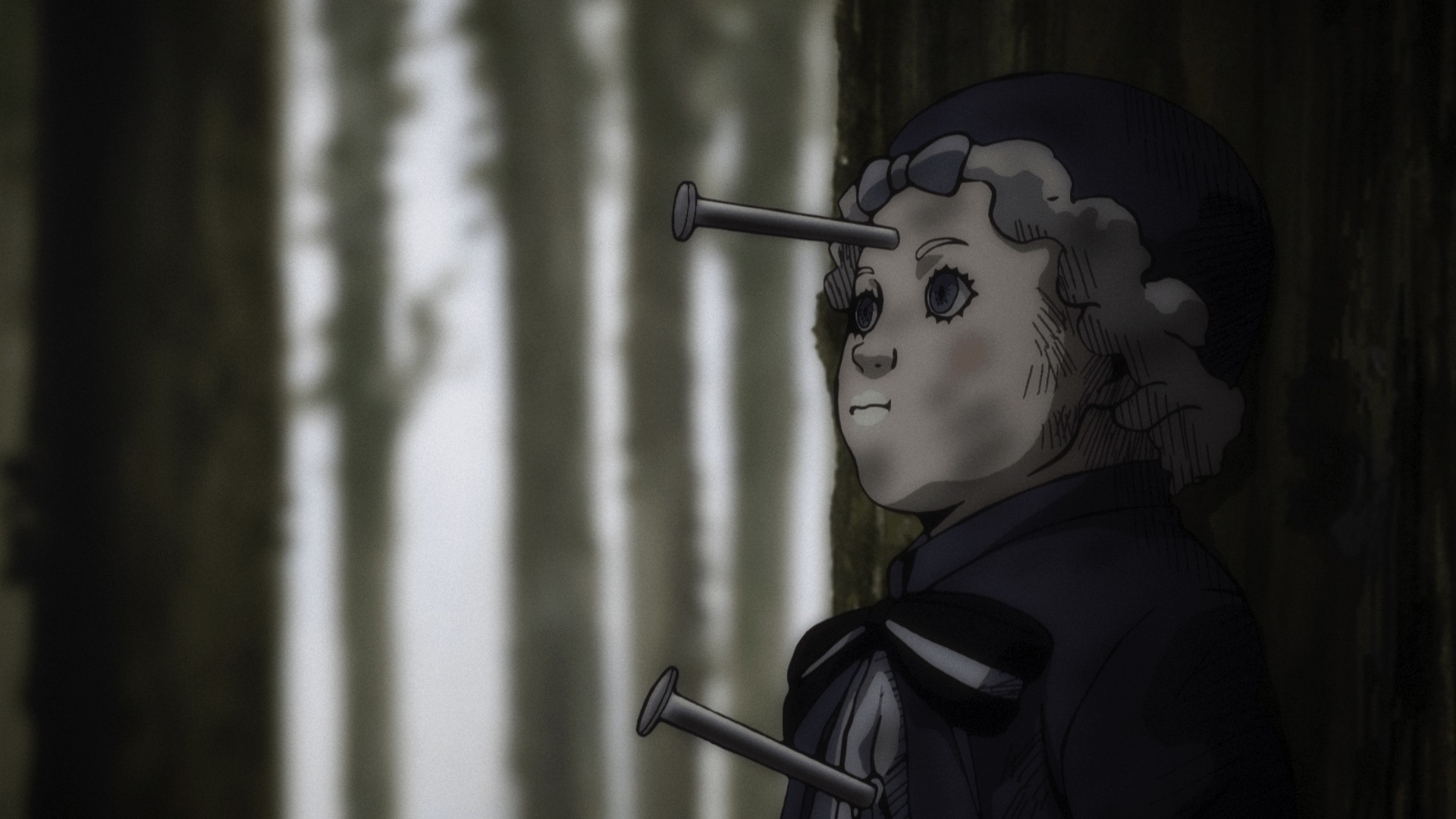
The doll used as this page’s opening image makes a related visual promise. A toy is small, familiar and made in a human likeness. Long nails turn that likeness into something damaged and menacing. The collection repeatedly places the strange close enough to everyday objects for their usual associations to remain uncomfortable company.
Why does Fuchi’s application frighten Iwasaki?
“Fashion Model”, paired with “Long Dream” in episode two, changes the social setting. Iwasaki belongs to a university film circle. A model he notices in a magazine troubles him so much that her appearance stays in his mind. When the circle advertises for a leading actress, her application turns a private fixation into a decision the whole group must make.
The director, Oda, hopes a professional’s participation will bring attention to the production. Iwasaki objects. The situation gives the story two credible immediate wants: the director wants the film to succeed; the anxious student wants the source of his dread kept away from it. Neither man needs to give a lecture about horror for those interests to collide.
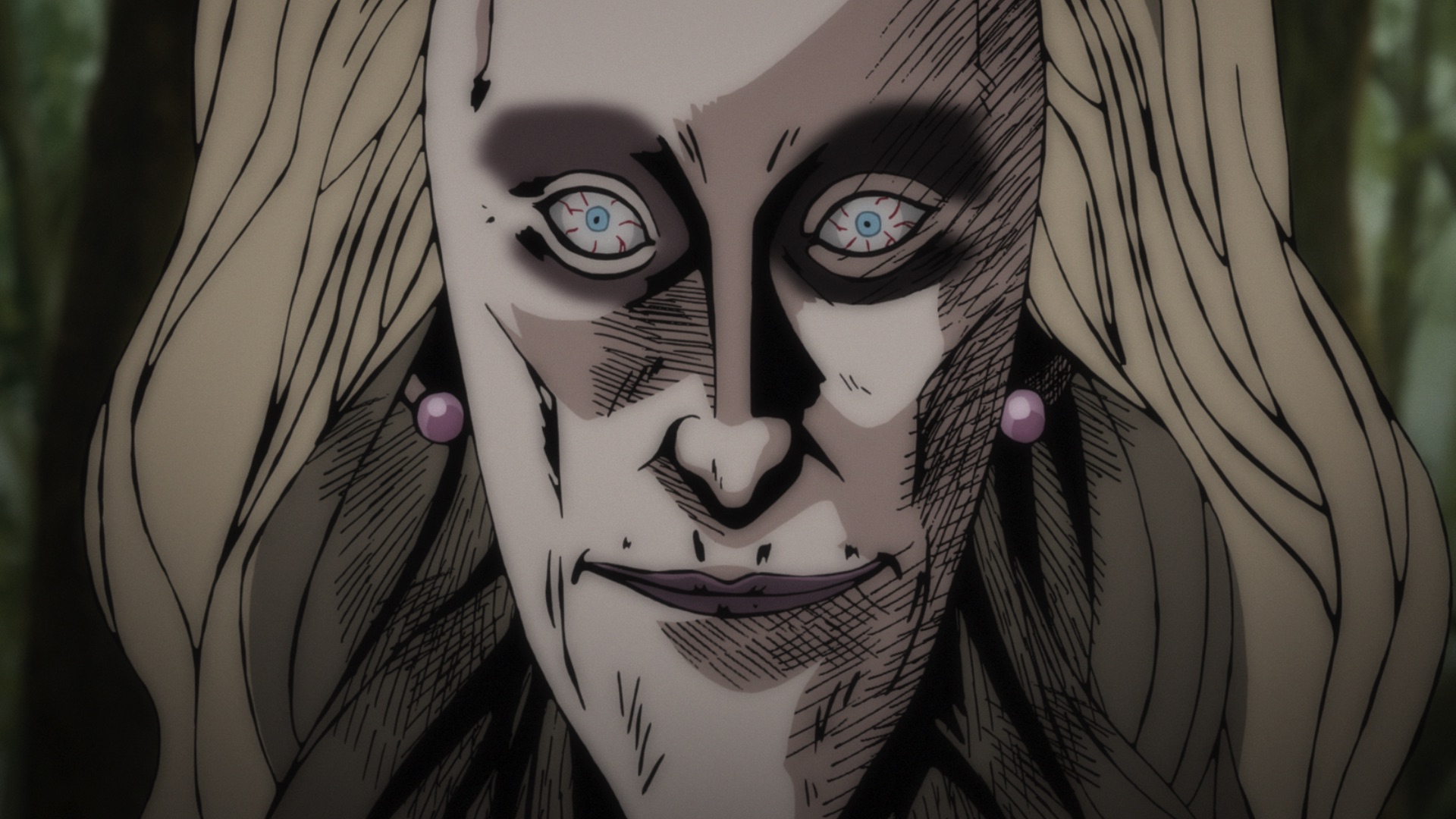
Fuchi’s pale face, blue eyes and dense drawn lines make a strong visual focus. But the people looking at her matter too. A photograph that alarms Iwasaki can be part of an attractive application to Oda. The story begins to unsettle a shared activity before its outcome is known.
The companion Feature on the casting decision follows that disagreement more closely and considers the questions animation brings to Ito’s images. This introduction leaves the student’s fears unresolved.
What kinds of horror should you expect?
Changing stories gives the series room to change scale and temperament. Souichi’s private certainty is very different from a group talking itself into a decision. The short form can end one set of assumptions and invite another without making every person part of the same expanding plot.
It can also make the encounter abrupt. Attachment has to form quickly, and a viewer may respond strongly to one premise while feeling distant from the next. The experience depends partly on which kinds of image, bodily threat or grotesque joke affect that viewer. There is no reason to promise that every story will work equally well for everyone.
That variation appears in a discussion with a prospective viewer: one reply enjoys the different kinds of horror and asks what specific material the viewer finds difficult; other replies are much more critical of the adaptation. Those are useful distinctions for choosing an evening’s viewing, rather than a settled verdict on the show.
The anime is directed by Shinobu Tagashira, who also supplies character design, with scripts by Kaoru Sawada, music by Yuki Hayashi and animation by Studio Deen. Performed voices, colour and sound give the characters another kind of presence. The stories offer different roles to inhabit, from a child who wants to look powerful to a student whose alarm is inconvenient to the people around him.
Which Junji Ito Collection should you start with?
Begin with episode one of the main 2018 television series. Its twelve main instalments use nominal 24-minute episodes, so allow roughly four hours and fifty minutes for that run. The short-story structure makes it easy to pause between instalments.
The separately released Tomie bonus parts are outside that main-twelve estimate; some services combine them into an additional item. Junji Ito Maniac is a different 2023 anthology, while Uzumaki is a separate adaptation of another work. Neither is a later season required to finish these twelve episodes.
Expect grotesque faces, bodily harm, bloody violence and frightening situations involving children. The official SMIRAL promotional video introduces more characters than the opening stories discussed here. Loading it connects to YouTube; it need not be watched before starting the series.
Original 2018 TV series · SMIRAL · 2017 promotional video
Loading the player connects to YouTube. Playback does not start automatically.
Sources
- Official 2017 adaptation announcement for the 2018 adaptation, source collections and staff credits.
- Official episode index, episode one and episode two for episode pairings and the opening premises described above. These pages include further story material.
- Official broadcast information and video products for the main television run and separately issued video material.
- Official promotional video, uploaded by SMIRAL. Loading its player connects to YouTube and reveals additional characters.
- A prospective-viewer question and replies, checked 26 October 2026, for the attributed contrast in reactions. These personal views do not establish audience consensus.