

Night City makes a better life look like something to earn by becoming more useful: to a corporation, a criminal crew or whoever can afford your next job. Cyberpunk: Edgerunners gives David Martinez another reason to keep pushing himself. He meets Lucy, a hacker who wants to leave the city for the Moon, and finds a future he can help somebody reach.
Across the original ten episodes, that apparently generous ambition becomes the series’ most compelling problem. David offers effort, risk and an increasingly powerful body. Those are useful assets in his mercenary career. They are less reliable answers to what another person needs from a relationship. The action is exhilarating because improvement looks so convincing; the romance hurts because being stronger does not settle the disagreement.
The verdict: a compact, visually inventive tragedy worth watching for the connection between its action and its relationships. Its hurried second half leaves some changes insufficiently explored, particularly beside the care given to its early encounters. Allow about 4¼ hours for the original series; no game knowledge is needed. Expect graphic violence and injury detail, strong language, nudity, sexual material and sexual assault.
Full-series spoilers follow, including major deaths and the ending. For a gentler starting point, use the series introduction. The linked criticism and episode accounts also reveal outcomes.
The Moon gives them something besides work
In episode 2, Lucy takes David to the Moon through a braindance, a virtual experience. They share its low gravity without having escaped her apartment. It gives her ambition a place and an activity. She is letting him participate in something she wants, rather than simply announcing that her current life is bad. Karl R De Mesa’s episode account describes the sequence and the abrupt return to danger.
For a brief interval, David does not have to win a fight to be welcome. The technology creates room for play instead of another test of his usefulness. This is the early romance’s strongest idea: a convincing glimpse of time together without an immediate task.
Yet sharing a simulation of freedom is easier than agreeing on how to obtain it. The scene creates a standard for the relationship, and the rest of the series tests whether its two participants understand that standard in the same way. A destination is easy to name. The life they might share is harder to describe.
Maine offers a model David cannot safely inherit
Maine’s crew gives David a practical education and a place where his abilities matter. Episode 4 turns his eagerness for another job into training with Lucy; by episode 5, he contributes an idea to the crew’s planning. Those small steps make belonging feel earned. Netflix’s episode guide traces that apprenticeship.
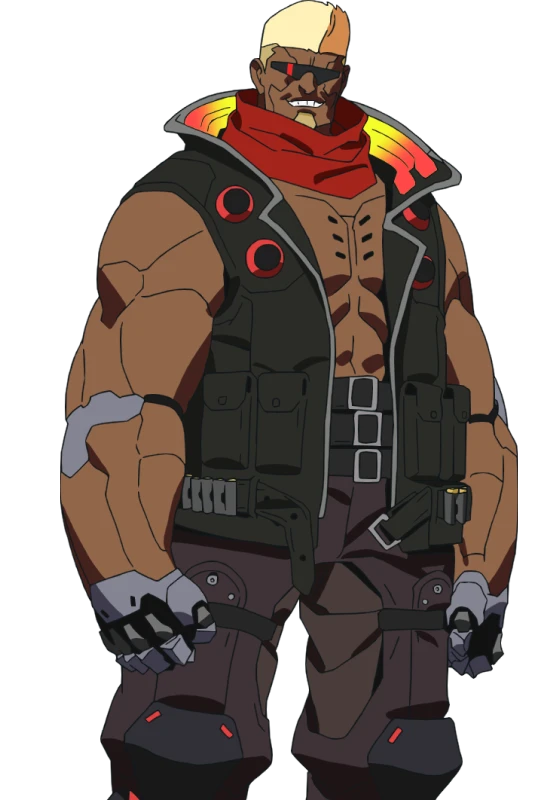
Maine is central to its appeal. His imposing body and authority offer David a legible picture of success. Then episode 6 turns that picture against him. Maine’s failing control makes him a danger to colleagues as well as enemies; the job collapses into a catastrophe, and David escapes with a piece of his mentor’s cybernetic body. De Mesa’s episode 6 recap records that final image.
The arm is a particularly effective inheritance. A mentor can leave advice; here, David carries away the equipment that helped make the mentor formidable. It embodies the difficulty of distinguishing the person he loved from the way that person lived. The warning and the aspiration arrive in the same object.
This is why David’s later rise is unsettling even before it becomes disastrous. The story has supplied a recognisable career path and shown its cost. Taking Maine’s place means accepting both.

The action makes the temptation visible
Director Hiroyuki Imaishi and character designer Yoh Yoshinari explained to Animation World Network how David’s accelerated movement retains successive frames as coloured afterimages. Instead of making speed an unreadable blur, the animation lets several moments occupy the screen.
The effect suits the fantasy of the Sandevistan. David appears able to get more action out of the same instant than everyone around him. An advantage that might otherwise require an explanation becomes a visual pleasure. The show needs that pleasure: if using the technology looked only miserable, the attraction of repeating it would be much weaker.
The contrast with the Moon sequence matters. One use of technology multiplies what David can accomplish; the other lets the couple linger. The series gives both their appeal, then shows how much more readily he can build a career around the first.
Justin Harrison’s review for The Spool places the show’s quiet connections alongside its bodily and emotional consequences. That is a useful way to judge the spectacle. Its success is not only in delivering an impressive fight, but in making the desire for another fight understandable without making the damage disappear.
The time jump gains momentum and loses steps
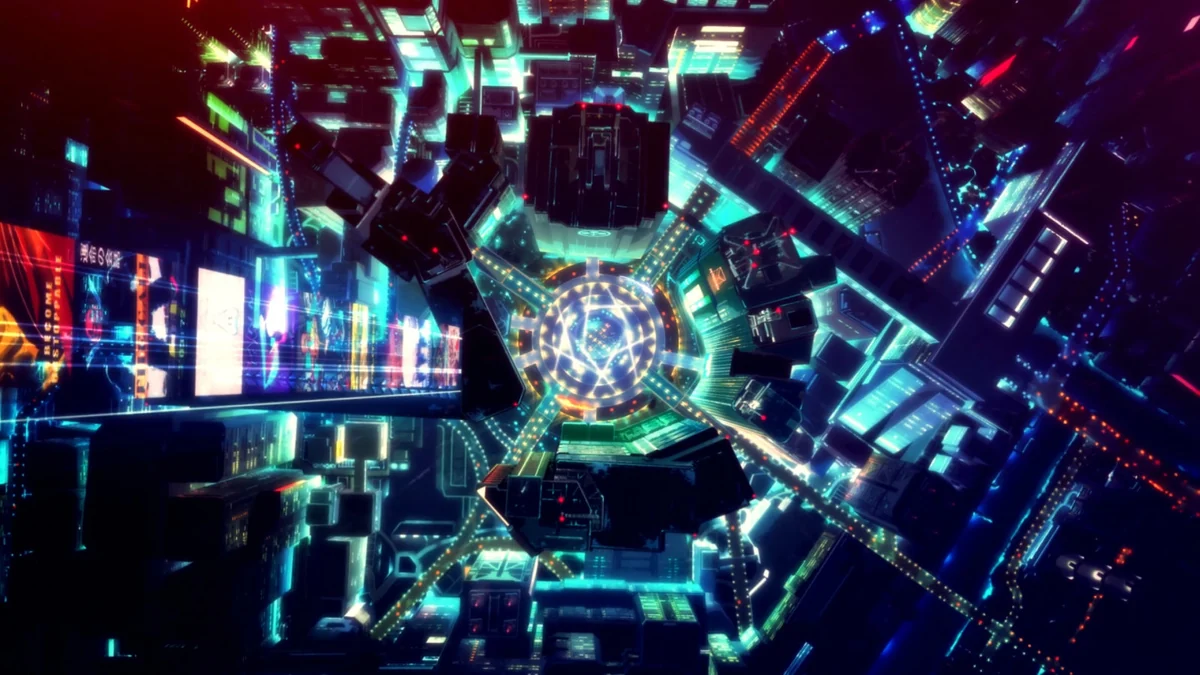
Episode 7 presents a more heavily modified David leading the crew. By episode 8, Lucy and Rebecca are confronting his behaviour while he refuses their concerns. The difference is clear; the process that produced it is less fully dramatised.
There is force in that compression. David now occupies the position he once looked up to, and the viewer can recognise the pattern faster than he accepts it. But recognition is not the same thing as watching the pattern develop. More of his intermediate choices would make the change feel less like a result announced by his new body.
Kate Sánchez’s But Why Tho? review praises the first six episodes’ pacing while arguing that the later time jump skips too much of David’s progression. The reservation is persuasive even without adopting her proposed longer episode count. Extra episodes would help only if they supplied the missing decisions, disagreements and ordinary intervals.
The ten-episode shape gives Edgerunners urgency. It also asks the audience to supply connective tissue at precisely the point when the characters are becoming harder to reach.
Lucy’s protection can become another kind of distance
The later episodes put Lucy on a private mission while David pursues increasingly dangerous work. By episode 9, that hidden activity and her past have become part of the trap around them. Her secrecy is an attempt to protect him, but it also keeps him outside decisions about his own future.
This mirrors David’s problem without making their behaviour identical. Each can act out of love while deciding alone what the other person needs. David’s willingness to risk himself is visible and spectacular. Lucy’s work is harder for him, and sometimes the viewer, to understand.
The resulting imbalance is a real weakness. David’s transformation has an immediately readable physical form; Lucy’s priorities are more often explained through concealed information. Her early confidence and curiosity have less room to breathe once the plot starts closing around her.
Beata Garrett’s review for The Anime View is much cooler on the romance and criticises the series’ treatment of women. That objection deserves space beside the more enthusiastic readings. Lucy’s importance to the plot does not automatically mean the show gives her equally rich access to the audience.
The romance still works because it establishes an alternative worth wanting. It would work better with more sustained attention to how Lucy’s desires change, beyond what David needs to discover.
The ending fulfils a promise and exposes its limits
In the finale, David’s rescue of Lucy culminates in his death, while she escapes with Falco. Jonathon Wilson’s ending account sets out those events. Lucy eventually reaches the Moon, returning the story to the place they first shared virtually.
That return is stronger than a simple declaration that nobody wins in Night City. A concrete part of the dream has been realised. Its meaning has changed because the person who helped make it possible cannot be there.
David’s final act is loving, but the ending does not make self-destruction a satisfactory plan for a relationship. Saving Lucy matters. So does the life together that the earlier sequence made imaginable. Both can be true, and the Moon makes the distance between them visible.
This is where the series’ compressed form finally pays off. It can return to a small, recognisable image rather than explain its thesis through another confrontation. Even if the intervening character development feels rushed, the difference between sharing a dream and delivering somebody to its destination is painfully clear.
A short tragedy with a lasting disagreement
Edgerunners is strongest when affection and poor judgement coexist. David’s devotion is sincere. Lucy’s protection is sincere. Neither sincerity gives them a shared method for staying alive together.
Watch it for action whose appeal becomes part of the drama, a memorable early romance and an ending that changes the meaning of an earlier scene. Be more cautious if you need gradual character development, equal attention to both partners or distance from graphic bodily harm. The series earns much of its force through precise images; it does not always give the people inside them enough time.
Sources
- Official original-series site and Netflix episode guide: ten-episode scope, premise, apprenticeship and later mission progression. Successor material is excluded.
- BBFC original 2022 VOD entries and episode 4 content advice: the original ten entries total 253 minutes; the separate 2025 classification provides explicit sexual-assault guidance. The rounded commitment allows for edition differences.
- Show Snob, episode 2 and episode 6: scene accounts used for the simulation and Maine’s collapse.
- Victoria Davis, Animation World Network, 2 November 2022: interview with Imaishi and Yoshinari about the animation.
- Justin Harrison, The Spool, Kate Sánchez, But Why Tho? and Beata Garrett, The Anime View: contrasting critical readings, including objections to compression and the romance. Garrett also describes the Moon conclusion.
- Jonathon Wilson, Ready Steady Cut: final-episode outcomes.