Humanity survives behind enormous walls built to keep out Titans, creatures that eat people. Eren Yeager wants to see the world beyond them. Many of the people around him have accepted a confined life as the price of a precarious peace. When the Colossal Titan breaks through the wall, that compromise collapses and Eren’s home becomes a battlefield.
What does Eren have to learn before fighting back?
Eren’s conviction is not the same as competence. He enters military training with Mikasa and Armin, but the demands of fighting Titans begin with the basics of surviving the training itself. The three friends have different strengths, and the institution measures recruits by skills that Eren cannot simply will into existence. The season’s early stretch gives his anger a practical obstacle: he must learn to use unfamiliar equipment and work inside a group.
That detail makes the military more than a staging ground for revenge. Cadets are sorted according to their performance, and high-ranked graduates can choose safer interior service. Training for war can therefore become a path away from the front. Eren’s desire to leave the walls conflicts with a system that rewards people for staying protected within them. The structure turns a career choice into an argument about what safety costs.
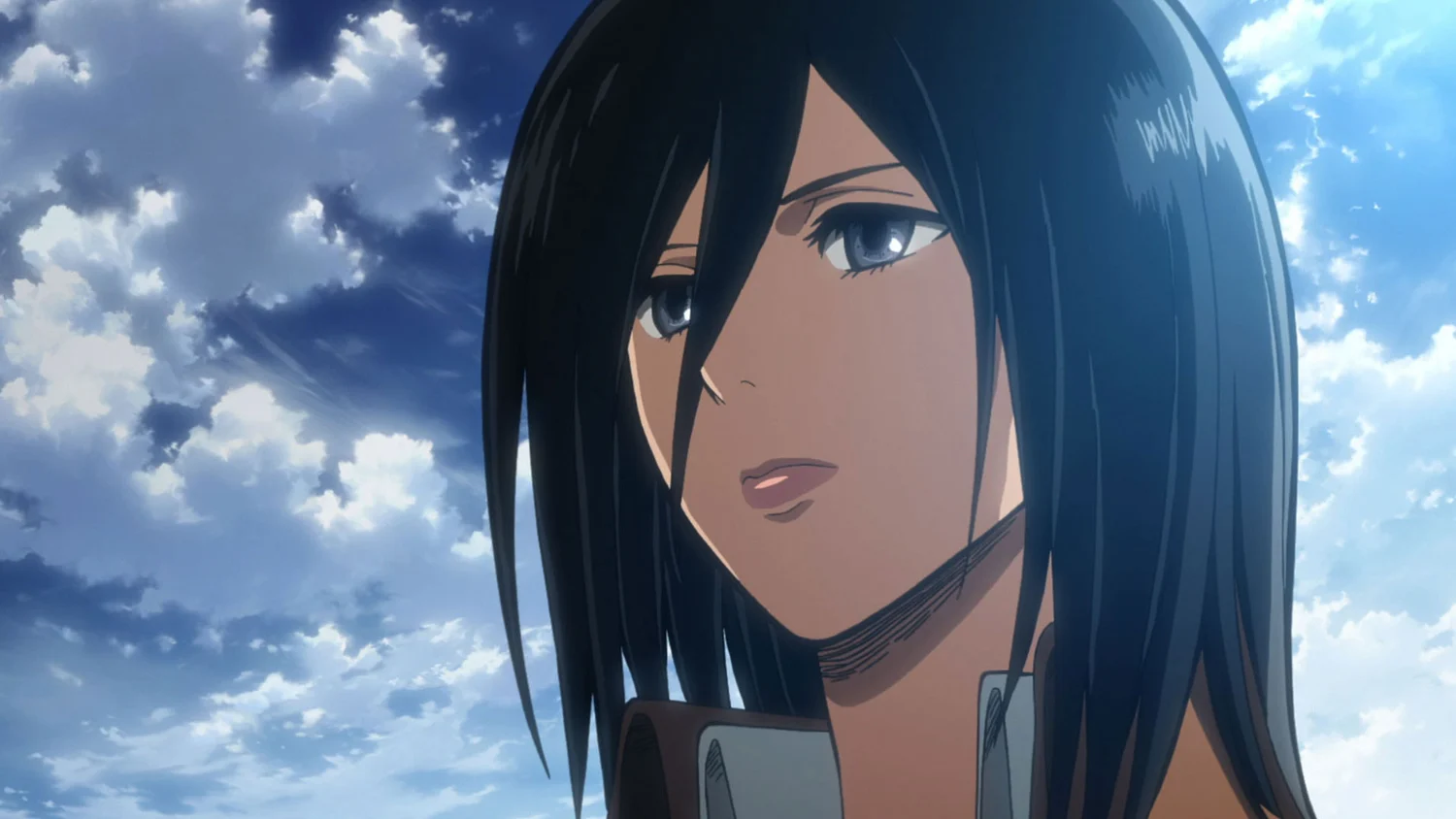
Image credits
Attack on Titan
(C)諫山創・講談社/「進撃の巨人」製作委員会
Image sourceWhy is the wall such a strong premise?
It is both physical defence and a limit on what people can imagine. The first episode gives the audience a clear social bargain: accept a confined life in return for protection. Eren resents that bargain, while others see it as the only reasonable way to live. The breach is frightening because it destroys more than a barrier; it makes the whole society’s assumptions feel provisional.
The Titans turn scale into threat. Their size and movement make individual skill seem inadequate, so the human characters depend on planning, coordination and equipment. This is not a story in which confidence alone closes the gap between people and danger. Eren’s certainty pushes him forward, but the early season keeps showing the work between wanting to fight and being capable of doing so.

Image credits
Attack on Titan
(C)諫山創・講談社/「進撃の巨人」製作委員会
Image sourceWhy does the action need height and distance?
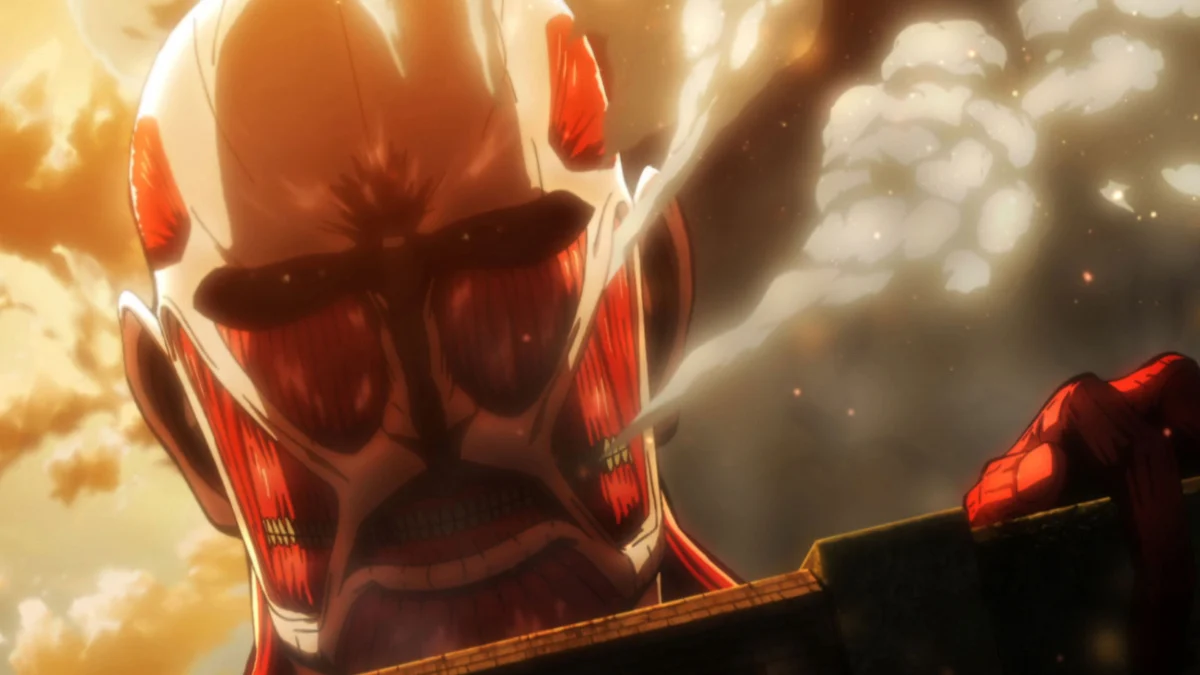
The Colossal Titan’s face above the wall gives the opening an immediate measure of size. The defences are enormous to a person on the street and suddenly inadequate beside the creature. Later, cables and manoeuvring equipment let the cadets cross that distance, turning buildings and vertical surfaces into routes through a fight. Learning to control a body in space becomes a survival skill.
Mikasa and Armin keep Eren from being the only imaginable response to that world. Mikasa’s protective focus and Armin’s interest in what lies outside the walls give the group motives beyond a shared uniform. They can face the same threat without needing the same temper or the same idea of courage.

Image credits
Attack on Titan
(C)諫山創・講談社/「進撃の巨人」製作委員会
Image sourceWhere does this page stop?
Start with episode one of the 2013 season, then follow seasons 2, 3 and The Final Season, ending with the two Final Chapters specials. The complete route has 87 regular episodes and two long specials, about 39 hours. The examples above introduce the walls, Eren’s ambition and his early military training.
For a promotional sample, see Original television PV · Pony Canyon. Trailers may include scenes beyond the early setup described here.


