

“Finish in a weekend” can mean four or five hours of episodes, not a guaranteed tidy ending. The useful distinction is simple: runtime tells you how long the anime is, while the endpoint tells you what kind of stop it offers.
These four runs are roughly 4.2 to 5 hours using approximate episode lengths.
Want a mystery that reaches an anime ending?
Erased, 12 episodes

Erased gives its television mystery a twelve-episode route. Image credits
Erased
(C)2016 三部けい/KADOKAWA/アニメ「僕街」製作委員会
Image sourceSatoru Fujinuma is a struggling manga artist whose unexplained ability sends him back to moments before a tragedy. The twelve-episode anime takes its central investigation through to a resolution. You do not need another television season to reach its answer.
Why try it: Its time-spanning suspense story has a defined endpoint.
Keep in mind: That is not the same as promising that every adaptation choice will satisfy a viewer who knows the source material. Go in for the anime's own conclusion, not as a substitute for every detail of the manga.
Want an original anime that leaves room to interpret?
Sonny Boy, 12 episodes

A boy in a loosened school tie stands with a companion behind him. Image credits
Sonny Boy
(C)Sonny Boy committee
Image sourceAn ordinary school day breaks open when a class and its students drift into another dimension, where different rules and abilities begin to shape their survival. The official episode archive runs through a twelfth and final instalment. The run ends, but interpretation is part of the experience: Lost in Anime critic Guardian Enzo openly resists reducing the finale to one settled explanation.
Why try it: Visual ideas accompany a story willing to leave questions unresolved.
Keep in mind: If you want every mystery neatly answered, this is the least suitable pick here, even though its television run has a final episode.
Want a comic loop with a formal ending?
The Tatami Galaxy, 11 episodes

A change of perspective is part of the repeated university-life structure. Image credits
The Tatami Galaxy
© イラスト 中村佑介 ©四畳半主義者の会
Image sourceAn unnamed university student imagines how campus life might have changed if he had chosen different clubs. Fuji TV's official series page describes those choices as parallel worlds. The eleven-episode television run brings that repeating structure to an ending of its own. Tatami Time Machine Blues is a separate related work, rather than a missing twelfth episode.
Why try it: This is the shortest run at about four hours.
Keep in mind: Rapid dialogue and repeated versions of university life build towards a conclusion. Ani-Gamers critic Jared Nelson notes that the rapid narration may take some getting used to; if that sounds tiring, save it for a more attentive weekend.
Want a sports story about becoming yourself?
Ping Pong the Animation, 11 episodes
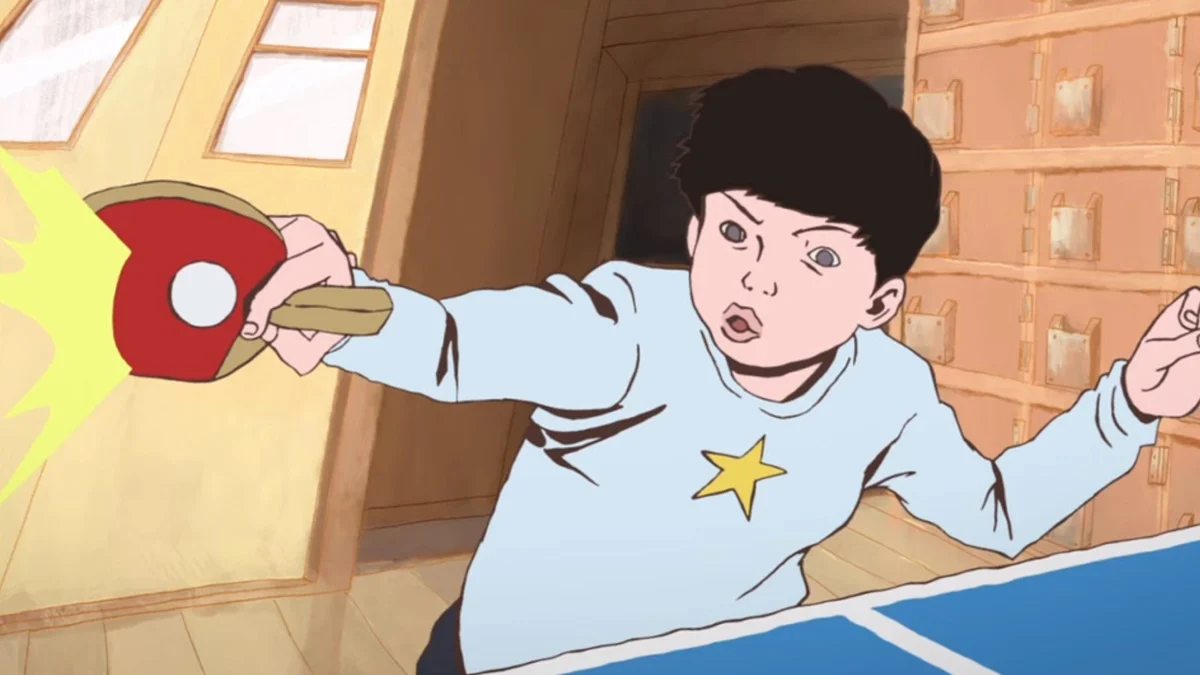
The complete Ping Pong adaptation fits a much smaller commitment than a long sports franchise. Image credits
Ping Pong the Animation
© 2014 Taiyou Matsumoto, Shogakukan / PingPong The Animation
Image sourceFive young men grow up through table tennis. Matches make their differences visible: skill, talent, discipline and desire do not mean the same thing to every player. Its eleven episodes carry the central sports and growing-up story through to a closing perspective on the players’ lives. You are choosing a completed anime adaptation, rather than an opening tournament that needs another season to continue.
Why try it: The compact sports drama uses the game to express personal stakes as well as competition.
Keep in mind: Its expressive, rough-edged drawing is a distinctive part of the experience; a viewer wanting conventional polished sports visuals may need time to adjust.
Sources
Linked sources contain later story details.
- Reddit B034
- B035
- B047
- Aniplex USA Erased press release
- Aniplus series and episode guide
- Sonny Boy official episode archive
- Lost in Anime series/ending review
- Fuji TV official series page
- Apple TV episode eleven
- Ani-Gamers review
- Ping Pong official programme record
- terminal episode
- UK Anime Network review