
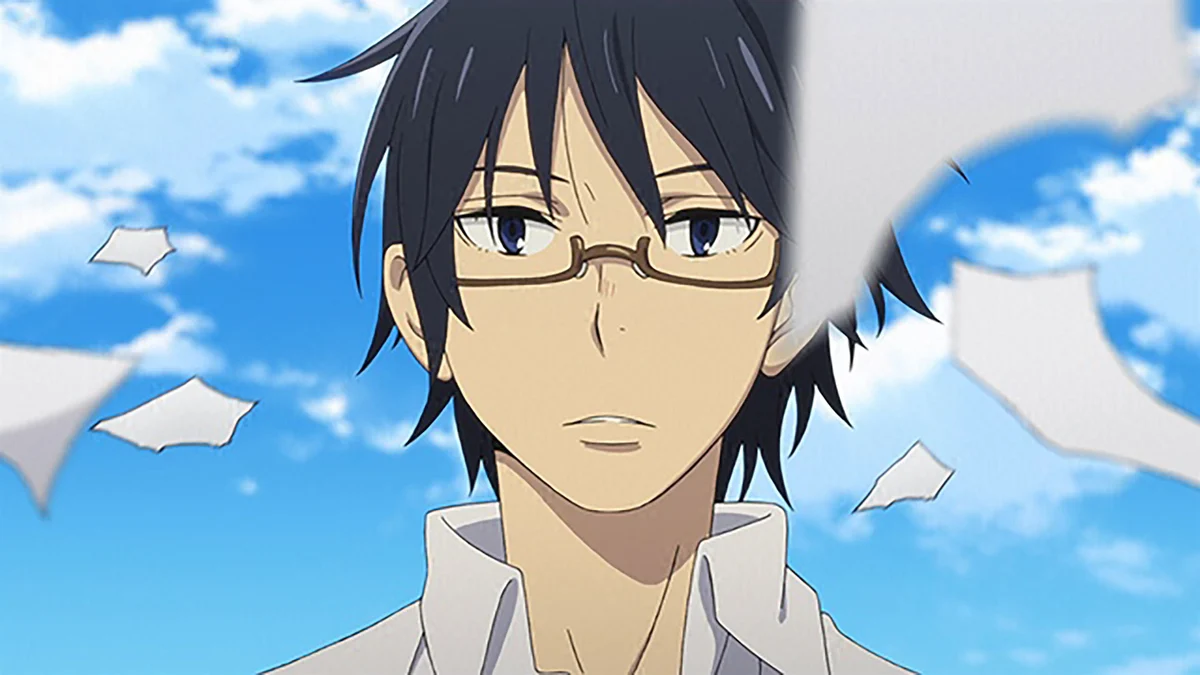
Satoru Fujinuma is a 29-year-old manga artist with a phenomenon he calls Revival. When something dangerous is about to happen, time can send him backward to a moment before it. He does not choose the destination or understand the warning. His task is to notice what has gone wrong before the moment repeats.
Is Revival a power or a problem?
The opening episode keeps the ability practical and unsettling. A traffic accident gives Satoru a chance to intervene, but the return does not arrive with an explanation. He has to read the scene, infer the danger and act with only a little more information than everyone else. The story’s suspense comes from this gap between the signal and its meaning.
That uncertainty makes Satoru’s ordinary life matter. His mother Sachiko temporarily moves in after the accident, and their domestic routine becomes part of the mystery rather than a pause from it. She notices what he misses and brings her own experience to his half-understood ability. Revival may put Satoru at the centre of events, but it does not make him the only person capable of understanding them.
What did Satoru fail to see as a child?
After Sachiko learns of a nearby attempted child abduction, a much larger jump takes Satoru to 1988 and elementary school. His mother is alive in this past. He believes that preventing the childhood crime may also save her future, but he has returned without a map of what he needs to change.
Kayo Hinazuki, a classmate he remembers as an abduction victim, makes that problem painfully specific. He notices bruises on her legs that did not command his attention when he was a child. At his friend Kenya’s prompting, he reads her contribution to a class essay collection: she imagines a town from which she has disappeared and wants to go far away alone. Her wish gives the quiet girl a life beyond being the person the mystery says must be protected.
The extra years in Satoru’s mind help him recognise signs of abuse. They do not make Kayo trust him. Her first response to his approach is cold, and his attempt to become involved takes the ordinary form of an invitation to a birthday party. The important change is small enough to be difficult: he has to stop passing somebody by and risk an unwelcome conversation. Knowing that something terrible will happen is different from understanding how to be useful to her now.
He also needs another child’s insight to notice the essay. Adult hindsight does not replace listening to the people who were there. The time-travel puzzle becomes a story about attention with a practical demand: a warning is worth little until somebody acts on it.

Image credits
Erased
©2016 三部けい/KADOKAWA/アニメ「僕街」製作委員会
Image sourceHow does the past look different?
In a review of the first six episodes, Cold Cobra connects Revival to old cinema: the past is often presented inside a narrower frame, as though Satoru is entering a remembered film. The observation gives the title’s repeated returns a visual language as well as a plot mechanism. A familiar place can be recognisable and still feel like something being replayed.
The adult opening has a different sort of immediacy. Satoru has work to do, a colleague in Airi and a mother who asks inconvenient questions. Those connections give his wish to repair the past something to return to. The childhood journey matters to lives already under way, not only to a puzzle whose answer is hidden at the end.
What is the right starting point?
Begin with episode one and watch the 12-episode 2016 television story in order. The live-action adaptation, film and manga are separate versions and are not included here. The television route takes approximately five hours. Knowing the culprit or the results of Satoru’s interventions would change the experience; the early setup is enough to begin.
For a promotional sample, see Original television PV · Fuji TV anime channel. Trailers may include scenes beyond the early setup described here.


