
A hamburger can be a surprisingly effective opening move in city politics. In Log Horizon, Shiroe and the Crescent Moon Alliance find a market for food that tastes good. The stall brings customers, but its more important product is a reason for other guilds to pay attention.
That progression makes the business worth following even if fictional fast food is not normally your preferred adventure. A useful discovery becomes a saleable service. A successful service makes its method valuable. People with resources now have a reason to negotiate with the people who know how it works.
The burger does not single-handedly fix the city. It gives a plan somewhere to begin.
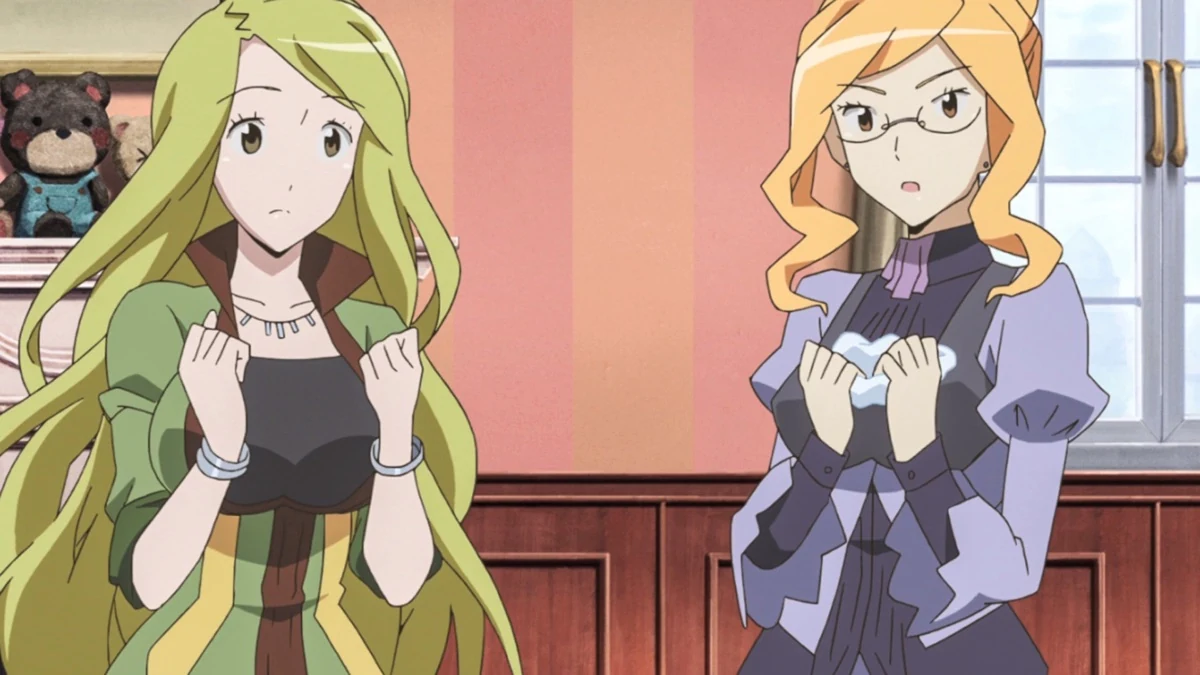
Image credits
Log Horizon
©橙乃ままれ・KADOKAWA/NHK・NEP
Image sourceWhy is good food valuable in a world full of monsters?
The trapped players have more immediate problems than finding an interesting restaurant. Yet eating is one of the things they must keep doing while they try to understand their circumstances. Log Horizon makes the dreariness of that routine part of the predicament: familiar-looking food does not provide familiar pleasure.
Nyanta’s knowledge supplies the opening. As the licensed episode 7 description explains, Shiroe learns the secret of making proper food, and Marielle’s guild establishes a stand selling Crescent Burgers. Customers who are tired of tasteless meals respond enthusiastically.
The attraction is easy to understand without an elaborate account of the currency. The seller has something people want and cannot yet obtain everywhere else. The commodity is also a small restoration of normal life: enjoying lunch instead of merely getting through it.
This makes the food relevant at two scales. A customer gets a better meal. The people running the stall learn that the city contains unmet demand. That second observation is where the story starts moving from comfort towards commerce.
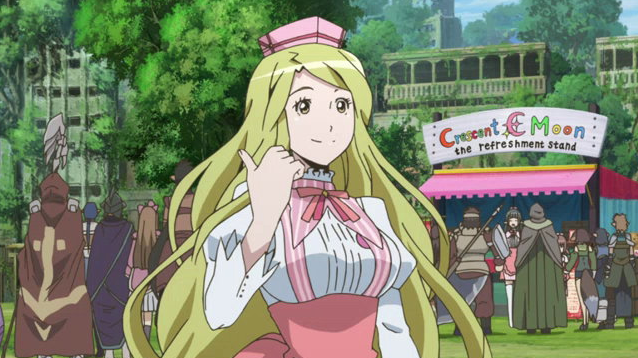
Image credits
Log Horizon
© 橙乃ままれ・KADOKAWA/NHK・NEP
Image sourceThe stall makes that demand visible before the guild negotiations begin. A named counter and people waiting to be served turn the cooking discovery into a service others can seek out. The scene has already changed from someone making a good meal to a group operating a business.
What can a small guild offer a much larger one?
Shiroe is not simply setting a target of selling the most lunches. The episode 7 listing on Apple TV identifies a much more ambitious goal: five million gold. The gap between a food stand and that number is part of the intrigue.
The next episode changes the audience for the pitch. Marielle and Henrietta approach the leaders of major production guilds, using the burger’s secret recipe as a bargaining chip. The licensed episode 8 synopsis places Henrietta’s negotiating skill at the centre of that meeting.
These organisations are groups of players with crafting and commercial interests. They have different reasons to value the discovery from somebody buying a single lunch. Access to a method could matter to an enterprise capable of using it repeatedly. The stall has made that opportunity visible.
That makes the strategy easy to follow. The story does not ask us to accept that other guilds listen because Shiroe is clever. It gives them something worth listening for. Information can provide leverage even when the people holding it do not command the largest fighting force.
Who does the work between the idea and the result?
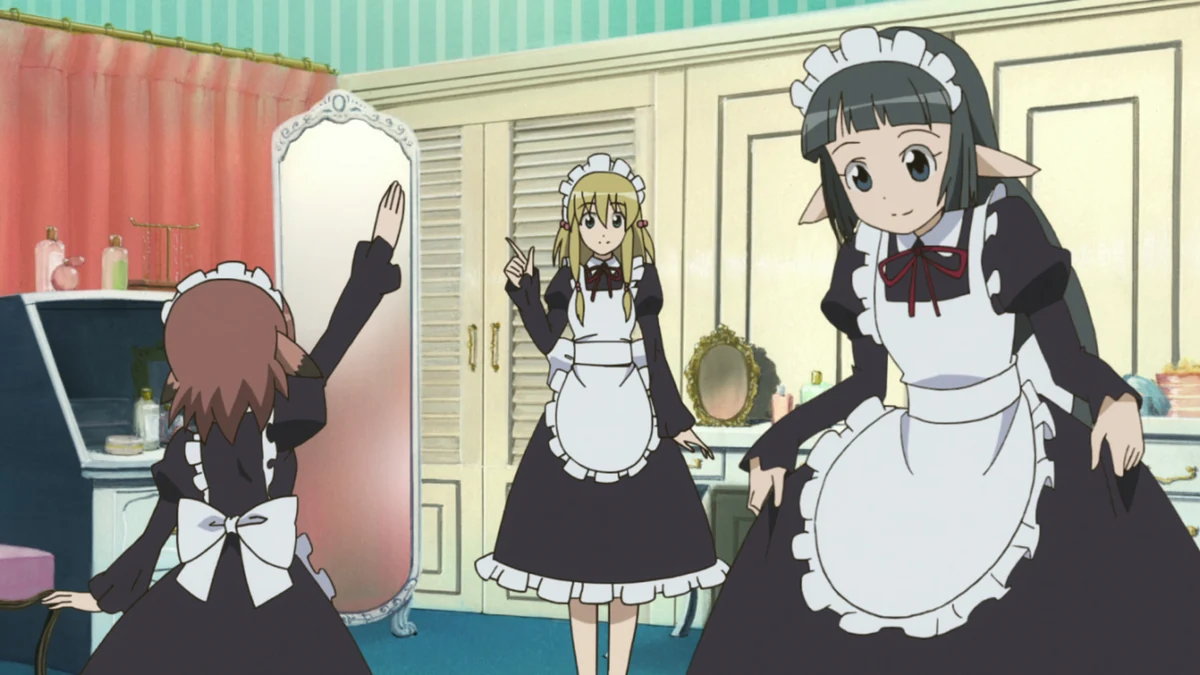
Image credits
Log Horizon
©橙乃ままれ・KADOKAWA/NHK・NEP
Image sourceNyanta knows something practical. Marielle has a guild that can help put it to use. Henrietta can conduct the negotiation. Shiroe connects those contributions to a larger objective. Describing the business only as his masterstroke would flatten the part that makes it interesting.
The changes in scale also change which skills matter. At the food stand, producing and serving something desirable matters. In a commercial negotiation, controlling the terms on which knowledge is shared matters. At a gathering of guild leaders, persuading people with conflicting interests to accept a common arrangement matters.
Combat power has not disappeared from this world. It simply cannot perform all those jobs. The story makes room for organisation and expertise by giving them consequences that a more forceful attack would not automatically produce.
Why doesn’t a successful business settle the politics?
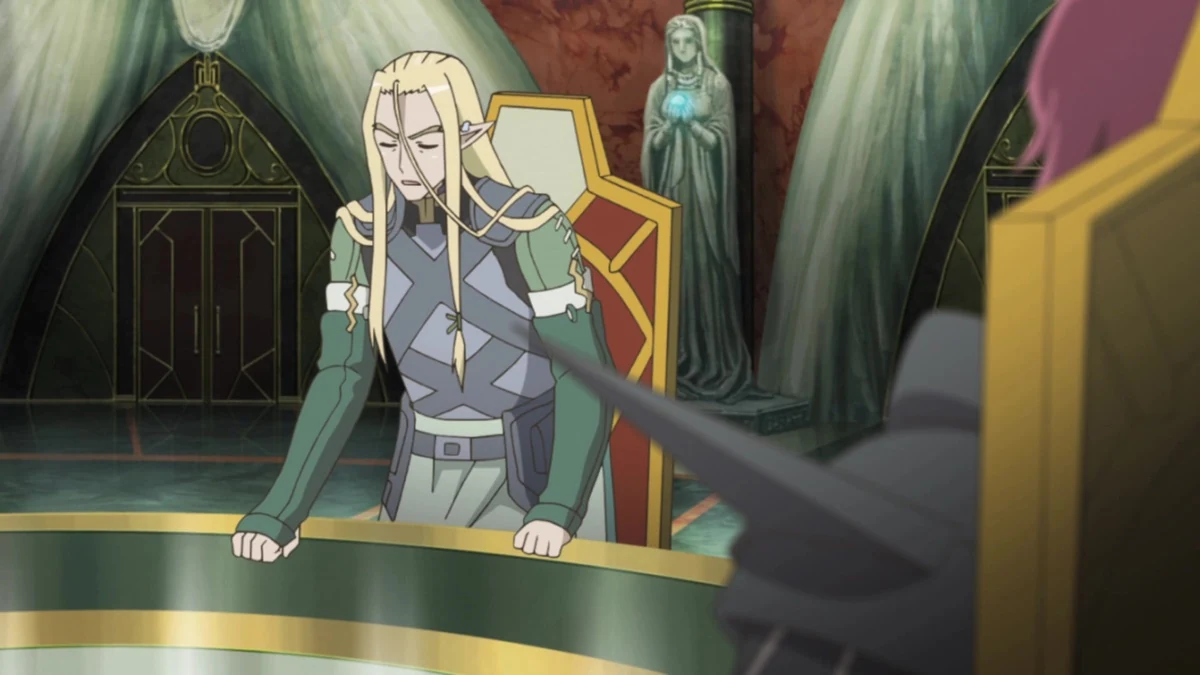
Image credits
Log Horizon
©橙乃ままれ・KADOKAWA/NHK・NEP
Image sourceBy episode 9, Shiroe has brought influential guild leaders together to propose a Round Table concerned with the city’s self-government. The licensed Japanese synopsis makes the obstacle explicit: their interests differ, and the proposal runs into difficulty. A city is not a party whose members have already agreed on the quest.
The distinction is crucial. Commercial interest can get somebody to consider an offer. It does not prove that they share your ideas about order, responsibility or how other people should live. Customers, business partners and political allies are different relationships.
That is why the burger-to-politics sequence is more satisfying than a shortcut in which making money automatically makes somebody fit to govern. Log Horizon carries a practical opportunity into a harder conversation. Knowing how to create value is useful. Deciding what obligations should follow from that value requires other people to answer back.
The sequence also explains the limits of the appealing burger-show description. In a Reddit discussion built around that scene, the original poster cautions that their heavily cut clip can mislead: the series is not principally about food. The entertaining detail matters because the consequences extend beyond it.
Shiroe’s early civic adventure begins with something people would like to eat and reaches a roomful of people who do not necessarily agree. The distance between those two places is where Log Horizon finds its politics.
The official original-series trailer, uploaded by Crunchyroll Store Australia, supplies the broader adventure context.
Sources
Linked sources contain later story details.