
An inn should offer a traveller somewhere to stop looking over her shoulder. A ship should carry its passengers along a known route. In Mononoke, both can be beautifully furnished and profoundly unreliable. Pattern fills the rooms; banners brighten the deck. The danger does not wait for the world to turn grey.
That is part of the original 2007 series’ invitation. Its colours attract the eye while the Medicine Seller asks people for accounts they would rather not give. The pleasure of looking and the discomfort of learning belong to the same encounter. To understand how that works, it helps to follow the places and their occupants, rather than treating the art as a decorative wrapper around a monster mystery.
What happens when the background refuses to stay behind?
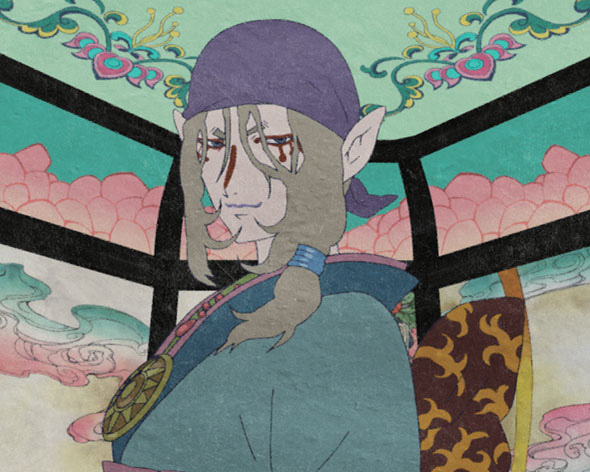
In their 2007 Anime Style interview, director Kenji Nakamura and character designer Takashi Hashimoto discuss the approach that began with Ayakashi’s “Bakeneko” and continued into Mononoke. Nakamura wanted the visual richness of a colourful picture scroll. He deliberately reduced the familiar distinction between an animated character and a differently painted background, taking inspiration from ukiyo-e’s shared treatment of figures and surroundings. Hashimoto describes suppressing shadows and most highlights so that characters could blend into that surface.
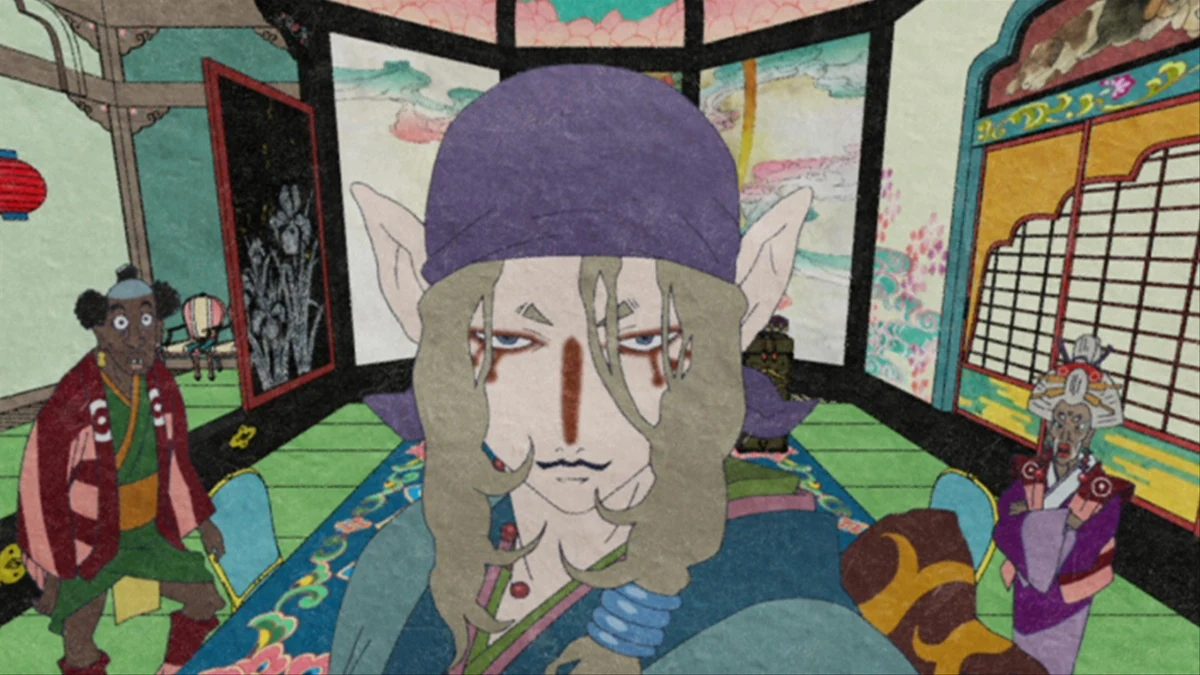
This gives us a more useful way to look at the series than “traditional art, but animated”. In the room still, a flower pattern can demand as much attention as a face. An expensively decorated interior does not supply the calm, neutral space in which a detective can stand apart from the problem. Everything belongs to the same insistent picture.
A pattern need not encode a hidden solution to matter. People and places become harder to separate, which suits cases in which what happened inside a room matters as much as the being that now occupies it. Looking closely means attending to the whole encounter, not simply searching for a concealed symbol.
Who is allowed to feel safe inside the inn?
The first case, “Zashiki-warashi,” begins with a pregnant traveller, Shino, seeking shelter on a rainy night. Hisayo, the innkeeper, hesitates before giving her a room normally kept from guests. A place to rest has to be negotiated before any supernatural explanation enters the account.
The two women do not face the same choice. Shino needs somewhere to stay; Hisayo can decide which rooms are available and what their guest needs to know. A traveller may recognise the immediate danger outside without knowing anything about the building she enters. The host’s familiarity with a house can be a kind of power.
The Medicine Seller arrives with another advantage: he can investigate. Shino cannot simply put her need for shelter on hold until everybody has told the truth. The opening brings together three different relationships to the place, the person who needs it, the person who manages it and the stranger who asks what happened there. Its visual richness does not cancel those unequal positions.
How does the sea case change the pressure?
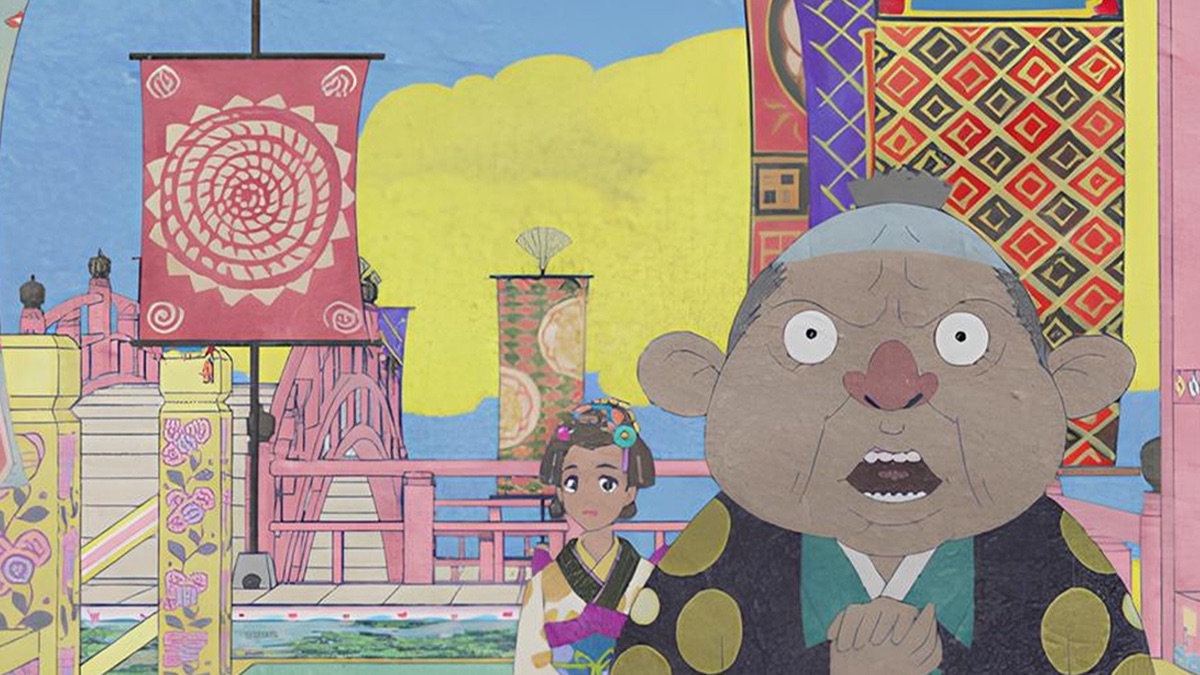
“Umi-bōzu” exchanges a room controlled by its host for a journey shared by passengers. The Soraris-maru is bound for Edo. Its company includes a self-described practitioner of magic; its compass is tampered with, and the ship leaves its prescribed route. The ordinary promise of a voyage, that somebody knows where this vessel is going, has failed.
The distinction matters. A traveller at an inn can ask to leave, even if circumstances make that difficult. A passenger at sea already depends on a shared vessel, a crew and a direction. Losing the route changes everybody’s position at once. The sea is not merely a fresh background for another locked-room tale: it gives the strangers a different reason to need an explanation together.
The Medicine Seller’s sword makes listening unavoidable in both places. It needs Form, Truth and Reason: a manifested being connected to human causes and ties, the circumstances of events, and the heart or feelings involved. Those requirements do not promise that understanding will be comforting. They prevent the spectacle of a creature from replacing an account of the people around it.
Can the same beauty soften horror and make it stranger?
Readers do not all experience the combination alike. In a Reddit discussion of the opening case, the original poster says the art alleviates the tension. Stormy8888 instead finds the psychedelic images intensify the approaching dread, while RyaReisender describes the experience primarily as a detective investigation rather than especially dark horror. These are individual responses, but their disagreement identifies something more interesting than a scare rating.
Stylisation creates distance from a literal body or room. That distance can give somebody room to watch a distressing story. It can also remove the reassurance that ordinary appearances will remain reliable. Both responses are possible when a scene offers pleasure without promising safety. A newcomer drawn by the colours should expect the human account to matter, not assume that an ornate image will make its subject gentle.
The music has its own version of that attraction. Opening composer Ryota Komatsu describes seeking a moth’s uncanny allure, using tango harmony and a deliberately unsettled melody for “Kagen no Tsuki,” credited to Komatsu × Charlie Kosei. The idea is more suggestive than a generic command to be scared: beauty can invite us closer to something we do not understand.
Across five cases and twelve episodes, Mononoke keeps making that invitation. Its rooms and journeys offer different arrangements of knowledge, need and authority. The Medicine Seller’s task is to discover what the striking surface cannot tell him on its own.
Sources
The episode pages and discussions reveal more than the opening situations used here. The 2007 interview also discusses the earlier Ayakashi work; later films are outside this feature.
- Anime Style: Nakamura and Hashimoto, first part of their 2007 interview: picture-scroll concept, figure/background relationship and design choices.
- Fuji TV: original series and opening episode: original identity, cases and Shino/Hisayo’s shelter encounter.
- Licensed original-TV synopsis: Form, Truth and Reason.
- Apple TV: Umi-bōzu, opening part: ship, destination, compass and retained deck image.
- Komatsu’s own liner notes and Toei music credits: the opening’s conception and performers.
- Original Reddit discussion, Stormy8888’s response and RyaReisender’s qualification: differing audience experiences, not consensus or production evidence.