
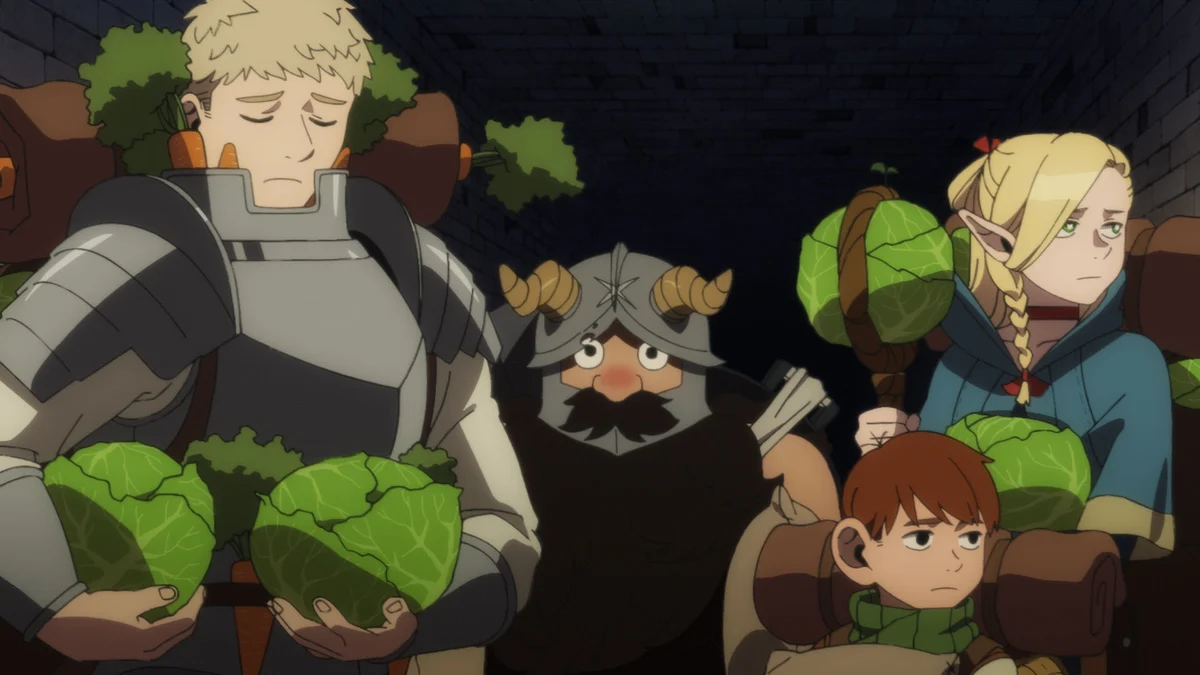
Laios looks at a monster and considers how it might be eaten. Maomao hears about a palace curse and wants to know what is making people ill. Their interests are not decorative quirks attached to otherwise conventional adventures. They decide which details the characters notice, which questions they ask and what work the story can make them do.
That does not require diagnosing either character. Their interests are visible in what they do: a proposed meal, an investigated rumour, an excited response that other people do not share. Curiosity is useful, but usefulness does not make it socially comfortable.
What does Laios’s curiosity make possible?
Delicious in Dungeon begins with a rescue problem. A dragon has swallowed Laios’s sister Falin, and the surviving party has returned to the surface without the money and provisions it needs. Going back means finding enough food to survive inside the dungeon.
Laios proposes eating the monsters they encounter. That makes his enthusiasm practical. A creature’s behaviour and anatomy can become information for survival rather than a paragraph of background lore. Episode 2’s basilisk hunt gives knowledge of a monster’s habits a direct use, while Senshi insists that eating enough is also a matter of nutritional balance.
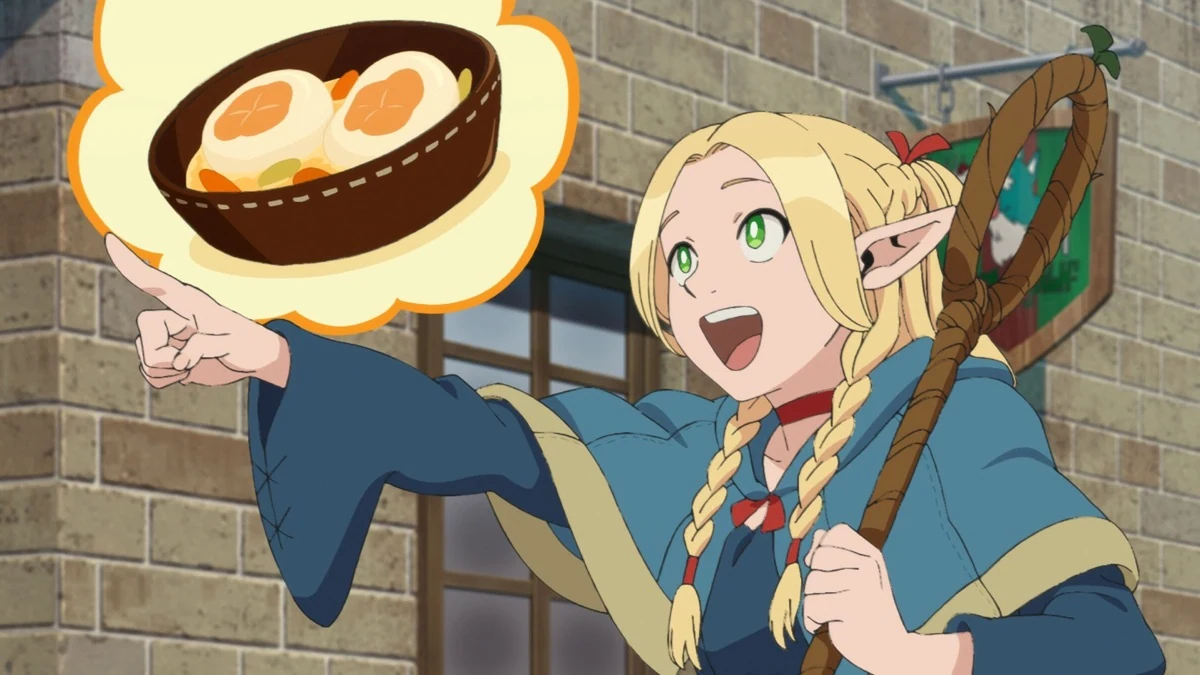
Image credits
Delicious in Dungeon
(C)九井諒子・KADOKAWA刊/「ダンジョン飯」製作委員会
Image sourceThe idea is not equally attractive to everyone. Marcille’s reluctance matters because the proposed solution has to be lived by a group. An ingredient that fascinates Laios can disgust someone expected to eat it. The comedy has a material question underneath it: whose knowledge counts, and who bears the discomfort of following it?
What does Maomao’s interest put at risk?
Maomao’s situation begins with less freedom. Kidnapped and sold into service in the rear palace, she is not an independent investigator choosing interesting clients. Her medical knowledge attracts the attention of people who can change her work and position.
The opening makes the conflict clear: reports of imperial infants falling ill are explained as a curse, while Maomao’s curiosity directs her towards a cause. Her expertise supplies a different way of reading the same surroundings. A court that organises life through rank and rumour contains physical substances and bodily consequences too.
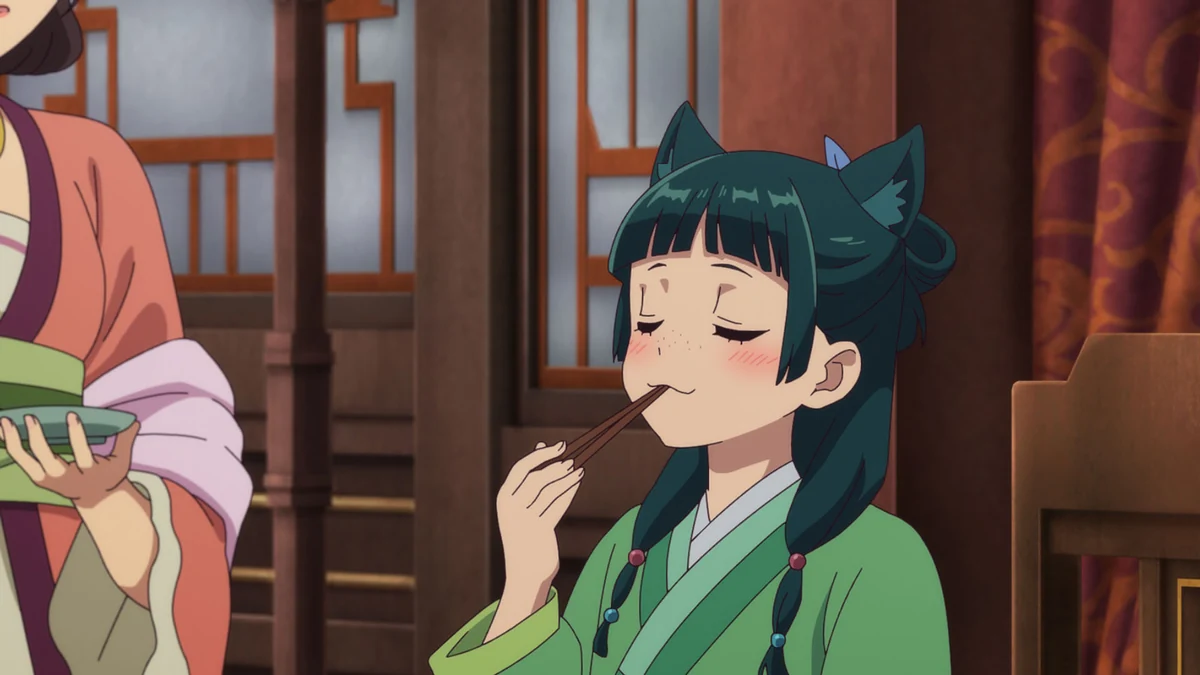
Image credits
The Apothecary Diaries
©日向夏・イマジカインフォス/「薬屋のひとりごと」製作委員会
Image sourceBecoming a food taster places an especially sharp edge on that interest. Something she finds intellectually compelling can be dangerous work for a person of low status. Enjoying the puzzle does not erase the imbalance between the person assigning it and the person expected to put her own body near the risk.
Why is knowledge not enough on its own?
Both stories make the expert’s problem social. Laios has to travel with people whose appetites and skills differ from his own. Maomao has to deal with a hierarchy in which seeing something clearly does not guarantee that saying it will be safe or welcome.
That creates more possibilities than a repeated joke about a strange enthusiast. Curiosity can provide food, reveal danger or make a conversation uncomfortable. Another character can need the knowledge while resisting the way it is offered. Practical help and friction can come from the same trait.
In a first-season interview, The Apothecary Diaries director Norihiro Naganuma describes using the opening three episodes to establish Maomao’s relationships and environment, with more comedy in episode 2. His account helps explain why an expressive comic reaction need not cancel the seriousness of her work. Their curiosity has different consequences: Laios proposes a meal for his companions, while Maomao attracts the attention of people who control her work.
What kind of adventure follows their attention?
Their interests give them reasons to investigate the worlds around them. The dungeon has to sustain living things. The palace’s beautiful surfaces cannot exempt people from illness. Looking closely at those conditions gives both series a way to turn exposition into an action someone urgently wants to perform.
The pleasure is not simply that these people know a lot. It is that their attention can be productive, inconvenient and incomplete at once. Other people keep the story larger than the fascination driving its lead.