
Not understanding everything is different from having nothing to follow. A girl can need help putting on her clothes before she understands why she has wings. An email can be frightening before its sender’s claim makes sense. A taxi passenger can reveal what he wants without announcing which part of the conversation will matter later.
Mystery becomes inviting when a scene gives you those immediate bearings. You may not know the explanation, but you can recognise embarrassment, curiosity, irritation or a person trying to impress somebody. The story can leave a larger question open because something smaller is already happening in front of you.
Haibane Renmei, Serial Experiments Lain and Odd Taxi make three different offers. One grounds uncertainty in a household, one makes the environment itself uneasy, and one lets information travel inside apparently casual talk. They ask for attention in different ways. None becomes better simply by being harder to describe.
What can you understand before you understand the world?
Rakka arrives in Haibane Renmei without the history that would explain her. The people around her have halos and grey wings, and their town has restrictions she does not know. The opening could turn that situation into a sequence of lectures. Instead, much of the early work is practical: finding her place in Old Home, learning how the others live and discovering what she can do for them.
By episode four, Rakka is spending time with Kana, hauling rubbish and working on clocks. The licensed episode description also places her somewhere she can see the city walls from above. Work and mystery inhabit the same day. A job gives her an immediate task; the walls remain a much larger question.

That arrangement makes the viewer’s position manageable. You can follow who is helping Rakka, how comfortable she feels and what a day asks of her. Those observations do not solve her existence. They create a relationship to it.
There is an important limit to the invitation. Haibane Renmei does not owe every symbol the same kind of answer as a detective story owes a culprit. Treating the town as a locked-room puzzle can make daily life look like a delay before the real material. The relationships are already the material. Its uncertainty has an emotional use even when a particular viewer would prefer more explanation.
How can an image make a question feel present?
Serial Experiments Lain begins with a more disturbing form of missing information. Reserved schoolgirl Lain Iwakura receives an email from a schoolmate who has died. The licensed synopsis identifies the message as the event that draws her towards the NAVI computers and their networked world.
The question is clear even when the answer is not. How can this person still be communicating? Lain does not begin as an expert who can settle the matter for us. Her fascination and uncertainty give the technological premise a human point of entry.
The first episode’s image below puts cables across an almost blank sky. Lain is surrounded by connections while looking very much on her own. You can read that tension without translating every wire into a secret code.
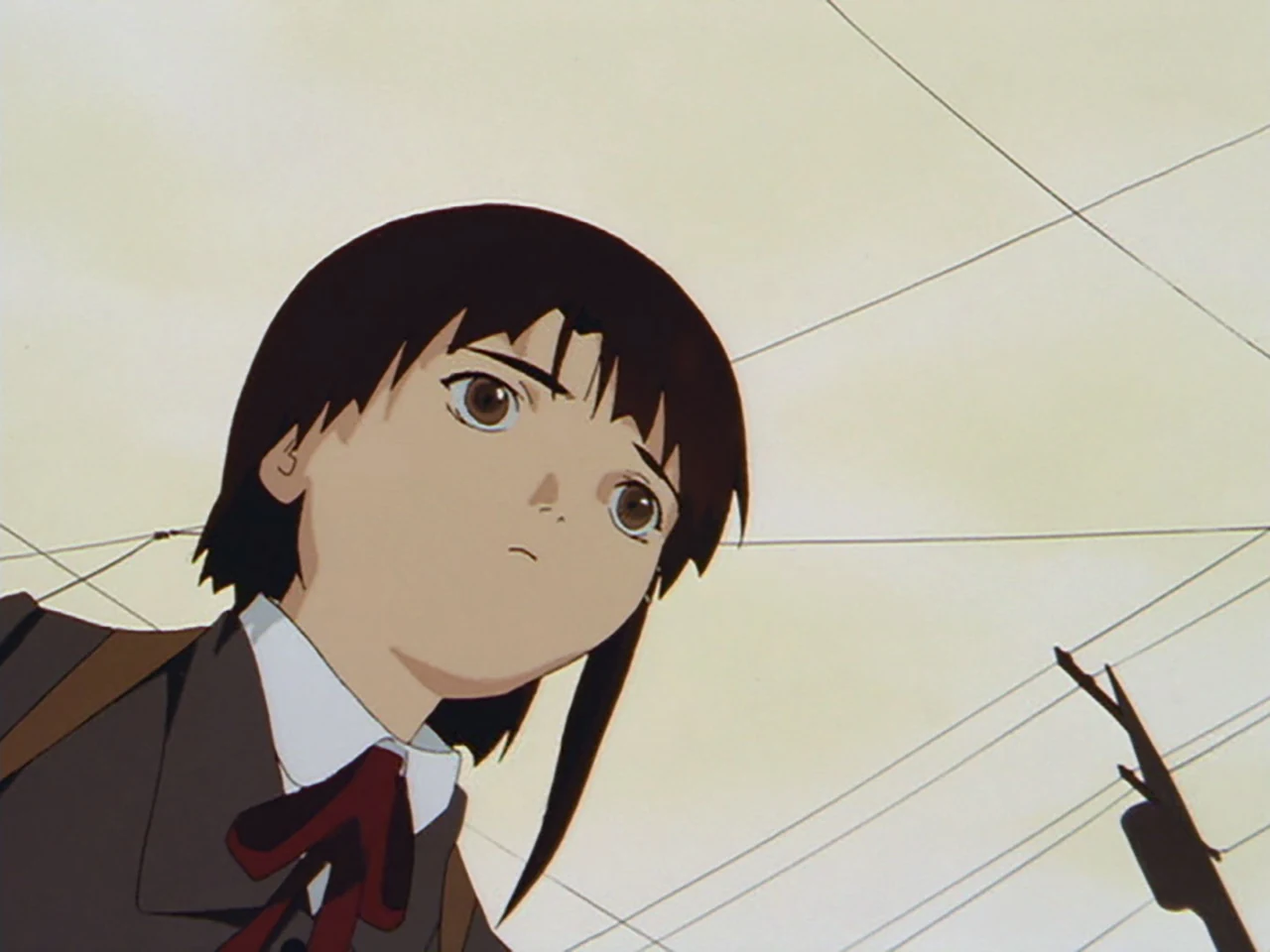
Sound extends that pressure beyond what the frame shows. In his Eye for Film review, Anton Bitel highlights the amplified electronic hum of the wires alongside the series’ detailed poles and half-empty streets. An ordinary piece of infrastructure becomes difficult to ignore. The surroundings direct attention before anyone delivers a technical explanation.
This is a different kind of guidance from a clear account of cause and effect. It tells you that a connection feels intrusive, that a place feels wrong, or that a character is isolated. Lain can remain disorienting. Paying attention does not guarantee you will enjoy that feeling, and noticing a visual pattern is not the same as resolving the narrative.
What if the explanation sounds like small talk?
Odd Taxi supplies the most useful complication to the idea that trusting the audience means saying less. Its characters talk a great deal. Taxi driver Odokawa hears passengers, visits his doctor and deals with people who have concerns beyond explaining a mystery to the viewer.
The official first-episode account makes that routine almost comically plain: he carries different customers and attends his usual clinic. The selected stills show how the routine can carry information. A rear-view mirror holds driver and passenger in the same narrow frame; a phone turns a moment in the car into something other people can see.
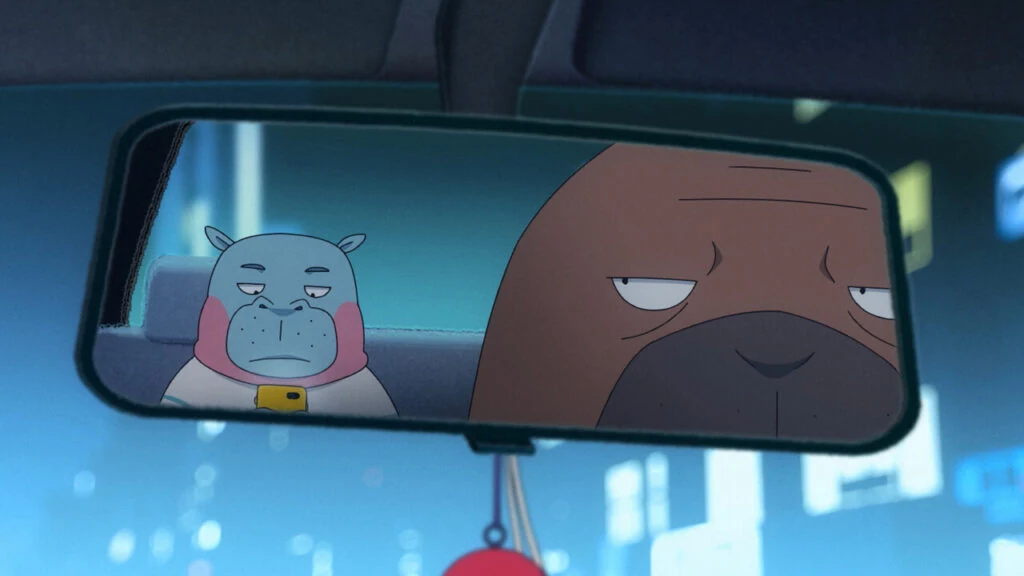
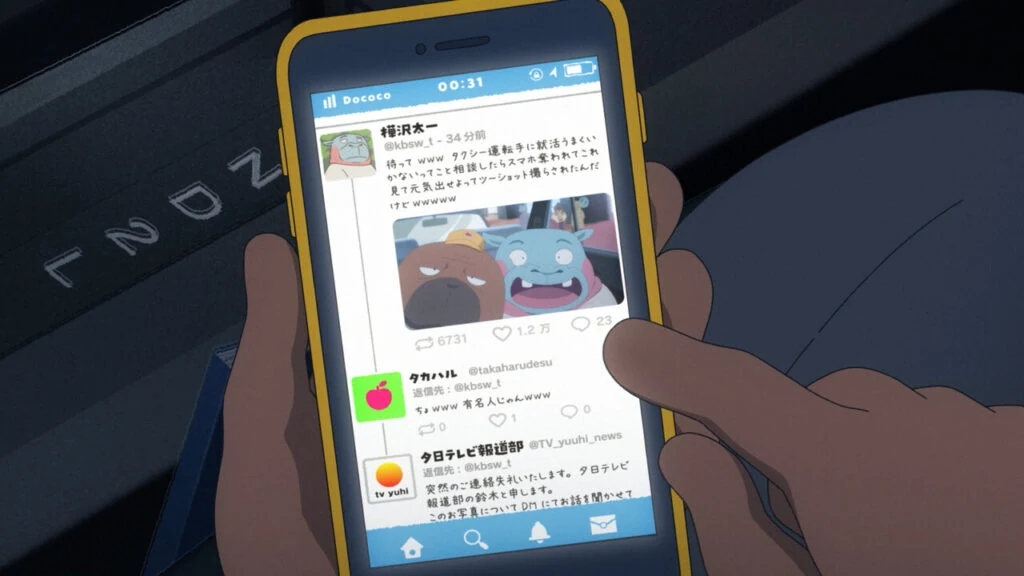
A conversation has an immediate shape even when you cannot yet place every detail. One person wants a response, another refuses the expected one, and a joke or change of subject alters the temperature. The viewer can enjoy that exchange now while retaining something that may acquire a different significance later.
There is a concrete production choice behind the space given to those voices. In an interview with Fashion Press, Odokawa’s actor Natsuki Hanae says that the television anime and film recorded voices before fitting the images to them. He explains that this allowed pauses and breathing to follow the performance more freely. Riho Iida, who voices Shirakawa, likewise points to the natural exchanges as part of the work’s appeal.
That testimony helps explain an approach to dialogue; it does not turn every conversational detail into a clue. Listening for what each person wants is more useful than assuming that every noun must be written down for a later test.
How does the opening sound?
The official three-minute opening excerpt offers a short sample of the series’ delivery. It is Japanese-language footage from episode one, rather than a recap or explanation of the mystery.
Odd Taxi · episode 1 opening excerpt · official Japanese upload. Opens YouTube.
When does leaving room become leaving you stranded?
There is no virtue in making a viewer confused for its own sake. A withheld explanation needs something around it: a relationship worth following, an atmosphere worth experiencing, a question whose answer could change the situation. Otherwise the invitation to infer can feel like a demand to supply the story yourself.
These three works show why one prescription cannot cover every mystery. Haibane Renmei gives uncertainty a home and a daily routine. Lain makes the channels of connection themselves unsettling. Odd Taxi lets talk have a social purpose before all of its information has a place in the larger design.
You do not need to approach them as an exam. Notice what the scene lets you understand now: who wants help, who seems uncomfortable, who is listening and who is changing the subject. Larger interpretations can wait until there is a larger story to interpret.
An anime can trust you by leaving a question open. It earns that trust by giving you something worth noticing while the question remains.
Sources
The reviews and interview discuss later material. The official Odd Taxi site also contains a relationship chart and later episode images; avoid those sections to preserve its mystery.
- Licensed Haibane Renmei episode listings, especially episodes two and four, for early household/work situations and the selected episode-four still.
- MVM’s Haibane Renmei listing, for the complete 2002 television series identity.
- d Anime Store’s Serial Experiments Lain listing, for the initiating email, NAVI premise and 1998 anime identity.
- Anton Bitel, Eye for Film, for an attributed account of the sound and visual environment.
- Odd Taxi’s official first-episode page and official opening excerpt, for the 2021 television series, early routine and images.
- Natsuki Hanae and Riho Iida interview, Fashion Press, for their accounts of conversation and recording before the animation was fitted to the voices.