
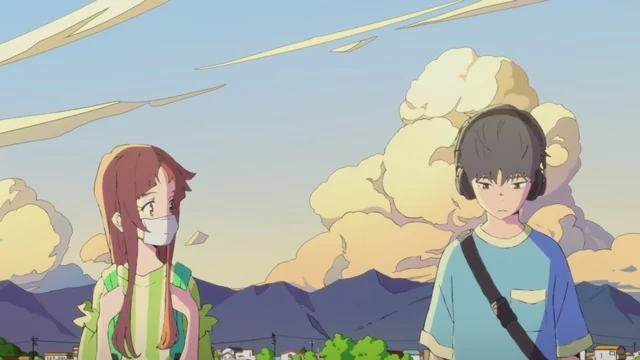
What brings a shy poet and a video maker together?
A shopping centre is the meeting place in Words Bubble Up Like Soda Pop: somewhere to work, wander, see friends and bump into a stranger. Cherry is spending part of his summer helping at its elderly day-care centre. He wears headphones to discourage conversation, but his reluctance to speak does not mean he has nothing to say. He writes haiku, short Japanese poems that give his observations a shape he can manage.
Smile seems better equipped for being noticed. She makes videos and has an audience online, yet wears a mask because she is embarrassed by her prominent front teeth and braces. Her nickname promises an openness she cannot comfortably offer in person. A chance collision brings the teenagers together, then their phones give them a less exposed way to get acquainted.
The pleasure of their pairing lies in that mismatch between a public sign and a private feeling. Headphones suggest someone who wants to be left alone; a cheerful online identity suggests confidence. Neither tells the whole story. The film gives these two people time to discover that being easy to see and being easy to know are different things.
How does a poem escape the phone screen?
Cherry’s poems do not remain a secret interior monologue. He posts them online, while his friend Beaver copies them around town as graffiti while practising Japanese. That is a funny transformation: words written by someone who avoids attention acquire a much bolder public life.
It also lets poetry become part of the scenery. The writing sits among the places where the teenagers spend their summer, rather than separating them from everyday life. Cherry’s hobby is an act of attention, a way of noticing something and finding words for it. A reader does not need to identify a poetic rule to recognise the distance between composing a line and saying it to another person.
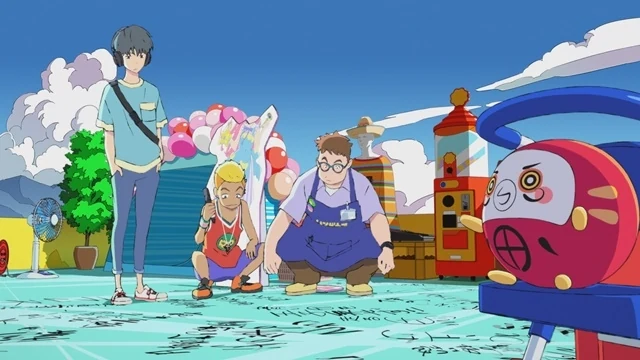
Smile’s videos offer another form of expression. She can choose what to show and how to frame it, just as Cherry can choose his words before posting. The film’s digital life is therefore more interesting than a lesson about putting phones away. Grant Watson’s FictionMachine review draws attention to the different creative forms through which the characters communicate. The contrast is useful: an old poetic practice and a contemporary video feed can both make approaching someone easier.
Why does an old record matter to their summer?
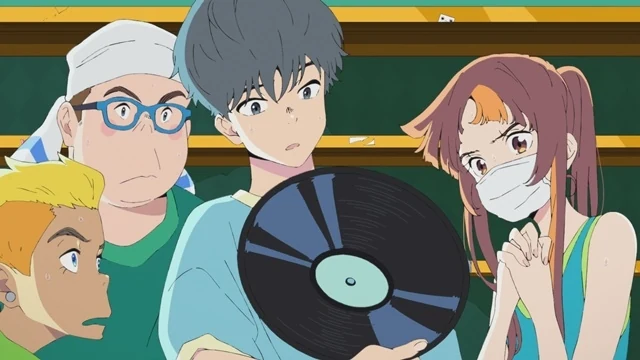
Mr Fujiyama, an older man connected with the day-care centre, is looking for a missing record. Cherry and Smile decide to help. The search gives their friendship a task: they can spend time together by paying attention to something that matters to someone else.
The object changes the scale of the romance. A poem or a video can carry an immediate feeling; a record can carry a connection to an earlier life. The film places the teenagers’ new attachment beside an older person’s need to recover something precious, without requiring either generation to explain itself in a speech. Clara V. Nguyen’s Harvard Crimson review reads the record search through music and memory. Its value here is also practical: looking together creates occasions for the pair to grow closer.
What gives the town its colour and sound?
Director Kyohei Ishiguro makes a modest setting conspicuous. Broad greens, turquoise paving and clouds with sharply drawn outlines turn ordinary summer places into something closer to a colourful illustration than a photograph. The official stills make that choice especially clear: even the sky has shapes to study. Nguyen connects the landscape’s detail with Cherry’s habit of noticing, while Karen Beilharz’s review responds to the flatter, brighter colour design. The town offers things worth looking at before the romance tells us what they mean.
Music supplies another route between private feeling and shared experience. Kensuke Ushio composed the score; Taeko Onuki performs the film’s song “YAMAZAKURA”, and never young beach supplies its title theme. Nguyen describes the contrast between the electronic score and Onuki’s acoustic song. That change of texture fits a story moving between contemporary teenage expression and an older recording, though discovering the song’s place in the drama is best left to the film.
The familiar romantic framework remains visible beneath these details. Its interest is less in surprising reversals than in the different ways the characters find to communicate. If the tentative couple is the main attraction, the time devoted to the record search may feel like a detour. The search also supplies the older generation and shared activity that stop this from being only two teenagers waiting to say the right thing.
Which version should you watch?
Start with the animated feature released in Japan in 2021, allowing approximately 87 minutes. It stands alone; the manga and novel are not prerequisites. Its best invitation is the combination of summer colour, awkward affection and a small communal search.
The official trailer previews later romantic scenes and discusses the film’s climax. Skip it if you prefer to discover the story without previews.
2021 film · Netflix Anime
Loading the player connects to YouTube. Playback does not start automatically.
Sources
The reviews discuss the record’s history and the ending. The older publicity page carries a superseded release date.
- FlyingDog: official film information: character setup and music credits.
- JFDB, operated by UNIJAPAN: film record: Japanese release on 22 July 2021, director, runtime and record-search premise.
- Clara V. Nguyen, The Harvard Crimson: poetry, landscape and the relationship between music and memory.
- Karen Beilharz, Hivemindedness Media: the day-care setting, public poems and visual design.
- Grant Watson, FictionMachine: creative expression, digital communication and the familiar romantic plot.
- Animate Times: trailer and stills announcement: released publicity imagery and artist comments, dated 5 March 2020.
- BBFC: Netflix edition: runtime and content indicators.