
What brings a stranger into the forest’s war?
An ironworks needs fuel. A forest is home to creatures who will fight to keep it. In Princess Mononoke, those two facts make neighbours into enemies, and neither a human settlement nor an ancient god can afford to treat the conflict as an abstract argument.
Ashitaka comes from elsewhere. A young warrior cursed while defending his village from a monstrous boar, he travels west in search of a cure. What he finds is Irontown, a fortified settlement led by Lady Eboshi, whose iron production brings prosperity at the forest’s expense. Beyond its walls are enormous wolves, boars and other beings for whom the land is a living home.
Among them is San, a human raised by the wolf god Moro. She fights for the wolves because they are her family. Ashitaka’s humanity gives him no automatic claim on her trust, and his attraction to her does not make their loyalties compatible. She has a home to defend; he is trying to understand a conflict that has already reached into his own body.
That gives Hayao Miyazaki’s film an unusually difficult task for its travelling hero. Ashitaka can fight, but being stronger than another person cannot tell him whose life matters. His journey keeps bringing him close enough to people on opposing sides to see what their enemies cannot.
Why would people choose to follow Eboshi?
Irontown is noisy, sociable and full of work. Its women operate the bellows that feed the furnaces; its weapons offer protection as well as a means of attack. Eboshi has made a place for people rejected or exploited elsewhere, including former sex workers and people with leprosy. Their loyalty has a material basis: a livelihood, care and a community prepared to defend them.
Lucy Jakub’s essay “Love’s Work” draws attention to this connection between dignity and production. It is an essential complication in the film’s ecology. Closing the ironworks is not an uncomplicated rescue if the people who depend on it have nowhere safe to go. Yet caring for those people does not make the destruction of another home harmless.
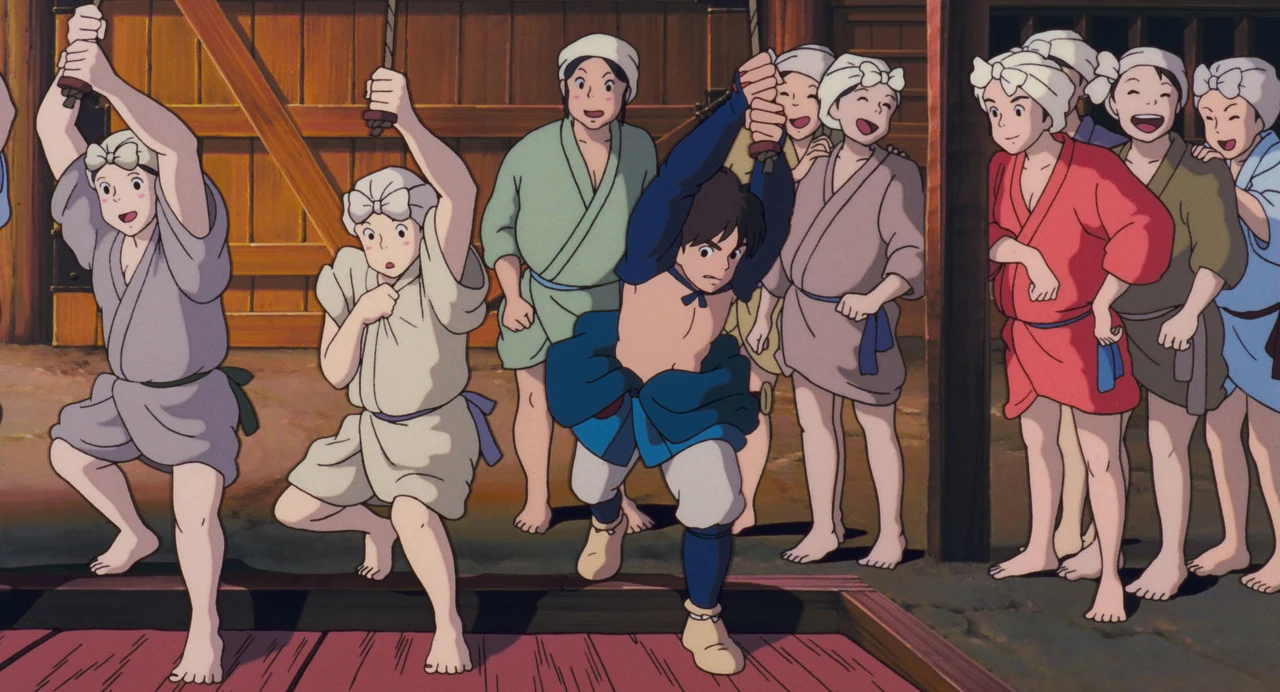
The bellows scene supplies a welcome change of register. Ashitaka is surrounded by animated faces and shared amusement, rather than an anonymous workforce awaiting a speech from its leader. The town’s warmth makes the conflict harder: these are people with jokes, skills and attachments, not merely the human machinery of an environmental warning.
Eboshi’s confidence is part of her appeal and part of the danger. She can imagine a better future for her people while treating the forest’s resistance as an obstacle to overcome. Meanwhile, samurai have their own interest in the settlement’s iron. The struggle reaches beyond two equally matched camps; power presses on Irontown even as Irontown presses into the woods.
What makes the forest more than a beautiful setting?
The forest has presences of very different sizes and temperaments. Small, pale kodama, or tree spirits, interrupt its grandeur with peculiar little faces. The wolves are another matter. Their great bodies and exposed teeth make it difficult to mistake them for tame companions, even when San is at ease beside them. Roger Ebert singled out that refusal to soften the wolves into friendly comic animals.
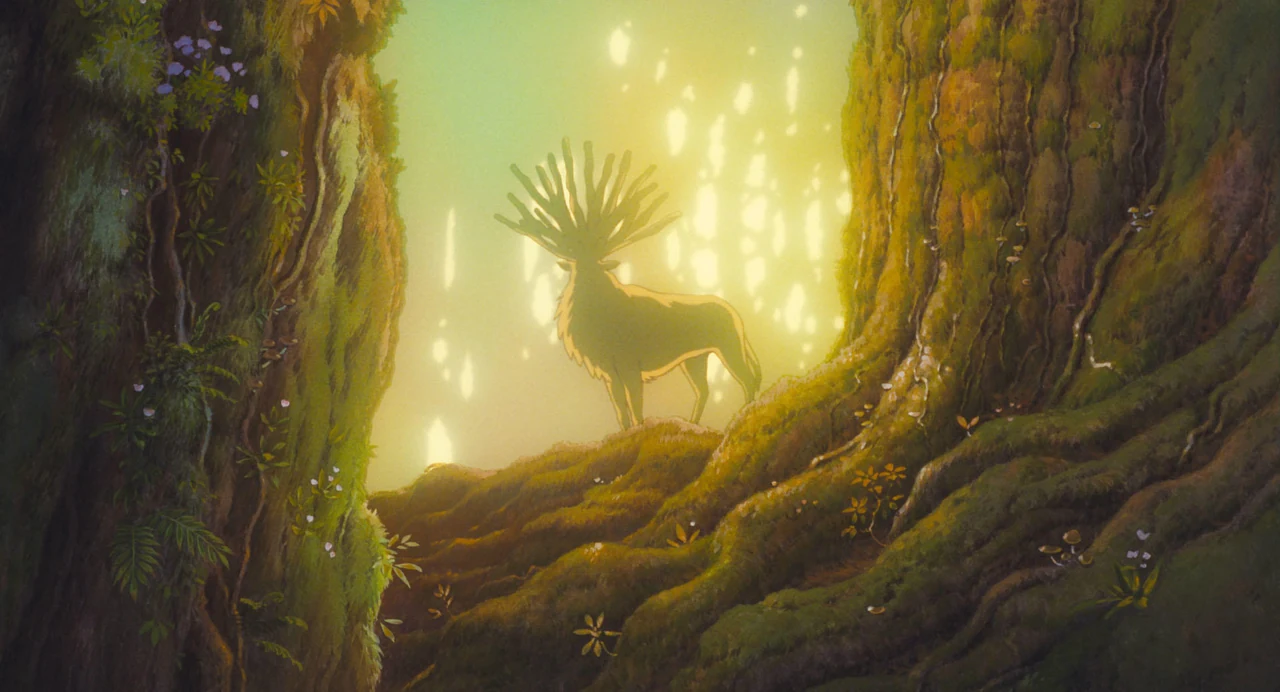
The wooded spaces offer more than green abundance. In this glimpse of the Forest Spirit, tiny plants cling to enormous trunks while the antlered figure stands at the centre of the light. The composition makes looking an event. Ashitaka has entered somewhere that cannot be understood simply by identifying a resource or an enemy.
The action can break that wonder abruptly. Arrows and blades cause sudden, bloody injuries; the curse is a frightening burden rather than a clean heroic upgrade. Physical power is spectacular here, but its consequences are difficult to celebrate.
There is an emotional distance built into this large conflict. San’s loyalties and Eboshi’s ambitions do not turn into easy confidences for Ashitaka, and the story asks attention to several competing interests. The pleasure lies in that resistance as much as in the adventure: sympathy keeps widening without making the damage disappear.
Where should you start?
Watch the 1997 film, directed and written by Hayao Miyazaki. It stands alone and runs approximately 133 minutes, using Studio Ghibli’s published figure. Its forest beauty accompanies bloody injuries, frightening creatures and animal suffering; this is a substantially harsher experience than My Neighbor Totoro.
The official English trailer may reveal later battles and supernatural imagery.
1997 film · English trailer · GKIDS Films
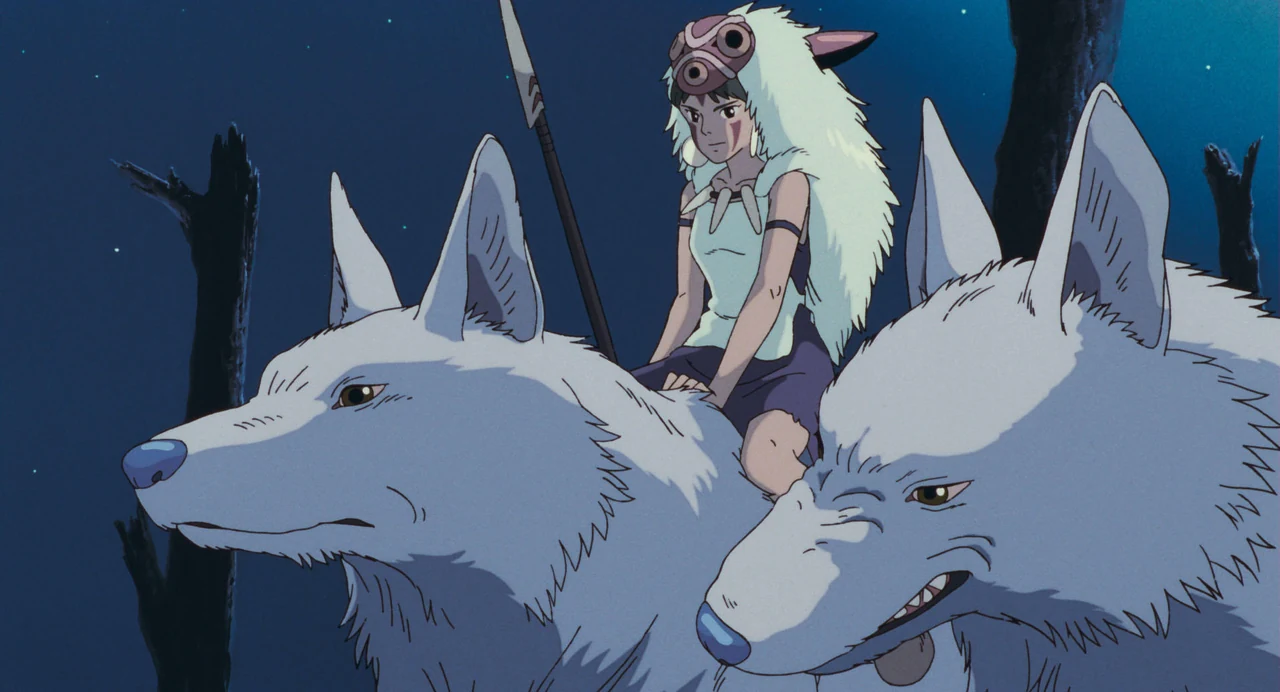
Loading the player connects to YouTube. Playback does not start automatically.
Sources
The reviews, programme notes and detailed content advice reveal later events and the ending.
- Studio Ghibli: Princess Mononoke: original release, director, approximate runtime, credits and official stills.
- GKIDS: Princess Mononoke: Ashitaka’s journey and the conflict between Irontown and the forest.
- Lucy Jakub, Love’s Work: labour, refuge and the communities sustained by the ironworks.
- Roger Ebert: Princess Mononoke: the wolves, sudden violence and competing human motives.
- TR, Time Out: the three-way struggle involving the settlement, samurai and forest creatures.
- BFI Southbank programme notes: character roles. The runtime above follows Studio Ghibli rather than these notes.
- videogamep, A Piece of Anime: San and Ashitaka’s different positions, the forest and the violence of the action.
- BBFC: Princess Mononoke: edition-specific content advice.
- GKIDS’ Studio Ghibli trailer collection: official English trailer provenance.