
How does an interview turn into an adventure?
An old film studio is closing, and documentary maker Genya Tachibana wants to record the memories of its retired star, Chiyoko Fujiwara. He visits her with cameraman Kyoji Ida and a small key from her past. It sounds like the beginning of a retrospective: an admired performer, a visitor with questions and a career to look back on.
Once Chiyoko starts talking, the interview refuses to stay in the room. Genya and Kyoji appear inside the scenes she remembers. A remembered event can flow into a movie role, and the documentary crew can find itself accompanying a younger Chiyoko through a setting far removed from her home. Satoshi Kon turns the act of listening into participation.
The device gives Millennium Actress an unusually active relationship with the past. Chiyoko does not simply describe what happened while illustrative flashbacks play. Her account draws the listeners into the way those experiences feel, with performances and personal recollections sharing the same imaginative space.
What keeps Chiyoko moving?
As a girl, Chiyoko briefly shelters a young man fleeing the authorities. Their encounter and the key he leaves behind become bound up with her decision to act. A career offers movement, visibility and the possibility of finding him again. Her desire carries the story forward even as the settings change.
This is why the key is such an effective object for an interview to begin with. Small enough to hold, it can connect the woman telling the story with the younger person inside it. The film does not need to reveal its whole significance at once. It gives Chiyoko something concrete around which memory can gather.
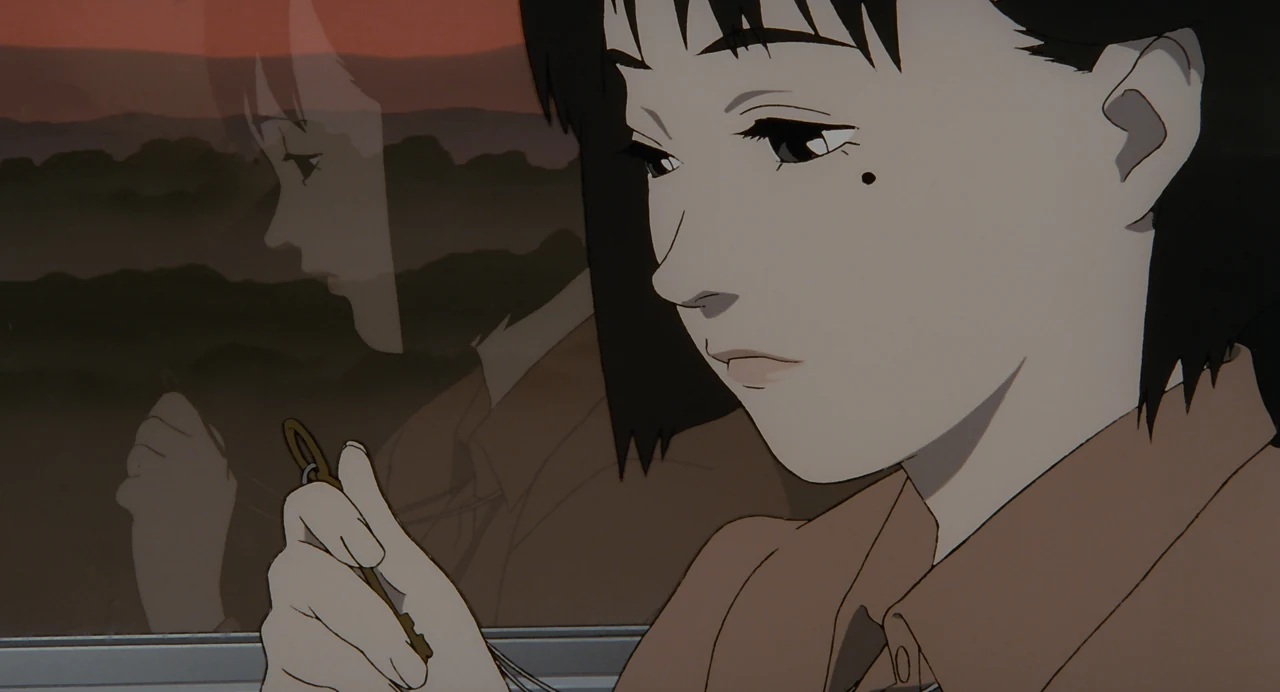
The pursuit also makes it possible to follow an emotional direction without pinning every moment to a single calendar. Chiyoko’s circumstances change, but wanting to reach someone provides continuity. Whether that desire enlarges her life or confines it is a more interesting question than treating the film as a chronological puzzle with one correct answer.
How can one movement carry us into another film?
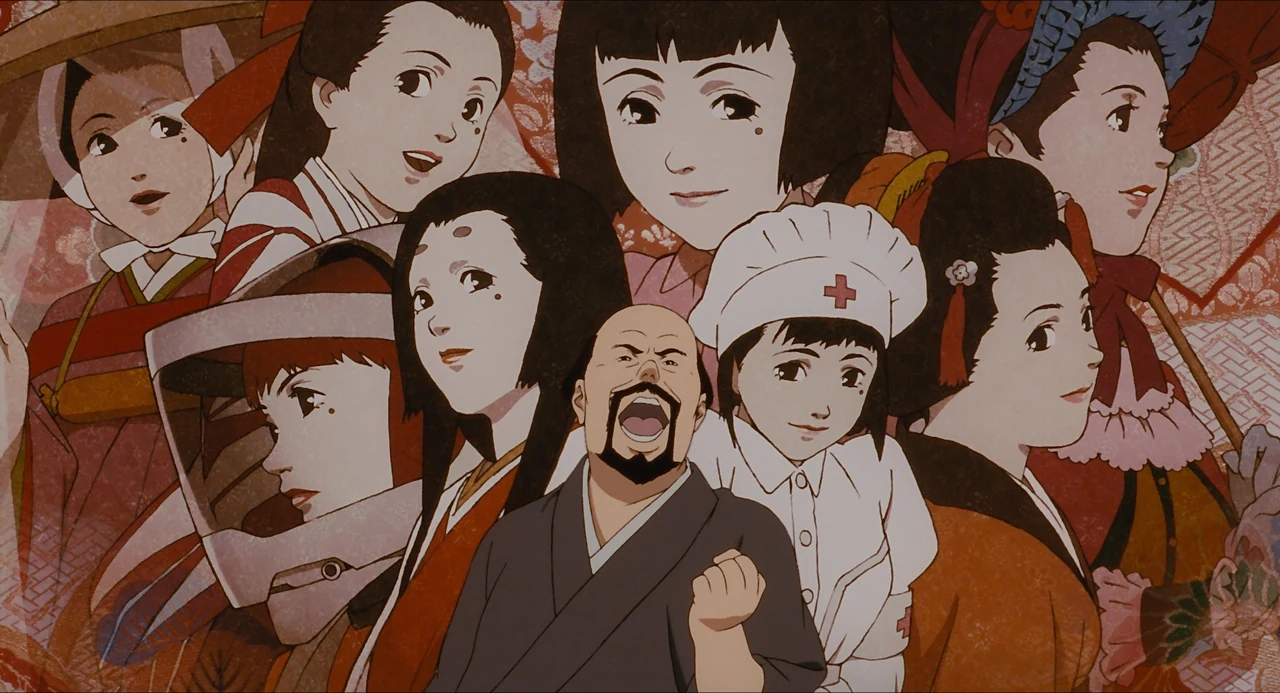
A change of scene need not interrupt Chiyoko’s momentum. Kent Conrad’s Cinema Sentries review describes how her movements connect different films, periods and places: she can fall through a doorway and arrive in another scene. Action provides the link that an ordinary biographical film might supply with a date or explanatory transition.
The result lets the audience recognise the impulse before fully locating the new surroundings. A journey can continue while its costume and setting change. There is pleasure in that moment of adjustment, when the body seems to remember where it is going before the viewer has worked out which story now contains it.
The changing genres are part of the invitation. Period drama, wartime cinema and science fiction give Chiyoko different landscapes to cross. In the production notes reproduced by the BFI, Kon explains that he wanted her to run through images of Japanese history shaped by cinema. These are remembered screen worlds, not a claim to reconstruct each period exactly. Recognising individual allusions adds another layer, but the basic experience of pursuing someone through changing worlds does not require a film-history test.
Why do the two listeners matter?
Genya is an admirer as well as an interviewer. He wants to be near Chiyoko’s story, and his appearances inside it can turn him into an eager participant. Kyoji brings a drier presence, still equipped with a camera in situations that have travelled far beyond an ordinary documentary assignment. Their reactions allow wonder and comedy to share the frame.
Kon told Tom Mes at Midnight Eye that he wanted this film’s relationship between admirer and star to take a more positive form than in Perfect Blue. That intention helps explain the warmth of Genya’s involvement, but it does not settle every question about his position. An admirer can be devoted to someone and still prefer the version of their life that makes the most moving story.
Is the pursuit romantic, limiting or both?
The film’s sweep does not remove that ambiguity. Michael Arnold’s Midnight Eye review objects to how strongly Chiyoko’s life is organised around an elusive man, arguing that the adoration leaves too little space for her as a person. Conrad instead responds to the film as a celebration of pursuing what one loves. Those readings pull against each other in a useful way.
Chiyoko is both the performer being watched and the person recounting her own history. That makes it worth attending to what she chooses to tell, how the listeners respond and how a familiar romantic motive changes when repeated across a lifetime. The ending should have the room to complicate those questions itself.
For a newcomer, the attraction is the combination of propulsion and reflection: an elderly woman’s recollection can have the urgency of a chase, while each new role changes what that chase seems to mean. Someone seeking a conventional account of an actor’s working life may find the persistent romantic thread narrowing. Someone interested in how a life becomes a story has much more to follow.
Which film should you choose?
Watch Satoshi Kon’s standalone animated feature, commonly dated 2001, allowing approximately 87 minutes. The later restoration and English dub do not make it a different story, and no other Kon film is required beforehand. BFI’s programme lists 88 minutes; Eleven Arts lists 87, so the allowance is approximate.
The official extended restoration trailer may reveal later scenes and story details beyond this introduction. Skip it if you prefer to discover the shifts without previews.
Original film · Eleven Arts · Restoration trailer
Loading the player connects to YouTube. Playback does not start automatically.
Sources
These sources include substantial plot details, the ending and interpretations of it.
- Eleven Arts: Millennium Actress: restoration, interview premise, runtime, stills and official trailer.
- BFI Southbank programme notes: production credits and Kon and Sadayuki Murai on cinematic history and the film’s construction.
- Tom Mes interviews Satoshi Kon, Midnight Eye: subjective storytelling and the relationship between admirer and star.
- Kent Conrad, Cinema Sentries: movement across scenes and an affirmative reading of the pursuit.
- Michael Arnold, Midnight Eye: a competing assessment of Chiyoko’s character and the spectator’s role.
- Charles Cassady Jr., Common Sense Media: detailed content guidance. Its older advice about dub availability does not describe every later edition.