
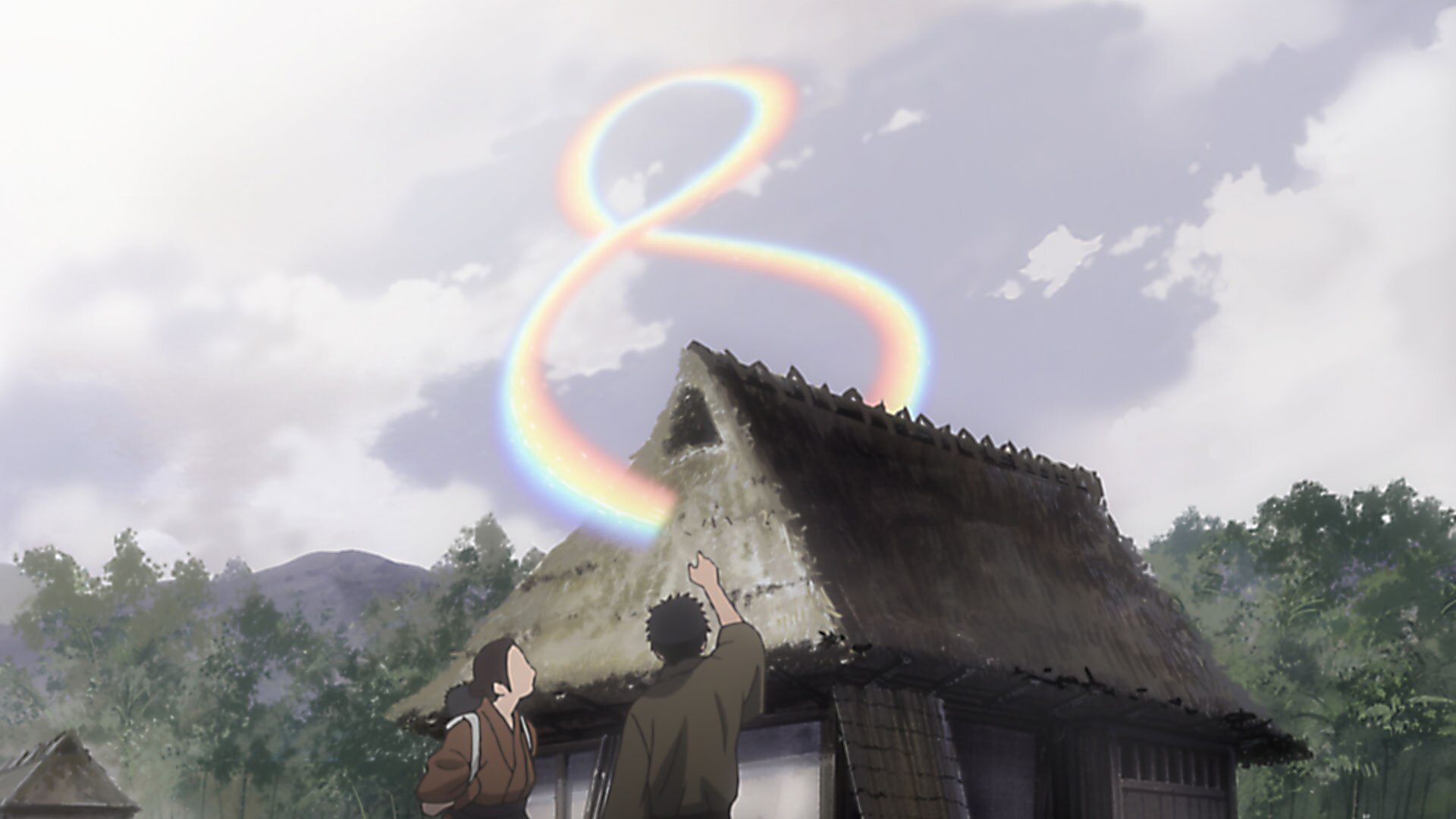
In a remote mountain home, a boy’s drawings made with his left hand come to life. Elsewhere, a girl lives in darkness because something has happened to her sight. A bridge carpenter wanders in search of a mysterious rainbow. These are extraordinary situations, but Mushishi begins by placing people inside them: someone has a gift, someone needs care, someone has made a strange sight the purpose of his journey.
Mushi are unfamiliar forms of life that ordinary people often cannot perceive. Their presence can alter bodies, dreams or landscapes without behaving like a human enemy with a plan. Understanding what has happened is the work of Ginko, a travelling specialist. He arrives at homes and villages where people have already been trying to live with the consequences.
The original 2005–2006 series gives that journey twenty-six episodes. Many encounters form complete stories, connected by Ginko’s presence and by the attention given to a particular life. A new village is an invitation to meet somebody, rather than a required step towards a final confrontation.
Who is Ginko?
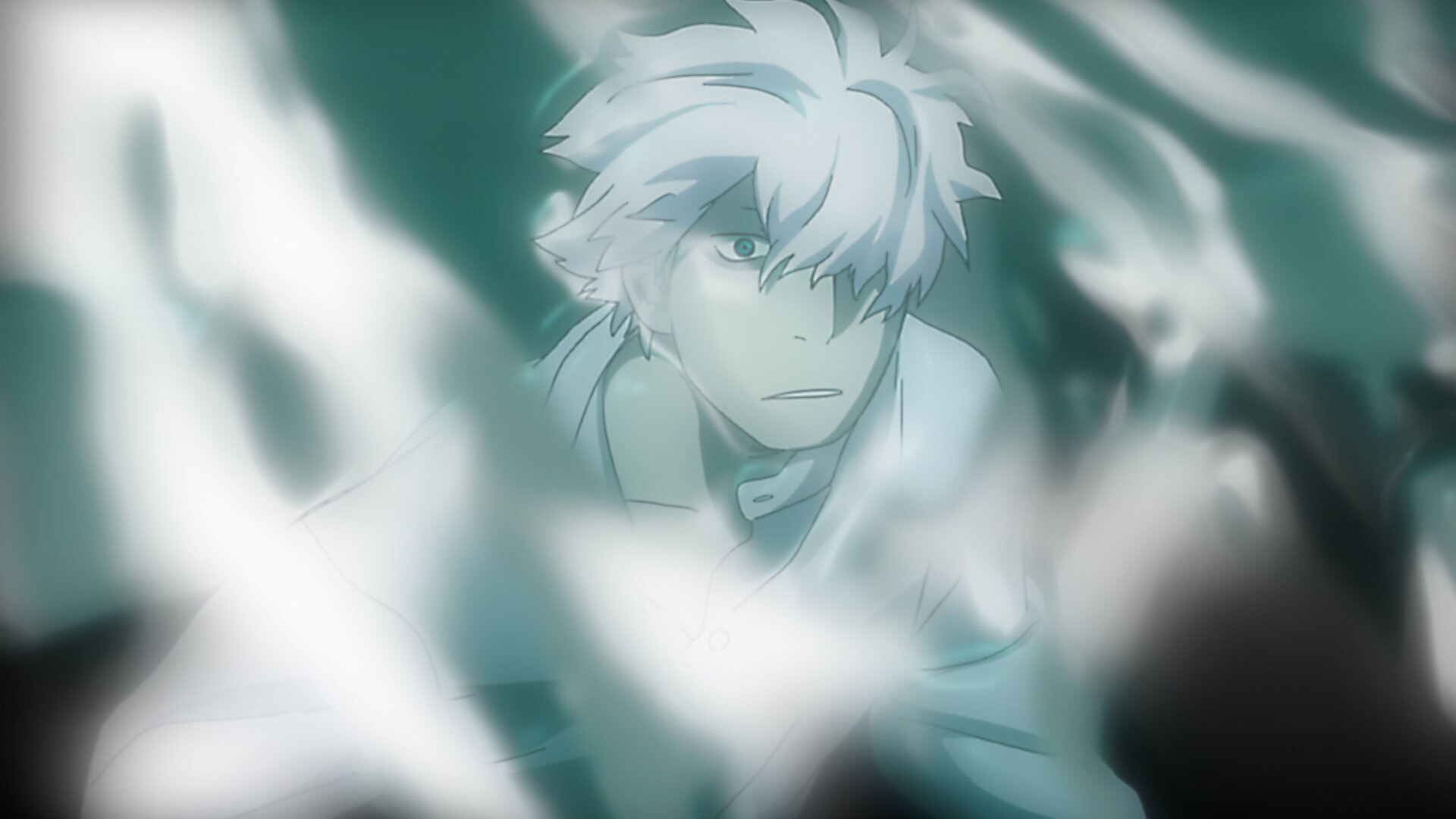
Ginko’s white hair, partly covered eye and wooden equipment box make him recognisable on the road. His knowledge offers something the people he visits may lack: a way to connect a frightening experience to the life around them. But arriving with an explanation is only part of his role. He has to find out what someone needs and what their attachments make difficult.
A household consultation is an apt image for that work. People ask him for help in rooms where they live together, not in a world emptied out to display a supernatural specimen. His expertise meets relationships already in progress.
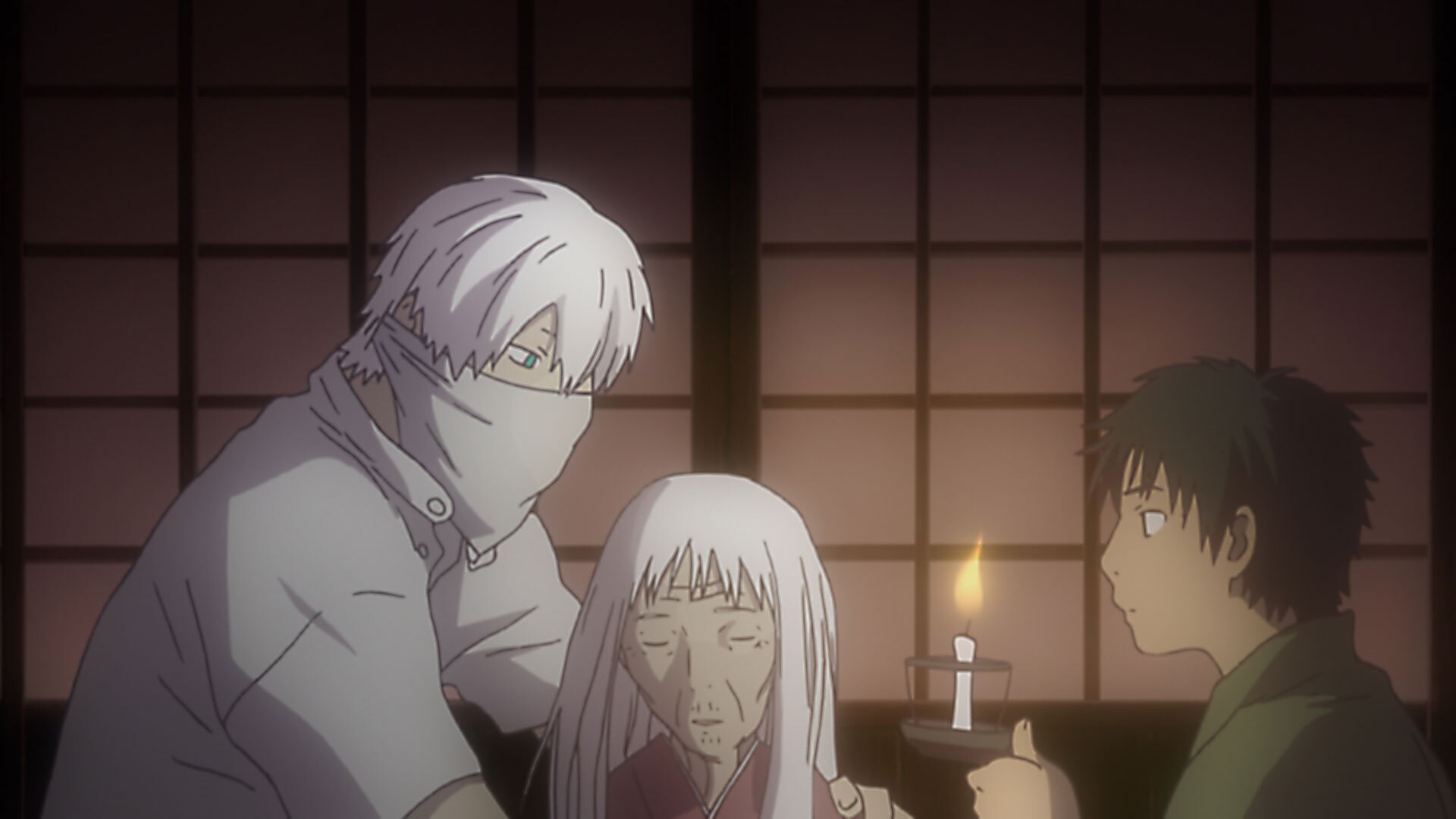
He also has acquaintances within that world. Adashino, a local doctor, knows Ginko and collects objects connected with mushi. The connection gives the journey moments of shared curiosity as well as urgent investigation. A strange object can be something a person wants to keep, even when keeping and understanding it are different activities.
Ginko’s work involves moving on. That makes the people left in each place especially important. They are the ones who must live with an explanation, a decision or a change after the travelling specialist’s visit has ended.
What happens to Shinra’s drawings?
The first episode introduces Shinra, a boy who lives away from other people in the mountains. What he draws with his left hand becomes living material. A familiar creative act has an unfamiliar result: the image need not remain contained by the page or its maker’s intention.
This gives the opening a sense of wonder with an immediate human complication. Shinra’s ability is part of an isolated life. Ginko meets a person, not merely a striking phenomenon. Another mystery concerns a girl encountered in the house; leaving her identity to the episode preserves the discovery.
The premise is a useful sample of the series’ method. A drawing gives a newcomer a recognisable activity to begin with. The story changes what that activity can produce, then asks what it means to the people around it. It does not require a battle to make the meeting consequential.
Who does Ginko meet along the way?
The second episode brings Ginko to Sui, whose eye condition keeps her in a dark storehouse. Biki, a boy related to her, cares for her. The mystery changes the rhythm of two people’s lives before Ginko can name its cause. Light, usually associated with seeing more clearly, becomes something the episode makes uncertain.
A different kind of attachment draws the bridge carpenter of episode seven onwards. He has organised his wandering around a mysterious rainbow. For someone passing through, it might be an astonishing sight. For him, finding it has become a purpose. The strange landscape matters because a person has given it a place in his life.
These encounters need not produce the same wish. One person wants relief, another wants to keep following an experience that outsiders may not understand. The Feature on Ginko’s visits explores care, exhaustion and attachment through three early cases. The introduction’s invitation is broader: each new story can change what help would mean.
What gives Mushishi its atmosphere?
Hiroshi Nagahama directs the adaptation of Yuki Urushibara’s manga, with character design by Yoshihiko Umakoshi, music by Toshio Masuda and animation by Artland. The environments give the unfamiliar life a material setting: mountain paths, dark interiors, water, vegetation and changes of light.
In his credited commentary on Bandai Channel’s original-series page, critic Ryusuke Hikawa singles out cool, damp air and light in the images, alongside layered Asian folk instruments. His description offers a useful way to attend to the adaptation’s atmosphere. The world can feel inhabited before anybody explains its unusual rules.
The episode-seven image at the top of this page makes that approach visible without requiring its answer. A thatched roof and two small people provide a familiar landscape; the luminous ribbon above them refuses to stay ordinary. The scale of the human figures makes looking itself part of the scene’s appeal.
The pace leaves time for that attention, which will not suit every mood. In a discussion about continuing, even an admirer cautions that the slow episodic form is representative. Another reader recommends spacing episodes. Those are personal responses, rather than an obligation to watch at a prescribed rate. The series includes illness, bereavement and disturbing changes; a reflective atmosphere does not promise painless stories.
Which series should you start with?
Start at episode one of the original 2005–2006 animated series. The scope here is episodes 1–26, including the six beyond the initial terrestrial run. At a nominal 24 minutes each, allow roughly ten hours and twenty-four minutes in total; this is a planning estimate.
Next Passage, specials, compilations and the live-action film are separate from this introduction’s route. There is no need to assemble them before discovering whether Ginko’s first encounter interests you. One episode is enough to meet the form of the journey.
The original-series box-set trailer below is from Crunchyroll Dubs, promoting the 2009 DVD edition. It may show imagery beyond these opening situations. Loading it connects to YouTube and does not begin playback automatically.
Original series · Crunchyroll Dubs · 2009 box-set trailer
Loading the player connects to YouTube. Playback does not start automatically.
Sources
- Marvelous’ original-series episode one, episode two, episode five and episode seven pages, for the opening situations, named characters and Adashino’s role. Linked summaries can disclose further details.
- Official staff credits and Bandai Channel’s original-series page, including Hikawa’s credited commentary, for the production and attributed atmosphere discussion.
- Original broadcast archive, for the bounded original-series route; the runtime above remains a nominal planning estimate.
- Pacing discussion and a viewer’s personal recommendation, checked 26 October 2026. Suggestions about other seasons or specials are outside the route given here.