
When the giant monster is dead and the celebrated fighters have gone, somebody has to clear up the body. In Kaiju No. 8, that is Kafka Hibino’s job. Japan suffers regular attacks by creatures called kaiju, and its Defense Force fights them with specialist weapons. Kafka works for the cleanup company left dealing with their remains.
At 32, he has almost abandoned his ambition to join the Force. His childhood friend Mina Ashiro has become one of its captains; he is still watching her achievements from outside. A new colleague encourages him to try again, just as a bizarre encounter gives him the ability to become a kaiju himself. Now the organisation he wants to enter has every reason to kill him.
The absurdity is a large part of the fun. Kafka finally has the strength to take on monsters, but looking like one is a terrible qualification for his dream job. Around that secret, the series builds an adventure about starting again, learning from younger colleagues and finding a place among people whose talents are very different from your own.
What does a second chance mean to Kafka?
Kafka’s problem is recognisable even without the monsters: he knows exactly what he once wanted to do, and has spent years getting further from it. Mina’s success makes that distance visible. Their childhood promise was to fight kaiju together, not for him to spend his working life removing what her unit leaves behind.
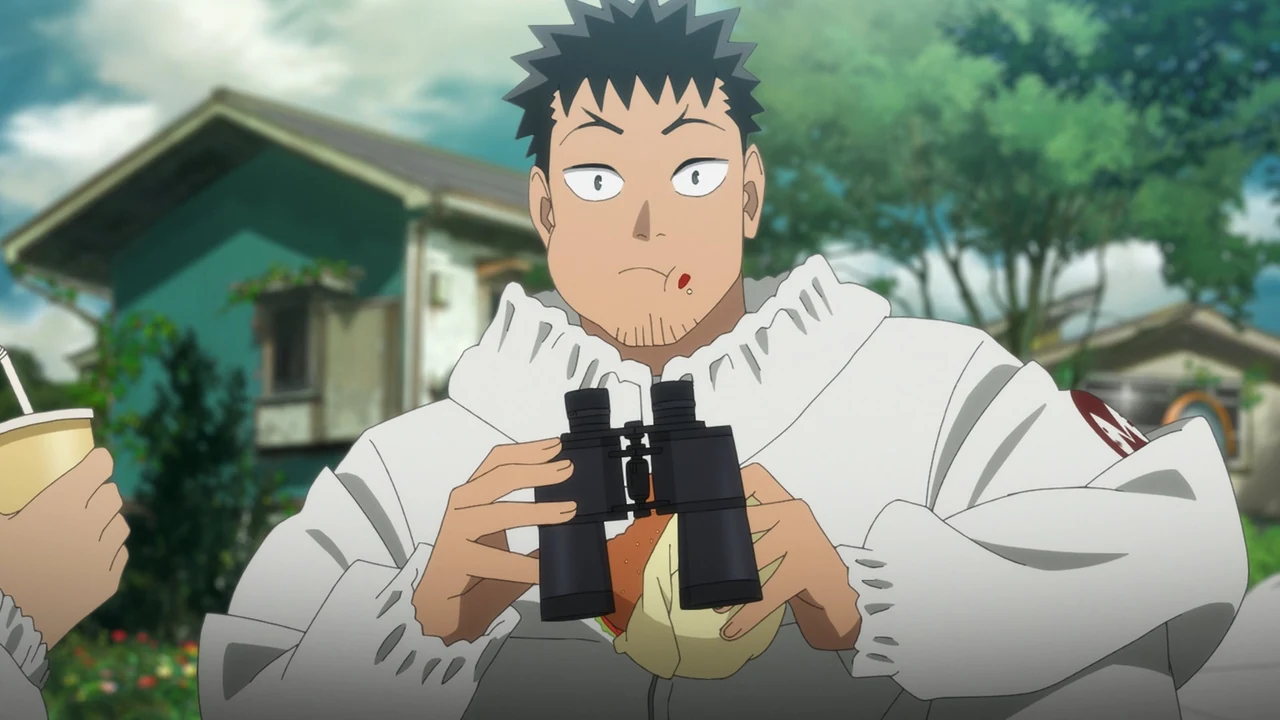
The opening gives his life outside the Force a value of its own. When Reno Ichikawa, a younger recruit to the cleanup crew, struggles with the work, Kafka helps him. When a surviving monster attacks, Kafka tries to get Reno to safety despite having no extraordinary power. Reno gets to know his courage and generosity before discovering his extraordinary strength.
That matters to the appeal of his transformation. We already have a reason to want this man to succeed. His knowledge of kaiju bodies also gives him something useful to contribute beyond a powerful punch. His years on the cleanup crew become practical expertise. There is something generous in that idea: starting again does not have to mean discarding everything you learnt along the way.
Who shares his dream?
Reno wants to join the Defense Force too, but initially sees Kafka as somebody who has given up. His growing respect gives Kafka encouragement without making Reno merely a grateful sidekick: both are pursuing a place in the same dangerous profession. Reno also becomes the person who must help Kafka manage a secret that can endanger them both.
Mina is the promise Kafka wants to keep and the professional standard he has yet to reach. She specialises in destroying large kaiju with heavy firepower. Her position is more demanding than waiting for an old friend to catch up: she has a division and civilians to protect. Kafka’s new appearance puts his wish to stand beside her in direct conflict with her job.
At the entrance exam, Kikoru Shinomiya gives the dream a different face. She arrives with exceptional training and talent, while Kafka is trying to make a belated start. Her father is the Defense Force’s exacting Director General, so being gifted does not free her from expectations. Both applicants have something to prove, but their starting positions could hardly be further apart. Kafka is trying to catch up; Kikoru has to live with the assumption that she will always be ahead.
The unit also needs more than one kind of fighter. Vice-captain Soshiro Hoshina specialises in sword combat against smaller monsters, complementing Mina’s large-target strength. Their different specialities give the monster battles a team structure: a towering target and a fast, close opponent call for different skills. Kafka’s task is to discover what he can contribute to that combination.
How do the monsters become both frightening and funny?
The opening presents two scales of the same disaster. First comes the city under attack, with military force mobilised against an enormous creature. Then come the workers dismantling what is left. The grand spectacle becomes a messy job with a shift to finish. That change of perspective gives the world a life beyond the people who win its battles.
The premiere’s helicopter sequence makes the response feel mobile and organised. Anime Independent’s first-episode account singles out the camera’s movement through the cockpit and the ominous music, while Sarah Musnicky at But Why Tho? praises the opening assault’s animation and varied creature designs. Both reviews describe the full premiere. Production I.G animates the series, with Studio khara credited for kaiju supervision and Yuta Bandoh for music.
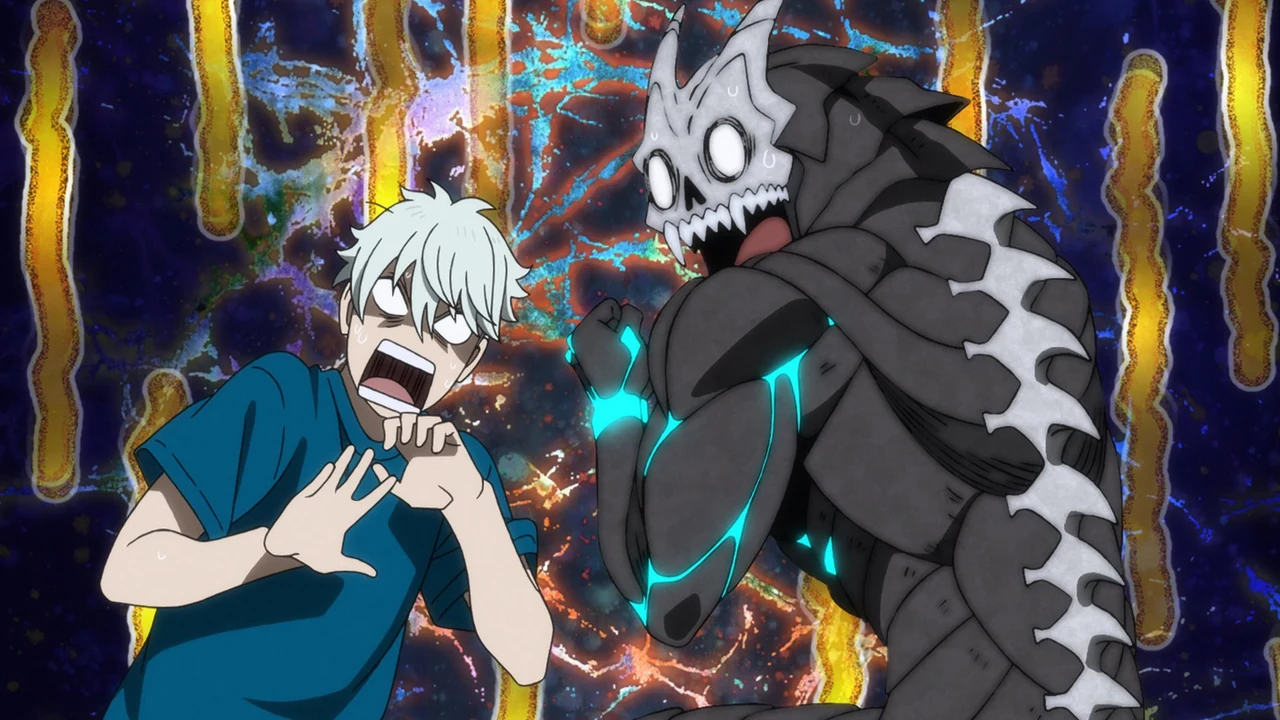
Kafka brings that imposing monster imagery into a much less composed personality. His transformed face has a skull-like jaw and glowing eyes, but the same features become round-eyed panic beside Reno. The design makes room for both menace and embarrassment. He can look built for destruction and still be the man whose colleague has to help him through an awkward situation.
That is where the friendship and the comedy meet. Reno’s early seriousness gives Kafka someone to bounce off, while their shared secret turns an ordinary conversation or misunderstanding into a potential crisis. The humour keeps the enormous power attached to an approachable person, even when his body suggests something else entirely.
What changes when Kafka has to hide his strength?
The entrance exam turns the usual pleasure of showing off a new power into a predicament. Kafka wants to demonstrate that he belongs, yet his most impressive ability is the one he cannot safely reveal. Episodes 3–4 build on that contradiction: a small test can matter as much as a large enemy when success and exposure are so closely connected.
As the story moves from applications towards training and field operations, his dream becomes more concrete. He has people to work alongside and skills to develop. The sequel expands the focus to other units and combatants, including First Division captain Gen Narumi, whose formidable fighting ability contrasts with his disorganised private life. The gap between a heroic reputation and an awkward person is a source of humour beyond Kafka himself.
That expanding cast also changes the rhythm. Exams, training and comic exchanges occupy real space between confrontations, and their appeal depends on how much you enjoy the people involved. In her season 2 premiere review, Allyson Johnson appreciates the action and backgrounds but finds the shift away from Kafka and Reno’s friendship less engaging. The linked review reveals the first season’s outcome. It is a useful reservation about that episode, rather than a verdict on the whole continuation: the friendship that makes the opening distinctive also sets a high bar for the wider ensemble.
Where can you see the original-series trailer?
The trailer previews the first-season premise, characters and monster action. Release messaging refers to the original launch.
Original series · Crunchyroll · 2023
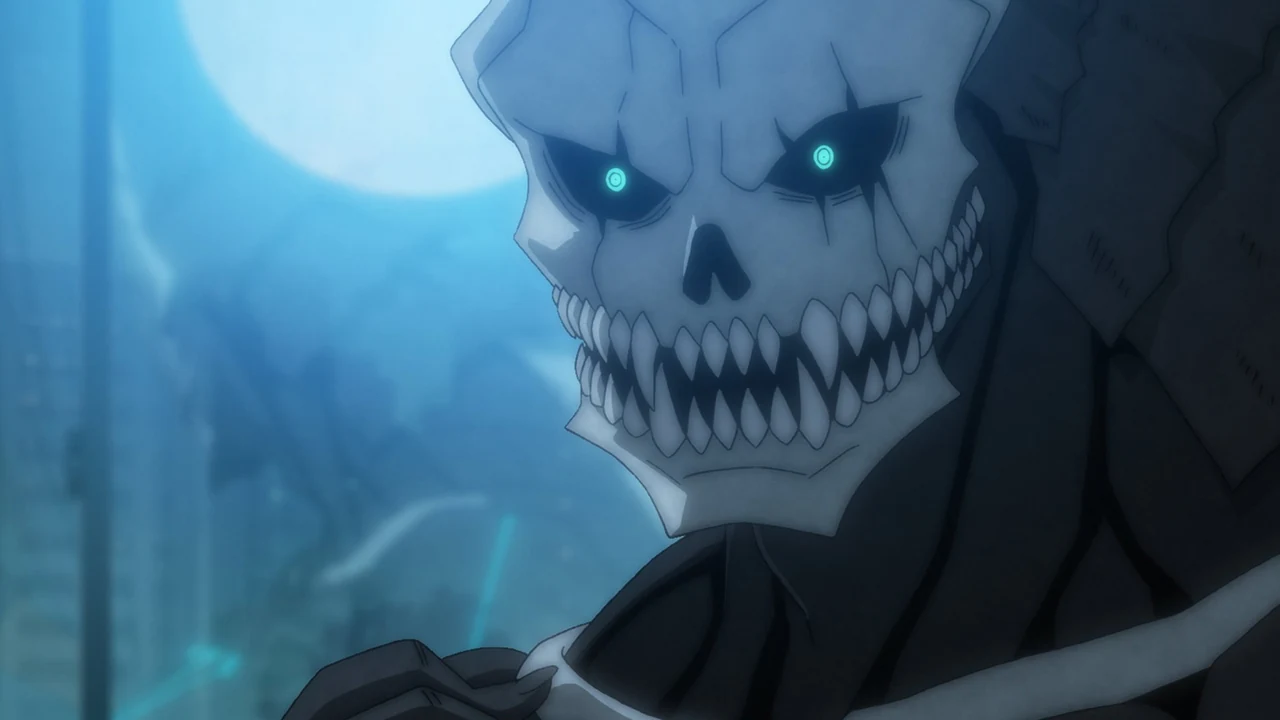
Loading the player connects to YouTube. Playback does not start automatically.
Watch on YouTube · ©JAKDF 3rd Division ©Naoya Matsumoto/SHUEISHA
Where do the seasons and extras fit?
Start with season 1, episodes 1–12, then continue to season 2, episodes 13–23 overall, beginning with “Kaiju Weapon”. The four-episode opening takes Kafka from cleanup work to the entrance exam and gives a good sense of the series’ friendships, humour and hidden-power problem.
The main route totals 23 episodes, about 9 hours 12 minutes at a planning estimate of 24 minutes each, including credits. The announced Final Chapter is still outside that released total, and the story remains open.
Two optional additions sit around the TV route:
- Hoshina’s Day Off, after season 1: a roughly 24-minute side story in which Reno and Iharu investigate their vice-captain’s free time. Mission Recon combines this episode with a condensed season 1 recap, so the film adds no required stop if you watch the full season and separate special.
- Narumi’s Week at Work, after season 2: four short character extras, listed separately from the main TV seasons.
Service numbering varies. Prime Video groups the Hoshina special before “Kaiju Weapon” in a bundle labelled “Season 3”; use the episode titles above to find the continuation. Availability depends on service and territory.
The BBFC’s UK first-season guidance details the bloody violence, injury imagery and crude humour summarised above; its episode notes contain spoilers.
Sources
The official character profiles, later episode summaries, ratings and critical reviews reveal events beyond this introduction’s opening-story boundary.
- Premise and characters: official episode 1, episode 2 and official character profiles.
- Exam and early mission structure: official episodes 3, 4, 5 and 6.
- Production and current scope: official site, credits and episode index, including the separate shorts and Final Chapter production confirmation; episode 13 and episode 23 establish the second season’s endpoints.
- Optional extras: official Mission Recon announcement and Hoshina’s Day Off synopsis.
- Craft and reservations: Sarah Musnicky’s premiere review, Anime Independent’s first thoughts and Allyson Johnson’s season 2 premiere review.
- Runtime and content: BBFC first-season records and Prime Video’s continuation and special listing. The 24-minute multiplier is a planning estimate, not an exact summed runtime or a promise of local availability.