

In Bleach, the dead do not always leave quietly. Soul Reapers guide spirits onwards and fight the dangerous beings called Hollows. Ichigo Kurosaki can see ghosts, but protecting his family pulls him into that work and into the rules of the organisation behind it.
VIZ identifies the original run as 366 episodes. Watch them all for the complete television story, or watch every episode except the optional ranges below for a shorter route. This version keeps mixed episodes and disputed boundaries; it does not remove every anime-original scene. Thousand-Year Blood War continues that story despite the long broadcast gap.
Content: supernatural threat, death and bloody fighting. The later Thousand-Year Blood War includes dismemberment and stronger bloody violence; its intensity is worth checking before starting a family watch. See the US Common Sense Media original-series content notes and BBFC continuation advice.
Films sit outside this main route. Returning after a break? Find your resume point.
Which episodes can you skip?
All numbers in this section belong to the original Bleach anime. They do not restart when a streaming service changes its season label.
| Optional episode(s) | What you leave out | Resume at |
|---|---|---|
| 33 | A standalone Karakura hero episode. | 34 |
| 50 | A Kon-centred detour during the larger storyline. | 51 |
| 64–108 | Most of the Bount storyline, a separate conflict involving soul-consuming beings. 109 stays in this route, so expect an epilogue to events you skipped. | 109 |
| 128–137 | Additional missions and character side stories between main-story stretches. | 138 |
| 147–149 | The Forest of Menos side adventure. It adds a particular encounter rather than advancing the manga adaptation. | 150 |
| 168–189 | The new-captain storyline featuring Shūsuke Amagai. The main conflict resumes where it was interrupted. | 190 |
| 204–205 | Two comic detours. | 206 |
| 213–214 | The Karakuraiser superhero side story. | 215 |
| 228–265 | Two standalone detours, then the Zanpakutō rebellion and its follow-up: sword spirits become characters the Soul Reapers must confront. Keep 227 and 266. | 266 |
| 287 | The magic-lamp alternate-setting story. | 288 |
| 298–299 | A film-festival comedy and Hell Verse tie-in material. This route postpones the films. | 300 |
| 303–305 | Further standalone comic/holiday material. | 306 |
| 311–341 | Side stories followed by the invading-army storyline. 342 stays, including its transition out of this stretch. | 342 |
| 355 | A New Year side story. | 356 |
These choices use the specialist classifications at Anime Filler List, keeping mixed episodes and one extra recap at the return from a long detour. “Filler” here means a source-adaptation classification, not a verdict that an episode is bad.
Taking every skip leaves 204 episodes from the original 366. At an assumed 24 minutes each, that is about 82 hours, versus about 146 hours for the complete original run: a saving of roughly 65 hours. Those are planning estimates including credits, not measured edition runtimes. Films and Thousand-Year Blood War are extra.
If the table feels like too much administration, make only the four big jumps: 63 → 109, 167 → 190, 227 → 266 and 310 → 342. Watch everything else. That keeps the smaller detours and leaves 230 original-series episodes, about 92 hours at the same 24-minute assumption. It is an easier compromise when you want fewer interruptions without checking a list every evening.
Which episodes should you keep?
Keep 109 and 342 whole. Anime Filler List classifies both as mixed. They also finish material from the preceding anime-original arcs, so a shorter route will not be completely seamless. At 109, unfamiliar references do not mean you selected the wrong episode. You have deliberately bypassed the Bount story. If you want that storyline’s conclusion to remain a surprise for a later watch, watch the block before its epilogue.
Keep 227. It is a flashback, and its position can make it look like another expendable interruption. Anime Filler List classifies it as manga material, so it stays in this route.
Keep 266. Anime Filler List marks it as filler. We keep this recap as a return point after a long interruption; it costs one episode. It is the reason this route has 204 episodes rather than the often-repeated 203.
More generally, keep any episode marked “mixed”. There is no need to follow a complicated set of minute-by-minute cuts. Those depend on the particular release, opening placement and edit; a timestamp copied from another service can remove the wrong scene.
How long should you give the opening?
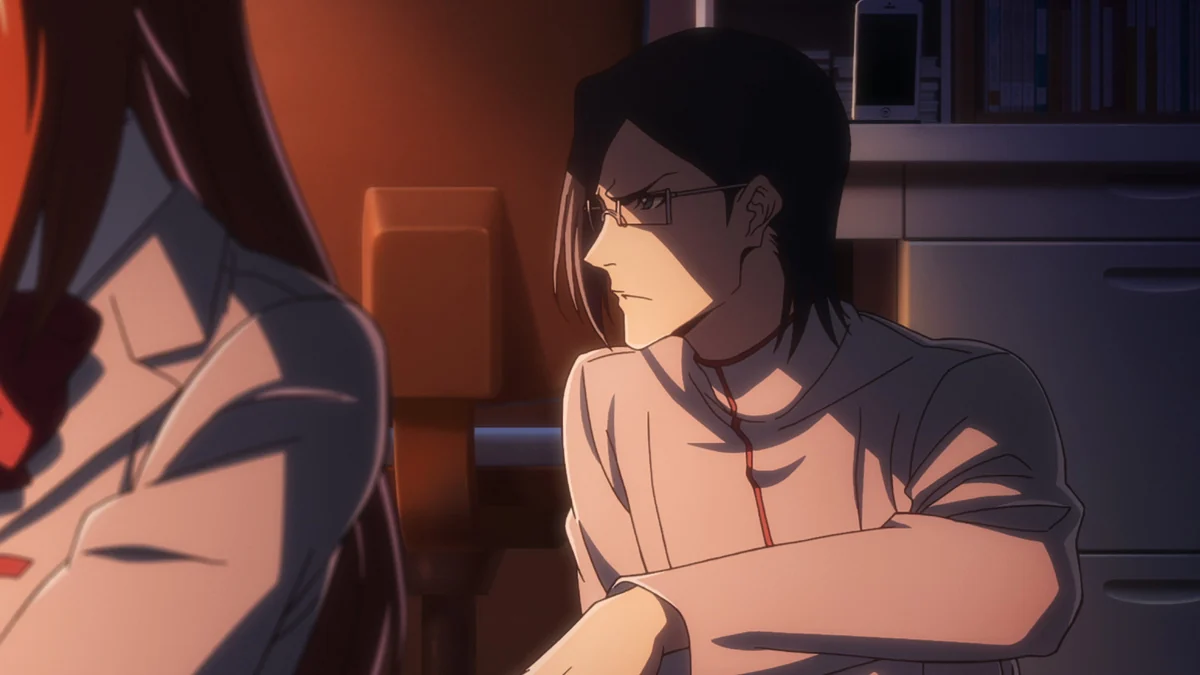
Start at episode 1. Ichigo’s early work with Rukia establishes what it means to help a spirit, why a Hollow can be more than a monster to defeat, and why his friends become involved. Rukia knows the job; Ichigo tends to act on the need immediately in front of him. Their disagreements make the supernatural rules part of a relationship rather than a glossary.
Episode 21 is the major change of setting: Ichigo and his friends enter Soul Society. The official retrospective identifies it as that arc’s beginning. By then, Rukia’s position has turned a string of local cases into a rescue mission. The people standing in Ichigo’s way have uniforms, ranks and duties of their own. A fight now tests his loyalty to a friend against the organisation she belongs to.
If the early cases interest you but feel too separate, that is a useful point to reassess. It is not a reason to jump straight to 21: the rescue depends on the relationships built before it. Watching through 21 takes about eight and a half hours at the guide’s planning rate. You can stop much sooner if the characters, comedy or sword fighting simply do not appeal.
Two contemporary reviews help explain the shift. Ryan at Anime UK News found the later opening episodes more cohesive as the Soul Society conflict emerged. A. H., reviewing Series 2 Part 1 for UK Anime Network, finds that the move to Soul Society expands the show’s imagination and that its slow, dialogue-heavy fights remain gripping. The change gives the story a larger destination; it does not turn it into a brisk, short series.
Can the extra arcs be worth watching?
Choose them by what they offer. The Zanpakutō stretch turns the relationship between fighters and their weapons into an external conflict. The Amagai storyline gives the series a separate captain-centred story. If either premise interests you, keep its complete block rather than alternating between it and the main storyline.
The trade-off is interruption. These arcs arrive inside a continuing adaptation, so watching them can postpone a conflict you were already invested in. Skipping them buys that momentum back, but also removes time with the wider cast.
The Bount skip is particularly noticeable: references to its characters continue beyond the optional block, so returning at 109 does not erase every trace of the story you missed.
What comes after episode 366?
The continuation brings Ichigo and the Soul Reapers into a war with a new invading force. It assumes you know the cast and their institutions. The original series’ last stretch, episodes 343–366, remains part of the route: the label “final arc” on the newer show is not permission to bypass those episodes.
Choose Bleach: Thousand-Year Blood War, then follow its parts in order:
- The Blood Warfare: start at continuation episode 1.
- The Separation.
- The Conflict.
- The Calamity.
Keep the continuation’s episodes in their listed order; the original-series skip table does not apply to them. The official story archive groups the continuation into its broadcast parts.
The final part is The Calamity. Use the official schedule to check the release in Japan and your local service for its available episodes and languages. A part name tells you where to continue; it does not guarantee that the entire part is available in your region.
Some databases call the first continuation episode 367, adding it to the original run. The official continuation starts again at 1. Both can refer to the same next episode. Match the series title and part as well as the number.
Where do the films fit?
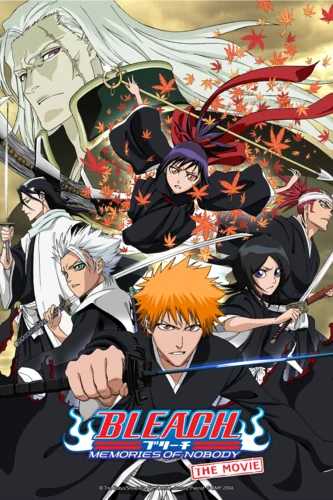
For a first watch, leave the four animated films until after original episode 366. You can then watch them in their release order:
- Memories of Nobody
- The DiamondDust Rebellion
- Fade to Black
- Hell Verse
That is a practical recommendation, not a claim that their stories all occur after episode 366. It avoids interrupting the television route and places their original-era cast and abilities after your introduction to them. The films tell additional adventures rather than supplying the missing first chapter of Thousand-Year Blood War. VIZ’s four-film collection identifies the four works; its descriptions contain film premises.
If you have finished the old series and want the next main storyline, go straight to Thousand-Year Blood War. No movie homework is required.
Where should you resume after a break?
- Finished 63 and never continued? Resume at 64 for everything, or 109 for our shorter route, with the epilogue caveat above.
- Stopped at 167? Continue at 168 for the Amagai story, or 190 to resume the interrupted adaptation.
- Finished 310? The shorter route resumes at 342, then continues through the final original-series stretch, omitting 355 if desired.
- Finished 366? Start Thousand-Year Blood War episode 1; do not restart the original series because the new listing also says “season 1”.
Keep a note of your last original episode number. A platform’s “season 10, episode 1” is not a portable bookmark, and a long-running show’s first available episode is not necessarily the beginning.
Sources
Episode lists, synopses and content advice below contain story spoilers.
-
Anime Filler List: Bleach: community-maintained original-series classifications. The route above retains its mixed episodes and additionally keeps recap episode 266.
-
VIZ’s Bleach overview: the original 366-episode run and the continuation’s identity.
-
Official Thousand-Year Blood War story archive and on-air page: continuation parts, episode numbering and Japanese schedule.
-
Official original-series retrospective: episode 21 begins the Soul Society arc. Its limited-time viewing promotion is not current availability advice.
-
Ryan, Anime UK News, Volume 2 and A. H., UK Anime Network, Series 2 Part 1: the opening’s increased cohesion and the Soul Society rescue’s imaginative setting and deliberate fight pacing.
-
Apple TV’s original-series episode 11 listing: the Rukia and Ichigo lead image.
-
VIZ’s four-film collection: film identities and premises. Watching them after episode 366 is our recommendation.
-
Common Sense Media and BBFC: original-series and continuation content guidance respectively.
-
Image sources: official TYBW episode 1 gallery and VIZ: Memories of Nobody.