
Why does Kouichi keep approaching Mei?
Kouichi Sakakibara meets her before he reaches his new classroom. He has moved to Yomiyama to stay with his grandparents, but a collapsed lung puts him in hospital and delays his arrival at school by a month. The girl with an eyepatch whom he encounters there is Mei Misaki. When he finally joins Class 3-3, she is there too.
His classmates offer friendship, yet nobody will discuss her. Kouichi has an ordinary reason to ask about somebody he has met; the group’s response makes that curiosity feel consequential. Mei’s quiet manner gives him few easy answers, and a warning to be careful only gives the question more weight.
This is the opening attraction of Another, the 2012 P.A.WORKS anime directed by Tsutomu Mizushima from Yukito Ayatsuji’s novel. It joins a school’s adolescent relationships to a mystery about what the class fears, then lets violent horror intrude into the spaces where those relationships were taking shape.
What kind of class has he joined?
The story takes place in spring 1998 at Yomiyama North Middle School. Kouichi arrives after other pupils have already begun the year together. He needs help learning the ordinary life of the class at the same time as he begins noticing its evasions.
Naoya Teshigawara offers an outgoing presence. Izumi Akazawa is more commanding and concerned with managing the class’s abnormal situation. A mood-maker and someone trying to take charge need not respond to fear in the same way. Their different approaches give Kouichi people to deal with, rather than a chorus that does nothing but withhold a secret.
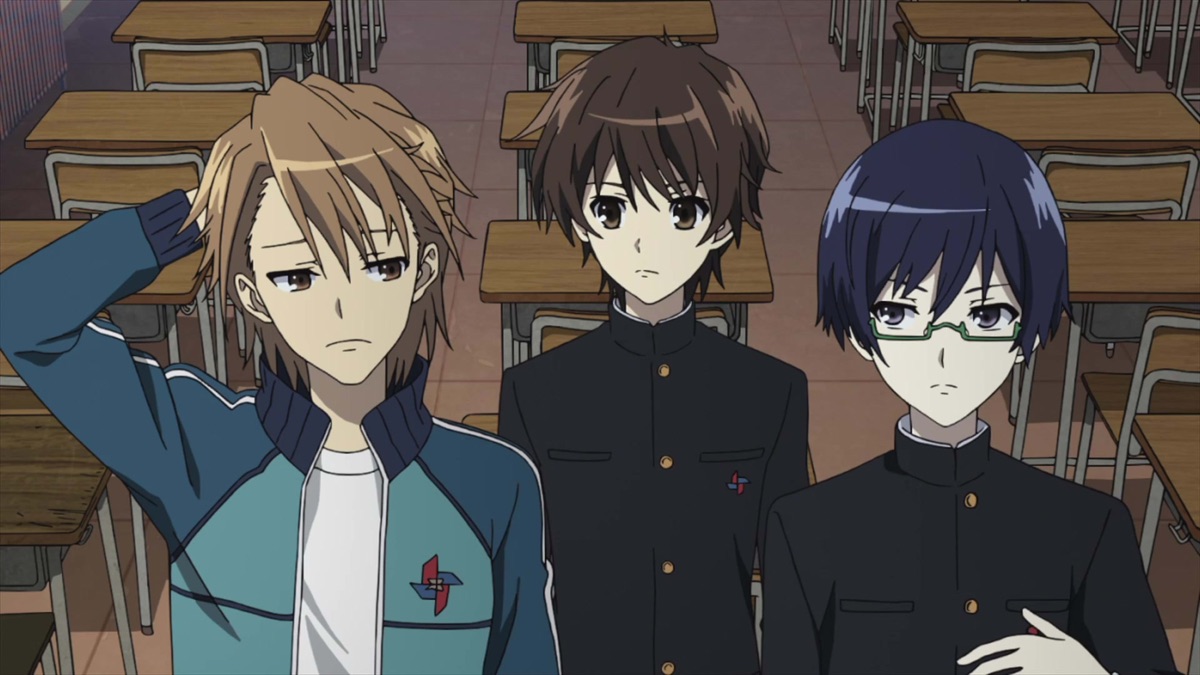
The mystery takes him beyond the classroom. Following Mei leads towards a workshop crowded with old dolls; a story about an earlier Class 3-3 brings the school’s past into the present. A hospital encounter, an afternoon walk and a conversation about a classmate can all become part of the investigation without beginning as detective work.
What holds Kouichi and Mei’s relationship together?
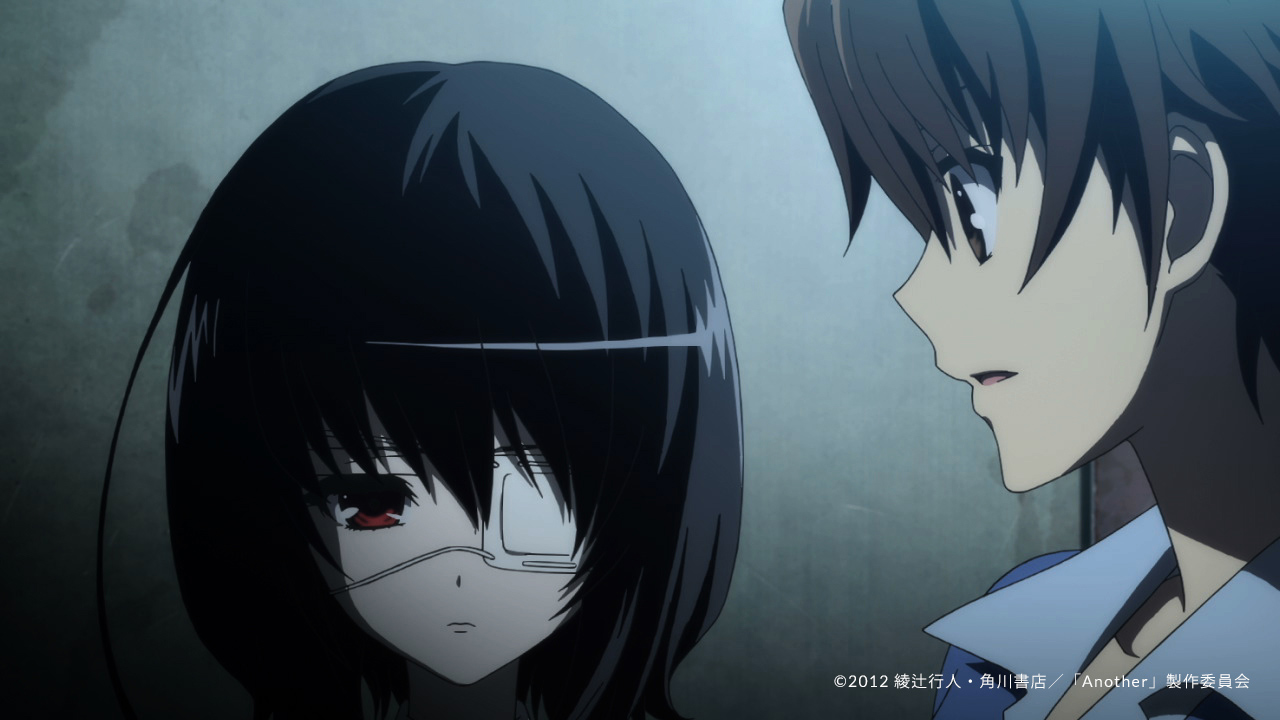
He keeps asking; she is hard to read. That uneven rhythm supplies both the uncertainty and a reason to stay with them. Approaching the person nobody will mention is a small social choice that puts Kouichi at odds with his new surroundings.
The performances were conceived around that difference. Atsushi Abe described aiming for a recognisable ordinary schoolboy, while Natsumi Takamori spoke of restraining Mei’s expression and considering how Kouichi perceives her. The pair begin without the ease of classmates who already know where they stand with one another.
The adaptation can also leave Kouichi’s viewpoint. Ayatsuji describes the novel’s first-person narration and the anime’s ability to show other pupils outside his view. That makes the classmates’ lives relevant even when he does not hear everything they say. We can be close to his uncertainty without assuming the class has no experience beyond it.
What kind of fear should you expect?
The unexplained girl and frightened class offer a mystery you can follow. As deaths intrude, the setting acquires another kind of suspense: ordinary actions and objects may become dangerous. The series includes graphic, sudden violence, rather than maintaining the same quiet register throughout.
That combination gives it a particular appeal and a real trade-off. The atmosphere can make you watch a familiar place anxiously; spectacular accidents can also draw attention away from the people and towards the mechanics of a shock. Expect a mixture of unsettling school encounters, investigation and increasingly emphatic horror, not a gentle ghost story.
How do the pictures and music shape that atmosphere?
Noizi Ito’s character designs, adapted for animation by Yuriko Ishii, sit in recognisable classrooms, tiled hospital interiors and pale corridors. The contrast lets a small exchange between pupils feel uncertain before anything overtly supernatural needs to appear. The series’ recurring human-shaped dolls add another presence to a story already asking how to recognise a person properly.
Kow Otani supplies the score and Yoshikazu Iwanami directs sound. The opening, ALI PROJECT’s “Kyoumu Densen,” and the ending, Annabel’s “anamnesis,” frame that school world differently. Lantis describes the ending, composed and arranged by myu, as warm. Mizushima’s own description of the project as a drama of adolescence alongside horror helps explain why tenderness belongs in the same work as dread.
Which version should you begin with?
Start with episode 1, “Rough sketch,” of the 2012 animated television series, then follow the twelve numbered episodes. At approximately 24 minutes each, allow about 4 hours 48 minutes.
The separately issued episode 0 prequel OVA is outside that total and is best left until after the television story on a first watch. The live-action film and original fiction are separate versions. KADOKAWAanime’s original second promotional video includes later threatening imagery.
2012 television series · KADOKAWAanime
Loading the player connects to YouTube. Playback does not start automatically.
Sources
Episode pages, the interview and trailer contain later details. No named death, mystery mechanism or ending is disclosed here.
- P.A.WORKS: Another: setting, adaptation and staff/music credits.
- Apple TV: original series: hospital arrival, early classroom encounters and doll-workshop setting.
- Dengeki Online: 2011 recording interview: character intentions, anime viewpoints and adolescence-drama account.
- Lantis: anamnesis: ending song and its conception. Australian Classification: violence guidance for the original animated series.
- dAnime: television edition: original TV scope. KADOKAWAanime: original PV2: original anime promotion.