
At first, Sotoba needs a diagnosis. People are dying, the village doctor cannot explain the pattern, and familiar institutions are meant to respond. A clinic treats illness; a temple helps a community live with death. Shiki places Toshio Ozaki and his childhood friend Seishin Muroi inside those roles, then gives them a crisis their shared history cannot resolve for them.
That is a more compelling starting point than asking which side will turn out to be the “real monster”. The doctor and the priest begin with people they know. So do the young villagers and the newly arrived Kirishiki household. The disturbing question is what becomes permissible when protecting those people seems to require hurting somebody else.
What does the village stand to lose besides lives?
Sotoba has around 1,300 residents, one road to the outside and an enduring burial custom. That geography is useful to a horror mystery, but the people make its enclosure matter. Megumi Shimizu wants city life and fashion; Natsuno Yuuki, recently brought from the city, wants to leave again. The place somebody calls home can be the place somebody else dreams of escaping.
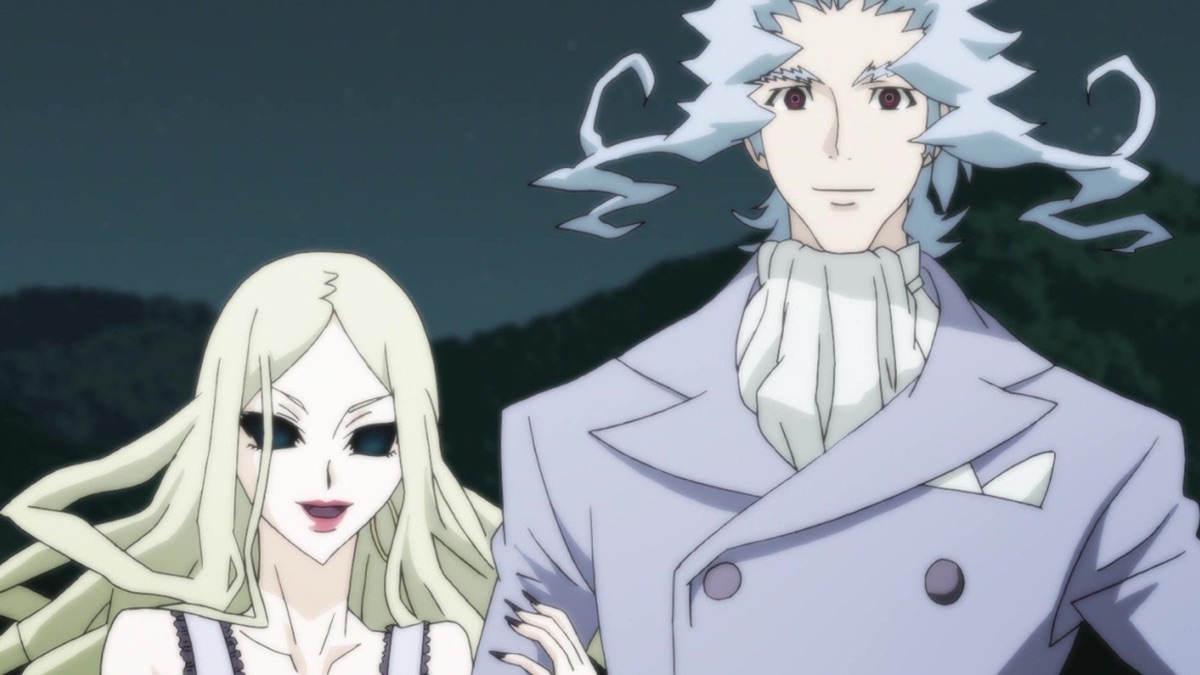
Even those who seem secure have obligations attached to their names. Toshio is the village’s doctor. Seishin is a novelist as well as the temple’s deputy priest, with work beyond the role his neighbours see. Sunako Kirishiki reads his fiction. Her interest reaches him through something he has made, rather than through the function the village expects him to perform.
Those relationships prevent the crisis from dividing a happy, unified community from a faceless threat. Sotoba contains affection and resentment before its deaths become an emergency. What it asks people to preserve may be a friendship, a duty, an institution or a life they never chose.
The following sections discuss the central supernatural premise and specific developments in television episodes 14 and 20, including medical violence. They do not disclose the finale or the characters’ final fates.
When does finding an answer become a violation?
The deaths lead to the shiki, the risen dead who feed on the living. Finding that explanation does not restore the simple world in which the doctor has patients and an external disease to defeat. The threat has faces and relationships of its own.
Episode 14 gives the problem a brutal form. Toshio’s wife Kyoko has died. Five days later, she wakes beside him, and he takes up a scalpel. The official synopsis identifies her both as his long-standing companion and as his only clue for resisting the enemy. Those descriptions name the conflict: a person with whom he shared a life has become a means of obtaining knowledge.
The medical context makes this more than another frightening attack. Toshio’s profession ordinarily connects expertise to care. Here his determination to learn how to fight supplies a different purpose for the same expertise. If the information may save other villagers, does that settle what he can do to the individual before him? It gives his action a reason; it does not make that individual disappear.
This is where sympathy and approval need to separate. We can understand the urgency of a doctor who has watched people die, and still find his use of another body horrifying. The series does not need to make him stupid or indifferent for that conflict to work. The knowledge he seeks is consequential precisely because he is capable of using it.
Does hunger leave room for a choice?
The opposing claim is survival. A risen person did not necessarily choose to become dependent on blood. Nor do their memories and relationships vanish simply because the living now have a reason to fear them. Calling everybody a monster can be a way of refusing to distinguish among their actions.
Episode 20 puts Ritsuko and Toru beside that distinction. The official description places her hunger and overwhelming desire alongside his pain at his own conflict. The scene’s pressure comes from recognisable persons struggling with what their existence now demands. A need can be involuntary while the means of satisfying it still involves somebody else.
That is also the limit of a simple predator-and-prey analogy. Deer cannot usually negotiate with bears; these characters can speak, remember, argue and recognise one another. Their ability to give reasons invites us to examine those reasons. It does not automatically make the person being hunted responsible for keeping the hunter alive.
Why does the argument keep dividing viewers?
The disagreement is clear in a discussion on r/anime. DownloadTillTandava1 reads both groups through the struggle to survive and resists naming either as the true villain. Giant2005 responds from the threatened person’s side: prey has a claim to prevent its own death. Another participant values the series’ portrait of group fear more than the philosophical dilemma, questioning whether a workable, non-coercive coexistence has been imagined at all.
These readings cannot be combined into “both sides are equally bad” without losing their differences. One asks whether biological necessity changes blame. Another asks what defence a victim may undertake. A third questions the story’s construction of the dilemma. They are related questions, but they do not have to produce the same answer.
The useful distinction is between a reason to survive and permission to do anything for survival. The living can have a justified interest in defending themselves without every act against the risen becoming justified. The risen can retain fears and attachments without acquiring a right to turn their neighbours into resources. Attention to individual conduct makes the horror harder than a vote for a species.
What can horror do that a neat moral puzzle cannot?
The village’s later resistance makes the hunters vulnerable in turn. Familiar faces appear on both sides of violence; neighbours become a group with a job to finish. That change can make an audience recoil even when it accepts the need for defence. Watching the methods, the anger and the treatment of an individual asks more of us than agreeing with an objective.
Guardian Enzo’s contemporary review praises the series while explicitly rejecting moral equivalence between its sides. That combination is worth keeping: a work can disturb the viewer through human brutality without proving that all responsibility is shared equally. His disagreement with Seishin also shows how much depends on what we think understanding another life requires us to do.
Shiki is richest when the question stays attached to people: a doctor with a scalpel, a priest who listens, a hungry person facing someone they know. Their fear does not absolve them, and recognising it need not excuse them. It keeps their actions from becoming as simple as the labels each group uses for the other.
Sources
All discussion links below contain substantial spoilers, including material beyond the episodes analysed here.
- Official series introduction, characters and cast interview: village, initial desires, institutions and relationships.
- Official episode 14: Kyoko, the doctor’s knowledge and scalpel. Official episode 20: Ritsuko’s hunger and Toru’s conflict.
- Guardian Enzo: Shiki series review, 31 December 2010: criticism of the violence, reversals and moral-equivalence question.
- Reddit: Shiki discussion about morals, including DownloadTillTandava1, Giant 2005 and the group-psychology qualification: competing readings of survival, self-defence and the story’s dilemma.