
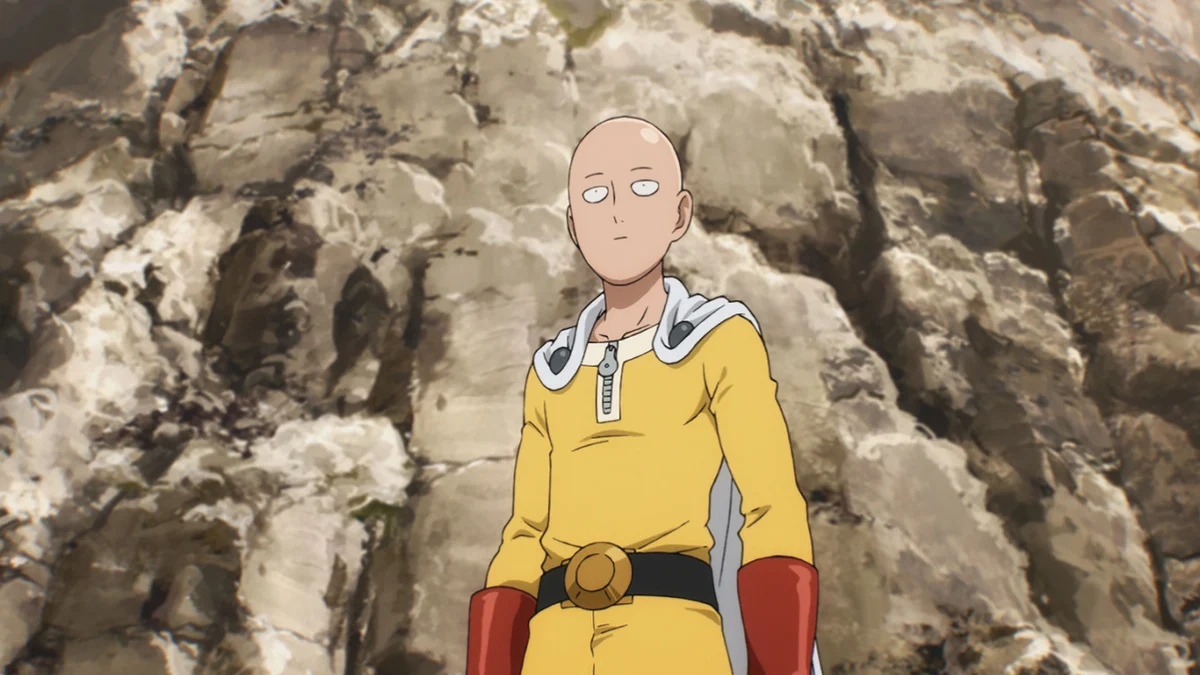
Saitama does not need a quieter life in quite the same way that Mob needs an ordinary one. Saitama has trained until defeating a monster no longer provides the excitement he wanted from hero work. Mob already has extraordinary psychic ability, but it does not make him the person he hopes to become at school.
Calling both characters “overpowered” identifies the obvious joke and misses the useful difference. One has achieved an ambition so completely that it has become unsatisfying. The other has a remarkable gift that is poorly matched to some of his ambitions.
What has success taken away from Saitama?
The first One-Punch Man episode presents heroism as something Saitama once chose for fun. After years of training, the expected contest disappears: overwhelming strength ends it too quickly. The obstacle is not simply finding another enemy. It is finding the experience that made becoming a hero desirable.
That changes what a fight can do dramatically. For a threatened bystander, a monster remains dangerous. For Saitama, the question can be whether the encounter will supply anything he has not already experienced. The same event therefore has two scales, and his flat response can be funny precisely because the situation around him is so extravagant.
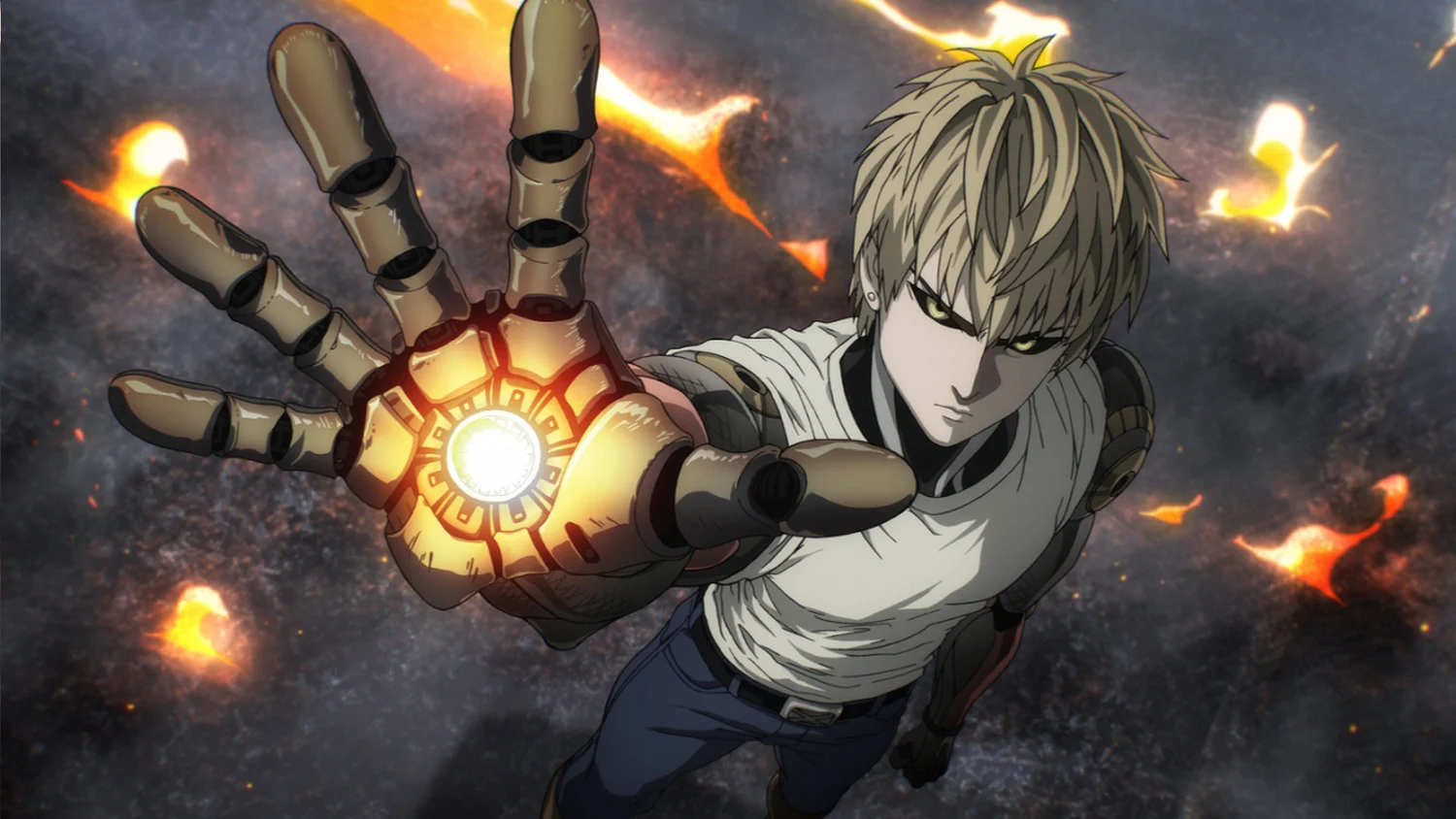
Image credits
One-Punch Man
(C)ONE・村田雄介/集英社・ヒーロー協会本部
Image sourceGenos brings a different expectation. He wants to become stronger and sees a master worth following. Their partnership puts aspiration beside disappointment without requiring either character to be secretly weak. Genos wants the strength that Saitama has already found unsatisfying.
Why does Mob choose something he is bad at?
In Mob Psycho 100 episode 3, joining the Body Improvement Club does not immediately make Mob athletic. A run leaves him exhausted. The aim nevertheless makes sense: he wants to build his body and become closer to his childhood crush, Tsubomi.
Psychic power cannot do that work on his behalf. Moving a heavy object would not be the same accomplishment as developing stamina. Impressing somebody through an exceptional ability would not automatically make a mutual relationship.
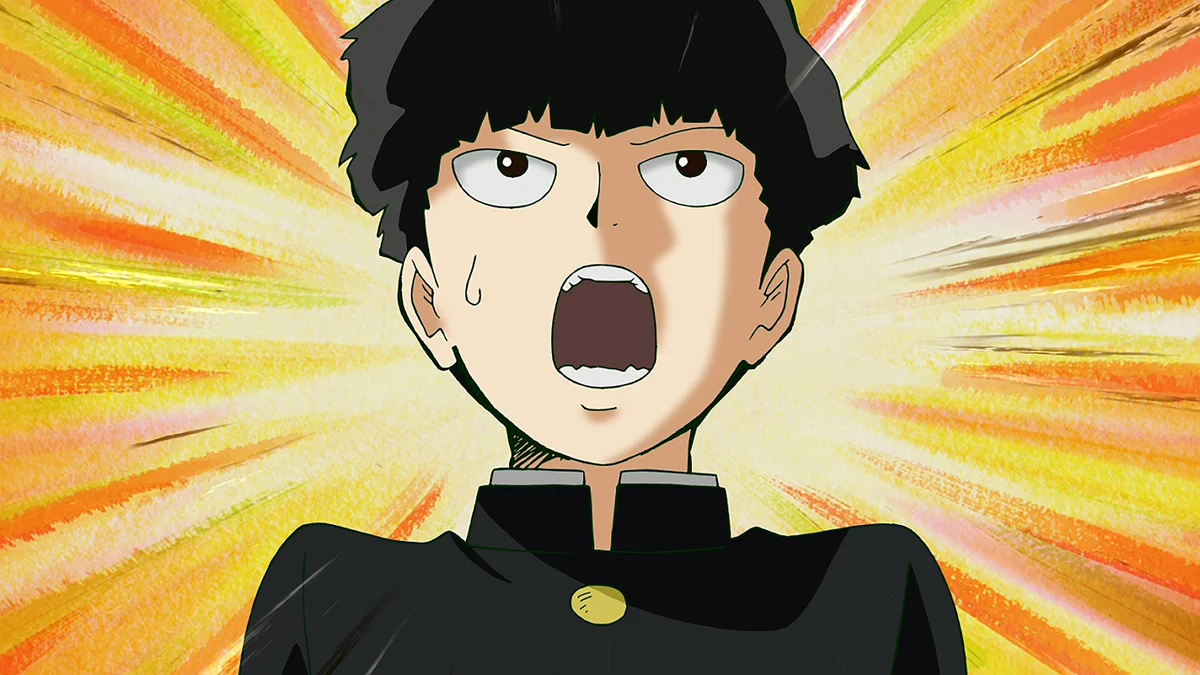
Image credits
Mob Psycho 100
©ONE・小学館/「モブサイコ100」製作委員会
Image sourceThe weakness is therefore productive. It gives effort a meaning that would disappear if every ordinary problem could be solved by a supernatural shortcut. Mob can need encouragement, practice and company in a world where he is already enormously capable of something else.
Are their ordinary lives just interruptions?
If all you want is the next display of power, shopping, work, school and conversation may look like material between the real events. In these openings they establish what power is failing to supply. Without the ordinary desires, the scale of the extraordinary ability would have much less to push against.
The action has pleasures of its own. The danger faced by other characters remains part of One-Punch Man. The spirits in Mob Psycho 100 are not merely metaphors for a schoolboy’s social difficulties. The contrast works because the fantastic and mundane demands coexist.
Nor does sharing a creator make the two adaptations visually interchangeable. The original One-Punch Man season was animated at Madhouse; the original Mob Psycho 100 season at Bones. This comparison concerns the opening dramatic problems, rather than a claim that the productions or every later arc have one identical purpose.
What remains when strength is no longer the answer?
Saitama wants a challenge that will make hero work exciting again. Mob accepts difficulty in an area where his psychic ability gives him no head start. The routes point in different directions, but both make winning an inadequate definition of living well.
That is what gives the ordinary scenes weight. A conversation or an exhausted run can reveal a limit that a spectacular attack cannot. The strongest person in the room can still need a reason to be there, and somebody else to share the room with.